NZ’s latest push to roll out more EV chargers is a good thing – but can it go the distance?

Source: The Conversation (Au and NZ) – By Mingyue Selena Sheng, Senior Research Fellow, Faculty of Business and Economics, University of Auckland, Waipapa Taumata Rau

A $50 million plan to expand New Zealand’s public electric vehicle (EV) charging network marks another step toward a lower-emissions transport system.

The government will provide interest-free loans to private operators ChargeNet and Meridian Energy, which will invest a further $60 million to lift the national network to around 4,500 charge points.

The aim is to ease a key constraint on EV uptake: limited public charging infrastructure, particularly outside major urban centres.

It partly reflects what’s been called a chicken-and-egg problem, in which providers are reluctant to invest without enough EVs on the road, while drivers are hesitant to switch without a reliable charging network.

By lowering upfront costs for providers and encouraging rollout in smaller towns and along regional routes – where usage and returns are less certain – the scheme would help bring forward the investment needed to build a functional national network.

That is a positive and timely development. But our research suggests that without deeper shifts in pricing, incentives and driver behaviour, expanding charging infrastructure alone is unlikely to drive EV uptake at the pace New Zealand needs.

What puts the brakes on EV uptake?

The Climate Change Commission sees electrifying New Zealand’s largely ageing and fossil fuel-powered vehicle fleet as among the key steps to meeting national emissions reduction targets.

There is a long way to go. With its 1,800 charge points, New Zealand remains well short of the infrastructure needed to reach a goal of 10,000 public chargers by 2030.

While an expanding range of EV models and policy measures – including some since rolled back – has encouraged more motorists to switch, uptake remains uneven across regions and demographic groups.

Cities might be quickly plugging in, but many rural towns and lower-income areas are being left behind, where high costs and limited access to chargers continue to deter buyers.

In these places especially, “range anxiety” is less about battery capacity and more about confidence in the charging network. Our recent modelling shows EV uptake is higher where charging is visible and reliable, with that sense of convenience often proving just as decisive as the upfront purchase price.

It might seem, then, that simply adding more chargers is the solution. But the reality is more complicated.

Even where chargers exist, drivers worry about whether they will be available, working, or already in use. For those outside major centres, gaps between towns – or along key highways – can make longer trips feel uncertain or impractical.

This reflects the networked nature of charging infrastructure. In a geographically dispersed country like New Zealand, the value of charging infrastructure depends as much on where chargers are located – and how well they connect – as on how many there are.

At the same time, expanding the network brings its own challenges. If large numbers of drivers plug in at the same time – particularly in the early evening – this can place additional strain on local electricity networks and increase system costs.

Why NZ’s EV shift needs a ‘systems’ approach

These factors suggest that, rather than focusing only on building more infrastructure, we need to consider how that infrastructure is used, experienced and integrated into the wider energy system.

It’s also here where we begin to see the limitations of a loan-based policy like the one just announced by the government.

It may be true that lower-cost finance can help bring forward investment. But it does not remove the underlying risks for providers, particularly in areas where demand is low or uncertain.

In regions where returns are structurally low – such as rural or remote communities – loans alone may be insufficient to ensure equitable access. Nor does it address questions about where chargers should go, how they are used, or how drivers respond to them.

As international evidence suggests, concessional finance – such as loans or grants provided at below-market rates – can support infrastructure rollout. But it is rarely enough on its own to deliver rapid, system-wide deployment.

A more effective response would take a system-wide approach – combining infrastructure investment with clearer long-term signals, targeted support in underserved areas, and incentives that influence when and how people charge.

This could include measures such as time-of-use pricing to shift charging away from peak periods, or coordinated planning across central government, councils and network operators to ensure chargers are placed where they are most needed.

New technologies may also play a role. Wireless charging, for example, has the potential to reduce reliance on large batteries and make charging more seamless.

Our research on in-road charging systems – including modelling for Auckland’s electric bus network – suggests this could improve efficiency and reduce infrastructure constraints over time.

Ultimately, the government’s loan scheme should be seen as a good thing. But building a reliable, equitable charging network will require a more coordinated and long-term approach.

ref. NZ’s latest push to roll out more EV chargers is a good thing – but can it go the distance? – https://theconversation.com/nzs-latest-push-to-roll-out-more-ev-chargers-is-a-good-thing-but-can-it-go-the-distance-279645

Evening Report: https://eveningreport.nz/2026/04/09/nzs-latest-push-to-roll-out-more-ev-chargers-is-a-good-thing-but-can-it-go-the-distance-279645/
EV chargers to roll out faster under new rules

Source: New Zealand Government

The Government has removed unnecessary consenting barriers to electric vehicle (EV) charging infrastructure, making it faster and easier to build chargers where New Zealanders need them, RMA Reform Minister Chris Bishop says. 

Amendments to the National Environmental Standards for Electricity Transmission Activities (NES-ETA) introduce new nationally consistent permitted activity standards for EV charging infrastructure, replacing fragmented and inconsistent district plan rules. The amendments will come into force on 7 May 2026.

“Under the current system, anyone wanting to install EV charging infrastructure has had to navigate a confusing patchwork of local rules, creating uncertainty, delays and unnecessary costs for infrastructure that is typically small-scale,” Mr Bishop says.

“These changes cut through that red tape. By setting clear national rules, we’re making it much quicker and easier to get chargers in the ground, while still managing effects appropriately.

“For the first time, the NES-ETA explicitly includes EV charging infrastructure, with permitted activity rules covering the full lifecycle from construction through to operation, upgrade and replacement.”

The amendments apply to four types of EV charging infrastructure:

  • private EV chargers
  • EV chargers in a transport corridor
  • EV chargers associated with other infrastructure or buildings, such as service stations or supermarkets
  • standalone EV charging facilities, including charging hubs

“Many New Zealanders have thought about getting an EV, even before the fuel challenges we’re currently facing. But a lack of public chargers is still holding people back,” Mr Bishop says.

“This Government is tackling that from both sides, by removing planning barriers and backing new investment to grow the network.”

The move complements the Government’s recent announcement of $52.7 million in zero-interest loans, alongside co-investment from ChargeNet and Meridian, which will see more than 2,500 additional public EV charging stations.

“At present, New Zealand has just over 1,800 public EV charging points nationwide. That puts us among the lower-ranked countries in the OECD for chargers relative to the number of EVs on the road.

“With chargers already in progress and the latest investment, the network is expected to more than double to around 4,550 charge points. Our goal is 10,000 by 2030, roughly one charger for every 40 EVs.

“Making it simpler to consent new chargers will help us get there faster.

“Many New Zealanders are already looking to switch to an EV when it’s time to upgrade their vehicle. Even before the current fuel pressures, running an EV was typically cheaper than petrol, and New Zealand’s electricity system is largely renewable.

“We’re also seeing that shift in the data, with EV registrations so far in 2026 up 96.4 per cent on the same period last year. Recent global events have likely accelerated that trend, as higher fuel prices drive more interest in EVs.

“In a world where international fuel markets are uncertain, that matters.

“We’re striking the right balance by enabling the charging infrastructure New Zealand needs, while keeping sensible safeguards in place.

“The new permitted activity standards include conditions to manage effects such as noise, earthworks, size and setbacks near residential areas, and traffic impacts for larger standalone facilities. Where those standards are not met, a restricted discretionary consent will still be required.”

The amendments apply directly once they come into effect on 7 May (28 days after Gazettal). Councils are not required to amend district plans, and more lenient plan rules will continue to apply where relevant.

“This is another example of how targeted national direction can make the resource management system work better in practice, while we transition to a more enabling, common-sense planning system,” Mr Bishop says.

The policy intent of the changes will be carried through into the new planning system established by the Planning and Natural Environment Bills.

Notes to editors: 

  • The amendments to the NES-ETA are part of a suite of changes the Government has made to national direction under the Resource Management Act.
  • These changes aim to boost infrastructure and urban development by making it easier to consent, enhance the primary sector by removing unworkable rules and replacing national direction, and deliver housing growth.
  • The amendment to the NES-ETA follows the gazettal of 10 new or amended national direction instruments on 18 December 2025 which came into force on 15 January 2026, with amendments to several other national direction instruments expected in coming months. 

MIL OSI

LiveNews: https://livenews.co.nz/2026/04/09/ev-chargers-to-roll-out-faster-under-new-rules/

New Manukau rehab centre for spinal injury patients

Source: New Zealand Government

Construction of a long-awaited, purpose-built specialised rehabilitation centre will proceed at Manukau Health Park, significantly improving care for people with spinal cord injuries, Health Minister Simeon Brown says.

“I’m pleased to confirm that a new 30-bed facility will be delivered, providing the certainty the community has been waiting for following earlier delays and cost pressures that began under the previous government,” Mr Brown says.

“The current Ōtara Spinal Unit is one of the most outdated and high‑risk facilities in the country, and limited rehabilitation capacity has been placing ongoing pressure on Middlemore Hospital’s acute services for many years.

“This $128.5 million investment addresses both challenges by replacing an ageing facility and expanding rehabilitation capacity, ensuring patients receive quality care in the right setting, at the right time.”

Once complete, the centre will replace the existing 20‑bed unit and increase spinal rehabilitation capacity to 30 beds. This expanded capacity will improve access for patients with complex rehabilitation needs and support faster transitions out of acute hospital care.

Rehabilitation services will be further strengthened through the refurbishment of Middlemore Hospital’s adult rehabilitation ward under Health New Zealand’s National Remediation Programme. This will allow the ward to continue operating safely as a 28‑bed adult general and neuro rehabilitation unit.

“Together, these facilities will deliver a total of 58 rehabilitation beds, supporting rising demand through to 2040 while easing pressure on acute services at Middlemore Hospital.

“This is about ensuring our health system has the capacity it needs, both now and into the future. Expanding rehabilitation services helps patients recover sooner and frees up acute beds for those who need them most.”

The new Manukau facility will feature modern therapy spaces, stronger integration with clinical services, and a design aligned with the new Model of Rehabilitation. Its direct connection to the Manukau Surgery Centre will support patient privacy and provide convenient access to radiology, outpatient clinics, and theatre services.

“This project has been a long time coming, and I know how much it matters to the community. I want to acknowledge the dedication of staff, clinicians, and community partners who helped shape this project and ensure rehabilitation services are modern, responsive, and centred on patients and their families,” Mr Brown says. 

MIL OSI

LiveNews: https://livenews.co.nz/2026/04/09/new-manukau-rehab-centre-for-spinal-injury-patients/

Auckland Council Libraries releases te reo Māori – English children’s book celebrating stories of Polynesia

Source: Auckland Council

Tamariki and their whānau are invited on a literary journey across the Pacific with Rere Atu Ki Poronihia: Flight to Polynesia, a new bilingual children’s book published by Auckland Council Libraries and Oratia Books.  

Launching on Saturday 11 April at 10:30am at Te Atatū Peninsula Library, the book continues the joyful spirit of its award-winning predecessor Rere Atu Taku Poi! Let My Poi Fly! while expanding into the wider cultures of Polynesia and championing te reo Māori along the way. 

Catherine Leonard, Head of Library and Learning Services at Auckland Council, says books like Rere Atu Ki Poronihia, which is written in both English and te reo Māori, remind us that seeing ourselves reflected in our stories is vital for our communities, and they highlight the importance of the libraries’ publishing programme.  

“When tamariki see their cultures, their languages, and their identities celebrated, it strengthens their sense of belonging. Our publishing kaupapa is about making sure every Aucklander can find themselves in our collections and this beautiful book is a great example of that. It also reflects Auckland Council’s commitment to ensuring te reo Māori is seen, heard, spoken and learnt across Tāmaki Makaurau.” 

Te reo Māori speaker numbers have reached their highest ever (213,849 in the 2023 New Zealand Census), with young people among the largest number of te reo speakers. Auckland Council Libraries is committed to celebrating, protecting and revitalising te reo Māori; each of the region’s 57 libraries holds a Māori collection with many titles in te reo. 

The Libraries’ publishing programme focuses on filling gaps in the collections and creating resources that reflect and serve Auckland’s diverse communities. This includes publishing books and content that amplify Māori and Pasifika voices, share stories of Tāmaki Makaurau, respond to community needs and offer lasting value for future generations.  

Written by Tangaroa Paora (Te Whare Tawhito o Muriwhenua) and illustrated by Luca Tu’avao Walton, Rere Atu Ki Poronihia: Flight to Polynesia invites young readers to explore the rich traditions, colours and connections of Māori, Samoan, Tongan, and Hawai’ian cultures. The story is uplifting and adventurous, yet it also gently opens space for tamariki to understand how Māori and other Polynesian cultures define gender, identity and belonging. 

Author Tangaroa Paora brings a remarkable depth of lived experience to the story. A poi expert who identifies as gender-fluid, they are a lecturer in te reo Māori at AUT and completed a doctorate in gender studies in 2023. Their writing draws on their own groundbreaking journey competing in the poi section of Te Matatini, weaving themes of courage, expression, and cultural pride into a story that resonates with families across Aotearoa.  

Community Committee member Cr Sarah Paterson-Hamlin reflects on our libraries as places where communities connect and language is fostered.  

“By publishing stories that bridge cultures and celebrate our shared Pacific heritage, we’re helping create spaces where Aucklanders can learn from one another, feel seen, and build understanding. This book is a wonderful invitation for whānau to come together and explore stories of our people and places.” 

Aucklanders are welcome to borrow the book from Auckland Council Libraries, place a hold through the library catalogue, or purchase a copy through Oratia Books and local booksellers.  

Whether you’re looking for a meaningful gift, a bilingual resource, or a story that celebrates the beauty and diversity of Polynesia, Rere Atu Ki Poronihia: Flight to Polynesia is a book that will inspire tamariki and adults alike. 

MIL OSI

LiveNews: https://livenews.co.nz/2026/04/09/auckland-council-libraries-releases-te-reo-maori-english-childrens-book-celebrating-stories-of-polynesia/

Pharmac update blood cancer decision due to patient feedback

Source: New Zealand Government

Associate Health Minister David Seymour welcomes Pharmac’s decision to fund two new combination therapies for people with chronic lymphocytic leukaemia (CLL), a type of blood cancer. 

“Improving access to cancer medication in New Zealand is important to cancer patients, and their families. That’s why it has been a focus of this Government,” Mr Seymour says.

Pharmac has decided to fund two combination treatments and widen access to ibrutinib for people with CLL from 1 May 2026. Under this decision:

People with CLL will be able to receive venetoclax with ibrutinib or venetoclax with obinutuzumab as first‑line treatments, meaning they can be used as an initial treatment option rather than after other treatments have been tried.
Access to ibrutinib will be widened so it can be used on its own as a second line treatment for people whose CLL has not responded to a previous treatment, has come back, or where earlier treatment has caused intolerable side effects. 

“It’s important to the patient community that their voice is heard. That’s why Pharmac consult the community on funding proposals before a final decision is made,” Mr Seymour says. 

“Earlier this year Pharmac consulted the blood cancer community on a proposal to fund two new combination therapies for people with CLL. Pharmac heard from the community and from their clinical advisors that venetoclax with ibrutinib or obinutuzumab will make a big difference for people with CLL, especially when used at the beginning of treatment. 

“Venetoclax with ibrutinib or obinutuzumab will help patients achieve longer lasting remission and avoid the need for traditional chemotherapy. Two of these medicines will be available in pill form, which don’t require an IV drip and could mean fewer hospital visits. The use of these combination treatments is expected to save an estimated 3,700 infusion hours saved each year.

“Pharmac also received feedback highlighting the need for ibrutinib on its own as an option for people who can’t use other available medicines. So, Pharmac will fund ibrutinib on its own as a second-line treatment for people whose CLL has not responded to a previous treatment, has come back, or where earlier treatment has caused side effects.

“When Pharmac fund a new cancer treatment, people already paying for that treatment privately are forced to make a very difficult choice: spend their savings to continue private treatment undisrupted, or transfer to a public hospital. Patients told Pharmac the latter was hugely disruptive and caused significant stress during an immensely difficult period. Obinutuzumab will be another cancer medicine available in private clinics. 

“People currently paying privately for the combination treatments could receive funded treatment in a private hospital, provided they met the funding criteria at the time they began treatment.

“This funding decision is another example of the new culture at Pharmac. The patient community used to picket outside Pharmac. Now, they’re in the room with Pharmac making decisions.  

“Patients are reaping the benefits. Since this Government took over we’ve allocated Pharmac its largest ever budget of $6.294 billion over four years, and a $604 million uplift Pharmac. With that money, Pharmac has made 133 decisions to fund or widen access to medicines. This includes decisions on 46 cancer medicines. Over 200,000 patients have benefited.”

MIL OSI

LiveNews: https://livenews.co.nz/2026/04/09/pharmac-update-blood-cancer-decision-due-to-patient-feedback/

BAFTA racial slur was breach of BBC editorial standards: internal probe

Source: Radio New Zealand

The finding follows a “fast-tracked” investigation ordered by former Director-General Tim Davie into the “serious mistake” that saw the racist slur aired during the event in late February.

According to the investigation report, there was a “lack of clarity” among staff handling the broadcast, which was aired slightly later than the start of the ceremony, about whether the N-word was audible on the recording.

“This resulted in there being a delay before a decision was taken to remove the recording from iPlayer,” it said, adding this did not happen until about 9.30am the following day.

“This delay was a serious mistake, because there could be no certainty that the word would be inaudible to all viewers,” it added.

The incident was the latest in a string of controversies to hit the BBC.

In June 2025 during the BBC’s Glastonbury festival coverage, staff failed to pull a livestream of a performance by Bob Vylan after the punk-rap duo’s frontman led the crowds in an anti-Israel chant.

The BBC later apologised and said it would no longer live-broadcast musical performances it deemed to be “high risk”.

The president has filed a US$10 billion defamation lawsuit against the BBC over the edit for its flagship current affairs programme Panorama.

Trump alleges the editing of his 6 January, 2021 speech made it appear that he had explicitly urged supporters to attack the Capitol, where lawmakers were certifying Democrat Joe Biden’s 2020 election victory.

– Published by EveningReport.nz and AsiaPacificReport.nz, see: MIL OSI in partnership with Radio New Zealand

LiveNews: https://nz.mil-osi.com/2026/04/09/bafta-racial-slur-was-breach-of-bbc-editorial-standards-internal-probe/

Consumer reveals its ‘most unreliable’ vehicles

Source: Radio New Zealand

File photo. Supplied/ Pixabay CC 0

Ford has topped the list of Consumer NZ’s least reliable cars in its latest survey.

The survey of 5791 car owners asked people what faults they had experienced with their cars and how satisfied they were with the vehicles.

Ford Escapes and Ford Focuses had the highest number of major and serious faults reported and fewer satisfied owners when it came to ongoing maintenance and repairs.

Consumer noted that Ford discontinued the Focus last year and the Escape had also been taken out of the New Zealand market.

The survey found Fords had a lot of engine, transmission and electrical issues. Ford was approached for comment.

Report author Bryan Wall said products, including cars, were generally built to a budget and components would fail eventually.

“Cars are subject to quite a lot of stress and strain on the road, high speeds and so on, so parts are going to fail eventually. It just depends which parts fail that deems how reliable a car is.

“If it’s a major failure, say a water pump, and it’s expensive, then it’s going to be deemed a less reliable vehicle.”

The next least reliable vehicle was a Volkswagen Tiguan.

Nearly half of owners had experienced a fault with their cars during the period they had owned them. A quarter had been a major fault.

Wall said he was not surprised.

“One of the cars I’ve actually got myself is the Volkswagen Tiguan and we’ve had issues with them. I think the design of these vehicles is great – you’ll see there’s two sides to the survey.

“There’s a reliability and a satisfaction score, so you find the two are certainly interrelated, if you’ve got an unreliable vehicle, you’re generally going to be unsatisfied.

“However, there are certain vehicles where people actually really like them and they’ll keep putting money into them and repairing them. The Tiguan is one of those. It’s a really good vehicle to drive. It’s got all the bells and whistles, but it’s got this strange unreliability part to it.”

Volkswagen was also approached for comment.

Wall said the cost of repairing cars came down to parts and labour.

“I’ve been amazed at some of the prices I get quoted for parts on my European vehicles. They do have a reputation [for being expensive to repair] and I think there is evidence to back that up as well.”

He said it would be interesting to see how electric vehicles fared over time.

“It’s early days with EVs as to how reliable they are … we’re seeing a lot of EVs that people are really, really happy with at the moment because the maintenance on these is essentially quite minimal really compared to an internal combustion engine. t’s generally software issues that have to be updated and so on to fix problems.”

Sign up for Money with Susan Edmunds, a weekly newsletter covering all the things that affect how we make, spend and invest money

– Published by EveningReport.nz and AsiaPacificReport.nz, see: MIL OSI in partnership with Radio New Zealand

LiveNews: https://nz.mil-osi.com/2026/04/09/consumer-reveals-its-most-unreliable-vehicles/

Wellington house sales delayed by backlog of council issued LIM property reports

Source: Radio New Zealand

The current processing time for LIMs issued by Wellington City Council is 28 working days. RNZ / REECE BAKER

House sales are being delayed by a backlog of property reports issued by Wellington City Council.

The current average processing time for Land Information Memorandums (LIMs) is 28 working days – almost triple the timeframe in which the council legally must issue them.

LIMs are reports which include all the information the council has about a property, such as rates and special land features.

LIMs are not mandatory for a house sale but are highly recommended for sellers and buyers and most banks will not lend without seeing a LIM.

If you’ve been affected by the delays contact Anya.Fielding@rnz.co.nz

Lowe & Co real estate agency co-founder Craig Lowe said these were worst delays in his 26-year career.

“At least in my memory, I can’t remember it being this bad.”

He said delays in receiving LIMs caused frustration and uncertainty, causing more pain for people during the sales process.

He said buyers may have to have more additional conditions on the sale, or not go through to contract because they have not seen the LIM yet.

“To actually transact, buyers and sellers need information.

“It just adds friction to the process and slows things down and makes it particularly hard for sellers that have a reason to get on the market quickly.”

Alexia Stoddart from Tommy’s Real Estate has had a client lose out on their dream home because of the delays.

“Their dream property popped up on the market, and they couldn’t be unconditional as the LIM hadn’t come through. I think it was on day 20 [of waiting for the LIM]. So they offered, but with a finance clause waiting for that LIM.

“And those vendors took a lower offer, but an unconditional offer.”

Stoddart said the backlog was delaying house sales as sellers may not know they need a LIM to put their house on the market.

“Well, it basically puts you in a five-week limbo while you wait for that LIM, because people who bring their properties to market don’t always know that the LIM is required and that there is this delay.

“So they might suddenly want to come on the market next week. We may get them an offer in week two, but we have to sit for another sort of four weeks waiting for the LIM to arrive, because generally banks will not lend unless they cite the LIM. “

She said there was little agents could do while waiting for LIMs.

The fast-track service has been put on hold while the council works through the backlog.

Backlogs over the summer are expected, as more houses come on sale during this time, causing higher demand for LIMs.

“We generally run between sort of 750 and 800 homes in the Wellington region, and we’re up at around about 1100 at the moment. So there is an increase in properties on the market,” Stoddart said.

“We have had that spike before, though, and we still managed to get our LIMs. It certainly hasn’t been as long as it is now.”

Wellington City Council said demand continued to be high into February and March, which had not been planned for.

“This week we have seen a reduction in the number applied for which indicates the first sign of a slowdown in the seasonal demand,” a council spokesperson said.

To work through the backlog the council has hired more staff, increased hours and was looking into automating the LIM process.

Wellington City Council charges $563.50 for a LIM. This is above the charges for Auckland, Christchurch, Hamilton and Dunedin.

The council is currently processing 452 LIMs.

“Council fees are set on a cost-recovery basis, rather than being linked solely to statutory processing timeframes,” a council spokesperson said.

The fees charged reflect the full cost of providing the service, including staff resources, technical assessments, specialist inputs, systems, and overheads that are incurred regardless of whether a statutory timeframe is met.

“The work required to assess applications still needs to be undertaken to an appropriate standard.”

Sign up for Ngā Pitopito Kōrero, a daily newsletter curated by our editors and delivered straight to your inbox every weekday.

– Published by EveningReport.nz and AsiaPacificReport.nz, see: MIL OSI in partnership with Radio New Zealand

LiveNews: https://nz.mil-osi.com/2026/04/09/wellington-house-sales-delayed-by-backlog-of-council-issued-lim-property-reports/

Israeli threats to occupy or annex south Lebanon dust off a decades-old playbook

Source: The Conversation (Au and NZ) – By Mireille Rebeiz, Chair of Middle East Studies, Dickinson College

A chorus of hawkish Israeli politicians is urging the country’s military to intensify its weekslong ground and air campaign against Hezbollah and pave the way for a more permanent presence in the country’s south.

On April 5, 18 Israeli lawmakers pressed the government of Prime Minister Benjamin Netanyahu to occupy and fully control southern Lebanon up to the Litani River and “evacuate” the Lebanese population there. It followed an earlier call from Israel’s Finance Minister Bezalel Yoel Smotrich, a powerful, extremist voice in the ruling coalition for the outright annexation of southern Lebanon.

Alongside such voices, Israel’s campaign shows no signs of slowing down. That’s despite a two-week ceasefire announced by President Donald Trump on April 7 that paused the U.S. and Israel’s war in Iran and that, according to mediators, was meant to apply to Lebanon as well.

Those calling for an enlarged Israel that includes parts of Lebanon tend to shroud their ideology in religious rhetoric. Yet the view is hardly isolated to the hawkish, religious far-right. It is also nothing new. As a scholar who specializes in Middle East studies, I believe that the policy of occupying and annexing south Lebanon up to the Litani River has long held influence among parts of the Israeli government and dates back to influential Zionist leaders – secular and religious alike – before Israeli independence in 1948.

History suggests were that goal to be pursued in the course of Israel’s military campaign now, however, it would only destabilize Lebanon further, encourage regional turmoil and do little to guarantee Israel’s safety.

Early Zionism and south Lebanon

In 1918, David Ben-Gurion – an early Zionist leader and widely regarded as Israel’s founding father – argued that Israel’s natural borders included parts of modern-day Syria, Egypt, the Arabian Gulf, and should also extend north to the Litani River in southern Lebanon. Lying 20 miles north of Lebanon’s southern border, the river is about 108 miles long and serves as Lebanon’s main source of water.

This position was reaffirmed again in 1919 when a delegation of the Zionist Organization, led by Chaim Weizmann, presented the case of a Jewish homeland in Palestine at the Paris Peace Conference that concluded World War I. The organization argued that such a state should start from the southern city of Saida and include the Litani River.

Instead, Great Britain and France were granted control of administering the formerly Ottoman-ruled land of Greater Syria and Palestine, which were put under an international legal charter called the mandate system.

Lebanon’s current borders date back to Sept. 1, 1920, when the French mandate recognized the nation’s territory stretching south to the cities of Saida and Tyre and below the Litani River to the boundaries of British-administered Mandatory Palestine.

U.N. peacekeepers drive a tank over a bridge spanning the Litani River on their way to a village in south Lebanon in 2006. AP Photo/Francois Mori

Land borders dispute since 1948

The creation of the state of Israel in 1948, which led to the mass displacement of over 750,000 Palestinians and a subsequent Arab-Israeli war in 1948, led to a further shifting of borders in the region. In Lebanon, Israel occupied and annexed seven southern villages.

In 1949, under the aegis of the United Nations, Israel and Lebanon agreed to an Armistice Demarcation Line based on the 1923 Palestine-Lebanon boundaries set by the French and British colonial powers.

Though not a mutual agreement on statehood, the armistice was nonetheless a recognition of land borders. While never officially revoked, the armistice was, in practice, superseded by a borders shift during the Six Day War in 1967. That’s when Israel stopped recognizing all armistice agreements it had signed in 1949, including with Lebanon, even though the country wasn’t a party to the 1967 war.

In 1978, following a series of attacks organized by Palestinian fighters from Lebanese soil, Israel invaded Lebanon and occupied its south in what was known as Operation Litani. Israeli troops withdrew more than two decades later on May 25, 2000.

Thereafter, the U.N. established the Blue Line – a so-called withdrawal line to separate the two countries, absent mutually recognized borders – and put in the buffer zone a U.N. peacekeeping mission.

War for natural resources

But the border question was never settled, and the discovery of the Leviathan field in 2010 – the largest natural gas reservoir in the Mediterranean Sea – added a wrinkle in the form of a potential maritime dispute.

In October 2022, Israel and Lebanon signed a U.S.-brokered maritime border agreement, a move some analysts interpreted as the beginning of normalizing relations between the two countries.

However, the long-running land dispute has never been settled.

For the most part, the vocal far-right in Israel calling for expansion of the country’s border to the Litani River dress their claims in religious language – and what it might mean for security for Israel’s northern residents. But extending to the Litani would also provide a potential new source of water for a country with limited natural water sources and growing demand.

Lebanon’s fragile sovereignty

The lack of resolved borders and Israel’s periodic incursions into southern Lebanon have predictably meant that Lebanon has struggled to assert sovereignty over its own territory.

The 1985 birth of Hezbollah, the Iranian-backed Shiite militia, following repeated Israeli invasions and amid the Lebanese civil war, only compounded matters.

An Israeli convoy travels south of Saida, Lebanon, in 1985. AP Photo/Shedid

Since then, Hezbollah has dominated the military scene inside Lebanon and repeatedly battled with Israel.

Tit-for-tat Hezbollah-Israel fighting following the Oct. 7, 2023, attacks escalated into a full-scale war in September 2024 in which over 3,000 Lebanese civilians were killed, 14,000 injured, and more than 1.2 million residents were displaced.

On Nov. 27, 2024, Israel and Hezbollah agreed to a ceasefire. However, this agreement was beset by mutual violations, including hundreds on the Israeli side.

It was finally derailed by the U.S. and Israeli war in Iran, Hezbollah’s subsequent retaliation, and Israel’s invasion.

Facing the magnitude of the war and the real threat of Israeli occupation, Lebanon banned Hezbollah’s military actions on its soil and expelled the Iranian ambassador from its territory.

But those moves have not satisfied those in Israel intent on full occupation of southern Lebanon.

The security risks of new Lebanon occupation

Including the current operation, Israel has invaded Lebanon seven times in the past 50 years.

Any potential plans for another long-term occupation would face many of the same risks as past endeavors – to both Lebanese and Israeli safety.

For one, Israel’s targeting and displacement of the Shiite community in southern Lebanon is likely to create friction among Lebanon’s various religious sects.

It could also degenerate into another wave of violence outside Lebanon. The internal destabilization of Lebanon has rarely been contained within the country, and in the past it has spread to neighboring countries – something that Israel’s northern residents and security officials are all too aware of.

Second, following yearslong conflict in Gaza, operations in Syria and now war with Iran, Israel’s military may be too stretched to achieve full occupation, even if that were the plan. Addressing the Israeli security cabinet, Lt. Gen. Eyal Zamir said the “IDF is on the verge of collapse.”

There is also a sizable Israeli opposition to war in Lebanon and war fatigue within Israeli society.

Neither of those things may be enough to stop a long-term Israeli presence in south Lebanon, but it may help explain the ongoing narrative shifts from Israeli officials that in recent weeks have gone from creating a buffer zone in south Lebanon to full-scale occupation and control up to the Litani River.

There is no doubt that the fate of Hezbollah depends largely on the longer-term settlement of the Iran war and its effect on the associated operation in Lebanon’s south.

But Israel faces headwinds not favorable to full occupation: dwindling international support, internal tensions, entanglements in war across the region and potential violence inside Lebanon. Moreover, history shows that it is a risky endeavor – with high potential to backfire.

ref. Israeli threats to occupy or annex south Lebanon dust off a decades-old playbook – https://theconversation.com/israeli-threats-to-occupy-or-annex-south-lebanon-dust-off-a-decades-old-playbook-279704

Evening Report: https://eveningreport.nz/2026/04/09/israeli-threats-to-occupy-or-annex-south-lebanon-dust-off-a-decades-old-playbook-279704/

When a president is unfit for office, here’s what the Constitution says can happen

Source: The Conversation (Au and NZ) – By Kirsten Matoy Carlson, Professor of Law and Adjunct Professor of Political Science, Wayne State University

Bipartisan calls for President Donald Trump’s removal from office increased on April 7, 2026, after he issued threats to destroy “a whole civilization” if Iran refuses to reopen the Strait of Hormuz.

These calls have come from across the political spectrum, from Democratic Reps. Alexandria Ocasio-Cortez of New York and Melanie Stansbury of New Mexico to former Rep. Marjorie Taylor Greene and right-wing pundit Alex Jones. Unlikely allies seem to agree that the president has gone too far and needs to be reined in.

Their concerns have emerged as Iran has walked away from talks to end the war and Trump’s language suggests that he plans to escalate it by destroying the country’s power plants and bridges.

Concerns over Trump’s fitness for office have grown in recent weeks as his commentary has become more erratic.

If lawmakers do attempt to remove Trump from office, here’s what would happen:

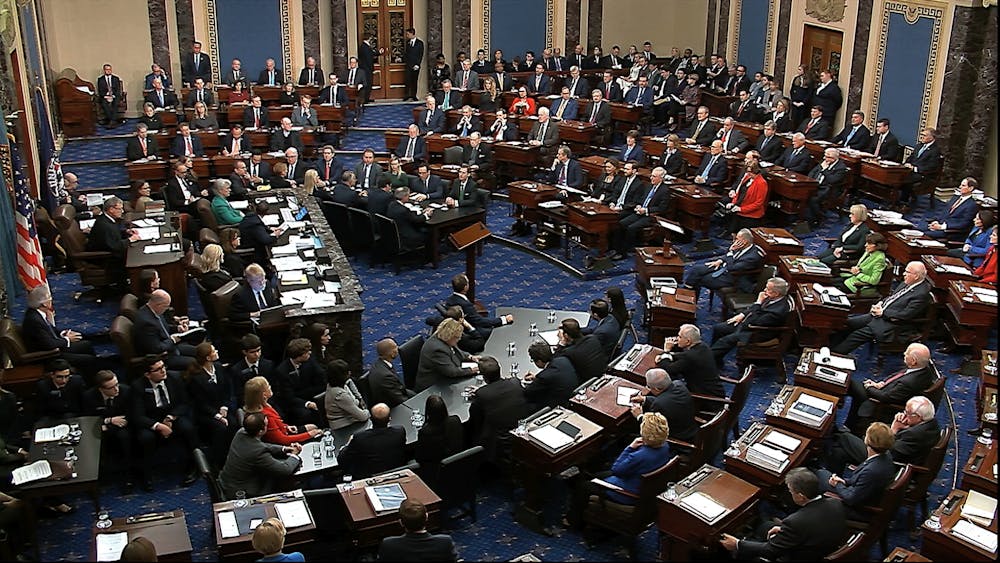
Donald Trump has been impeached twice, but has not convicted. Senate Television via AP

25th Amendment

The Constitution’s 25th Amendment provides a way for high-level officials to remove a president from office. It was ratified in 1967 in the wake of the 1963 assassination of John F. Kennedy – who was succeeded by Lyndon Johnson, who had already had one heart attack – as well as delayed disclosure of health problems experienced by Kennedy’s predecessor, Dwight Eisenhower.

The 25th Amendment provides detailed procedures on what happens if a president resigns, dies in office, has a temporary disability or is no longer fit for office.

It has never been invoked against a president’s will, and has been used only to temporarily transfer power, such as when a president is undergoing a medical procedure requiring anesthesia.

Section 4 of the 25th Amendment authorizes high-level officials – either the vice president and a majority of the Cabinet or another body designated by Congress – to remove a president from office without his consent when he is “unable to discharge the powers and duties of his office.” Congress has yet to designate an alternative body, and scholars disagree over the role, if any, of acting Cabinet officials.

The high-level officials simply send a written declaration to the president pro tempore of the Senate – the longest-serving senator from the majority party – and the speaker of the House of Representatives, stating that the president is unable to discharge the powers and duties of his office. The vice president immediately assumes the powers and duties of the president.

The president, however, can fight back. He or she can seek to resume their powers by informing congressional leadership in writing that they are fit for office and no disability exists. But the president doesn’t get the presidency back just by saying this.

The high-level officials originally questioning the president’s fitness then have four days to decide whether they disagree with the president. If they notify congressional leadership that they disagree, the vice president retains control and Congress has 48 hours to convene to discuss the issue. Congress has 21 days to debate and vote on whether the president is unfit or unable to resume his powers.

The vice president remains the acting president until Congress votes or the 21-day period lapses. A two-thirds majority vote by members of both houses of Congress is required to remove the president from office. If that vote fails or does not happen within the 21-day period, the president resumes his powers immediately.

The 25th Amendment to the U.S. Constitution. National Archives via AP

The case for impeachment

Article II of the Constitution authorizes Congress to impeach and remove the president – and other federal officials – from office for “Treason, Bribery, or other high Crimes and Misdemeanors.” The founders included this provision as a tool to punish a president for misconduct and abuses of power. It’s one of the many ways that Congress could keep the president in check, if it chose to.

Impeachment proceedings begin in the House of Representatives. A member of the House files a resolution for impeachment. The resolution goes to the House Judiciary Committee, which usually holds a hearing to evaluate the resolution. If the House Judiciary Committee thinks impeachment is proper, its members draft and vote on articles of impeachment. Once the House Judiciary Committee approves articles of impeachment, they go to the full House for a vote.

If the House of Representatives impeaches a president or another official, the action then moves to the Senate. Under the Constitution’s Article I, the Senate has the responsibility for determining whether to remove the person from office. Normally, the Senate holds a trial, but it controls its procedures and can limit the process if it wants.

Ultimately, the Senate votes on whether to remove the president – which requires a two-thirds majority, or 67 senators. To date, the Senate has never voted to remove a president from office, although it almost did in 1868, when President Andrew Johnson escaped removal from office by one vote.

The Senate also has the power to disqualify a public official from holding public office in the future. If the person is convicted and removed from office, only then can senators vote on whether to permanently disqualify that person from ever again holding federal office. Members of Congress proposing the impeachment of Trump have promised to include a provision to do so. A simple majority vote is all that’s required then.

This is an updated version of an article originally published on Jan. 9, 2021.

ref. When a president is unfit for office, here’s what the Constitution says can happen – https://theconversation.com/when-a-president-is-unfit-for-office-heres-what-the-constitution-says-can-happen-280120

Evening Report: https://eveningreport.nz/2026/04/09/when-a-president-is-unfit-for-office-heres-what-the-constitution-says-can-happen-280120/

Gas-focused new entrant good news for NZ’s petroleum sector

Source: New Zealand Government

The sale of Matahio Energy’s New Zealand assets to independent oil and gas explorer and producer Sunda Energy is good news for New Zealand’s petroleum sector and a further signal of growing international interest in the opportunities on offer, says Resources Minister Shane Jones.

The companies have today announced a sale and purchase agreement covering Matahio’s New Zealand assets, which include well‑established onshore oil and gas operations in Taranaki – the producing Cheal, Cheal East and Sidewinder fields – as well as the Puka exploration permit.

“This transaction is the kind of signal we want to see as we work to reinvigorate New Zealand’s petroleum sector,” Mr Jones says. 

“It shows there is still strong international interest in investing here, backing proven assets and bringing new capital, capability and ambition into our system.

“More than ever, a secure and productive petroleum sector matters for New Zealand’s economic resilience and energy security. The entry of a gas‑focused explorer and producer like Sunda Energy helps strengthen that foundation and supports regions like Taranaki that have powered the sector for decades.

“The assets involved are established operations with existing infrastructure and a skilled local workforce. That’s exactly where we want to see renewed investment and activity, particularly in the short-term to bolster our dwindling gas supply.”

Sunda Energy, a listed London Stock Exchange company, will now seek change of control approvals from regulator New Zealand Petroleum and Minerals for affected permits. 

“If those processes are satisfied, I see this as a positive signal of continued international confidence in New Zealand’s oil and gas sector and in the future of onshore energy development in regions like Taranaki,” Mr Jones says.

MIL OSI

LiveNews: https://livenews.co.nz/2026/04/09/gas-focused-new-entrant-good-news-for-nzs-petroleum-sector/

Ballet dancers ‘go wild’ for Predator Free 2050  

Source: NZ Department of Conservation

We’re launching a new Predator Free 2050 and Always Be Naturing video – Predator Free 2050: Let Nature Go Wild – that features the Royal New Zealand Ballet dancing in native species costumes. Check out korimako twirls, kiwi leaps, spider spins, and learn more about this playful campaign…

Finally, the day has come where bird nerds, professional dancers, and a film crew unite for nature!

[embedded content]

Introducing a new Predator Free 2050 video – Let Nature Go Wild 

The Royal New Zealand Ballet recently volunteered their time, native species costumes, and exceptional talent to help us spread the Predator Free 2050 message.

This 30 second playful and funny video features a young woman daydreaming in a park while listening to dance music. She spots a community trapper and it inspires her to envisage a predator-free future.

The tagline of the campaign is “Predator Free 2050: Let nature go wild”, with the core message of “when predators are gone, nature throws a party”.

Sharing our predator-free vision with new audiences

We’re launching this video and digital campaign to grow awareness for those who haven’t heard of Predator Free 2050 before.

We want to achieve our goal of having 1 in 2 New Zealanders be aware of our nationwide goal to eradicate introduced predators so that nature and people can thrive.

Introduced predators are one of the key threats to native species.

But many Kiwis don’t realise how bad the situation is – 80% think nature is in good shape.

OLYMPUS DIGITAL CAMERA

” data-large-file=”https://i0.wp.com/blog.doc.govt.nz/wp-content/uploads/2026/04/43-curious-kea-Kepler-Track-%C2%A9Lyn-Trewella_O2-e1775625484954.jpg?fit=580%2C367&ssl=1″ src=”https://i0.wp.com/blog.doc.govt.nz/wp-content/uploads/2026/04/43-curious-kea-Kepler-Track-%C2%A9Lyn-Trewella_O2-e1775625484954-1024×648.jpg?resize=580%2C367&ssl=1″ alt=”” class=”wp-image-59655″ srcset=”https://i0.wp.com/blog.doc.govt.nz/wp-content/uploads/2026/04/43-curious-kea-Kepler-Track-%C2%A9Lyn-Trewella_O2-e1775625484954.jpg?resize=1024%2C648&ssl=1 1024w, https://i0.wp.com/blog.doc.govt.nz/wp-content/uploads/2026/04/43-curious-kea-Kepler-Track-%C2%A9Lyn-Trewella_O2-e1775625484954.jpg?resize=300%2C190&ssl=1 300w, https://i0.wp.com/blog.doc.govt.nz/wp-content/uploads/2026/04/43-curious-kea-Kepler-Track-%C2%A9Lyn-Trewella_O2-e1775625484954.jpg?resize=768%2C486&ssl=1 768w, https://i0.wp.com/blog.doc.govt.nz/wp-content/uploads/2026/04/43-curious-kea-Kepler-Track-%C2%A9Lyn-Trewella_O2-e1775625484954.jpg?resize=1536%2C973&ssl=1 1536w, https://i0.wp.com/blog.doc.govt.nz/wp-content/uploads/2026/04/43-curious-kea-Kepler-Track-%C2%A9Lyn-Trewella_O2-e1775625484954.jpg?resize=2048%2C1297&ssl=1 2048w, https://i0.wp.com/blog.doc.govt.nz/wp-content/uploads/2026/04/43-curious-kea-Kepler-Track-%C2%A9Lyn-Trewella_O2-e1775625484954.jpg?w=1160&ssl=1 1160w, https://i0.wp.com/blog.doc.govt.nz/wp-content/uploads/2026/04/43-curious-kea-Kepler-Track-%C2%A9Lyn-Trewella_O2-e1775625484954.jpg?w=1740&ssl=1 1740w” sizes=”auto, (max-width: 580px) 100vw, 580px”/>

Curious kea. : Lyn Trewella ©

Why we need Predator Free 2050 

Many of our native species are found nowhere else in the world. They evolved for millions of years without mammal predators or defences against them. 

We’ve got cheeky parrots, ancient frogs, army-crawling bats and ground foraging birds. But many of them are living on the edge of extinction due to threats like introduced predators.

Pekapeka/short-tailed bat. : Belle Gwilliam | DOC

Rats, possums, feral cats and mustelids (stoats, ferrets, weasels) kill an estimated 25 million native birds each year.

Predator Free 2050 aims to remove these harmful predators once and for all so that our unique plants and animals can thrive alongside us.

And everyone has a role to play.  

You can get involved in the predator free movement by learning to trap, visiting your local sanctuary, or donating a trap to a predator-free group.

Get trapping!

Special thanks to the Royal New Zealand Ballet and Zealandia

We also wanted to share a special thank you to the ballet for supporting the Let Nature Go Wild campaign by choreographing native species dance moves and sharing their talent with us. We also wanted to thank Zealandia for offering their predator-free sanctuary as the filming location.

Visit Zealandia. : Maddy Brennan | DOC

MIL OSI

LiveNews: https://livenews.co.nz/2026/04/09/ballet-dancers-go-wild-for-predator-free-2050/

Pharmac to fund two new combination treatments, and widen access to another, for people with a type of blood cancer

Source: PHARMAC

From 1 May 2026, people living with chronic lymphocytic leukaemia (CLL) will be able to access two new funded treatment options, alongside wider access to another – changes that could mean fewer hospital visits and more time spent living their lives.

The decision includes:

  • funding venetoclax with ibrutinib and venetoclax with obinutuzumab as first treatment options
  • widening access to ibrutinib on its own as a second-line treatment
  • changing the access criteria so that people who have been self‑funding venetoclax or ibrutinib can switch to the funded combination treatment

“This decision gives people with CLL more options that can fit better around their lives,” says Pharmac’s Manager of Pharmaceutical Funding, Claire Pouwels. “For some people, that could mean fewer hospital visits and less time planning their lives around .”

Venetoclax, ibrutinib and obinutuzumab are already used to treat blood cancers, but these combinations are not currently funded together as a first treatment option for CLL. The medicines work in different and complementary ways to target CLL cells, and evidence suggests the combinations can help people achieve longer periods of remission while avoiding traditional chemotherapy for many people.

Importantly, venetoclax and ibrutinib are oral medicines that people can take at home, rather than needing regular hospital infusions.

“For many people, this can mean fewer hospital visits, less time spent at appointments, and more flexibility to fit treatment around everyday life,” says Pouwels. “For the health system, wider use of these combination treatments is expected to reduce pressure on infusion services, with an estimated 3,700 infusion hours saved each year.”

CLL is a slow‑growing blood cancer. While it can’t be cured, many people can live well for long periods with the right treatment. Pharmac estimates around 110 people each year will benefit from the new combination treatments, and around 30 people each year will benefit from widened access to ibrutinib.

The decision follows consultation with people with CLL, their families, clinicians, and consumer advocacy groups.

“Most people supported the decision,” says Pouwels. “People told us these options could mean more time living their lives and less time planning around treatment, travel, and hospital visits.

“aren’t suitable. This change wasn’t part of the original proposal.”

“While we weren’t able to make every change suggested, we listened carefully,” says Pouwels. “The feedback shaped this decision and will continue to inform our future work.” 

MIL OSI

LiveNews: https://livenews.co.nz/2026/04/09/pharmac-to-fund-two-new-combination-treatments-and-widen-access-to-another-for-people-with-a-type-of-blood-cancer/

Sequel to The Handmaid’s Tale arrives with eerie timing

Source: Radio New Zealand

In the halls of Aunt Lydia’s premarital preparatory academy, young teens Agnes and Daisy will form a bond that will up-end their past, present and future.

That’s the premise of the new television series The Testaments, based on Canadian author Margaret Atwood‘s novel of the same name, a sequel to The Handmaid’s Tale.

While The Handmaid’s Tale was about the totalitarian regime of Gilead, which stripped women of their rights during a global fertility crisis, the sequel focuses on the young women being groomed for marriage in Gilead at the elite preparatory school.

Shechinah Mpumlwana, Rowan Blanchard, Birva Pandya, Mattea Conforti, Chase Infiniti and Isolde Ardies in The Testaments.

Supplied / Disney+

LiveNews: https://nz.mil-osi.com/2026/04/09/sequel-to-the-handmaids-tale-arrives-with-eerie-timing/

Reserve Bank adamant inflation spike will be brought under control

Source: Radio New Zealand

Reserve Bank governor Anna Breman. (File photo) RNZ / Supplied

Reserve Bank governor Anna Breman is adamant the inflation spike caused by the Middle East conflict will be brought under control and back into the target zone, but says businesses and households need to play their part.

The central bank has kept the official cash rate (OCR) unchanged at 2.25 percent, but forecast inflation to peak at 4.2 percent in the June quarter while economic growth would be dampened

Breman told Morning Report, the key issue was how long the conflict would last and how soon prices started to retreat, which would determine the RBNZ’s policy moves.

“If we see that oil prices and then fuel prices and fertiliser prices actually come down… that means this is something that will pass relatively quickly and we don’t see a long lasting effect on inflation. Our mandate is medium term inflation.

“So what we’re looking for is this something that is going to get embedded into inflation expectations and inflation over the medium term or will it pass relatively quickly and households can look forward to inflation falling again.”

But Breman said the RBNZ was ready to act if there were signs that higher inflation was getting embedded in the economy, with businesses holding on to price increases and households looking to boost wages to counter cost of living pressures.

She said it was an assurance not a warning to the public.

“It’s just assuring people that we are very focussed on making sure inflation falls back so that households know that over the medium term inflation will fall and their purchasing power will come back.

“Firms can assume that over the medium term inflation will be lower and stable again and they can hold back on price hikes.”

She said a rate rise would likely lower demand within the economy and hopefully act as a brake on firms raising prices and help to drive inflation lower.

Breman said households needed to take a medium term view and to assume that inflation would be low and stable again, while businesses needed, where possibly to make sure any fuel related price hikes were only temporary.

The RBNZ’s next monetary policy statement with full economic forecasts was due at the end of May. Financial markets were betting on at least two OCR rises by the end of the year, starting in September.

Sign up for Ngā Pitopito Kōrero, a daily newsletter curated by our editors and delivered straight to your inbox every weekday.

– Published by EveningReport.nz and AsiaPacificReport.nz, see: MIL OSI in partnership with Radio New Zealand

LiveNews: https://nz.mil-osi.com/2026/04/09/reserve-bank-adamant-inflation-spike-will-be-brought-under-control/

All Whites captain Chris Wood returns to Nottingham Forest squad

Source: Radio New Zealand

Chris Wood is available for Nottingham Forest’s next game tomorrow. It’s great news for All Whites fans too. Photosport

All Whites striker Chris Wood has returned to the Nottingham Forest squad, ending a six-month injury lay-off.

In what is a boost for [https://www.rnz.co.nz/news/sport/590364/chris-wood-closing-on-premier-league-return-for-nottingham-forest the All Whites ahead of their FIFA World Cup mid-year campaign, Wood has been declared available for the first leg of Forest’s Europa League quarterfinal against Porto tomorrow morning NZT.

Thirty-four year-old Wood was training with the team in Porto, Forest manager Vitor Pereira said.

“He is working with us, we need to manage him a little bit physically but he has travelled. It means he is available to be in the game tomorrow.

“He is an experienced player, he scores goals and it’s important to be ready for the team in this moment because we face a lot of challenges.”

Forest had been on a downhill skid since Wood, who scored a career-best 20 goals for them in the Premier League last season, was injured. He hadn’t played at top-level since injuring a knee during a league match against Chelsea in mid-October. He had surgery in December.

He returns with Forest in a fight to stay in the Premier League. They were three points above the relegation zone with seven matches remaining.

Wood had played twice for Forest B on his recovery trail and scored a goal in their win over Newcastle under-21 last month.

Pereira said the priority was to win against Porto.

“The Europa League is very important and it is very important to keep the club in the Premier League.

“I need to find the balance between the two competitions. This is the only way; the only way to compete tomorrow and again in three days’ time against Aston Villa.

“The players have to feel they are important and have the qualities and conditions to compete and to help the club in this moment.”

Sign up for Ngā Pitopito Kōrero, a daily newsletter curated by our editors and delivered straight to your inbox every weekday.

– Published by EveningReport.nz and AsiaPacificReport.nz, see: MIL OSI in partnership with Radio New Zealand

LiveNews: https://nz.mil-osi.com/2026/04/09/all-whites-captain-chris-wood-returns-to-nottingham-forest-squad/

Post-mortem to be carried out as investigation into ‘unexplained’ Christchurch death continues

Source: Radio New Zealand

Police were investigating the death. (File photo) RNZ / Nate McKinnon

A post-mortem would be carried out on Thursday after an “unexplained” death at a Christchurch property.

Police were called to house on Main North Rd in Papanui shortly after 2.30pm on Wednesday.

A person was found in a critical condition, but died at the scene.

A scene guard remained place on Thursday, police said, and the public could see more officers in the area while the investigation continued.

Sign up for Ngā Pitopito Kōrero, a daily newsletter curated by our editors and delivered straight to your inbox every weekday.

– Published by EveningReport.nz and AsiaPacificReport.nz, see: MIL OSI in partnership with Radio New Zealand

LiveNews: https://nz.mil-osi.com/2026/04/09/post-mortem-to-be-carried-out-as-investigation-into-unexplained-christchurch-death-continues/

Plans for new basement venue at rebuilt historic St James Theatre

Source: Radio New Zealand

The renovation of St James Theatre in February this year. RNZ / Marika Khabazi

There are plans for a new basement venue at Auckland’s St James theatre after builders unearthed extra space during renovations.

The heritage theatre which opened in 1928 has been closed since a fire in 2007.

Work is underway to re-open the theatre for its 100th anniversary in 2028.

Steve Bielby of Auckland Notable Properties Trust, said the new basement area would host everything from live music to smaller-scale performances.

He explained how the proposal for a new basement venue came about.

“The building had existing basements in the north and in the south and part of the fire code is that we had to link those two basements so that in a fire you could escape through more than one way.”

Steve Bielby says the main structural work on the theatre is just starting to commence. RNZ / Marika Khabazi

When the costings were done it was found it would be cheaper to remove the material completely to create a massive basement in the theatre rather than trying to create a tunnel, he said.

That had been done and “it’s created this amazing venue space,” he said.

“We’re designing it for up to 1200 people and that would be in a sort of concert-type mode but it could be used for everything from rehearsals to corporate events to bands – it’s a black box essentially, an empty black box, so everything comes in and it can be used for anything.”

Watch: Perlina Lau from Culture 101 spoke to Steve Bielby about the St James renovations in February:

He said it had been a long process to get this far.

“It’s been sort of an 11-year restoration journey, it started at advocacy and now we’re into physical works, but it’s also a little about urban regeneration in that area, you know mid towns have a tough time and it’s great to see that Aotea arts quarter hopefully come to life.”

But the restoration was going well and all the asbestos had been removed from the building and the new electrical system was in, he said.

“The main structural work is just starting to commence, so all the scaffolding’s going up around the building at the moment.”

Given the building’s age there were a lot of challenges in terms of restoring it, he said.

“A lot of that fine arts stuff is outside the normal construction envelope. But I guess they’re challenges but they’re also the exciting bit because you’ve got to find ways to solve them.”

Adding the basement venue was cost neutral but it removed some risks, he said.

“So building a tunnel’s actually quite challenging, where as just excavating down and removing the material is a lot more of a calculable exercise.”

He said they were on track and “2028 we’ll open those doors”.

Sign up for Ngā Pitopito Kōrero, a daily newsletter curated by our editors and delivered straight to your inbox every weekday.

– Published by EveningReport.nz and AsiaPacificReport.nz, see: MIL OSI in partnership with Radio New Zealand

LiveNews: https://nz.mil-osi.com/2026/04/09/plans-for-new-basement-venue-at-rebuilt-historic-st-james-theatre/

Explainer: What is a tropical cyclone and what do the categories mean?

Source: Radio New Zealand

The track of Tropical Cyclone Vaianu as it moves south towards New Zealand. Screenshot / Zoom Earth

Tropical Cyclone Vaianu is making its way south from Fiji and appears likely to impact New Zealand sometime on Sunday.

It’s currently tracking as a category 2 storm with winds around 100km/h.

What does it take to make a cyclone, and what do the categories mean?

Tropical cyclone structure Supplied / MetService

What is a tropical cyclone?

Tropical cyclones usually form over large bodies of warm water – at least 26.5C, according to Australia’s Bureau of Meteorology. That heat fuels the developing storm.

Earth Sciences New Zealand (formerly NIWA) describes them as characterised by a low pressure centre, strong winds, and thunderstorms that produce heavy rain.

Those low pressure systems cause warm, moist air to rise upwards.

Think of them as a swirling oceanic engine, taking energy from the warm waters and generating enormous amount of energy.

They tend to move polewards – and can last about a week.

The tropical cyclone season in the Southern Hemisphere typically lasts from November to the end of April. An average of 10 tropical cyclones form in the South Pacific each season, with usually one of them affecting New Zealand in some way.

However, director of the Na Draki Weather Service in Fiji, Neville Koop, told the ABC this week that there is no climate normal anymore, and the cyclone season in the South Pacific is quite likely to continue well into May.

And of course, foremost in everyone’s mind with the current cyclone warnings is Cyclone Gabrielle in February 2023, which killed 11 people in New Zealand and was the costliest cyclone on record in the Southern Hemisphere, causing billions of dollars in damage.

For more, check out this video from Australia’s BOM:

[embedded content]

Are they still tropical cyclones when they hit New Zealand?

Typically, by the time a tropical cyclone reaches New Zealand waters, it actually becomes an ex-tropical cyclone due to the cooler waters, MetService says on its website.

“Re-classification as an ex-tropical cyclone does not necessarily mean the system has weakened, but rather that it has transformed into a completely different type of weather system,” MetService writes.

“Many of New Zealand’s most severe and impactful storms have been ex-tropical cyclones.”

“Although these systems will no longer be classified as tropical cyclones, we will often still refer to them by their given name e.g. ‘Cyclone Gita’ for communication purposes,” the forecaster notes.

Cyclone categories Supplied / MetService

What do the categories mean?

Under the scale we use, they range from category 1 to 5.

Category one tropical cyclones have sustained wind speeds from about 63 to 88 km/h, while category five having sustained winds surpassing 200 km/h.

Maximum gusts can be even stronger than that – theoretically 3-second gusts of over 280 km/h for category 5 cyclones.

Still, sometimes weaker tropical cyclones inflict more damage if they are slow moving or “stall out” over an island.

What’s the difference between tropical cyclones, hurricanes and typhoons?

They’re actually all the same, but have different names depending on where they form.

In the Atlantic, they are called hurricanes; in the Western Pacific, they are called typhoons; and in the Southwest Pacific, toward Australia and Indian Ocean, they’re called tropical cyclones.

How are cyclones named, anyway?

The naming list for cyclones in our region comes from Fiji’s Meteorological Service. They designated Vaianu as this storm’s name on Monday.

The Fiji Meteorological Service uses a list of names compiled by weather bureaus across the region, including Samoa, Cook Islands and Vanuatu, the ABC has reported.

“If there was a tropical cyclone to happen in the Cook Islands or Samoa, they shall rely on Fiji to provide the name,” Misaeli Funaki, Director of the Fiji Meteorological Service, told the ABC.

If a storm causes a great deal of damage and/or death, the name is retired – as is the case with Cyclone Gabrielle or Hurricane Katrina in the US.

Sign up for Ngā Pitopito Kōrero, a daily newsletter curated by our editors and delivered straight to your inbox every weekday.

– Published by EveningReport.nz and AsiaPacificReport.nz, see: MIL OSI in partnership with Radio New Zealand

LiveNews: https://nz.mil-osi.com/2026/04/09/explainer-what-is-a-tropical-cyclone-and-what-do-the-categories-mean/

Scooter thief rolls into court

Source: New Zealand Police

An offender’s attempt to steal a scooter in Mt Wellington this morning has failed to gain momentum.

Auckland City East Area Response Manager, Senior Sergeant Tony Ngau Chun says around 12.20am Police received a report of a man seen entering a property on Mount Wellington Highway.

“This man approached a scooter parked within the property, and began to push it towards the road,” he says.

“He has initially moved the Honda scooter to the end of the driveway for a few minutes but then came back and pushed it away again.”

Police were alerted and were quickly in the area.

“Upon hearing the sirens from Police cars, the alleged offender has become spooked and dumped the scooter in a bush a short distance down the road,” Senior Sergeant Ngau Chun says.

“He has then fled on foot towards Waipuna Road.”

CCTV cameras in the area located the male and were able to guide a dog handler to his location.

“A Police dog team then found the alleged offender attempting to hide inside an address on Waipuna Road,” Senior Sergeant Ngau Chun says.

“This was a great result, offending like this is not acceptable and we are pleased he will face the consequences of his actions in court.”

A 40-year-old man will appear in the Auckland District Court today charged with burglary by night and possessing instruments for conversion.

ENDS.

Amanda Wieneke/NZ Police

MIL OSI

LiveNews: https://livenews.co.nz/2026/04/09/scooter-thief-rolls-into-court/