Israeli threats to occupy or annex south Lebanon dust off a decades-old playbook

Source: The Conversation (Au and NZ) – By Mireille Rebeiz, Chair of Middle East Studies, Dickinson College

A chorus of hawkish Israeli politicians is urging the country’s military to intensify its weekslong ground and air campaign against Hezbollah and pave the way for a more permanent presence in the country’s south.

On April 5, 18 Israeli lawmakers pressed the government of Prime Minister Benjamin Netanyahu to occupy and fully control southern Lebanon up to the Litani River and “evacuate” the Lebanese population there. It followed an earlier call from Israel’s Finance Minister Bezalel Yoel Smotrich, a powerful, extremist voice in the ruling coalition for the outright annexation of southern Lebanon.

Alongside such voices, Israel’s campaign shows no signs of slowing down. That’s despite a two-week ceasefire announced by President Donald Trump on April 7 that paused the U.S. and Israel’s war in Iran and that, according to mediators, was meant to apply to Lebanon as well.

Those calling for an enlarged Israel that includes parts of Lebanon tend to shroud their ideology in religious rhetoric. Yet the view is hardly isolated to the hawkish, religious far-right. It is also nothing new. As a scholar who specializes in Middle East studies, I believe that the policy of occupying and annexing south Lebanon up to the Litani River has long held influence among parts of the Israeli government and dates back to influential Zionist leaders – secular and religious alike – before Israeli independence in 1948.

History suggests were that goal to be pursued in the course of Israel’s military campaign now, however, it would only destabilize Lebanon further, encourage regional turmoil and do little to guarantee Israel’s safety.

Early Zionism and south Lebanon

In 1918, David Ben-Gurion – an early Zionist leader and widely regarded as Israel’s founding father – argued that Israel’s natural borders included parts of modern-day Syria, Egypt, the Arabian Gulf, and should also extend north to the Litani River in southern Lebanon. Lying 20 miles north of Lebanon’s southern border, the river is about 108 miles long and serves as Lebanon’s main source of water.

This position was reaffirmed again in 1919 when a delegation of the Zionist Organization, led by Chaim Weizmann, presented the case of a Jewish homeland in Palestine at the Paris Peace Conference that concluded World War I. The organization argued that such a state should start from the southern city of Saida and include the Litani River.

Instead, Great Britain and France were granted control of administering the formerly Ottoman-ruled land of Greater Syria and Palestine, which were put under an international legal charter called the mandate system.

Lebanon’s current borders date back to Sept. 1, 1920, when the French mandate recognized the nation’s territory stretching south to the cities of Saida and Tyre and below the Litani River to the boundaries of British-administered Mandatory Palestine.

U.N. peacekeepers drive a tank over a bridge spanning the Litani River on their way to a village in south Lebanon in 2006. AP Photo/Francois Mori

Land borders dispute since 1948

The creation of the state of Israel in 1948, which led to the mass displacement of over 750,000 Palestinians and a subsequent Arab-Israeli war in 1948, led to a further shifting of borders in the region. In Lebanon, Israel occupied and annexed seven southern villages.

In 1949, under the aegis of the United Nations, Israel and Lebanon agreed to an Armistice Demarcation Line based on the 1923 Palestine-Lebanon boundaries set by the French and British colonial powers.

Though not a mutual agreement on statehood, the armistice was nonetheless a recognition of land borders. While never officially revoked, the armistice was, in practice, superseded by a borders shift during the Six Day War in 1967. That’s when Israel stopped recognizing all armistice agreements it had signed in 1949, including with Lebanon, even though the country wasn’t a party to the 1967 war.

In 1978, following a series of attacks organized by Palestinian fighters from Lebanese soil, Israel invaded Lebanon and occupied its south in what was known as Operation Litani. Israeli troops withdrew more than two decades later on May 25, 2000.

Thereafter, the U.N. established the Blue Line – a so-called withdrawal line to separate the two countries, absent mutually recognized borders – and put in the buffer zone a U.N. peacekeeping mission.

War for natural resources

But the border question was never settled, and the discovery of the Leviathan field in 2010 – the largest natural gas reservoir in the Mediterranean Sea – added a wrinkle in the form of a potential maritime dispute.

In October 2022, Israel and Lebanon signed a U.S.-brokered maritime border agreement, a move some analysts interpreted as the beginning of normalizing relations between the two countries.

However, the long-running land dispute has never been settled.

For the most part, the vocal far-right in Israel calling for expansion of the country’s border to the Litani River dress their claims in religious language – and what it might mean for security for Israel’s northern residents. But extending to the Litani would also provide a potential new source of water for a country with limited natural water sources and growing demand.

Lebanon’s fragile sovereignty

The lack of resolved borders and Israel’s periodic incursions into southern Lebanon have predictably meant that Lebanon has struggled to assert sovereignty over its own territory.

The 1985 birth of Hezbollah, the Iranian-backed Shiite militia, following repeated Israeli invasions and amid the Lebanese civil war, only compounded matters.

An Israeli convoy travels south of Saida, Lebanon, in 1985. AP Photo/Shedid

Since then, Hezbollah has dominated the military scene inside Lebanon and repeatedly battled with Israel.

Tit-for-tat Hezbollah-Israel fighting following the Oct. 7, 2023, attacks escalated into a full-scale war in September 2024 in which over 3,000 Lebanese civilians were killed, 14,000 injured, and more than 1.2 million residents were displaced.

On Nov. 27, 2024, Israel and Hezbollah agreed to a ceasefire. However, this agreement was beset by mutual violations, including hundreds on the Israeli side.

It was finally derailed by the U.S. and Israeli war in Iran, Hezbollah’s subsequent retaliation, and Israel’s invasion.

Facing the magnitude of the war and the real threat of Israeli occupation, Lebanon banned Hezbollah’s military actions on its soil and expelled the Iranian ambassador from its territory.

But those moves have not satisfied those in Israel intent on full occupation of southern Lebanon.

The security risks of new Lebanon occupation

Including the current operation, Israel has invaded Lebanon seven times in the past 50 years.

Any potential plans for another long-term occupation would face many of the same risks as past endeavors – to both Lebanese and Israeli safety.

For one, Israel’s targeting and displacement of the Shiite community in southern Lebanon is likely to create friction among Lebanon’s various religious sects.

It could also degenerate into another wave of violence outside Lebanon. The internal destabilization of Lebanon has rarely been contained within the country, and in the past it has spread to neighboring countries – something that Israel’s northern residents and security officials are all too aware of.

Second, following yearslong conflict in Gaza, operations in Syria and now war with Iran, Israel’s military may be too stretched to achieve full occupation, even if that were the plan. Addressing the Israeli security cabinet, Lt. Gen. Eyal Zamir said the “IDF is on the verge of collapse.”

There is also a sizable Israeli opposition to war in Lebanon and war fatigue within Israeli society.

Neither of those things may be enough to stop a long-term Israeli presence in south Lebanon, but it may help explain the ongoing narrative shifts from Israeli officials that in recent weeks have gone from creating a buffer zone in south Lebanon to full-scale occupation and control up to the Litani River.

There is no doubt that the fate of Hezbollah depends largely on the longer-term settlement of the Iran war and its effect on the associated operation in Lebanon’s south.

But Israel faces headwinds not favorable to full occupation: dwindling international support, internal tensions, entanglements in war across the region and potential violence inside Lebanon. Moreover, history shows that it is a risky endeavor – with high potential to backfire.

ref. Israeli threats to occupy or annex south Lebanon dust off a decades-old playbook – https://theconversation.com/israeli-threats-to-occupy-or-annex-south-lebanon-dust-off-a-decades-old-playbook-279704

Evening Report: https://eveningreport.nz/2026/04/09/israeli-threats-to-occupy-or-annex-south-lebanon-dust-off-a-decades-old-playbook-279704/
When a president is unfit for office, here’s what the Constitution says can happen

Source: The Conversation (Au and NZ) – By Kirsten Matoy Carlson, Professor of Law and Adjunct Professor of Political Science, Wayne State University

Bipartisan calls for President Donald Trump’s removal from office increased on April 7, 2026, after he issued threats to destroy “a whole civilization” if Iran refuses to reopen the Strait of Hormuz.

These calls have come from across the political spectrum, from Democratic Reps. Alexandria Ocasio-Cortez of New York and Melanie Stansbury of New Mexico to former Rep. Marjorie Taylor Greene and right-wing pundit Alex Jones. Unlikely allies seem to agree that the president has gone too far and needs to be reined in.

Their concerns have emerged as Iran has walked away from talks to end the war and Trump’s language suggests that he plans to escalate it by destroying the country’s power plants and bridges.

Concerns over Trump’s fitness for office have grown in recent weeks as his commentary has become more erratic.

If lawmakers do attempt to remove Trump from office, here’s what would happen:

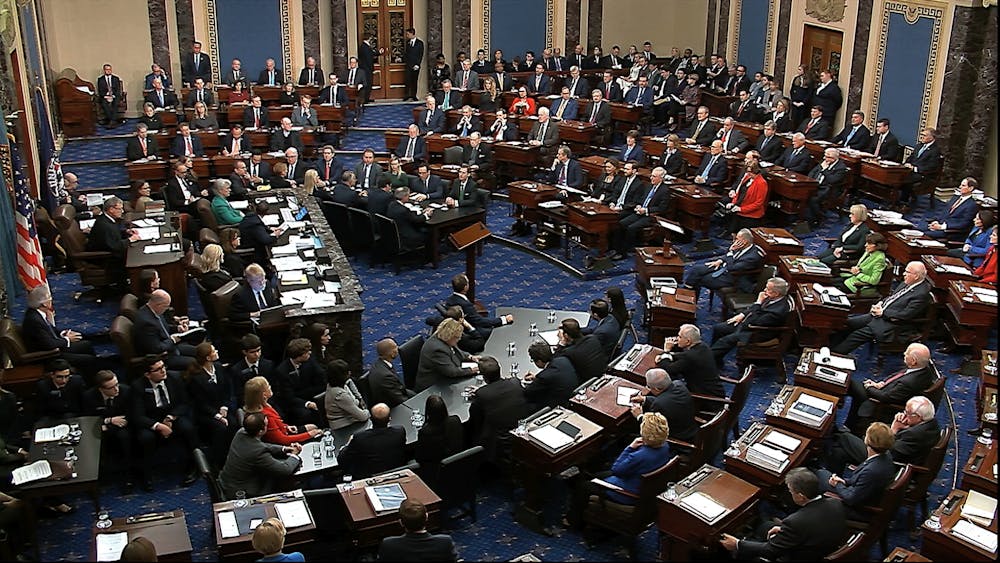
Donald Trump has been impeached twice, but has not convicted. Senate Television via AP

25th Amendment

The Constitution’s 25th Amendment provides a way for high-level officials to remove a president from office. It was ratified in 1967 in the wake of the 1963 assassination of John F. Kennedy – who was succeeded by Lyndon Johnson, who had already had one heart attack – as well as delayed disclosure of health problems experienced by Kennedy’s predecessor, Dwight Eisenhower.

The 25th Amendment provides detailed procedures on what happens if a president resigns, dies in office, has a temporary disability or is no longer fit for office.

It has never been invoked against a president’s will, and has been used only to temporarily transfer power, such as when a president is undergoing a medical procedure requiring anesthesia.

Section 4 of the 25th Amendment authorizes high-level officials – either the vice president and a majority of the Cabinet or another body designated by Congress – to remove a president from office without his consent when he is “unable to discharge the powers and duties of his office.” Congress has yet to designate an alternative body, and scholars disagree over the role, if any, of acting Cabinet officials.

The high-level officials simply send a written declaration to the president pro tempore of the Senate – the longest-serving senator from the majority party – and the speaker of the House of Representatives, stating that the president is unable to discharge the powers and duties of his office. The vice president immediately assumes the powers and duties of the president.

The president, however, can fight back. He or she can seek to resume their powers by informing congressional leadership in writing that they are fit for office and no disability exists. But the president doesn’t get the presidency back just by saying this.

The high-level officials originally questioning the president’s fitness then have four days to decide whether they disagree with the president. If they notify congressional leadership that they disagree, the vice president retains control and Congress has 48 hours to convene to discuss the issue. Congress has 21 days to debate and vote on whether the president is unfit or unable to resume his powers.

The vice president remains the acting president until Congress votes or the 21-day period lapses. A two-thirds majority vote by members of both houses of Congress is required to remove the president from office. If that vote fails or does not happen within the 21-day period, the president resumes his powers immediately.

The 25th Amendment to the U.S. Constitution. National Archives via AP

The case for impeachment

Article II of the Constitution authorizes Congress to impeach and remove the president – and other federal officials – from office for “Treason, Bribery, or other high Crimes and Misdemeanors.” The founders included this provision as a tool to punish a president for misconduct and abuses of power. It’s one of the many ways that Congress could keep the president in check, if it chose to.

Impeachment proceedings begin in the House of Representatives. A member of the House files a resolution for impeachment. The resolution goes to the House Judiciary Committee, which usually holds a hearing to evaluate the resolution. If the House Judiciary Committee thinks impeachment is proper, its members draft and vote on articles of impeachment. Once the House Judiciary Committee approves articles of impeachment, they go to the full House for a vote.

If the House of Representatives impeaches a president or another official, the action then moves to the Senate. Under the Constitution’s Article I, the Senate has the responsibility for determining whether to remove the person from office. Normally, the Senate holds a trial, but it controls its procedures and can limit the process if it wants.

Ultimately, the Senate votes on whether to remove the president – which requires a two-thirds majority, or 67 senators. To date, the Senate has never voted to remove a president from office, although it almost did in 1868, when President Andrew Johnson escaped removal from office by one vote.

The Senate also has the power to disqualify a public official from holding public office in the future. If the person is convicted and removed from office, only then can senators vote on whether to permanently disqualify that person from ever again holding federal office. Members of Congress proposing the impeachment of Trump have promised to include a provision to do so. A simple majority vote is all that’s required then.

This is an updated version of an article originally published on Jan. 9, 2021.

ref. When a president is unfit for office, here’s what the Constitution says can happen – https://theconversation.com/when-a-president-is-unfit-for-office-heres-what-the-constitution-says-can-happen-280120

Evening Report: https://eveningreport.nz/2026/04/09/when-a-president-is-unfit-for-office-heres-what-the-constitution-says-can-happen-280120/

Gas-focused new entrant good news for NZ’s petroleum sector

Source: New Zealand Government

The sale of Matahio Energy’s New Zealand assets to independent oil and gas explorer and producer Sunda Energy is good news for New Zealand’s petroleum sector and a further signal of growing international interest in the opportunities on offer, says Resources Minister Shane Jones.

The companies have today announced a sale and purchase agreement covering Matahio’s New Zealand assets, which include well‑established onshore oil and gas operations in Taranaki – the producing Cheal, Cheal East and Sidewinder fields – as well as the Puka exploration permit.

“This transaction is the kind of signal we want to see as we work to reinvigorate New Zealand’s petroleum sector,” Mr Jones says. 

“It shows there is still strong international interest in investing here, backing proven assets and bringing new capital, capability and ambition into our system.

“More than ever, a secure and productive petroleum sector matters for New Zealand’s economic resilience and energy security. The entry of a gas‑focused explorer and producer like Sunda Energy helps strengthen that foundation and supports regions like Taranaki that have powered the sector for decades.

“The assets involved are established operations with existing infrastructure and a skilled local workforce. That’s exactly where we want to see renewed investment and activity, particularly in the short-term to bolster our dwindling gas supply.”

Sunda Energy, a listed London Stock Exchange company, will now seek change of control approvals from regulator New Zealand Petroleum and Minerals for affected permits. 

“If those processes are satisfied, I see this as a positive signal of continued international confidence in New Zealand’s oil and gas sector and in the future of onshore energy development in regions like Taranaki,” Mr Jones says.

MIL OSI

LiveNews: https://livenews.co.nz/2026/04/09/gas-focused-new-entrant-good-news-for-nzs-petroleum-sector/

Ballet dancers ‘go wild’ for Predator Free 2050  

Source: NZ Department of Conservation

We’re launching a new Predator Free 2050 and Always Be Naturing video – Predator Free 2050: Let Nature Go Wild – that features the Royal New Zealand Ballet dancing in native species costumes. Check out korimako twirls, kiwi leaps, spider spins, and learn more about this playful campaign…

Finally, the day has come where bird nerds, professional dancers, and a film crew unite for nature!

[embedded content]

Introducing a new Predator Free 2050 video – Let Nature Go Wild 

The Royal New Zealand Ballet recently volunteered their time, native species costumes, and exceptional talent to help us spread the Predator Free 2050 message.

This 30 second playful and funny video features a young woman daydreaming in a park while listening to dance music. She spots a community trapper and it inspires her to envisage a predator-free future.

The tagline of the campaign is “Predator Free 2050: Let nature go wild”, with the core message of “when predators are gone, nature throws a party”.

Sharing our predator-free vision with new audiences

We’re launching this video and digital campaign to grow awareness for those who haven’t heard of Predator Free 2050 before.

We want to achieve our goal of having 1 in 2 New Zealanders be aware of our nationwide goal to eradicate introduced predators so that nature and people can thrive.

Introduced predators are one of the key threats to native species.

But many Kiwis don’t realise how bad the situation is – 80% think nature is in good shape.

OLYMPUS DIGITAL CAMERA

” data-large-file=”https://i0.wp.com/blog.doc.govt.nz/wp-content/uploads/2026/04/43-curious-kea-Kepler-Track-%C2%A9Lyn-Trewella_O2-e1775625484954.jpg?fit=580%2C367&ssl=1″ src=”https://i0.wp.com/blog.doc.govt.nz/wp-content/uploads/2026/04/43-curious-kea-Kepler-Track-%C2%A9Lyn-Trewella_O2-e1775625484954-1024×648.jpg?resize=580%2C367&ssl=1″ alt=”” class=”wp-image-59655″ srcset=”https://i0.wp.com/blog.doc.govt.nz/wp-content/uploads/2026/04/43-curious-kea-Kepler-Track-%C2%A9Lyn-Trewella_O2-e1775625484954.jpg?resize=1024%2C648&ssl=1 1024w, https://i0.wp.com/blog.doc.govt.nz/wp-content/uploads/2026/04/43-curious-kea-Kepler-Track-%C2%A9Lyn-Trewella_O2-e1775625484954.jpg?resize=300%2C190&ssl=1 300w, https://i0.wp.com/blog.doc.govt.nz/wp-content/uploads/2026/04/43-curious-kea-Kepler-Track-%C2%A9Lyn-Trewella_O2-e1775625484954.jpg?resize=768%2C486&ssl=1 768w, https://i0.wp.com/blog.doc.govt.nz/wp-content/uploads/2026/04/43-curious-kea-Kepler-Track-%C2%A9Lyn-Trewella_O2-e1775625484954.jpg?resize=1536%2C973&ssl=1 1536w, https://i0.wp.com/blog.doc.govt.nz/wp-content/uploads/2026/04/43-curious-kea-Kepler-Track-%C2%A9Lyn-Trewella_O2-e1775625484954.jpg?resize=2048%2C1297&ssl=1 2048w, https://i0.wp.com/blog.doc.govt.nz/wp-content/uploads/2026/04/43-curious-kea-Kepler-Track-%C2%A9Lyn-Trewella_O2-e1775625484954.jpg?w=1160&ssl=1 1160w, https://i0.wp.com/blog.doc.govt.nz/wp-content/uploads/2026/04/43-curious-kea-Kepler-Track-%C2%A9Lyn-Trewella_O2-e1775625484954.jpg?w=1740&ssl=1 1740w” sizes=”auto, (max-width: 580px) 100vw, 580px”/>

Curious kea. : Lyn Trewella ©

Why we need Predator Free 2050 

Many of our native species are found nowhere else in the world. They evolved for millions of years without mammal predators or defences against them. 

We’ve got cheeky parrots, ancient frogs, army-crawling bats and ground foraging birds. But many of them are living on the edge of extinction due to threats like introduced predators.

Pekapeka/short-tailed bat. : Belle Gwilliam | DOC

Rats, possums, feral cats and mustelids (stoats, ferrets, weasels) kill an estimated 25 million native birds each year.

Predator Free 2050 aims to remove these harmful predators once and for all so that our unique plants and animals can thrive alongside us.

And everyone has a role to play.  

You can get involved in the predator free movement by learning to trap, visiting your local sanctuary, or donating a trap to a predator-free group.

Get trapping!

Special thanks to the Royal New Zealand Ballet and Zealandia

We also wanted to share a special thank you to the ballet for supporting the Let Nature Go Wild campaign by choreographing native species dance moves and sharing their talent with us. We also wanted to thank Zealandia for offering their predator-free sanctuary as the filming location.

Visit Zealandia. : Maddy Brennan | DOC

MIL OSI

LiveNews: https://livenews.co.nz/2026/04/09/ballet-dancers-go-wild-for-predator-free-2050/

Pharmac to fund two new combination treatments, and widen access to another, for people with a type of blood cancer

Source: PHARMAC

From 1 May 2026, people living with chronic lymphocytic leukaemia (CLL) will be able to access two new funded treatment options, alongside wider access to another – changes that could mean fewer hospital visits and more time spent living their lives.

The decision includes:

  • funding venetoclax with ibrutinib and venetoclax with obinutuzumab as first treatment options
  • widening access to ibrutinib on its own as a second-line treatment
  • changing the access criteria so that people who have been self‑funding venetoclax or ibrutinib can switch to the funded combination treatment

“This decision gives people with CLL more options that can fit better around their lives,” says Pharmac’s Manager of Pharmaceutical Funding, Claire Pouwels. “For some people, that could mean fewer hospital visits and less time planning their lives around .”

Venetoclax, ibrutinib and obinutuzumab are already used to treat blood cancers, but these combinations are not currently funded together as a first treatment option for CLL. The medicines work in different and complementary ways to target CLL cells, and evidence suggests the combinations can help people achieve longer periods of remission while avoiding traditional chemotherapy for many people.

Importantly, venetoclax and ibrutinib are oral medicines that people can take at home, rather than needing regular hospital infusions.

“For many people, this can mean fewer hospital visits, less time spent at appointments, and more flexibility to fit treatment around everyday life,” says Pouwels. “For the health system, wider use of these combination treatments is expected to reduce pressure on infusion services, with an estimated 3,700 infusion hours saved each year.”

CLL is a slow‑growing blood cancer. While it can’t be cured, many people can live well for long periods with the right treatment. Pharmac estimates around 110 people each year will benefit from the new combination treatments, and around 30 people each year will benefit from widened access to ibrutinib.

The decision follows consultation with people with CLL, their families, clinicians, and consumer advocacy groups.

“Most people supported the decision,” says Pouwels. “People told us these options could mean more time living their lives and less time planning around treatment, travel, and hospital visits.

“aren’t suitable. This change wasn’t part of the original proposal.”

“While we weren’t able to make every change suggested, we listened carefully,” says Pouwels. “The feedback shaped this decision and will continue to inform our future work.” 

MIL OSI

LiveNews: https://livenews.co.nz/2026/04/09/pharmac-to-fund-two-new-combination-treatments-and-widen-access-to-another-for-people-with-a-type-of-blood-cancer/

Sequel to The Handmaid’s Tale arrives with eerie timing

Source: Radio New Zealand

In the halls of Aunt Lydia’s premarital preparatory academy, young teens Agnes and Daisy will form a bond that will up-end their past, present and future.

That’s the premise of the new television series The Testaments, based on Canadian author Margaret Atwood‘s novel of the same name, a sequel to The Handmaid’s Tale.

While The Handmaid’s Tale was about the totalitarian regime of Gilead, which stripped women of their rights during a global fertility crisis, the sequel focuses on the young women being groomed for marriage in Gilead at the elite preparatory school.

Shechinah Mpumlwana, Rowan Blanchard, Birva Pandya, Mattea Conforti, Chase Infiniti and Isolde Ardies in The Testaments.

Supplied / Disney+

LiveNews: https://nz.mil-osi.com/2026/04/09/sequel-to-the-handmaids-tale-arrives-with-eerie-timing/

Reserve Bank adamant inflation spike will be brought under control

Source: Radio New Zealand

Reserve Bank governor Anna Breman. (File photo) RNZ / Supplied

Reserve Bank governor Anna Breman is adamant the inflation spike caused by the Middle East conflict will be brought under control and back into the target zone, but says businesses and households need to play their part.

The central bank has kept the official cash rate (OCR) unchanged at 2.25 percent, but forecast inflation to peak at 4.2 percent in the June quarter while economic growth would be dampened

Breman told Morning Report, the key issue was how long the conflict would last and how soon prices started to retreat, which would determine the RBNZ’s policy moves.

“If we see that oil prices and then fuel prices and fertiliser prices actually come down… that means this is something that will pass relatively quickly and we don’t see a long lasting effect on inflation. Our mandate is medium term inflation.

“So what we’re looking for is this something that is going to get embedded into inflation expectations and inflation over the medium term or will it pass relatively quickly and households can look forward to inflation falling again.”

But Breman said the RBNZ was ready to act if there were signs that higher inflation was getting embedded in the economy, with businesses holding on to price increases and households looking to boost wages to counter cost of living pressures.

She said it was an assurance not a warning to the public.

“It’s just assuring people that we are very focussed on making sure inflation falls back so that households know that over the medium term inflation will fall and their purchasing power will come back.

“Firms can assume that over the medium term inflation will be lower and stable again and they can hold back on price hikes.”

She said a rate rise would likely lower demand within the economy and hopefully act as a brake on firms raising prices and help to drive inflation lower.

Breman said households needed to take a medium term view and to assume that inflation would be low and stable again, while businesses needed, where possibly to make sure any fuel related price hikes were only temporary.

The RBNZ’s next monetary policy statement with full economic forecasts was due at the end of May. Financial markets were betting on at least two OCR rises by the end of the year, starting in September.

Sign up for Ngā Pitopito Kōrero, a daily newsletter curated by our editors and delivered straight to your inbox every weekday.

– Published by EveningReport.nz and AsiaPacificReport.nz, see: MIL OSI in partnership with Radio New Zealand

LiveNews: https://nz.mil-osi.com/2026/04/09/reserve-bank-adamant-inflation-spike-will-be-brought-under-control/

All Whites captain Chris Wood returns to Nottingham Forest squad

Source: Radio New Zealand

Chris Wood is available for Nottingham Forest’s next game tomorrow. It’s great news for All Whites fans too. Photosport

All Whites striker Chris Wood has returned to the Nottingham Forest squad, ending a six-month injury lay-off.

In what is a boost for [https://www.rnz.co.nz/news/sport/590364/chris-wood-closing-on-premier-league-return-for-nottingham-forest the All Whites ahead of their FIFA World Cup mid-year campaign, Wood has been declared available for the first leg of Forest’s Europa League quarterfinal against Porto tomorrow morning NZT.

Thirty-four year-old Wood was training with the team in Porto, Forest manager Vitor Pereira said.

“He is working with us, we need to manage him a little bit physically but he has travelled. It means he is available to be in the game tomorrow.

“He is an experienced player, he scores goals and it’s important to be ready for the team in this moment because we face a lot of challenges.”

Forest had been on a downhill skid since Wood, who scored a career-best 20 goals for them in the Premier League last season, was injured. He hadn’t played at top-level since injuring a knee during a league match against Chelsea in mid-October. He had surgery in December.

He returns with Forest in a fight to stay in the Premier League. They were three points above the relegation zone with seven matches remaining.

Wood had played twice for Forest B on his recovery trail and scored a goal in their win over Newcastle under-21 last month.

Pereira said the priority was to win against Porto.

“The Europa League is very important and it is very important to keep the club in the Premier League.

“I need to find the balance between the two competitions. This is the only way; the only way to compete tomorrow and again in three days’ time against Aston Villa.

“The players have to feel they are important and have the qualities and conditions to compete and to help the club in this moment.”

Sign up for Ngā Pitopito Kōrero, a daily newsletter curated by our editors and delivered straight to your inbox every weekday.

– Published by EveningReport.nz and AsiaPacificReport.nz, see: MIL OSI in partnership with Radio New Zealand

LiveNews: https://nz.mil-osi.com/2026/04/09/all-whites-captain-chris-wood-returns-to-nottingham-forest-squad/

Post-mortem to be carried out as investigation into ‘unexplained’ Christchurch death continues

Source: Radio New Zealand

Police were investigating the death. (File photo) RNZ / Nate McKinnon

A post-mortem would be carried out on Thursday after an “unexplained” death at a Christchurch property.

Police were called to house on Main North Rd in Papanui shortly after 2.30pm on Wednesday.

A person was found in a critical condition, but died at the scene.

A scene guard remained place on Thursday, police said, and the public could see more officers in the area while the investigation continued.

Sign up for Ngā Pitopito Kōrero, a daily newsletter curated by our editors and delivered straight to your inbox every weekday.

– Published by EveningReport.nz and AsiaPacificReport.nz, see: MIL OSI in partnership with Radio New Zealand

LiveNews: https://nz.mil-osi.com/2026/04/09/post-mortem-to-be-carried-out-as-investigation-into-unexplained-christchurch-death-continues/

Plans for new basement venue at rebuilt historic St James Theatre

Source: Radio New Zealand

The renovation of St James Theatre in February this year. RNZ / Marika Khabazi

There are plans for a new basement venue at Auckland’s St James theatre after builders unearthed extra space during renovations.

The heritage theatre which opened in 1928 has been closed since a fire in 2007.

Work is underway to re-open the theatre for its 100th anniversary in 2028.

Steve Bielby of Auckland Notable Properties Trust, said the new basement area would host everything from live music to smaller-scale performances.

He explained how the proposal for a new basement venue came about.

“The building had existing basements in the north and in the south and part of the fire code is that we had to link those two basements so that in a fire you could escape through more than one way.”

Steve Bielby says the main structural work on the theatre is just starting to commence. RNZ / Marika Khabazi

When the costings were done it was found it would be cheaper to remove the material completely to create a massive basement in the theatre rather than trying to create a tunnel, he said.

That had been done and “it’s created this amazing venue space,” he said.

“We’re designing it for up to 1200 people and that would be in a sort of concert-type mode but it could be used for everything from rehearsals to corporate events to bands – it’s a black box essentially, an empty black box, so everything comes in and it can be used for anything.”

Watch: Perlina Lau from Culture 101 spoke to Steve Bielby about the St James renovations in February:

He said it had been a long process to get this far.

“It’s been sort of an 11-year restoration journey, it started at advocacy and now we’re into physical works, but it’s also a little about urban regeneration in that area, you know mid towns have a tough time and it’s great to see that Aotea arts quarter hopefully come to life.”

But the restoration was going well and all the asbestos had been removed from the building and the new electrical system was in, he said.

“The main structural work is just starting to commence, so all the scaffolding’s going up around the building at the moment.”

Given the building’s age there were a lot of challenges in terms of restoring it, he said.

“A lot of that fine arts stuff is outside the normal construction envelope. But I guess they’re challenges but they’re also the exciting bit because you’ve got to find ways to solve them.”

Adding the basement venue was cost neutral but it removed some risks, he said.

“So building a tunnel’s actually quite challenging, where as just excavating down and removing the material is a lot more of a calculable exercise.”

He said they were on track and “2028 we’ll open those doors”.

Sign up for Ngā Pitopito Kōrero, a daily newsletter curated by our editors and delivered straight to your inbox every weekday.

– Published by EveningReport.nz and AsiaPacificReport.nz, see: MIL OSI in partnership with Radio New Zealand

LiveNews: https://nz.mil-osi.com/2026/04/09/plans-for-new-basement-venue-at-rebuilt-historic-st-james-theatre/

Explainer: What is a tropical cyclone and what do the categories mean?

Source: Radio New Zealand

The track of Tropical Cyclone Vaianu as it moves south towards New Zealand. Screenshot / Zoom Earth

Tropical Cyclone Vaianu is making its way south from Fiji and appears likely to impact New Zealand sometime on Sunday.

It’s currently tracking as a category 2 storm with winds around 100km/h.

What does it take to make a cyclone, and what do the categories mean?

Tropical cyclone structure Supplied / MetService

What is a tropical cyclone?

Tropical cyclones usually form over large bodies of warm water – at least 26.5C, according to Australia’s Bureau of Meteorology. That heat fuels the developing storm.

Earth Sciences New Zealand (formerly NIWA) describes them as characterised by a low pressure centre, strong winds, and thunderstorms that produce heavy rain.

Those low pressure systems cause warm, moist air to rise upwards.

Think of them as a swirling oceanic engine, taking energy from the warm waters and generating enormous amount of energy.

They tend to move polewards – and can last about a week.

The tropical cyclone season in the Southern Hemisphere typically lasts from November to the end of April. An average of 10 tropical cyclones form in the South Pacific each season, with usually one of them affecting New Zealand in some way.

However, director of the Na Draki Weather Service in Fiji, Neville Koop, told the ABC this week that there is no climate normal anymore, and the cyclone season in the South Pacific is quite likely to continue well into May.

And of course, foremost in everyone’s mind with the current cyclone warnings is Cyclone Gabrielle in February 2023, which killed 11 people in New Zealand and was the costliest cyclone on record in the Southern Hemisphere, causing billions of dollars in damage.

For more, check out this video from Australia’s BOM:

[embedded content]

Are they still tropical cyclones when they hit New Zealand?

Typically, by the time a tropical cyclone reaches New Zealand waters, it actually becomes an ex-tropical cyclone due to the cooler waters, MetService says on its website.

“Re-classification as an ex-tropical cyclone does not necessarily mean the system has weakened, but rather that it has transformed into a completely different type of weather system,” MetService writes.

“Many of New Zealand’s most severe and impactful storms have been ex-tropical cyclones.”

“Although these systems will no longer be classified as tropical cyclones, we will often still refer to them by their given name e.g. ‘Cyclone Gita’ for communication purposes,” the forecaster notes.

Cyclone categories Supplied / MetService

What do the categories mean?

Under the scale we use, they range from category 1 to 5.

Category one tropical cyclones have sustained wind speeds from about 63 to 88 km/h, while category five having sustained winds surpassing 200 km/h.

Maximum gusts can be even stronger than that – theoretically 3-second gusts of over 280 km/h for category 5 cyclones.

Still, sometimes weaker tropical cyclones inflict more damage if they are slow moving or “stall out” over an island.

What’s the difference between tropical cyclones, hurricanes and typhoons?

They’re actually all the same, but have different names depending on where they form.

In the Atlantic, they are called hurricanes; in the Western Pacific, they are called typhoons; and in the Southwest Pacific, toward Australia and Indian Ocean, they’re called tropical cyclones.

How are cyclones named, anyway?

The naming list for cyclones in our region comes from Fiji’s Meteorological Service. They designated Vaianu as this storm’s name on Monday.

The Fiji Meteorological Service uses a list of names compiled by weather bureaus across the region, including Samoa, Cook Islands and Vanuatu, the ABC has reported.

“If there was a tropical cyclone to happen in the Cook Islands or Samoa, they shall rely on Fiji to provide the name,” Misaeli Funaki, Director of the Fiji Meteorological Service, told the ABC.

If a storm causes a great deal of damage and/or death, the name is retired – as is the case with Cyclone Gabrielle or Hurricane Katrina in the US.

Sign up for Ngā Pitopito Kōrero, a daily newsletter curated by our editors and delivered straight to your inbox every weekday.

– Published by EveningReport.nz and AsiaPacificReport.nz, see: MIL OSI in partnership with Radio New Zealand

LiveNews: https://nz.mil-osi.com/2026/04/09/explainer-what-is-a-tropical-cyclone-and-what-do-the-categories-mean/

Scooter thief rolls into court

Source: New Zealand Police

An offender’s attempt to steal a scooter in Mt Wellington this morning has failed to gain momentum.

Auckland City East Area Response Manager, Senior Sergeant Tony Ngau Chun says around 12.20am Police received a report of a man seen entering a property on Mount Wellington Highway.

“This man approached a scooter parked within the property, and began to push it towards the road,” he says.

“He has initially moved the Honda scooter to the end of the driveway for a few minutes but then came back and pushed it away again.”

Police were alerted and were quickly in the area.

“Upon hearing the sirens from Police cars, the alleged offender has become spooked and dumped the scooter in a bush a short distance down the road,” Senior Sergeant Ngau Chun says.

“He has then fled on foot towards Waipuna Road.”

CCTV cameras in the area located the male and were able to guide a dog handler to his location.

“A Police dog team then found the alleged offender attempting to hide inside an address on Waipuna Road,” Senior Sergeant Ngau Chun says.

“This was a great result, offending like this is not acceptable and we are pleased he will face the consequences of his actions in court.”

A 40-year-old man will appear in the Auckland District Court today charged with burglary by night and possessing instruments for conversion.

ENDS.

Amanda Wieneke/NZ Police

MIL OSI

LiveNews: https://livenews.co.nz/2026/04/09/scooter-thief-rolls-into-court/

Appeal for information following assault, Hamilton East

Source: New Zealand Police

Attribute to Constable Jordyn Paekau: 

Police are asking for the public’s help identifying the man and vehicle pictured, following an assault in Hamilton East in February.

On Tuesday 17 February around 5.40pm, Police were called to Clyde Street with a report that a person had been assaulted.

The victim received moderate injuries and was understandably shaken by the incident.

Police believe the man pictured may be able to assist in our enquiries and are asking for the public’s help to identify him.

He was with two other men in a silver-coloured Toyota Fielder Corolla – similar to the one pictured.

If you recognise this man or the vehicle, or have any information that could assist Police in our enquiries, please contact 105 either online or over the phone.

Please use reference number 260218/2547.

Alternatively, you can provide information anonymously through Crime Stoppers on 0800 555 111.

ENDS 

Issued by Police Media Centre

MIL OSI

LiveNews: https://livenews.co.nz/2026/04/09/appeal-for-information-following-assault-hamilton-east/

Investigation into unexplained death continues, Christchurch

Source: New Zealand Police

Attribute to Detective Sergeant Rebecca Podmore: 

A scene guard remains in place at an address in Papanui while enquiries are carried out following an unexplained death yesterday.

At around 2.40pm, Police were called to a property on Main North Road where a person was located in a critical condition.

Sadly, despite best efforts by emergency services, the person died at the scene.

Police continue to make enquiries to work what exactly has happened, however at this stage the death is being treated as unexplained.

A post-mortem is expected to be carried out today, and the public may see an increased Police presence while enquiries are ongoing.

ENDS

Issued by Police Media Centre

MIL OSI

LiveNews: https://livenews.co.nz/2026/04/09/investigation-into-unexplained-death-continues-christchurch/

Construction of new SH36 Hauraki Stream Bridge to begin this month

Source: New Zealand Government

Transport Minister Chris Bishop announced today that replacement of an aging culvert on State Highway 36 between Tauranga and Rotorua will begin this month. 

“State Highway 36 is a vital connection between Tauranga and Rotorua. The current culvert on SH36 north of Hamurana, while safe to use, is over 80 years old, at the end of its useful life, and it needs replacing,” Mr Bishop says.

“I’m pleased NZ Transport Agency (NZTA) is prioritising delivery of a fit for purpose bridge replacement. At a total cost of $10-12 million, the new wider and stronger bridge is being delivered by Isaac Construction Ltd and will utilise prefabricated bridge components to speed up delivery. 

“The work to repair or upgrade nine priority bridges and culverts was given the green light in July 2024 as part of the 2024-27 National Land Transport Programme (NLTP). Since then, a further five priority locations have been added, and NZTA is progressing design, consenting, and contracting so work can start.

“Fixing the basics of our roading network is a priority for this Government, and with many bridges across the country requiring speed and weight restrictions due to their age and condition, it is essential priority bridges are replaced when funding is available with more modern and resilient structures.

“Our state highways are critical routes for freight and tourism and serve as important lifelines for communities around New Zealand. We expect our state highway bridges to be well maintained and properly managed, which is why this replacement and maintenance work is so important.

“I look forward to construction of the new SH36 Hauraki Stream Bridge getting underway this month and thank road users and local communities in advance for their patience. Construction is expected to be completed in early 2027.”

Notes to editor:

Bridges/culverts set to be replaced in the 2024-27 NLTP period:

•    SH3 Mangapepeke No. 1 Culvert, Taranaki (new addition for 2024-27 period)
•    SH3 Mangapepeke No. 2 Culvert, Taranaki
•    SH43 Kururau Stream Water Drive, Whanganui
•    SH25 Pepe Stream Bridge, Coromandel
•    SH82 Elephant Hill Bridge, South Canterbury 
•    SH82 Waihao North Bridge, South Canterbury 
•    SH6 Coal Creek Overbridge, West Coast 
•    SH25 Ramarama Stream Bridge, Waikato 
•    SH27 Ohinekaua Bridge, Waikato 
•    SH36 Hauraki Stream Culvert, Bay of Plenty

Bridge maintenance renewal works:

•    SH25 Boundary Creek Bridge, Coromandel (new addition for 2024-27 period)
•    SH35 Mangahauini No. 1 Bridge, Gisborne (new addition for 2024-27 period)
•    SH38 Frasertown Bridge, Hawke’s Bay (new addition for 2024-27 period)
•    SH50 Ngaruroro River Bridge, Hawke’s Bay (new addition for 2024-27 period)

Other announcements recently made:

•    SH2 Pekatahi Bridge, Bay of Plenty. Design and pre-implementation work for a two-lane replacement is underway. Construction is expected to be within the 2027-30 NLTP once funding is approved and a contractor is appointed.

This programme excludes bridges being replaced due to weather event damage. 
 

MIL OSI

LiveNews: https://livenews.co.nz/2026/04/09/construction-of-new-sh36-hauraki-stream-bridge-to-begin-this-month/

Was the Hawke government really the ‘gold standard’ for reform?

Source: The Conversation (Au and NZ) – By John Hawkins, Head, Canberra School of Government, University of Canberra

Journalism is sometimes called the first draft of history. Near contemporary works, such as the University of Canberra’s long running series of books on Australian governments, going back to the Hawke government (1983-1991), might be viewed as the second draft.

Gold Standard? Remembering the Hawke Government differs from both. The book is timely. Edited by eminent academics Frank Bongiorno, Carolyn Holbrook and Joshua Black, it has been produced while it is still possible to have many chapters written by authors who observed the government in action, and some by those who worked in or for it.

But it can also assess the actions of the Hawke government from a distance, knowing its longer term consequences. It can compare the government to its successors, not just its predecessors.


Review: Gold Standard? Remembering the Hawke Government – edited by Frank Bongiorno, Carolyn Holbrook and Joshua Black (NewSouth)


Gareth Evans, who served as minister for foreign affairs, was the first to apply the term “gold standard” to the Hawke government. The book’s title adds a question mark, but most of the contributors seem to agree that the Hawke government was indeed the “gold standard”. Glyn Davis, in his preface, wonders whether “nostalgia has softened judgement”.

Gold Standard? is certainly less critical than some evaluations, such as those by political historians Graham Maddox and Dean Jaensch, both of whom criticise the government for its alleged betrayal of Labor traditions.

The book is nevertheless a more objective account than Hawke’s 1994 autobiography, which the editors describe as “the product of the overgrown ego of an embittered former leader”.

Hawke, his cabinet and his opponents

Hawke is the Australian Labor Party’s most electorally successful leader. Ian McPhee, a Liberal contemporary, recalls him as “intelligent, practical and charming”. But Hawke was an unusual mix as a person.

His interests were sporting, rather than cultural or intellectual. He could be quick-tempered. He was a womaniser and a heavy drinker (though he abstained while serving as prime minister). And he had a competitive streak. Michelle Grattan relates the story of Hawke signing up Australian cricketing great Rod Marsh as a special advisor, just so Marsh could play in the prime minister’s team in an exhibition match against the press gallery.

Bob Hawke at the Davis Cup tennis finals in 1986, Patrick Riviere/Getty Images

Hawke had undoubted strengths as a leader. Grattan, whose time in the press gallery predates the Hawke era, recalls it as a time when television was supreme as the public’s source of information on political events. This was a medium in which Hawke was very much at home.

He was not only popular; he possessed what the 19th century English journalist Walter Bagehot referred to as the desirable attributes of a statesperson: “common opinions and uncommon abilities”.

He was an accomplished chair of cabinet. Journalist Troy Bramston – Hawke biographer and co-editor of an earlier book on the government – explains how Hawke ably managed his government by not micromanaging it. “I allowed ministers their heads,” Hawke is quoted as saying, “not least because they had good heads.”

Hawke learned lessons from observing the unwieldy 27-member cabinet of Gough Whitlam. When Whitlam’s ministers lost an argument in cabinet, they would sometimes try to have the decision overruled by caucus. Hawke had a cabinet of 13 senior ministers, assisted by 14 junior ministers, and they were much more disciplined.

He inherited a strong ministerial team from Bill Hayden, who had picked up 13 seats at the 1980 election, putting Labor within striking distance of government. Hayden’s political and policy contribution has been underestimated.

Bill Hayden in 1988, during his time as foreign minister in the Hawke government. Department of Foreign Affairs and Trade, via Wikimedia Commons, CC BY

Hawke was luckier than previous Labor prime ministers in the external environment. Andrew Fisher faced the first world war. James Scullin had to deal with the Great Depression. John Curtin and Ben Chifley governed during the second world war. Whitlam was prime minister during the OPEC oil shock. Hawke benefited from the breaking of a drought and a generally benign global economy.

Like Robert Menzies in the 1950s and Anthony Albanese now, Hawke was also lucky to face an opposition in disarray and riven by leadership rivalry. The Liberal Party had been in government with their coalition partners the Country/National Party from 1949 to 1972, and again from 1975 to 1983. Academic Marija Taflaga shows just how unprepared Hawke’s opponents were for their wilderness years.

Opposition leader Andrew Peacock campaigned well in 1984, but the swing he gained was not enough to bring him to government. The campaign of his rival John Howard in 1987 was derailed by the ludicrous “Joh for PM” campaign by Queensland premier Joh Bjelke-Petersen. In 1990, Peacock again increased the coalition’s two-party vote to just over 50%, but was thwarted by Labor’s astute preference-attracting strategy.

Holbrook and Bongiorno both suggest that the coalition’s opposition to Medicare contributed to its losses.

Assessing the policy record

Andrew Podger, a former public servant, describes the Hawke government’s reforms to the public service. Most of these were pragmatic and incremental. They made government more responsive, open and efficient. Podger laments, however, that there came to be “unduly high expectations of responsiveness”. With less secure tenure, senior public servants may tell ministers what they want to hear rather than what they need to hear,

Economist Bruce Chapman, with some help from former ACTU secretary Bill Kelty, examines the Hawke government’s macroeconomic record, explaining the role of the accord with the trade union movement. Developed by Hawke’s minister for industrial relations Ralph Willis, this involved wage restraint in exchange for improvements in the social wage. Chapman’s judgement is that it significantly lowered the unemployment rate.

Poltical historian Liam Byrne further discusses the accord. While the unions have influenced subsequent Labor governments, there has been no repeat of the accord. One reason may be that the share of the workforce belonging to a union has dropped from around half in 1983 to only around one in eight now.

This is largely a matter of structural change. The heavily unionised manufacturing sector is now a smaller proportion of the economy. But the reduced role of unions in winning wage rises under the accord may also have contributed.

Chapman was the designer of the Higher Education Contribution Scheme (HECS), an income-contingent loan scheme by which students contributed to the cost of their university education, without being deterred by upfront fees. This Hawke government policy was internationally influential. But as former Labor leader turned university vice-chancellor Bill Shorten recently commented, “the higher education system has moved from a situation in 1990 where the government would pay 90% of a student’s course to now, on average, below 50%”.

Taflaga calls out the “mythology of bipartisan economic reform”. Evans also describes this as a “fantasy”. Whatever the coalition said later, it opposed many of the Hawke government’s reforms at the time, including the establishment of Medicare, compulsory superannuation and tax reforms, such as the introduction of fringe benefits tax and capital gains tax.

The task of economic reform was, however, made easier by a more serious media. Grattan observes that, during the Hawke era, senior public servants would give the media “background briefings” to explain how policy worked. Treasurer Paul Keating “was able to weave policy into a story”, accompanied by diagrams on a whiteboard.

Paul Keating and Bob Hawke at a NSW Labor campaign event in Sydney, January 1988. Patrick Riviere/Getty Images

Many reforms, dramatic at the time, now seem uncontroversial. As the editors comment, “no one today advocates for fixed exchange rates and few support a return to high tariffs”. But in some areas, such as education, corporatisation may have gone too far. The editors voice concern about “the galloping wealth inequality that took off in the 1980s”, which market reforms may have exacerbated: “nobody on the Labor side of politics today – not even Paul Keating himself – would argue as enthusiastically for the role of market forces as Keating did during the mid-1980s heyday of reformist energy”.

Economist Meredith Edwards emphasises that innovative social reforms were implemented in a context of fiscal restraint. Ministers wanting to spend more, or introduce new programs, had to find equivalent savings in others. Edwards regards the government’s child support scheme, like HECS, as world leading. It used the tax office to collect payments from non-custodial parents. She commends the government for its implementation of evidence-based policy. Political scientist Marian Sawer similarly attributes a good record on women’s policy to preparatory work by minister Susan Ryan.

Academic and Yawuru man Peter Yu, on the other hand, assesses that the Hawke government delivered little for First Nations Australians, other than establishing ATSIC.

Omissions

While Gold Standard? covers many areas, there are some lacunae. It surprised me there was no chapter on foreign policy. Hayden and Evans made important contributions as foreign ministers. The foreign affairs department was merged with the trade department. A ban on mining in Antarctica was implemented. Asia Pacific Economic Co-Operation (APEC) – “four adjectives in search of a noun”, as Evans quipped at the time – and the Cairns Group of trading nations were established.

Australia developed closer relations with Asia. Its role as a middle power, something of great contemporary resonance, blossomed.

Gold Standard? also gives less attention to some missteps. Davis refers briefly to the Australia Card as “an idea whose time swiftly came and went”. The 1990s recession and the MX missile crisis are barely mentioned.

The concluding chapter is contributed by Evans. He attributes the government’s success to the leadership and communication skills of Hawke and Keating, and the clear policy direction. The government was, he argues, “very dry in our economic policy, very compassionately moist in our social policy and very liberal internationalist in our foreign policy”.

Evans judges that the subsequent Labor governments of Kevin Rudd and Julia Gillard “struggled to recreate anything as compelling”. The government of Anthony Albanese, who has cited Hawke as a role model, is still a work in progress.

ref. Was the Hawke government really the ‘gold standard’ for reform? – https://theconversation.com/was-the-hawke-government-really-the-gold-standard-for-reform-277505

Evening Report: https://eveningreport.nz/2026/04/09/was-the-hawke-government-really-the-gold-standard-for-reform-277505/

Middle East conflict: this ceasefire may have made Iran stronger

Source: The Conversation (Au and NZ) – By Bamo Nouri, Honorary Research Fellow, Department of International Politics, City St George’s, University of London

Ceasefires are often presented as moments of relief – pauses in violence that open the door to diplomacy. But sometimes they reveal something more consequential: who has actually gained from the war. The emerging ceasefire between the US, Israel and Iran may be one of those moments.

On the surface, all sides are claiming success. Donald Trump has declared a “total and complete victory”, presenting the agreement as evidence that US objectives have been met. Meanwhile, Iran’s leadership has framed the ceasefire as a strategic achievement, with its Supreme National Security Council formally endorsing the deal on the condition that attacks stop.

But beneath these competing narratives lies a deeper reality: the content and structure of the ceasefire suggests that Iran may have emerged not weakened, but strengthened. While much of its senior leadership has been assassinated during the conflict, the regime’s ability to rapidly appoint replacements and maintain cohesion points to institutional resilience rather than collapse.

The ceasefire was not imposed by decisive military defeat. It was negotiated – and shaped – around Iranian conditions, delivering gains it previously did not have, with Tehran’s ten-point plan serving as a starting framework for negotiations rather than a finalised agreement being imposed on Iran.

Tehran’s proposals went beyond ending hostilities. They include sanctions relief, access to frozen assets, reconstruction support and continued influence over the Strait of Hormuz. They also include effective US withdrawal from the Middle East – and an end to Israeli attacks on Lebanon.

The Strait of Hormuz, through which roughly one-fifth of global oil transits, has been reopened under Iranian oversight, a clear signal of where leverage now lies. Control over Hormuz is not just strategic but economic. Iran has reportedly proposed continuing the charging of transit fees it begin during the conflict – creating a potential revenue stream at precisely the moment reconstruction is needed.

In effect, a war that involved sustained bombing of Iranian infrastructure may now leave Iran with new financial mechanisms to rebuild and potentially expand its regional influence.

The logic is paradoxical but familiar. Military campaigns are designed to degrade an opponent’s capabilities. But when they fail to produce decisive political outcomes, they often create new opportunities for the targeted state. Iran entered this war already adapted to pressure. Years of sanctions had forced it to build resilience by diversifying networks, strengthening institutions and developing asymmetric strategies.

What the war appears to have done is accelerate that process. Rather than collapsing, Iran has demonstrated its ability to disrupt global energy markets, absorb sustained strikes and force negotiations on terms that include economic concessions.

Illusion of victory

This is where the dissonance in US messaging becomes most visible. The US president may have framed the ceasefire as a “complete victory” but, tellingly, while the ceasefire deal will involve the temporary reopening of the Strait of Hormuz, which has been the US president’s main demand in recent days, talks will centre on Iran’s ten-point plan rather than the original US 15-point plan, which centred on dismantling Iran’s nuclear and missile capabilities.

The shift suggests an American search for an off-ramp. At the same time, Iran has maintained a consistent position: rejecting temporary arrangements unless they deliver structural outcomes such as sanctions relief and security guarantees.


Read more: Iran war: the search for an ‘off ramp’


For Washington the ceasefire halts escalation and stabilises markets. For Tehran, it aims to consolidate the leverage offered by its control of the Strait of Hormuz. This asymmetry suggests the ceasefire is not a neutral pause, but a moment that could lock in a shift in regional power.

The most decisive dimension of this shift is economic. The war has destabilised global markets – with oil prices fluctuating sharply in response to disruptions of supply. But the ceasefire introduces a new dynamic. If sanctions are eased, Iran gains access to global markets at a time of sustained energy demand. Combined with potential transit revenues and reconstruction flows, this creates the conditions for a significant economic rebound.

Oil prices fall sharply sollowing news of the ceasefire. Jonathan Raa/Sipa USA

In effect, the war risks producing the opposite of its intended outcome. Rather than weakening Iran economically, it may instead have strengthened it.

A stronger Iran, a weaker order?

This raises a larger question: what does this ceasefire reveal about power itself? For decades, US influence in the Middle East has rested on military dominance and economic pressure. This conflict suggests both are under strain.

Militarily, the US and Israel have demonstrated overwhelming capability, yet without decisive outcomes. Iran has retained its core capacities, maintained cohesion and leveraged its position to shape deescalation.

At the same time, US and Israeli legitimacy has eroded. The war’s contested justification, civilian toll and lack of broad international support have weakened their standing, even among allies. American soft power – long central to its global leadership – is diminished. Trump’s increasingly abusive social media posts have certainly alienated even its closest allies, most of whom stayed silent in face of US threats.

Economically, Iran’s ability to influence – and potentially monetise – global energy flows gives it a form of structural power that force alone cannot neutralise. The result is a paradox: a war intended to contain Iran may have reinforced its strength.

It is still early. Ceasefires can collapse, negotiations can fail, and conflicts can reignite. But if this agreement holds – even temporarily – it may mark a turning point. Not because it ends the war, but because of what it reveals about how wars are now won and lost. Victory is no longer defined by battlefield dominance alone, but by outcomes that are economically sustainable, politically legitimate and strategically durable.

On those measures, Iran appears well positioned. The US and Israel may have demonstrated military superiority. But Iran has demonstrated something different: the ability to endure, adapt and convert pressure into leverage.

That’s why this ceasefire matters; not just as an end to a phase of conflict, but marking the moment when a war intended to weaken Iran instead left it stronger – and exposed the limits of the power that sought to contain it.

ref. Middle East conflict: this ceasefire may have made Iran stronger – https://theconversation.com/middle-east-conflict-this-ceasefire-may-have-made-iran-stronger-280164

Evening Report: https://eveningreport.nz/2026/04/09/middle-east-conflict-this-ceasefire-may-have-made-iran-stronger-280164/

State Highway 2 blocked by slip in the Waioweka Gorge

Source: Radio New Zealand

An earlier slip in the Waioweka Gorge. (File photo) Supplied / Rebecca Redpath

A slip has blocked State Highway 2 in the Waioweka Gorge, south of Ōpōtiki.

It was the main road and transport link into the Tairāwhiti region on the East Coast of the North Island.

Contractors were on site but motorists were asked to take alternate routes.

There were also other areas of the Rotorua and Eastern Bay of Plenty area where there was surface flooding.

Police were advising people to take extra care if they needed to travel.

Sign up for Ngā Pitopito Kōrero, a daily newsletter curated by our editors and delivered straight to your inbox every weekday.

– Published by EveningReport.nz and AsiaPacificReport.nz, see: MIL OSI in partnership with Radio New Zealand

LiveNews: https://nz.mil-osi.com/2026/04/09/state-highway-2-blocked-by-slip-in-the-waioweka-gorge/

Otago rally revving up for its 50th year

Source: Radio New Zealand

Drivers rehearsing for an earlier Otago rally. (File photo) RNZ / Tess Brunton

The Otago Rally is revving and ready to hit the gravel for its 50th year in Dunedin with a bumper crop of competitors.

More than 140 crews would be competing this weekend – close to 40 of them from overseas.

They would tackle 16 stages across 280 kilometres, between Dunedin and Lawrence, marking the first round of the New Zealand Rally Championship.

But before the rally officially started, drivers headed to a shakedown at Whare Flat Forest to test out their cars.

Helmet on and harness tight, eyes were fixated on a small screen near the start line.

It turned green and the engine roared so loudly it felt like your bones were vibrating.

Mud and gravel sprayed backwards as the rally car launched forward, tearing past trees, up the hill, and around the bend.

Rally driver Jack Hawkeswood was in line to test his car.

He first competed in the Otago Rally back in 2016.

“I managed to roll my car 11 times down the road. That was my first even rally so it was almost the first and last rally I ever did but fortunately, it took us a while but we got the car all fixed back up,” he said.

Not one to shy away from a challenge, he returned and it became the first rally he ever won.

Rallying was in his blood – his dad was a former New Zealand rally champion.

He could not wait to compete in the rally again.

“These Lawrence roads that we get down here – they’re the best roads in the world. They’re just a rally driver’s dream, just so wide and smooth,” he said.

Preparation and the right mindset were key.

“Track drivers, they see the same corner a 1000 times. They just keep going round and around the track seeing the same corners. Whereas rally driving, we’re the complete opposite,” he said.

“We see 1000 corners once so once you’ve gone through that one corner, you’ve only got one shot at it and that’s it. You’ll probably never see that same corner again.”

Team manager Brent Rawstron had been hooked on rallying for decades.

“When I got started rallying back in the 70s, they were just huge adventures. They went for many many days, usually at night, usually overnight. You never had done the stages before, they were all entirely blind,” Rawstron said.

He helped to spearhead the classic car rallying in New Zealand in the 1990s.

When the Otago Rally picked it up, he competed and won the event before turning his attention to attracting guest drivers.

He believed that the classic car rally that helped to save the main rally in when it hit harder times.

“The fields got so small that it was the classic rally that had the most competitors and so therefore generated enough income for the rally to continue running for those years,” he said.

“Now, of course, it’s grown into the event it is today with 147 entries, which is just mindblowing.”

It had cost them time, money and energy to build, prepare and run the car when they were the only major competitor in the classic rally with a guest driver, but he said it had been rewarding to see the rally grow.

“The expertise, they know how to do it. The event has got such a reputation worldwide, particularly over in Europe that the people are wanting to come out here. They know the event is on and they’re just wanting the opportunity to get out here,” he said.

Rally spokesperson Roger Oakley first competed in the rally 40 years ago before getting involved in organising the event about five years later.

“I still remember starting the first stage for the first time and I thought ‘oh, I love this’. It’s great and it was a bit overwhelming,” he said.

“But it’s pure competition. There’s no excuses. There’s noone to blame but yourself and if you do well, you can take the credit for it. So I loved it.”

There had been a core organising group involved for decades who worked hard to make the rally a reality each year, he said.

The shakedown was a chance for drivers to test out their cars on Wednesday.

“Forestry arterial roads, relatively wide for a rally road but steep in places, twisty, a loose surface, some uphill downhill. Everything that a rally driver likes,” he said.

The event was expected to bring a direct spend of about $4 million this year, Oakley said.

There was a ceremonial start on Friday night before drivers hoped to leave their competitors in their dust over the weekend.

Sign up for Ngā Pitopito Kōrero, a daily newsletter curated by our editors and delivered straight to your inbox every weekday.

– Published by EveningReport.nz and AsiaPacificReport.nz, see: MIL OSI in partnership with Radio New Zealand

LiveNews: https://nz.mil-osi.com/2026/04/09/otago-rally-revving-up-for-its-50th-year/

‘Sobering reading’: Waterways worsening around the country, report reveals

Source: Radio New Zealand

A water quality monitor moored midstream south of Melling Bridge in Hutt River Te Awa Kairangi. Phil Pennington / RNZ

The health of a large portion of the country’s waterways is worsening, a new freshwater report says.

The Our Freshwater 2026 report, commissioned by the Ministry for the Environment and Stats NZ, was released on Thursday shining a light on the condition of the country’s rivers, lakes, wetlands and aquifers.

A central focus of the report was on groundwater.

Recent figures showed many rivers and groundwaters were affected by pathogens or nitrate levels that could pose risks to human health.

“Pressures from land use, contamination, water abstraction and climate change are altering the quality and movement of water across rivers, lakes, wetlands and aquifers. These changes affect drinking water security, ecosystem health, recreation, cultural practices and economic activity in many regions,” the report said.

A groundwater sample being taken. Supplied / Earth Sciences New Zealand

Of the 998 groundwater-monitoring sites, 45 percent had E.coli concentrations above the maximum acceptable levels for drinking water at least once between 2019 and 2024.

Twelve percent had nitrate levels above acceptable levels at least once.

Improvements were reported in other areas, including phosphorus levels in rivers and lakes, and the visual clarity of most monitored rivers.

“Together, the updated indicators show that while some aspects of freshwater quality and ecosystem health are good and improving, others are deteriorating. This reinforces the need to

view freshwater as an interconnected system where multiple pressures accumulate and interact over time,” the report said.

Nitrate levels have also worsened at more groundwater sites.

The report said it was “very likely” the levels worsened at 39 percent of monitored sites and improved at 26 percent of sites.

Between 2020 and 2024, almost half of New Zealand’s total river length was deemed unsafe for recreational activities, including swimming.

“E.coli concentrations tended to be higher at river monitoring sites with higher proportions of human-modified land cover (urban, agricultural and plantation forest) in the upstream catchment area.”

More than half of rivers were showing organic pollution and nutrient enrichment between 2020 and 2024.

‘Sobering reading’ – reaction from experts

Waikato University associate professor in biodiversity and ecology Nicholas Ling. RNZ / Dan Cook

Waikato University associate professor in biodiversity and ecology Nicholas Ling said although there had been improvements, most parameters showed either little gains or a worsening of conditions.

“Today’s release of the latest report on the state of our freshwater makes for sobering reading.

“Of particular concern is continued significant deterioration in the state of our lakes, wetlands and groundwaters. Any slight improvements in the nutrient status of rivers does not yet translate to improvements in ecological conditions, with more than half of all river length indicating conditions of moderate to severe organic pollution.”

Canterbury University professor of freshwater ecology Angus McIntosh said the report painted a bleak and sad picture of freshwater health.

“The dire state of freshwater health won’t be a surprise to those with connections to a lowland river or lake, and the report illustrates those close health, cultural, economic and recreational ties.

“Some water quality parameters are going in the right direction, and substantial efforts are being made in some places, but much more widespread progress in dealing with water quality and quantity problems is needed before measures of freshwater life will improve.”

Sign up for Ngā Pitopito Kōrero, a daily newsletter curated by our editors and delivered straight to your inbox every weekday.

– Published by EveningReport.nz and AsiaPacificReport.nz, see: MIL OSI in partnership with Radio New Zealand

LiveNews: https://nz.mil-osi.com/2026/04/09/sobering-reading-waterways-worsening-around-the-country-report-reveals/