New Zealanders getting costly dental work overseas, business owner says

Source: Radio New Zealand

Cedric Fauntleroy

A Waikato business owner who hosts dental tours to Vietnam says people are saving up to tens-of-thousands of dollars by getting their work done offshore.

It comes as calls grow louder for oral care to be integrated into New Zealand’s public healthcare system.

More than 1000 New Zealanders took part in a recent Talbot Mills Research survey, commissioned by advocacy group Dental For All.

Participants were asked whether they supported dental care being brought into the public healthcare system.

In findings released on Monday, 83 percent of participants said they supported the move. Twelve percent opposed the move and 5 percent were unsure.

Dental For All campaigner Hana Pilkinton-Ching said it would cost between $1-2b per year to integrate dental care into the public health system.

Earlier this month Damien Nikora from The Current Place took his first group of seven people to Da Nang for treatments including crowns, implants and extractions.

He started the tours after he paid $1700 for dental work in Vietnam, a procedure which was quoted for $22,000 in New Zealand.

Nikora told Checkpoint some dental procedures in New Zealand were too expensive.

“It’s a nightmare. It’s basically a mortgage, it’s absolutely ridiculous,” he said.

He said clients who had been quoted $90,000 for work in New Zealand, ended up paying $10,000 for the procedure in Vietnam.

“They’re absolutely stoked, there’s plenty of tears,” he said.

“They can’t believe they get to have a little holiday, get to deal with something that they’ve been traumatised or dealt since they were kids.

“It’s pretty awesome, it’s a really cool buzz.”

The cost of essential dental care in New Zealand was a barrier for people getting the work done, Nikora said.

He said none of his 250-plus clients had reported any post-procedure problems over the past two years since starting the tours.

The New Zealand Dental Association said complications were more likely to occur in patients who underwent complex treatment overseas, such as implants or crowns.

Chief Executive Dr Mo Amso said anyone travelling overseas for dental tourism needed to make sure the clinic they were attending was reputable.

Nikora said his tours usually ran for about 10 days and people were able to do online consultations before departing New Zealand.

“They get to talk with the dentists themselves. It’s pretty thorough,” he said.

“So the dentists know what to do with each client.”

ACC does not cover medical procedures or treatments performed outside of New Zealand.

Despite the lack of cover, Nikora felt it was worth the risk.

“The people we’ve dealt with haven’t had any problems,” he said.

“In the end what it comes down to is either never getting their teeth done here in New Zealand because they can never afford it.

“If they get the opportunity to be able to do it professionally and affordably, they’re more than willing to take that chance.”

Sign up for Ngā Pitopito Kōrero, a daily newsletter curated by our editors and delivered straight to your inbox every weekday.

– Published by EveningReport.nz and AsiaPacificReport.nz, see: MIL OSI in partnership with Radio New Zealand

LiveNews: https://nz.mil-osi.com/2026/03/30/new-zealanders-getting-costly-dental-work-overseas-business-owner-says/

New marae a homecoming for New Plymouth hapū

Source: Radio New Zealand

Artist’s impression of the $15m Ngāmotu Marae. Supplied / Boon Design / LDR

A new marae under construction in New Plymouth – a city that hasn’t had a functioning marae for about 150 years – represents a homecoming for mana whenua.

Ngāti Te Whiti hapū is building the $15 million Ngāmotu Marae, overlooking Port Taranaki, and hopes it will become a focal point for the wider community.

Julie Healey, who has a consents planning role at the hapū, has fond memories of Ngāmotu Beach.

“As little ones growing up, we used to come here quite a bit. There were baches all along the front here to the beach.

“We’d come down here as kids. dad and them would be there, all the old aunties would be there.

“It was so beautiful back in the days and, I tell you what, they were the best cooks. The big roasting dish of chocolates cakes and all that kai.”

The baches are long gone, but Healey said establishing Ngāmotu Marae adjacent to the beach would be better still.

“For me to be able to see my mokopuna on here, that’s a good thing, because my grandparents wanted the same.

“For us, it is a big deal putting a stake, a pou, in the ground, I guess. We’ve always been here.

“You can ask the archaeologists we work with. They’ll tell you Ngāti Te Whiti has been here a long time and they’re still here.

“They’re going to be here forever.”

Former board member Kura Ratapu also had childhood memories of Ngāmotu beach.

“This was our playground, this was our front yard and all of us kids during holidays, we would come down here.

“We would play, we would be down here all day and we’d basically go home at night had it, tired, hungry, but then we’d come back the next day and do it all over again.”

Ratapu explained the hapū had its land confiscated in the 1800s and many whanau were later moved out of the area.

“Once they decided they wanted to build a waterfront here, then basically, all of our whanau that were here all got kicked out.

“There was no compensation. It was, like, ‘Sorry, we want to take this land, we’re going to put up a wharf here’.”

Many whanau lost their connection to the area.

“A lot of them didn’t live in their own tribal or hapū area, because the land got confiscated, they had to move and they had to go where the jobs were – they had families.

Ngāti Te Whiti hapū members Kura Ratapu, Shelton Healey and Julie Healey discussed the significance of the new marae. RNZ/Robin Martin

“There were only a few whanau who were lucky enough to stay here and keep those home fires burning.”

Ratapu’s grandfather was among the first to lobby for a marae at Ngāmotu beach.

“It was because this is where they all grew up, this is where they lived, this is about their relationships, but it was also about, in later years, saying, ‘We’re still here, you can’t wipe us out’.

“People might say who is this Ngāti Te Whiti? Well, you come down once the marae is built and you’ll see who they are.”

Ratapu said Ngāmotu Marae would fulfil a vital role for the hapū.

“Through all of this, we can only hope that our mokopuna will see and learn their whakapapa, and get to realise that nobody can tell them where to go, nobody can say who they are or that they don’t belong, because they do.”

Ngāti Te Whiti chair Shelton Healey said the hapū had been without a home for too long.

“Time have been tough in terms of helping future generations understand who they are, what their whakapapa is and how to involve themselves being Māori in a Māori kaupapa space, such as a marae.

“For mana whenua here, we’ve always had to go onto marae as visitors.”

He said the marae build had not come without its challenges.

In 2019, then hapū chief executive and former police officer Shaun Keenan was jailed, after stealing about $500,000 from Ngāti Te Whiti, sending the then-$4.5 million project back to the drawingboard.

“It was an unfortunate situation that happened, and we were determined to fix that and make sure, for me and whanau members, that our future generations were going to have somewhere they could call home.

“One person wasn’t going to destroy that for us.”

Healey said the first phase of the project would include an atea, a wharenui sleeping 80 and wharekai catering to 100 people per sitting.

He was thrilled at the prospect.

“Knowing one day we’ll be able to sit inside a marae that’s going to build here for whanau, hapū members, kaumatua, our community itself, where we can come together as one and be one people even… yeah, it’s an exciting time.

“It’s an exciting time for Ngāti Te Whiti, but also the community.”

The hapū was still raising about $5 million with partners Taranaki Foundation to enable phase two of the project, which included an administration area, community facilities and support amenities.

Taranaki Foundation chief executive Josh Hickford said the charity had set up a page on its website to allow the public to donate to the project.

“This project brings tangible benefits to our city, from creating local job opportunities to enhancing cultural infrastructure for generations to come.”

Phase one of the marae build was expected to take about 15 months to complete.

Donations could be made via the Taranaki Foundation portal.

Sign up for Ngā Pitopito Kōrero, a daily newsletter curated by our editors and delivered straight to your inbox every weekday.

– Published by EveningReport.nz and AsiaPacificReport.nz, see: MIL OSI in partnership with Radio New Zealand

LiveNews: https://nz.mil-osi.com/2026/03/30/new-marae-a-homecoming-for-new-plymouth-hapu/

Man in custody after major police response in Dunedin

Source: Radio New Zealand

About nine police cars were seen near Helensburgh Rd in Dunedin. (File photo) RNZ / Richard Tindiller

A man is in custody after a major police response in Dunedin.

Police said they were told of a person acting erratically on Helensburgh St in the suburb of Wakari at 6pm.

A home was cordoned off while officers spoke with the man.

He was taken into custody just before 7.30pm.

A nearby worker said they saw about nine police vehicles and some ambulances.

Sign up for Ngā Pitopito Kōrero, a daily newsletter curated by our editors and delivered straight to your inbox every weekday.

– Published by EveningReport.nz and AsiaPacificReport.nz, see: MIL OSI in partnership with Radio New Zealand

LiveNews: https://nz.mil-osi.com/2026/03/30/man-in-custody-after-major-police-response-in-dunedin/

New Zealander’s getting costly dental work overseas. buisness owner says

Source: Radio New Zealand

Cedric Fauntleroy

A Waikato business owner who hosts dental tours to Vietnam says people are saving up to tens-of-thousands of dollars by getting their work done offshore.

It comes as calls grow louder for oral care to be integrated into New Zealand’s public healthcare system.

More than 1000 New Zealanders took part in a recent Talbot Mills Research survey, commissioned by advocacy group Dental For All.

Participants were asked whether they supported dental care being brought into the public healthcare system.

In findings released on Monday, 83 percent of participants said they supported the move. Twelve percent opposed the move and 5 percent were unsure.

Dental For All campaigner Hana Pilkinton-Ching said it would cost between $1-2b per year to integrate dental care into the public health system.

Earlier this month Damien Nikora from The Current Place took his first group of seven people to Da Nang for treatments including crowns, implants and extractions.

He started the tours after he paid $1700 for dental work in Vietnam, a procedure which was quoted for $22,000 in New Zealand.

Nikora told Checkpoint some dental procedures in New Zealand were too expensive.

“It’s a nightmare. It’s basically a mortgage, it’s absolutely ridiculous,” he said.

He said clients who had been quoted $90,000 for work in New Zealand, ended up paying $10,000 for the procedure in Vietnam.

“They’re absolutely stoked, there’s plenty of tears,” he said.

“They can’t believe they get to have a little holiday, get to deal with something that they’ve been traumatised or dealt since they were kids.

“It’s pretty awesome, it’s a really cool buzz.”

The cost of essential dental care in New Zealand was a barrier for people getting the work done, Nikora said.

He said none of his 250-plus clients had reported any post-procedure problems over the past two years since starting the tours.

The New Zealand Dental Association said complications were more likely to occur in patients who underwent complex treatment overseas, such as implants or crowns.

Chief Executive Dr Mo Amso said anyone travelling overseas for dental tourism needed to make sure the clinic they were attending was reputable.

Nikora said his tours usually ran for about 10 days and people were able to do online consultations before departing New Zealand.

“They get to talk with the dentists themselves. It’s pretty thorough,” he said.

“So the dentists know what to do with each client.”

ACC does not cover medical procedures or treatments performed outside of New Zealand.

Despite the lack of cover, Nikora felt it was worth the risk.

“The people we’ve dealt with haven’t had any problems,” he said.

“In the end what it comes down to is either never getting their teeth done here in New Zealand because they can never afford it.

“If they get the opportunity to be able to do it professionally and affordably, they’re more than willing to take that chance.”

Sign up for Ngā Pitopito Kōrero, a daily newsletter curated by our editors and delivered straight to your inbox every weekday.

– Published by EveningReport.nz and AsiaPacificReport.nz, see: MIL OSI in partnership with Radio New Zealand

LiveNews: https://nz.mil-osi.com/2026/03/30/new-zealanders-getting-costly-dental-work-overseas-buisness-owner-says/

End to successful Oriental fruit fly response in Papatoetoe

Source: NZ Ministry for Primary Industries

Biosecurity New Zealand has ended Oriental fruit fly operations and lifted restrictions on the movement of fruit and vegetables in the Auckland suburb of Papatoetoe.

The move, which comes after no further evidence of the Oriental fruit fly in the area, signals the end of 5 weeks of intensive fruit fly trapping and the inspection of nearly 4,000 kilograms of fruit.

Biosecurity New Zealand commissioner north Mike Inglis says eradicating the fruit fly would not have been possible without strong community support.  

“I’d like to thank residents and businesses in Papatoetoe for their efforts in helping us get rid of this pest. Everyone who’s complied with movement controls, disposed of food waste in our bins, and simply kept an eye out for Oriental fruit fly has helped make this possible.

“Given there have been no further detections, the Controlled Area Notice restrictions can be lifted and response operations closed.”

Biosecurity New Zealand’s wheelie bins will be removed and road signs will be dismantled.

The end of this response does not mean the end of fruit fly surveillance. Biosecurity New Zealand’s nearly 8,000 fruit fly traps across the country, including over 4,600 in Auckland, remain in place.

They are designed to specifically target the Queensland fruit fly, Mediterranean fruit fly, and Oriental fruit fly.

“These surveillance traps have once again demonstrated just how effective they are in targeting exotic species of fruit fly.”

Biosecurity New Zealand staff will be out in the community handing out flyers about the response closure and personally thanking residents and business owners for their contribution to the effort.

Key figures:

  • More than 1,900 individual visits were made to check 172 fruit fly traps in the Papatoetoe area throughout the response.
  • Nearly 1,475 biosecurity bins were distributed in the community to collect produce waste for safe disposal.
  • Nearly 4,000 kilograms of fruit were collected and examined for signs of fruit fly eggs or larvae.

MIL OSI

LiveNews: https://livenews.co.nz/2026/03/30/end-to-successful-oriental-fruit-fly-response-in-papatoetoe/

Hang Lung’s Westlake 66 Commences Soft Opening on April 28

Source: Media Outreach

Hang Lung Properties Limited (SEHK stock code: 00101) creates compelling spaces that enrich lives. Headquartered in Hong Kong and Shanghai, the Company manages a portfolio of over 3.5 million square meters of retail, office, residential, and hotel properties across Hong Kong and Chinese Mainland.

The Company’s diverse portfolio in Hong Kong includes office towers and malls in prime districts, as well as luxury residential developments in prestigious areas. In Chinese Mainland, under the signature “66” brand, the Company’s mixed-use and retail developments are regarded as premium landmarks, strategically located in the hearts of key cities of Shanghai, Shenyang, Jinan, Wuxi, Tianjin, Dalian, Kunming, Wuhan, and Hangzhou.

The Company is recognized for pioneering sustainability in the real estate industry, with an MSCI ESG rating of AA and inclusion on CDP “A List” for Climate Change. The Company powers 90% of its operating properties in the Mainland with renewable energy, with a net zero commitment by 2050.

At Hang Lung Properties – We Do It Well.

– Published and distributed with permission of Media-Outreach.com.

LiveNews: https://livenews.co.nz/2026/03/30/hang-lungs-westlake-66-commences-soft-opening-on-april-28/

Daylight saving 2026: When it ends, why we observe it and how to change the time on your phone

Source: Radio New Zealand

Go back, not forward on 5 April. 123rf

Enjoy your evening walks while you can – daylight saving will soon come to an end for another year, which means we all get an extra hour of sleep.

But when do the clocks switch over? Why do we observe daylight saving? And how do you change it on your phone?

Here’s what you need to know.

When does daylight saving end in New Zealand?

Daylight saving time ends every year at 3am on the first Sunday in April – which this year will be at 3am on Sunday 5 April.

Do the clocks go forward or back?

To quote the immortal Doc Brown, great scott! We’ve got to go back to the future.

That’s right: Clocks go back for the winter, from 3am to 2am.

That means you get an extra hour’s sleep-in and it won’t be as dark when you wake up in the morning – at least for a while.

It also means the sun will go down an hour earlier in the evening, so if you’ve got outside chores to complete, get them done faster.

Why do we have daylight saving time?

Because the Earth is on a tilt (of about 23 degrees, for those curious), we are exposed to more sun during summer and less during winter.

That means the days are longer during the warmer months and shorter in the colder months.

Daylight saving is intended to make the most of those long daylight hours. It means an extra hour of light on summer evenings.

Daylight saving ending means we’ll have earlier sunsets. Unsplash/ Anukrati Omar

How long have we been doing this?

New Zealand first observed daylight saving in 1927.

However, the dates that clocks went forward and back, and the amount of time they were changed, varied over the following years.

In 1941, daylight saving was extended year-round under emergency regulations to help save energy during World War II.

Five years later, daylight saving time (or summer time as it was then known) was adopted as standard time, effectively discontinuing daylight saving.

In 1975, daylight saving was introduced again.

It was extended to its current dates – from the last Sunday in September to the first Sunday in April – in 2007.

Clocks go forward again in September, from 2am to 3am. AFP/Alexander Farnsworth

How do I change the time on my phone?

Most smartphones will adjust to time zones automatically.

Here’s how to check if your smartphone does that:

  • Android: Go into the clock app, tap more and then go into settings. Then go into change date and time, select set time zone automatically and then select use location to set time zone.
  • iPhone: Open settings, select general, to go date & time and make sure set automatically is turned on.
  • Samsung: Open settings, go to general management, select date and time and then make sure automatic date and time is turned on. This should mean your phone will automatically reflect the time depending on where you are.

When will daylight saving time start again?

Clocks will go forward one hour at 2am on Sunday 27 September.

What if I’m working when the time changes?

The rules around getting paid for working during daylight saving time are set out in the Time Act 1974.

It says that if you’re working when clocks go back an hour, you are entitled to be paid for that extra hour.

For example, if your shift started at 10pm and finishes at 6am, you will have actually worked nine hours and must be paid for nine hours of work.

If you’re working on 27 September when the clocks go forward, you are still entitled to be paid for your normal hours. In this instance, a 10pm-6am shift will only mean seven hours of work, but you must be paid for eight.

I’ve changed the wall clock – what’s next?

Emergency officials say that daylight saving is a good time to check the batteries on your smoke alarm by pushing the test button to sound the alarm.

Check the alarm’s expiry date too – most last a maximum of 10 years – and give the cover a clean to avoid false alarms from dust buildup.

Sign up for Ngā Pitopito Kōrero, a daily newsletter curated by our editors and delivered straight to your inbox every weekday.

– Published by EveningReport.nz and AsiaPacificReport.nz, see: MIL OSI in partnership with Radio New Zealand

LiveNews: https://nz.mil-osi.com/2026/03/30/daylight-saving-2026-when-it-ends-why-we-observe-it-and-how-to-change-the-time-on-your-phone/

‘Alone in the world is my future. It’s my fate’

Source: Radio New Zealand

After years of living a nomadic life, unencumbered by possessions, New Zealanders Miriam Lancewood and her husband Peter Raine now have a permanent base in a remote eastern European village.

Eight years’ ago, Raine was diagnosed with kidney failure after becoming severely dehydrated in Australia.

Despite doctors saying he would recover within a month, when the couple returned to New Zealand, they found it was more serious. Raine, 64 at the time, had chronic kidney failure and was given a three percent chance of recovery.

Miriam Lancewood and Peter Raine now live in Bulgaria.

Supplied

– Published by EveningReport.nz and AsiaPacificReport.nz, see: MIL OSI in partnership with Radio New Zealand

LiveNews: https://nz.mil-osi.com/2026/03/30/alone-in-the-world-is-my-future-its-my-fate/

Large police presence in Dunedin

Source: Radio New Zealand

About nine police cars were seen near Helensburgh Rd in Dunedin. (File photo) RNZ / Richard Tindiller

A large police presence is being reported in Dunedin.

A worker at the intersection of Helensburgh and Taieri Rds said there were multiple police cars and ambulances in the area shortly after 7pm on Monday,

They said they saw about nine police cars.

MORE TO COME…

Sign up for Ngā Pitopito Kōrero, a daily newsletter curated by our editors and delivered straight to your inbox every weekday.

– Published by EveningReport.nz and AsiaPacificReport.nz, see: MIL OSI in partnership with Radio New Zealand

LiveNews: https://nz.mil-osi.com/2026/03/30/large-police-presence-in-dunedin/

How do fugitives like Dezi Freeman evade police for so long?

Source: The Conversation (Au and NZ) – By Vincent Hurley, Lecturer in Criminology (police & policing). School of International Studies, Macquarie University

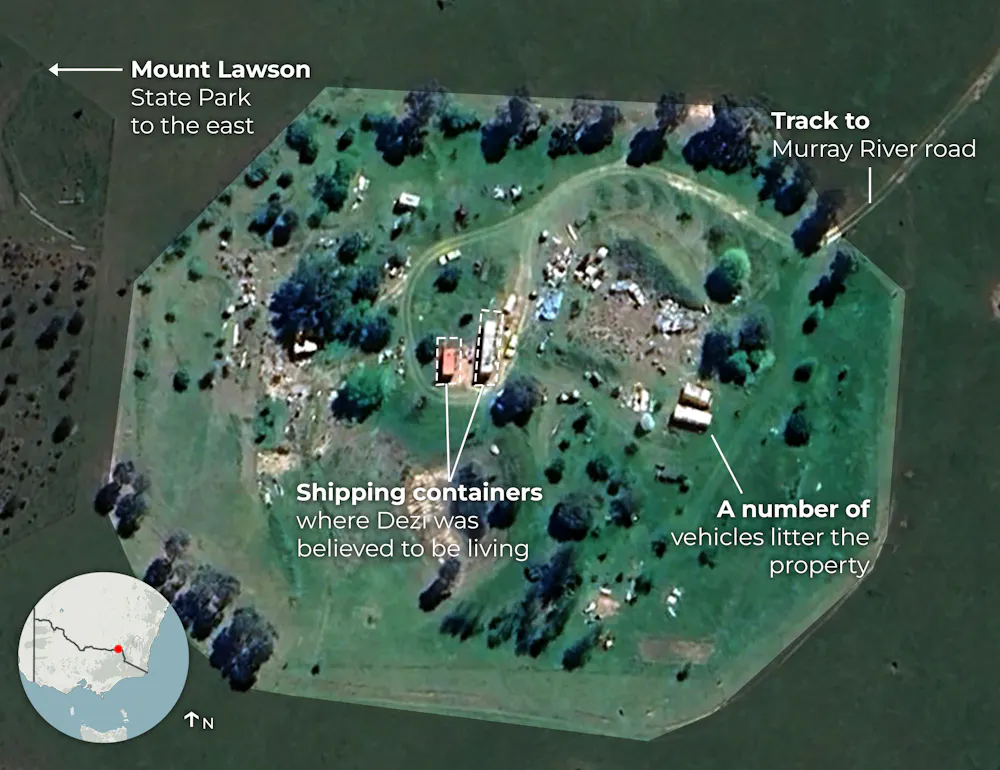
Police killer Dezi Freeman evaded authorities for more than 200 days before he was reportedly shot and killed by police on Monday morning.

Freeman shot and killed two police officers on August 26 last year before escaping and hiding in rugged bushland in north-east Victoria.

His evasion of police captured public attention primarily because it is so rare for fugitives to avoid capture for so long. The hunt for him was the largest tactical police operation in Australian history.

The rural property where Freeman was shot and killed, near Walwa on the Victoria-NSW border. Google Maps, The Conversation

So, how do people like Freeman stay hidden for so long, considering the technology and resources available to police?

Long-term evasion is rare

During the hunt for Freeman, New Zealand police were similarly trying to locate a man called Tom Phillips, who evaded police for almost four years.

He disappeared with his three children just before Christmas 2021 and hid in dense bush in the North Island’s western Waikato region before being shot and killed by police in late 2025.

Both he and Freeman were skilled bushmen with deep local knowledge. And they likely received support from others.

“It would be very difficult for him to get where he was […] without assistance,” Victoria Police chief commissioner Mike Bush said of Freeman. “We will be speaking to anyone we suspect has assisted him to avoid detection and arrest.”


Read more: After 216 days on the run, how was Dezi Freeman caught and what happens now?


In Australia, there have only been four other significant, long-term fugitives in the past 40 years:

  • John Bobak, who police believe was responsible for a double murder on the Gold Coast in 1991, is still on the run

  • Brenden Abbott, nicknamed the “postcard bandit”, escaped from Fremantle Prison in 1989. He evaded police for six years

  • Malcolm Naden hid and lived in rugged bushland around Gloucester and Scone for seven years after murdering two girls in 2005. NSW Police eventually found and arrested him in 2012.

  • New South Wales prison escapee Darko Desic evaded police for 30 years, living in sand dunes in Sydney’s Northern Beaches until he voluntarily handed himself into police in 2022.

How do these fugitives stay hidden?

A person going off the grid is one of the greatest challenges police face in trying to find someone, because technology serves as a person’s electronic footprint.

It ties a person to a time and place. When someone in a city or regional area with mobile coverage uses a phone, it logs their location, who they are talking to and how long they were on the phone call.

If they use their phone to pay for something, it ties that person to a place and time.

If they drive a car, they may be seen on CCTV on roadways that check for real time traffic conditions.

If they access money from an ATM, there may be facial recognition that captures their image. Not using technology blinds police.

The geography of an area also gives someone who goes off the grid a natural advantage because of the difficulty of physically trying to locate them in bushland. The bigger the area, the more rugged the terrain, the easier it is for anyone with bush skills to hide.

That was certainly the case for Freeman in north-east Victoria.

For police, bushcraft skill would not be as well honed as it would have been 20 years ago.

Technology has totally reoriented the way in which police carry out investigations. The use of drones, aerial surveillance, satellite imagery, number plate recognition, or residential home surveillance systems are rendered pointless for someone living off the grid.

For both police and the offender, these types of searches are a game of patience.

Freeman had time on his side, he knew the area and was a skilled bushman. It seems he was able to blend into the environment and become a shadow in the landscape, outwitting the police for months – until he was eventually tracked down.

How he was eventually discovered is yet to be revealed, but police, those impacted by Freeman’s actions, and the taxpayers footing the search bill, will no doubt be relieved the search is over.

ref. How do fugitives like Dezi Freeman evade police for so long? – https://theconversation.com/how-do-fugitives-like-dezi-freeman-evade-police-for-so-long-279554

Evening Report: https://eveningreport.nz/2026/03/30/how-do-fugitives-like-dezi-freeman-evade-police-for-so-long-279554/

Halving the fuel excise is smart politics, but flawed policy

Source: The Conversation (Au and NZ) – By Locky Xianglong Liu, Research fellow, Centre of Policy Studies, Victoria University

With fuel prices staying high, the federal government has announced a halving of the fuel excise for three months. This will cost the federal budget A$2.55 billion, according to Treasurer Jim Chalmers.

This will cut the cost of fuel by 26.3 cents a litre. At the same time, the government said it will temporarily cut the 32.4-cent-a-litre heavy vehicle road user charge to zero.

Cutting fuel excise is politically deft. It is highly visible, easy to implement and provides quick relief to motorists.

But that does not make it the right response to the kind of crisis Australia now faces.

Australians are not experiencing a conventional cost-of-living squeeze. Global energy supply has tightened, and oil prices have surged. This is a direct hit to national income.

Rather than lifting supply, a temporary cut in fuel excise seeks to cushion the price hit for fuel users, by shifting part of the national burden to the federal budget. From there, the burden will be shifted to other groups via cuts in spending or higher taxes – or shifted to the future if the excise cut is funded through government debt.

A poor answer for the problem

From a political perspective, the excise cut is skilful. Subsidising fuel for everyone might seem like a simple way to lower prices at the petrol bowser, and is easy to understand.

But it misses the mark on several counts when it comes to the fiscal response Australia really needs. The fuel excise cut is costly at a time when state and federal budgets across the country are already strained, it is narrowly focused on fuel, it heads off fuel-saving strategies and it is poorly targeted in who it helps.

Rising fuel costs have prompted the federal government’s latest measures to ease prices. Lukas Coch/AAP

First, it is fiscally costly and unsustainable. Our research suggests that the effect of a cut to temporarily soften a hit comes at significant cost to the budget. If debt-financed, such relief comes with higher public debt. Depending on the scale, this may create a debt overhang, where higher interest bills become a drag on growth long after the crisis has ended.

The Morrison government’s fuel excise cut in 2022 to address cost-of-living pressures cost about $1 billion a month, a cost that is hard to sustain in long-term crises.

Second, it is too narrow in what it covers. A fuel excise cut only lowers the cost of fuel, even though the shock is hitting Australian households and businesses more broadly with higher prices for other goods that are reliant on energy, transport, and hydrocarbon-dependent products.

Third, it is too broad in who it helps. Relief is spread across all fuel users, not those who need it most. This is poorly targeted and makes the excise cut a blunt tool that benefits wealthy households, as well as low-income ones.

When fuel is scarce, higher prices serve an important role. They signal that economic adjustment is needed, encouraging businesses and households who can cut back to do so. This helps ensure that limited supply goes to essential uses – farming, food transport and other industries, and households under the greatest pressure from rising fuel costs.

A fuel excise cut works against this price signal. When higher prices can’t do the rationing, we tend to fall back on queues, spending limits or formal rationing, increasing the administrative cost.

Additionally, a broad fuel tax cut creates a wider macroeconomic tension. If it is not offset elsewhere in the budget, it can leave overall spending higher than is helpful when inflation is still a concern and the Reserve Bank is working to dampen demand.

That does not make a fuel excise cut inherently inflationary, but it does sit uncomfortably alongside the RBA’s efforts to slow growth.

Economists have voiced similar warnings about the inflation risk of broad fuel tax relief.

What better-designed relief could look like

If governments want to help households through an oil shock, support should be targeted and fiscally sustainable. The aim should be to direct help to the people under the greatest pressure, rather than simply subsidising all fuel users.

In the near term, that points to more targeted responses, such as direct payments to vulnerable, low-income households and support for essential fuel-using activities.

To fund that relief, a temporary tax on the windfall profits earned by the largely foreign-owned gas exporters from the energy shock is worth considering. Alongside these policies, the excise cut would reconcile public demands for action within a sound and broader economic policy package.

Over the longer term, policymakers could also focus on reducing Australia’s exposure to future energy supply shocks. That means strengthening energy security and exploring policies that support the transition to lower fuel dependence.


Read more: Amid a surge in energy prices, a windfall tax on gas profits could be the best way to protect households


ref. Halving the fuel excise is smart politics, but flawed policy – https://theconversation.com/halving-the-fuel-excise-is-smart-politics-but-flawed-policy-279535

Evening Report: https://eveningreport.nz/2026/03/30/halving-the-fuel-excise-is-smart-politics-but-flawed-policy-279535/

Hongkong Land Foundation launches “AI for Good” Hackathon to strengthen community impact

Source: Media Outreach

  • A collaborative initiative bringing together NGOs, youth and academic partners to deliver community solutions
  • Leveraging AI and youth perspectives to address social issues

HONG KONG SAR – Media OutReach Newswire – 30 March 2026 – The Hongkong Land Foundation (the “Foundation”), formerly known as Hongkong Land HOME FUND, has launched its “AI for Good” Hackathon, a collaborative social innovation initiative developed in partnership with the Jockey Club Design Institute for Social Innovation (“J.C.DISI”) of The Hong Kong Polytechnic University (“PolyU”)

The two-day “AI for Good” Hackathon at PolyU concluded with four finalist teams advancing to the next stage. The winning projects will receive funding and ongoing support from the Hongkong Land Foundation over the next two years to drive their development and long-term impact.

The initiative supports local non‑governmental organisations (“NGOs”) to address pressing community needs, reflecting the Foundation’s long‑term commitment to building vibrant, inclusive and resilient communities through social innovation, stakeholder engagement and long‑term partnerships. Anchored by three strategic pillars — People, Place and Culture, the Foundation has invested more than HK$115 million in community initiatives since its establishment in November 2020, benefiting over 630,000 people, and is increasingly focused on building partnerships that support sustained social innovation.

The two-day “AI for Good” Hackathon was held on 21 and 22 March at PolyU. Supported by Hongkong Land’s volunteers and J.C.DISI’s mentors, participating NGOs worked in a supportive and trusted environment to explore, iterate and strengthen their ideas. During the Hackathon, participants used AI-enabled tools to develop a visual “Pattern Book” – an investment-ready framework that consolidated field research, ideation, solution planning, and visual presentation into a single document. The AI-powered approach enabled participants to distil complex social issues into concise, actionable concepts, creating more meaningful dialogue between NGOs, judges, and potential partners.

The J.C.DISI has been a key partner in supporting the Hackathon through ideation, NGO capacity building, project management and student engagement. Students from across PolyU took part as youth consultants, working closely with NGOs to offer fresh perspectives and insights, reinforcing the programme’s focus on co-creation and placemaking impact.

John Simpkins, General Counsel of Hongkong Land and Director of Hongkong Land Foundation, said “The Hongkong Land Foundation has been committed to supporting communities through meaningful collaboration. Through the Hackathon, and our collaboration with J.C.DISI, we are harnessing AI as a tool to empower our NGO partners, helping them strengthen ideas, enhance digital capabilities and unlock new creativity in social innovation. The initiative reflects our belief that lasting social impact is not created through one-off funding, but through co-creation, technology and sustained engagement. By bringing together NGOs, students and cross-sector partners, we aim to develop solutions that strengthen communities and contribute to a more vibrant city.”

Sam Lam, Interim Director, Jockey Club Design Institute for Social Innovation, said “What distinguishes this Hackathon is its focus on AI‑enabled capacity building for social innovation. Rather than a standalone pitch exercise, the programme equips NGO teams with the skill to utilise cutting-edge AI Design Thinking tools commonly used by professional consultancies, helping them compress months of strategic work to implementable solutions within 48 hours. This collaboration redefines the traditional funder–NGO relationship. Through long-term capacity building, the Hong Kong Land Foundation equips NGOs with practical skills and tools to strengthen placemaking and community engagement. Together, we translate strategic vision into solutions – ensuring impact that extends well beyond the hackathon.”

Four finalist teams were shortlisted to advance to the next stage, following an initial pitch assessed by Hongkong Land executives, and academic and industry experts. The shortlisted teams will refine their proposals with cross‑sector mentors, with winning projects receiving funding and ongoing support from the Hongkong Land Foundation over the next two years.

Appendix:

  • Four finalist teams:
  • Caritas Hong Kong
  • Hong Kong Design Institute
  • Hong Kong Youth Arts Foundation
  • Young Founders School

Hashtag: #HongkongLandFoundation

The issuer is solely responsible for the content of this announcement.

– Published and distributed with permission of Media-Outreach.com.

LiveNews: https://livenews.co.nz/2026/03/30/hongkong-land-foundation-launches-ai-for-good-hackathon-to-strengthen-community-impact/

Aviation sector urgently calls for specific crisis plan for jet fuel

Source: Radio New Zealand

There was just over 25.3 days worth of jet fuel in the country. (File photo) 123RF

The aviation sector is urgently calling for a specific crisis plan around fuel for flying.

The latest gauge of the country’s fuel supplies shows just over 25.3 days worth of jet fuel in the country, up from 20.1 days at the count before.

But including jet fuel that’s on its way, there were overall fewer days of fuel than before, with 50.4 days now compared to 53.4 days earlier.

It’s still about normal for jet fuel.

But Aviation Industry Association chief executive Simon Wallace told Checkpoint supply was crucial for the likes of emergency services and agriculture.

“I mean, the association that I lead represents much of the commercial aviation sector in New Zealand which is agricultural aviators, regional airlines, helicopter contractors, emergency services and having supply is really important, particularly for the likes of those emergency services,” he said.

“And also agriculture, this is the autumn time when we put the fertiliser down on crops, this is about food production and animal welfare as well.”

Wallace said he wanted aviation prioritised in the government’s plans.

“….As an industry body we are taking calls from our members daily,” he said.

“And they are very concerned about supply but also the price, and gas has gone up 100%, it’s gone up to $5 a litre from $2.50 where it was at the end of February and jet fuel has gone up from $1.60 to $2.80 so there is real concern about price.”

The government’s four step response plan already mentions aviation, but Wallace said more was needed.

“We absolutely have to see and have to have assurances from the government that emergency services – search and rescue, firefighting – that they are going to be a top priority if we get to the point at phase three or phase four where there may well be rationing,” he said.

“And the same applies to agriculture, which is at a really critical juncture in the season.”

Sign up for Ngā Pitopito Kōrero, a daily newsletter curated by our editors and delivered straight to your inbox every weekday.

– Published by EveningReport.nz and AsiaPacificReport.nz, see: MIL OSI in partnership with Radio New Zealand

LiveNews: https://nz.mil-osi.com/2026/03/30/aviation-sector-urgently-calls-for-specific-crisis-plan-for-jet-fuel/

‘They’re better at running than we are’ – Only Fools and Horses race returns for round two

Source: Radio New Zealand

Who is willing to try their luck and running prowess against a horse? Only fools, of course.

The Central Otago race Only Fools and Horses is back for round two on 11 April. There is a 40km race and a second shorter 25km fun run to entice more people to challenge their two- or four-legged foes.

Runners and riders have been testing out the course near Wedderburn, which traverses through tussock, along an ancient water race and up ridges.

Only Fools and Horses pits four legs against two in the Maniototo hills. RNZ / Tess Brunton

When it came to long-distance running, Julia Chamberlain has had a go at nearly everything – including testing her mettle against the horses in last year’s race.

“The horses thrashed us, they were so quick. But it was a great run,” she said.

But in a race between Only Fool and Horses, why did she choose the Fools side?

“I’ve probably ridden a horse once in my life. I’m a runner so running against horses, when do you get that opportunity? It’s a couple of friends who have organised the race so it’s pretty cool to support them,” Chamberlain said.

Long distance runner Julia Chamberlain would love to see a runner pip the horses to the finish line. RNZ / Tess Brunton

“Such a foreign concept… it’s quite fun running along the water race with these huge beasts coming past you.”

She knew the odds were falling in favour of four legs.

“The only thing that’s really in our favour is endurance, but even then, they’ve still got great endurance,” she said.

“Endurance, speed – but they’ve got four legs, we’ve got two so arguably, they should always win. It would be good to get a great runner to beat the horse so the humans must win. They hopefully will at some stage.”

Rider Niam Tripp and Jeffery are ready for redemption after stopping halfway through the ride last year. RNZ / Tess Brunton

Rider Niam Tripp was eager to hit the trail.

“I love jumping. I love the adrenaline but also I do love just galloping over hills.”

She was keen for a redemption race after competing on Jeffery last year.

Only Fools and Horses pits four legs against two in the Maniototo hills. RNZ / Tess Brunton

They stopped halfway as he was not quite race-fit, but she said he had been putting in the mahi this hunt season and was ready to go.

She laid down the gauntlet for runners – especially for her brother who, she said, did a dramatic sprint finish last year.

“We’re going to at least try to beat my brother this year,” Tripp said.

“It’s been an ongoing rivalry for a long time.”

Only Fools and Horses pits four legs against two in the Maniototo hills. RNZ / Tess Brunton

Tripp was firmly on Team Horse.

“They’re better at running than we are. Horses are supreme and those runners, well, tough luck for them. They’re going to get beaten again,” she said.

Race co-organiser Steve Tripp – and Niam’s dad – said about 40 competitors had signed up so far, but he expected more would jump onboard.

“It’s the Maniototo. It’s all gold and blue and some wonderful views. You’ve got a historic water race to run along. It’s all on private land so it’s land that you can’t get to otherwise. There’s a lake, a silver birch forest.”

Only Fools and Horses co-organiser Steve Tripp says there is a jackpot prize if a runner finishes first. RNZ / Tess Brunton

Locals would be cheering everyone over the finish line before the afterparty kicked off with a buffet dinner and dancing – last year, he said the runners outdanced the horse riders.

There was also some added incentive for a runner to cross the finish line first, he said.

“We’ve got a jackpot so it goes up $500 every year that a human doesn’t win it so it’s up to $1000. So if a human wins, it’s a $1000. If not, then it will be $1500 next year.”

The battle between hoof and foot will take place in Wedderburn on 11 April, with the money raised going towards supporting the Maniototo Area School.

Only Fools and Horses pits four legs against two in the Maniototo hills. RNZ / Tess Brunton

Sign up for Ngā Pitopito Kōrero, a daily newsletter curated by our editors and delivered straight to your inbox every weekday.

– Published by EveningReport.nz and AsiaPacificReport.nz, see: MIL OSI in partnership with Radio New Zealand

LiveNews: https://nz.mil-osi.com/2026/03/30/theyre-better-at-running-than-we-are-only-fools-and-horses-race-returns-for-round-two/

Regime change: What Americans can learn from other nonviolent civil activism movements

ANALYSIS: Introduced by Robert Reich

From time to time, I post transcripts I’ve come across of particularly insightful conversations. Here’s one that’s particularly relevant to the US “No Kings” Day protests at the weekend.

Recently, The Conversation hosted a webinar in which executive editor and general manager Beth Daley interviewed John Shattuck, professor of practice at The Fletcher School of Law and Diplomacy at Tufts University, and Oliver Kaplan, associate professor at Josef Korbel School of Global and Public Affairs at the University of Denver and a visiting scholar at Stanford University.

Shattuck is the former president of Central European University in Hungary, where he defended academic freedom against a rising authoritarian government. Kaplan is the author of Resisting War: How Communities Protect Themselves. This interview has been condensed and edited for print.

BETH DALEY: What is an authoritarian regime, and what are their characteristics?

JOHN SHATTUCK: The authoritarian, often referred to as a “king,” is the ideal role from the point of view of the king, but certainly not from the point of view of the people. Authoritarian characteristics include centralised unlimited power, the opposite of democracy; no accountability and no rule of law; no independent courts; no checks and balances on how the king operates; rule by fear and coercion, and when necessary, in order to carry out the king’s orders, rule by by force.

There are no individual rights or civil liberties except those the king decides to allow those who are loyal to him to have, at least until he decides to take them away.

That’s a nutshell informal description of an authoritarian regime. A special threat today is that an authoritarian can emerge from a democratic election, and, indeed, a democratic election can be used to turn a weak democracy into an authoritarian regime.

But when this happens, it opens the door to challenge the authoritarian in a subsequent election if civic activism can defend the electoral process by which the authoritarian was elected.

BD: What are we seeing and not seeing in the US that other countries have gone through in terms of authoritarian government?

OLIVER KAPLAN: I think we are heading toward an autocracy, if not there already. In their 2026 report, the Varieties of Democracy Project writes that the US is no longer a liberal democracy and is moving into “competitive authoritarianism,” marked by executive overreach and erosion of judicial and legislative checks. The report notes that US democracy is being dismantled at a speed that is “unprecedented in modern history”.

We are seeing shifts in terms of concentration of power to the executive branch and a disregard of the rule of law, things like ignoring court orders and difficulty with holding the executive branch accountable. We are also seeing the militariSation of law enforcement, monitoring of US citizens, and what some refer to as the dual state — that the state is working for some people while causing more challenges for or oppressing other people.

One of the things we’re not seeing at full force yet is a complete shutdown of civic space. We’re able to hold this kind of conversation, and people are still able to dialogue and go out on the street.

There are some efforts at curtailing free speech, and I think there’s some self-censorship possibly happening. But there’s still this open space and a powerful mass movement growing in this country.

BD: John, you were on the front lines, particularly in Hungary as the head of Central European University. What did you see there that has parallels today to the US?

JOHN SHATTUCK: There’s certainly a parallel between Hungary and the US, even though the countries are very different in size, history and background. What I saw in Hungary when I became president of Central European University in 2009 was a weak, new democracy that was only established in 1990 after 70 years of fascism and communism.

I was in Hungary from 2009 to 2016 and, despite the differences, I could begin to see some parallels. Many people had grievances in Hungary about how their economy was operating, particularly after the global financial crisis that affected Hungary more than any other Eastern European country.

Then there was an urban-rural divide, the urban elite versus the rural majority in the country.

Along came a cynical populist-nationalist politician, Viktor Orbán. Orbán started manipulating these grievances, and did so to significantly divide Hungarian society. He attacked many of the institutions of democracy, which were increasingly unpopular because of people’s grievances.

He went after elites, and foreigners, and migrants, and the media. And he blamed all of them for the country’s problems. He then was able to ride these grievances into office.

Once in office, Orbán amended the constitution and laws relating to the Parliament. He undermined the independence of the media and the judiciary so as to centralise power. All of this happened while I was running an international university in Budapest, which remained independent because it received no funding from the Hungarian government.

We were able to resist the increasingly authoritarian regime over issues of academic freedom. The government tried to shut down our programmes of migration studies and gender studies, and tried to censor aspects of our history department.

These authoritarian attacks are similar to what we’ve seen happening in the US, and in fact, Viktor Orbán was greatly admired by Donald Trump, and a lot of the playbook that Orban has followed was mirrored in Project 2025 in the US under Trump.

BD: How do communities respond in different ways to authoritarian regimes?

OLIVER KAPLAN: Pro-democracy movements and protection types of movements at the local level often co-occur. For example, in Colombia there have been various leftist movements and political parties that have pushed for greater democratic opening while communities mobilise to keep people safe and help them cope with repressive conditions.

In places like Chile, El Salvador and Guatemala, communities built trust and support networks to provide aid, such as for people who needed food assistance. This provides space to independently operate and preserve the community.

The US has parallels, such as innovating early warning networks to get advance notice of risks and threats, by communicating using the Signal app. In the Democratic Republic of Congo, villages set up radio networks, and in Ukraine they have sophisticated early warning networks to get word of airstrikes and drone attacks.

Fact-finding and countering stigma are important, and in the US we’re seeing that in the form of the video recording and publicising of harmful actions. This has played out similarly in Syria with fact-finding to protect nongovernment organisations.

There’s also accompaniment where outside actors come in to provide support to communities. Around the world, church organisations play important accompaniment roles. We’re seeing clergy in the US step up and visit places that are at risk.

And then, there are protests, the most visible kind of action. In Minnesota, we’ve seen communities actually setting up community barricades, which has also happened in Mexico, Colombia and Northern Ireland. Communicating the nonviolent nature of these movements is important to avoid any pretext for additional crackdowns.

I think Americans have been taking similar actions to other places around the world in part because there are some similar background conditions: repression and strong social capital networks. Those two things come together to produce these strategies.

BD: Could you speak more about the need to build a clear narrative and a positive one?

JOHN SHATTUCK: There are two basic rules for how to resist authoritarianism that I’ve learned from experience: Build a diverse coalition and develop a unifying theme. You need a diverse coalition in order to appeal to a broad range of the public, and in order to do that, you need agreement on the goal and values of what you’re trying to accomplish.

You need a clear and unifying narrative. The narrative often involves economic issues and issues of corruption, since there’s often a great deal of corruption in authoritarian regimes.

Hungary will have its next parliamentary election in April in which Orbán will seek his fifth term as prime minister. The opposition has developed a broad coalition and a unifying theme, while Orbán is using the centralised instruments of government and media that he controls to try to manipulate public opinion.

The opposition coalition is headed by Peter Magyar, who was once a major supporter of Orbán’s government. Magyar’s name can be magical in Hungary — sort of like a “Joe America” in the US.

With Magyar as its head, the opposition is aiming to peel off supporters of the regime. It’s campaigning on economic grounds, with a positive message and on moderate terms. And most importantly, it includes parties from the left, right and center.

Poland has succeeded in doing what the Hungarian opposition is attempting. It managed to vote out an authoritarian government by putting together a broad coalition to defend the independence of the Polish judiciary. That became a coalition to elect parliamentarians in 2023, and that succeeded in changing the government.

BD: How important is the preexisting social fabric of a community to the success of a protest movement?

JOHN SHATTUCK: It’s important, but complicated. Hungary had a very weak civil society after 70 years of totalitarian fascism and communism. When I was there, the very word to “volunteer,” which we think of as the essence of community action and service, was seen to be a bad word in Hungarian because it was closely associated with collaborating with the regime.

In the US, we’re the opposite in a sense, although the US is now slipping on this. We have a long history of volunteerism, we have all these civil society organisations, we have a tradition of barn raising, people getting together with their neighbours and doing things in their communities. This is very much a part of the American spirit and a core value.

But today, I would say a combination of consumerism and economic individualism coming out of decades of economic deregulation has caused our civil society to fray. But the authoritarian challenge that we face now, and the way in which we are beginning to respond to it, is in fact bringing communities back together again.

I think what happened in Minneapolis is an example of that. And this may reflect a growing capacity to resist an authoritarian regime.

Republished from Robert Reich’s Substack, originally published by The Conversation. Republished under Creative Commons

Article by AsiaPacificReport.nz

Evening Report: https://eveningreport.nz/2026/03/30/regime-change-what-americans-can-learn-from-other-nonviolent-civil-activism-movements/
Live: All Whites v Chile – Fifa Series at Eden Park

Source: Radio New Zealand

The All Whites will play Chile in their second match of the Fifa Series at Eden Park in Auckland on Monday.

New Zealand lost their opening game 2-0 against Finland on Friday.

Kickoff is at 7pm.

Sign up for Ngā Pitopito Kōrero, a daily newsletter curated by our editors and delivered straight to your inbox every weekday.

– Published by EveningReport.nz and AsiaPacificReport.nz, see: MIL OSI in partnership with Radio New Zealand

LiveNews: https://nz.mil-osi.com/2026/03/30/live-all-whites-v-chile-fifa-series-at-eden-park/

Rugby League: Warbrick signed by Warriors

Source: Radio New Zealand

Will Warbrick scoring in the 2025 NRL grand final. AAP/Photosport

Will Warbrick is on his way to the Wahs.

The Melbourne Storm winger will join the Warriors on a three-year deal from next season.

The Kawerau-born 28-year-old’s move home comes after veteran Roger Tuivasa-Sheck announced on Friday that he will finish his NRL career with the Warriors at the end of the season to join Wakefield in the Super League.

Warbrick underlined his ability yet again with the second four-try haul of his career in the Storm’s 24-28 round four loss to North Queensland on Saturday night.

New Zealand Warriors general manager recruitment for development and pathways Andrew McFadden said Warbrick has made a brilliant transition to rugby league to become one of the elite wingers in the competition.

Making his NRL debut in 2023, Warbrick has now scored 43 tries in 60 appearances for the Storm while he made a try-scoring test debut for the Kiwis against the Kangaroos in the 2024 Pacific Championships.

Coach Andrew Webster said bringing Warbrick home was a huge coup for the club.

“He’ll be a terrific asset on the wing with his height, pace, aerial ability at both ends of the field, his work rate and attitude. He also comes out of a great system at the Storm.”

Warbrick, who played in the Storm’s back-to-back grand finals in 2024 and 2025, averages more than 150 metres a game across his career while he is returning more than 170 metres a game so far this season.

He switched to rugby league from rugby union in 2022 after spending three years with the All Blacks Sevens, which included being a member of the silver medal-winning squad at the 2020 Tokyo Olympic Games.

He has the distinction of representing New Zealand in three codes, not only rugby union and rugby league, but also Australian Rules football.

Sign up for Ngā Pitopito Kōrero, a daily newsletter curated by our editors and delivered straight to your inbox every weekday.

– Published by EveningReport.nz and AsiaPacificReport.nz, see: MIL OSI in partnership with Radio New Zealand

LiveNews: https://nz.mil-osi.com/2026/03/30/rugby-league-warbrick-signed-by-warriors/

Anglican Bishop urged to intervene in Auckland sportsground ownership stoush

Source: Radio New Zealand

Point Chevalier Bowls Club president Simon Munro. RNZ / Jessica Hopkins

The Anglican Bishop of Auckland is being urged to intervene in a messy dispute over the ownership of a central Auckland sports ground.

The Hallyburton Johnstone Sports Club has hosted lawn bowls, tennis, and croquet at its Point Chevalier site since 1928.

But a charity, the Anglican Trust for Women and Children (ATWC), argues it is the legal owner of the land, which had a capital value of $5.15 million.

The trust was taking the sports club to the High Court as it wrestled to control the site.

Point Chevalier Bowls Club president Simon Munro said they were preparing for the legal fight.

Simon Monro at the club. RNZ / Jessica Hopkins

After over 700 people turned up to a community meeting last month, the club raised $28,000 from the community.

Bowls Auckland also loaned the club $25,000.

But Munro said this would not this be enough for the court hearing, which was expected next year.

“I don’t want to go to the High Court. We can’t afford it as a club.

“We’ve spent close to $50,000 on legal fees so far, but our lawyers are telling us that it’s going to be hundreds of thousands of dollars by the time this goes to the High Court.”

He said the Anglican Diocese of Auckland had influence over the appointment of ATWC trustees.

“The club understands that while the Bishop has distanced himself from the ATWC’s actions, the Church does have the power to remove and appoint Trustees under the Anglican Church Trusts Act (1981).

“There’s a meeting of the Synod, which is the governing body of the church [Auckland Anglican Diocese], which happens every September.

“That meeting is chaired by the bishop, and it’s also where the trustees are appointed, but they can also be removed.”

In a statement, ATWC chairperson Kevin Brewer said they were approached by The Public Trust six years ago, suggesting the Hallyburton Johnstone trust was at an end, and the land could be transferred to them.

He said their trustees had a responsibility to consider how the ATWC could best sustain its mission of supporting vulnerable families across Auckland.

“We understand this is a matter people feel strongly about and our intention is simply to resolve the issue responsibly and allow the appropriate legal process to determine the next steps.”

In a statement, Reverend Ross Bay confirmed the ATWC did social service work within the Diocese of Auckland and under the umbrella of the Anglican Church.

Reverend Ross Bay. (File photo) Supplied / Royal Commission of Inquiry into Abuse in Care

But he said the ATWC was independently governed.

“The Diocese of Auckland has a strong relationship with the ATWC but has no power to direct or interfere in its governance processes.

“I recognise that the claim taken by the Trust in relation to land occupied by various Pt Chevalier sports club is a sensitive issue. I understand the concerns that this has evoked within the local community as a whole and especially among the members of the affected clubs.

“I will continue to monitor the process and hope that a fair resolution can be achieved for all parties.”

He said the ATWC did not have any plans for the future of the site should a ruling fall in their favour.

The MP for Mount Albert, including the suburb of Point Chevalier, Helen White, said forcing a local sports club to spend money it does not have to fight for land they have occupied for almost a century is not a good look.

MP for Mount Albert Helen White. (File photo) VNP / Phil Smith

“The community would be deeply upset [if the sports club was no longer there], and I think it would hurt the reputation of both the Anglican Church and the trust involved.”

She said taking away the site, which also had a community garden and playground, from the sports club, would be of no benefit to women or children.

“I think it’s going to do real damage if this litigation continues or if, in fact, that charity won, that would be a terrible outcome for women and children and for that community.

“This is actually a very special club. It has a whole lot of different community activities in it. It doesn’t have pokies because it is mindful that it needs to support families.

“These are the very sorts of things that help women and children. They keep our children out of violent situations. They support our families. And at this time, when it’s really hard out there, this is an affordable space for everybody in that community.”

White said it was clear the original benefactor, Hallyburton Johnstone, intended for his land to be used for community sports.

The MP had written to Reverend Bay, asking him to step in.

“I would love to speak to that trust, and I would like to speak to the trustees, not a PR person. I would like to speak to the bishop.

“These are issues of concern that both of those parties should be taking some notice of the community interest in.”

She said when she contacted the ATWC to share her concerns, she was referred to a PR company.

Sign up for Ngā Pitopito Kōrero, a daily newsletter curated by our editors and delivered straight to your inbox every weekday.

– Published by EveningReport.nz and AsiaPacificReport.nz, see: MIL OSI in partnership with Radio New Zealand

LiveNews: https://nz.mil-osi.com/2026/03/30/anglican-bishop-urged-to-intervene-in-auckland-sportsground-ownership-stoush/

Warbirds Over Wānaka organisers confident withdrawal of modern military planes won’t dent visitor numbers

Source: Radio New Zealand

Warbirds Over Wānaka organisers said both Easter weekend days were sold out. (File photo) RNZ / Nate McKinnon

Warbirds Over Wānaka organisers are confident the withdrawal of modern military planes will not make a big dent in visitor numbers, with both Easter weekend days sold out for the biennial air show.

The Royal New Zealand Air Force (RNZAF) would not participate in the event because of fuel costs, with the United States Air Force also withdrawing from the show, which means the F-22 Raptor fighter jets would no longer be taking part.

A Defence Force spokesperson said air force participation in displays and flypasts were always contingent on operational considerations.

“We always ensure our resources are focused on maintaining operational readiness and given the current international fuel situation, all Royal New Zealand Air Force activities have been reviewed,” they said.

“As a result, those not directly related to operational readiness have been de-prioritised and regrettably this includes air display support to Warbirds over Wānaka.”

The spokesperson said RNZAF engagement with communities and participation in aviation events was important and it was not a decision made lightly.

“We understand this will disappoint people attending the event but we appreciate the continued public support and understanding,” they said.

RNZ also approached the United States Air Force for comment.

Warbirds Over Wānaka general manager Ed Taylor said a few tears were shed when organisers received the news but they could not guarantee the appearance of any aircraft at the show and the military had withdrawn before for operational reasons.

The event had taken place every second year in Central Otago for almost 40 years.

Taylor was confident the change to the line up would not affect visitor numbers, with at least 64,000 people expected to attend the sold-out show on Saturday and Sunday and tickets still selling for Friday, despite the military pulling out.

“It’s still an action-packed weekend, we’ve got some magnificent aircraft here. I always say that Warbirds over Wānaka is far more than any one or two aircraft, it’s the sum of many parts,” he said.

Taylor said the event used around 50,000 litres of aviation fuel over five days, including practice flights.

“Most of our display aircraft are not big consumers of fuel, some of the jets can get through a bit, but they’re only doing like a 10-minute display,” he said.

The figure did not include fuel used to fly to Wānaka for the event.

Taylor said the biggest fuel consumption was people travelling to the air show.

“We have to pay to get our aircraft here, especially our civilian aircraft, we have an agreement with each of the owners and they don’t get rich out of it, they just cover their costs,” he said.

New Zealand consumes around 24 million litres of fuel per day, of which around four million litres is jet fuel.

Taylor said the trust had no issues procuring fuel for the event, just at a higher price, but it was covered by the cost of ticket sales and organisers had a contingency built into their budget.

“We’ve got a bit of leeway there in terms of funds, so we’re happy we’ll be financially OK at the end of it, we’re run by a community trust, we’re not here to make money, we’re here to give back to our community,” he said.

Accommodation in Wānaka and the surrounding towns like Cromwell, Alexandra and Omarama was booked out for the event, which was crucial to businesses in the region, Taylor said.

The airshow was tipped to inject at least $40 million into the regional economy.

Cardrona Hotel general manager Warren Barclay said rooms were fully-booked heading into Easter, with Warbirds over Wānaka a major drawcard.

“It’ll be interesting this year with a lot of the military pulling out. It is understandable and we’re not blaming anyone but we just feel a little bit kind of disappointed that this has happened at this time,” he said.

Barclay said there had not been any cancellations because of the change to the show’s line up or the fuel crisis but that could change.

“We’re just busy, we haven’t seen any drop off or anything so there’s nothing at this stage that we would do differently, fuel crisis or not, but time will tell and hopefully this thing will be over before it really kicks in and starts to really jeopardise our whole economic of recovery,” he said.

Sign up for Ngā Pitopito Kōrero, a daily newsletter curated by our editors and delivered straight to your inbox every weekday.

– Published by EveningReport.nz and AsiaPacificReport.nz, see: MIL OSI in partnership with Radio New Zealand

LiveNews: https://nz.mil-osi.com/2026/03/30/warbirds-over-wanaka-organisers-confident-withdrawal-of-modern-military-planes-wont-dent-visitor-numbers/

CPA Australia Survey: Practical AI adoption and easier financing drive Taiwan SME confidence to a five year high

Source: Media Outreach

TAIPEI, TAIWAN – Media OutReach Newswire – 30 March 2026 – More than half of Taiwan’s small businesses recorded growth in 2025, while confidence heading into 2026 climbed to its highest level since 2020, according to the Asia-Pacific Small Business Survey 2025–26 conducted by global professional accounting body CPA Australia.

The survey found that 53 per cent of Taiwanese small businesses grew in 2025, slightly below the 57 per cent recorded in the previous survey. Looking ahead, business sentiment strengthened notably. In 2026, 63 per cent of respondents expect their business to grow, while confidence in the local economy also improved, with 61 per cent anticipating economic growth, the highest level recorded since Taiwan was first included in the survey in 2018.

Taiwan’s small and medium‑sized enterprises (SMEs) continue to play a vital role in creating new jobs. In 2025, 31 per cent of SMEs increasing staff numbers, while 44 per cent plan to hire additional employees in 2026.

With rising costs identified as the biggest challenge facing Taiwan’s SME in 2025, many businesses identified cost control as the most positive contributor to business performance last year.

Mr Elic Lam FCPA (Aust.), Honorary Taiwan Advisor at CPA Australia, said Taiwan’s economic fundamentals continue to support small business resilience, “Rising global demand for semiconductors and AI related chips continues to create opportunities for exporters and suppliers across Taiwan’s value chain,” Mr Lam said. “While geopolitical tensions and intensifying competition are adding uncertainty, government support measures for SMEs, including targeted subsidies and tax incentives, together with Taiwan’s resilient domestic demand, are helping to lift business confidence.”

Technology adoption, particularly artificial intelligence (AI), is becoming increasingly widespread among Taiwanese small businesses. The survey found that 33 per cent of small businesses identified AI as the technology they invested in most heavily invested in 2025, up from 29 per cent in the previous year.

Cyber risk among Taiwanese small businesses fell markedly. The share of small businesses reporting losses of time or money due to cyber incidents declined sharply from 59 per cent in 2024 to 27 per cent in 2025, reflecting stronger awareness and the uptake of basic protective measures across the sector.

However, the survey also indicates there is room to strengthen the returns from digital investment. Only 40 per cent of respondents reported that their technology investment in 2025 improved profitability, compared with the survey average of 56 per cent.

Mr Lam noted that Taiwan’s SME sector is undergoing a generational transition that is influencing technology adoption patterns, “Many SMEs in Taiwan are moving from first generation ownership to second or third generation leadership, and technology adoption remains cautious and practical,” he said. “The increase in AI investment reflects both external drivers, such as changing customer expectations and government policy support for digital transformation, as well as internal factors, including younger owners’ familiarity with AI tools and rising operating and staffing costs.”

“To improve profitability, SMEs should focus on applying digital solutions in areas with the greatest impact. For example, as rising costs were identified as the most negative factor affecting performance in 2025, investing in ready-to-use and AI enabled accounting or financial management tools can help reduce operating expenses and lift productivity.”

Access to finance is another notable finding. Financing conditions in Taiwan improved significantly in 2025, even as borrowing softened. Two-thirds of businesses (66 per cent) I said it was easy to access external finance, placing Taiwan among the top three surveyed markets and representing a sharp increase from 28 per cent in 2024. Looking ahead, financing conditions are expected to remain supportive, with 63 per cent anticipating easy access to finance in 2026.

Despite the marked improvement in financing conditions, demand for finance was more subdued. In 2025, 54 per cent of SMEs sought external finance, down from 72 per cent in 2024.

“The Taiwan government has expanded inclusive and guaranteed financing mechanisms to support SMEs, including higher guarantee ratios under the SME Credit Guarantee Fund and preferential loans offered through state affiliated banks,” Mr Lam said. “These measures have made bank financing more accessible for small businesses.”

“Even so, many SMEs remain cautious about taking on new debt. In a stable domestic environment, businesses can maintain steady growth, but external uncertainties drive them to take a prudent approach to borrowing. This aligns well with the government’s policy focus on gradual and resilient SME transformation rather than rapid, high risk expansion.”

Lam concluded, “To navigate international uncertainty and intensifying market competition, Taiwan’s small businesses should make better use of government policy support to upskill their workforce through AI adoption, foster innovation, and diversify export markets by strengthening online sales channels.”

The Asia Pacific Small Business Survey 2025–26 gathered views from 4,166 small businesses across 11 markets in the region, including Singapore, Chinese Mainland and Australia. The Taiwan survey sample comprised 311 small businesses.

Hashtag: #CPAAustralia

The issuer is solely responsible for the content of this announcement.

– Published and distributed with permission of Media-Outreach.com.

LiveNews: https://livenews.co.nz/2026/03/30/cpa-australia-survey-practical-ai-adoption-and-easier-financing-drive-taiwan-sme-confidence-to-a-five-year-high/