Homicide investigation launched, Lower Hutt

Source: New Zealand Police

Attribute to Hutt Valley Field Crime Manager, Detective Inspector Haley Ryan:

Police have launched a homicide investigation after a man was located unresponsive in Lower Hutt yesterday.

At 8.15am, Police were called to Malone Road, Waterloo, after a man was reported to be lying on the ground outside an address.

Upon emergency services’ arrival, the man was confirmed to be deceased.

Enquiries are ongoing to establish what exactly has occurred, however Police are now treating the death as a homicide.

A post-mortem examination is underway, and a scene guard remains in place at the property.

Further information will be provided when appropriate.

ENDS 

Issued by Police Media Centre

MIL OSI

LiveNews: https://livenews.co.nz/2026/04/10/homicide-investigation-launched-lower-hutt/

Ensure every New Zealander is housed and safe ahead of Cyclone Vaianu

Source: Green Party

The Green Party is calling on the Government to ensure emergency housing is available to all people experiencing homelessness this weekend as Cyclone Vaianu approaches the North Island.

“Luxon is telling everyone to stock up and prepare to stick out this storm at home. What does that mean for the people he has made homeless?” says Green Party Co-leader and Auckland Central MP Chlöe Swarbrick.

“The Government must choose to ensure everybody who needs it gets access to emergency housing this weekend, or they are choosing to leave New Zealanders on the street during what they’ve warned is a potentially ‘life-threatening’ event.” 

“As an indication of how crazy the current system is, Aucklanders displaced from their homes during the Anniversary Floods got rehoming support, but that resource was not available for those already displaced and without homes. We cannot let that happen again.” 

“This is a political choice. We can choose to ensure everyone is safe at home through this climate-change-charged extreme weather, and we are asking the Government to step up to that responsibility,” says Swarbrick

MIL OSI

LiveNews: https://livenews.co.nz/2026/04/10/ensure-every-new-zealander-is-housed-and-safe-ahead-of-cyclone-vaianu/

Road blocked following crash, Lower Moutere

Source: New Zealand Police

Edwards Road is blocked at the intersection with Central Road, Lower Moutere following a crash.

The two-vehicle crash involving a car and a cyclist was reported just after 12:40pm.

Initial indications are that there are serious injuries.

The road is currently blocked. Motorists are advised to avoid the area.

ENDS

Issued by Police Media Centre

LiveNews: https://nz.mil-osi.com/2026/04/10/road-blocked-following-crash-lower-moutere/

Is all canned food created equal?

Source: Radio New Zealand

People are often surprised when Renata Herrera Rojas, a fifth-year university student flatting in Dunedin, says she eats just as well as she did at her home – even though she uses some canned food.

But many students struggle: a 2024 University of Auckland survey found 45 percent of 347 students, especially those living away from home, faced food hardship. And the Otago University Student Association has seen rising food bank demand over the past few years.

“There’s this massive culture around that; ‘this is just what’s going to happen. This is what’s normal, that you’re going to be eating bad food for this number of years, and that’s totally fine’, and like a kind of complacency around it,” says Herrera Rojas, who has created the Beginner’s Guide to Nourishment.

Dunedin law and global studies student Renata Herrera Rojas has written a manual to make cheap and healthy student eating easy.

Supplied

LiveNews: https://nz.mil-osi.com/2026/04/10/is-all-canned-food-created-equal/

Burglars strike twice in a night in New Plymouth

Source: New Zealand Police

A late-night burglary attempt in New Plymouth ended with three young adults and one youth in custody after being caught by Police for unlawfully being in not just one, but two, buildings.

Around 12.30am on Tuesday 7 April Police were called to an abandoned building on Powderham Street following reports people had been seen and heard breaking glass inside.

Police officers attended the area, and three offenders were located by police inside the building.

One offender tried to run but was caught and alluded to being in the building next door earlier in the night. The four were arrested and taken into custody for being unlawfully inside the building.

Further inquiries undertaken at the commercial property next door revealed the building had been breached via the abandoned building, with the offenders gaining access to the store.

Alcohol to the value of around $500 was taken and several thousand dollars’ worth of damage was done to the commercial business.

This was a great result for Police. We’re glad to have apprehended those responsible in the act and potentially preventing further burglaries from occurring.

We will continue to send the message that this type of offending is not acceptable.

An 18-year-old man and a 19-year-old woman appeared in New Plymouth District Court this week on charges of burglary and of being unlawfully in a building. They have been remanded on bail to reappear on 22 April.

A youth is expected to appear in Youth Court next week on the same charges, while an 18-year-old woman has been referred to Te Pae Oranga.

END

Issued by the Police Media Centre

MIL OSI

LiveNews: https://livenews.co.nz/2026/04/10/burglars-strike-twice-in-a-night-in-new-plymouth/

Weather: Northland farmers still not done cleaning up flood damage as Cyclone Vaianu arrives

Source: Radio New Zealand

Flooding near Kerikeri in March 2026. RNZ/Tim Collins

Northland farmers are still grappling with the fallout of last month’s flooding as they prepare for an incoming cyclone.

Cyclone Vaianu is forecast by MetService to reach Northland late on Saturday night then spread across the rest of the island.

Rural Support Te Tai Tokerau has been doing what it describes as “rapid rural assessments”, including checking in on farmers and offering support.

Chair Michelle Ruddell said the main areas of concern were from Kaitaia through to the Hikurangi swamp, just north of Whangārei.

“There’s a lot of silt, a lot of woody debris accumulating, fencing damage, culverts washed out, newly sown grass paddocks under water, maize crops not being able to get harvested – the list goes on, unfortunately.”

Ruddell said stock water and feed had also been affected in some areas, while kumara growers were feeling the pinch.

“There are quite a number of stressed growers in Dargaville around the weather, they haven’t really had a great season since [Cyclone] Gabrielle, so we are looking at year-on-year impacts here.”

She said the cumulative effects obviously affected people’s wellbeing, and the importance of rural communities staying connected and supporting each other.

Kaitāia flooding after heavy rain, March 2026. Supplied FNDC via LDR

And while the fuel industry was indicating there would be some relief at the petrol pump over the next week, in the meantime Ruddell said farmers were facing the added pressure of bigger clean-up costs.

“We still have got farmers up here that have got maize to harvest, but you need heavy machinery for that. We’ve got grass that needs resowing and planting, but [again] you need heavy machinery to do that.”

Sign up for Ngā Pitopito Kōrero, a daily newsletter curated by our editors and delivered straight to your inbox every weekday.

– Published by EveningReport.nz and AsiaPacificReport.nz, see: MIL OSI in partnership with Radio New Zealand

LiveNews: https://nz.mil-osi.com/2026/04/10/weather-northland-farmers-still-not-done-cleaning-up-flood-damage-as-cyclone-vaianu-arrives/

Boil water notices in parts of New Plymouth lifted, others remain in place

Source: Radio New Zealand

A map of the Bell Block/The Links area water zone that has been under a precautionary boil water notice. New Plymouth District Council

A boil water notice for Bell Block and The Links near New Plymouth has been lifted.

The advisory was put in place on Thursday following a positive test for E. coli.

However, it remains in place for New Plymouth airport, where a water tanker will remain on site.

New Plymouth District Council said it tested water samples from eight sites throughout Bell Block and four sites at New Plymouth Airport yesterday, and all have come back clear.

“The boil water notice applies only on the airport side of the airport’s gates. It’s a precautionary measure while we continue testing for the next two days – if the samples continue to come back clear of E. coli, we’ll lift the notice there on Sunday evening,” New Plymouth District Council manager Three Waters Amy Quattlebaum said.

“This cautious approach is standard practice and allows time for further testing to ensure drinking water remains safe.

“Thank you to everyone in Bell Block and The Links for their patience during the precautionary boil water notice period.

“E. coli can be pretty nasty for vulnerable people and it was great to see locals sharing information and supporting each other yesterday while we gathered more information.”

The cause of the positive test is still under investigation.

Sign up for Ngā Pitopito Kōrero, a daily newsletter curated by our editors and delivered straight to your inbox every weekday.

– Published by EveningReport.nz and AsiaPacificReport.nz, see: MIL OSI in partnership with Radio New Zealand

LiveNews: https://nz.mil-osi.com/2026/04/10/boil-water-notices-in-parts-of-new-plymouth-lifted-others-remain-in-place/

Manufacturing data yet to show signs of war’s impact

Source: Radio New Zealand

File photo. 123rf

  • Manufacturing activity eases marginally to 53.2 from 54.8 in February – above 50 is expansion
  • All five sub-indexes positive, growth slows in production, new order, and deliveries
  • Firms may have moved to cushion Middle East conflict impact by stockpiling, building up inventory
  • Sharp lift in negative comments about business outlook, as conflict clouds outlooks

Manufacturing sector activity remained resilient in March and has yet to be significantly hit by the Middle East conflict.

The BNZ-Business NZ Performance of Manufacturing Index (PMI) slowed to 53.2 from 54.8 the month before. A reading above 50 indicates the sector is expanding.

“The PMI result supports our view that economic growth was reasonable in the first quarter of the year, even though material headwinds had accumulated by quarter’s end,” BNZ senior economist Doug Steel said.

All five sub-indices stayed in expansion with gains for employment and finished stocks, and a slowing for new orders, production, deliveries of raw materials.

Steel said the sector was resilient, although it was likely too early for the conflict to have had a significant negative impact on activity.

“While the PMI is no longer trending higher, it hasn’t been unduly hit by the fuel price surge and uncertainty of war. At least not yet.”

“There is evidence of some temporary PMI support from spending being brought forward and businesses stockpiling.”

However, the level of negative comments from firms about their outlook rose markedly to 62 percent from 44.5 percent.

“While the PMI only eased a touch, the drop in positive comments suggests the energy price shock is front of mind for many,” Steel said.

He said it was difficult to forecast how the Middle East would end up, with manufacturing activity rising and falling in line with commodity price moves, which at the moment were being driven by a supply shock.

“Currently rising prices are more likely to dampen manufacturing activity and economic growth, both in New Zealand and abroad.”

Sign up for Ngā Pitopito Kōrero, a daily newsletter curated by our editors and delivered straight to your inbox every weekday.

– Published by EveningReport.nz and AsiaPacificReport.nz, see: MIL OSI in partnership with Radio New Zealand

LiveNews: https://nz.mil-osi.com/2026/04/10/manufacturing-data-yet-to-show-signs-of-wars-impact/

Govt Cuts – Damning survey confirms PSA warnings: Govt. cuts are wrecking health IT – PSA

Source: PSA

A major new survey of health professionals has confirmed what the PSA has been saying for more than a year: the Government’s reckless cuts to digital services are destroying confidence in the health system’s ability to deliver safe, modern care.
The Korero Mai report from Health Informatics NZ, based on conversations with more than 200 clinicians, administrators, technologists and other experts, found trust in digital health transformation is eroding because the workforce is exhausted by change that repeatedly fails to deliver.
“This is a damning indictment of the Government’s approach to health IT. The health workers on the frontline are tired of being promised transformation only to watch systems get mothballed, budgets slashed and the experts who maintain critical infrastructure shown the door,” said Fleur Fitzsimons, National Secretary for the Public Service Association Te Pukenga Here Tikanga Mahi.
“This ultimately impacts patient care which is what we have been warning all along. You can’t slash Health NZ’s Digital Services workforce and still expect clinicians to deliver the safe and timely health care 24/7 that patients need.”
The Digital Services workforce has been reduced by nearly 1000 roles by the Coalition Government with $100m slashed from its budget.
The report lays out the concerns of health workers loud and clear.
‘Participants stressed that digital transformation is not a cost-saving exercise in the short term but requires sustained investment in people: This involves training, change management and roles dedicated to making systems work in practice,’ the report says. It notes reductions in digital service roles have left fewer people available to train, support and optimise systems.
“The Government ignored every warning. Now we have repeated outages across the country, hospitals reduced to whiteboards and paper forms during outages, and a workforce that has lost faith the system will ever be properly resourced.
“This survey confirms what digital services experts have been telling us. The problem is not skills. Health workers have the capability to use modern systems. The problem is that systems keep being pulled out from under them, budgets keep being cut and the people who keep things running keep being made redundant.”
“The Government cannot announce a 10-year digital health investment plan on one hand and gut the workforce needed to deliver it with the other. You can’t modernise a health system on the cheap.
“Documents the PSA obtained under the OIA showed Health NZ knew last year that cutting digital roles would increase risks to patient care and hospital resilience. That internal assessment warned risks would become unsustainable as technical debt mounted. The outages that followed proved it.
“They were the predictable consequence of a government that chose tax cuts for landlords over functioning hospital systems.
“Our members who work in health IT are dedicated professionals who have been keeping an ageing, fragile patchwork of systems running against the odds. They deserve investment and support, not redundancy notices.
“The Government needs to stop pretending it can cut its way to a modern health system. It must reverse the damage, rebuild the digital workforce and properly fund the infrastructure New Zealanders’ lives depend on.”
Recent PSA statements
The Public Service Association Te Pūkenga Here Tikanga Mahi is Aotearoa New Zealand’s largest trade union, representing and supporting more than 95,000 workers across central government, state-owned enterprises, local councils, health boards and community groups.

MIL OSI

LiveNews: https://livenews.co.nz/2026/04/10/govt-cuts-damning-survey-confirms-psa-warnings-govt-cuts-are-wrecking-health-it-psa/

First City Deal: A step forward for growth – BusinessNZ

Source: BusinessNZ

BusinessNZ welcomes New Zealand’s first City Deal as a long-overdue step toward unlocking economic growth, through better coordinated infrastructure planning and delivery.
BusinessNZ Chief Executive Katherine Rich says the agreement for Auckland signals a shift toward more constructive collaboration between central and local government.
“Developing world-class cities requires long-term thinking, coordinated investment, and a clear plan to deliver the infrastructure communities and businesses rely on.
“For too long, central and local government have been talking past each other when it comes to crucial infrastructure decisions. This agreement shows what can be achieved when both sides are aligned and working toward a shared outcome.”
Rich says while today’s agreement is focused on Auckland, its significance extends well beyond the region.
“Delivering infrastructure is essential to economic growth and lifting living standards across New Zealand. It enables the goods and services Kiwis expect, from healthcare and education to the basics of a modern economy – all of which become harder to sustain without well-planned investment. 
“This first City Deal is a model for a partnership approach that can be adapted across the country.”
Rich says the inclusion of new and innovative funding mechanisms is a particularly encouraging feature.
“Tools like Crown uplift funding help align incentives between councils and central government, making it easier to get projects off the ground and deliver them at pace.
“BusinessNZ has been advocating for more long-term planning that can survive beyond a single political term. This deal represents a pragmatic step forward. If we want to see meaningful progress on infrastructure, we need frameworks that encourage collaboration, unlock funding, and focus on delivery. This agreement is a strong start.”
The BusinessNZ Network including BusinessNZ, EMA, Business Central and Business South, represents and provides services to thousands of businesses, small and large, throughout New Zealand.

MIL OSI

LiveNews: https://livenews.co.nz/2026/04/10/first-city-deal-a-step-forward-for-growth-businessnz/

NZ is surrounded by ocean energy. Just what would it take to tap it?

Source: The Conversation (Au and NZ) – By Craig Stevens, Professor in Ocean Physics, University of Auckland, Waipapa Taumata Rau; Earth Sciences New Zealand

“Same as it ever was” is a phrase that continues to resonate in 2026.

The oil shocks of the 1970s, triggered by conflict in the Middle East, sent global energy prices soaring and exposed the vulnerability of modern economies to fuel supply. They also sparked a global surge of interest in alternative energy.

One particularly intriguing idea at the time came from Stephen Salter, a University of Edinburgh researcher who recognised the enormous amount of energy that is constantly cycled within oceans.

He developed a method of turning wave energy into electricity using a pear-shaped device dubbed the “nodding duck”. Despite its whimsical nickname, Salter’s solution appeared able to efficiently extract a large share of the energy carried in passing waves.

The easing of oil shortages and the politics of energy funding brought an end to Salter’s project and pushed marine energy research out of the spotlight.

Models of the Stephen Salter’s Duck displayed at the National Museum of Scotland. CC BY-NC-SA

Still, work in the field has quietly carried on. The last few decades have seen research and development into approaches that source energy from tides, marine winds – and even from differences in heat and salt at different depths.

At the same time, there has been another fundamental shift since the 1970s: the awareness that burning fossil fuels is warming our climate – and that we urgently need to reduce our dependence on them.

An ocean of potential?

New Zealand already generates a high share of its electricity from renewable energy, mostly from hydro, geothermal and wind. But much of the wider energy system still needs to follow.

In scaling up the country’s renewables sector, a large and untapped opportunity lies just offshore.

New Zealand’s west coast is continually swept by waves generated in the Southern Ocean, while the shape of its islands amplifies tidal flows in places like Te Moana-o-Raukawa Cook Strait – one of the most energetic stretches of water on the planet.

These conditions offer exceptional potential for marine energy, for which there is now an increasing range of technologies to harness.

Offshore wind is already well established globally, making up over 99% of marine-based renewable energy capacity. Tidal energy is quickly growing as a sector and now accounts for nearly two thirds of the non-wind ocean energy market. It has advanced through systems that operate much like compact underwater wind turbines.

The UK and France are now planning to install tidal stream energy infrastructure that would deliver at least 400 megawatts of capacity over the next decade, while other countries including Canada, the US, China and Japan are exploring the tech to a lesser extent.

Comparatively, wave energy still has a way to go. But scientists have been developing technology such as buoys and actuators that convert ocean wave motion into electricity, all building on those ideas first explored by Salter.

The new generation of marine energy technologies is solving many of the basic challenges of accessing this large energy resource. The next step is to get it accepted as part of an energy portfolio.

Unlike fossil fuels, waves and tides offer variable yet predictable sources of energy. But doing this at scale will require ways to store that energy – such as pumped hydro or large-scale batteries – to provide reliable supply when demand is high.

In New Zealand, scientists have been exploring these concepts as part of wider research into the potential for capturing energy from the country’s unique ocean environments.

A turbulence-measuring drone being deployed. Craig Stevens/ESNZ

Some of this work, supported by New Zealand’s Marsden Fund, has sought to understand how ocean energy works in these extreme conditions. This enables assessment of how turbine systems developed for smaller coastal settings might perform in more powerful ocean conditions.

Barriers to blue energy

While many of these marine energy technologies are technically viable today, they continue to face significant barriers to deployment. High upfront costs, limited economies of scale and cautious investment environments have all slowed progress.

Previously, proposed marine projects have tended to over-promise relative to technology and social license at the time. One example was a large tidal scheme in the Kaipara Harbour north of Auckland that was touted as capable of powering the equivalent of 250,000 homes. It did not proceed.

Another hurdle has been knowledge gaps in how marine energy developments might affect vulnerable local ecosystems. Recent research has highlighted not only the lack of data on critical species, but also the need to incorporate Māori perspectives and values when assessing impacts on the marine environment.

And so, as another global oil shock unfolds, New Zealand finds itself not much further down the road in realising its marine energy potential than it was 50 years ago.

One way forward is for the country to build on its strengths in hydro, wind, geothermal and solar – and make an even greater push toward renewable energy.

Doing this will require more than discovering new efficiencies in technology. It will mean better understanding how people make decisions about energy use, investing in environmental science to assess impacts and fostering a more capable domestic engineering and infrastructure sector to support deployment.

Regardless of where future renewable growth comes from – be it the sea, sun, earth or skies – it will be essential for reducing fossil fuel emissions. Greater resilience to future oil shocks would be an added benefit.

ref. NZ is surrounded by ocean energy. Just what would it take to tap it? – https://theconversation.com/nz-is-surrounded-by-ocean-energy-just-what-would-it-take-to-tap-it-279842

Evening Report: https://eveningreport.nz/2026/04/10/nz-is-surrounded-by-ocean-energy-just-what-would-it-take-to-tap-it-279842/

Phuc Yen Industrial Park a catalyst for investment in Phu Tho

Source: Media Outreach

PHU THO, VIETNAM – Media OutReach Newswire – 10 April 2026 – Approved by the Phu Tho People’s Committee, a joint venture between Vinh Phuc International Services and Industrial Zone Joint Stock Company (VISIZ) and SHINEC joint Stock Company officially broke ground on the Phuc Yen Industrial Park (Phuc Yen IP) infrastructure project on April 9.

A view of the Phuc Yen Industrial Park in Phuc Yen Ward in Phu Tho Province. — Photo courtesy of the firm

Phuc Yen IP covers 111.3 hectares in Phuc Yen Ward in the northern province of Phú Thọ, with a total investment of approximately VNĐ1.98 trillion and a 50-year operating licence.

Regarded as a key project in the province’s economic development strategy, Phuc Yen IP is expected to become a magnet for high-quality investment, particularly from enterprises in technology and electronics, precision engineering, supporting industries and logistics.

Strategic location and world-class infrastructure

Phuc Yen IP enjoys outstanding connectivity, with direct access to the Noi Bai – Lao Cai Expressway, a location approximately 10 minutes from Noi Bai International Airport and strong links to major economic hubs in Hà Nội, Phú Thọ and neighbouring provinces.

All technical infrastructure is built to international standards, including internal roads, high-capacity power supply, water supply and drainage systems, a centralised wastewater treatment plant and urban landscaping – enabling businesses to begin operations immediately upon land handover.

Development timeline

  • Phase 1 (Q1/2024 – Q1/2026): Legal procedures, site clearance, construction commencement
  • Phase 2 (Q2/2026 – Q1/2027): Full infrastructure construction – site levelling, internal roads, power and water system, wastewater treatment – culminating in project completion and handover

VISIZ General Director Nguyen Hai Tung said on behalf of the investor consortium: “We are fully committed to mobilising all available resources to deliver this project on schedule, ensuring synchronised, high-quality and modern construction standards.

“Phuc Yen IP is more than a production facility – it is a sustainable industrial ecosystem where investors can build and grow their operations with confidence over the long term.”

Socio-economic impact

At full capacity, Phuc Yen IP is expected to attract dozens of domestic and international investors, generate thousands of stable employment opportunities, and contribute meaningfully to annual State budget revenues. The park will serve as a catalyst for commercial services, urban development and industrial real estate growth across Phuc Yen Ward and surrounding areas.

Media Contact:

Hotline: (+84) 333 699 996

Email: phucyen@visiz.com.vn

Website: www.visiz.com.vn

Hashtag: #VISIZ #SHINEC

The issuer is solely responsible for the content of this announcement.

– Published and distributed with permission of Media-Outreach.com.

LiveNews: https://livenews.co.nz/2026/04/10/phuc-yen-industrial-park-a-catalyst-for-investment-in-phu-tho/

New learning modules for hazardous substances in agriculture

Source: Worksafe New Zealand

Free online learning to help agricultural businesses and workers safely use and manage hazardous substances at work.

We’ve developed free online learning modules to help agricultural businesses and workers understand how to safely use and manage hazardous substances. The modules explain the responsibilities businesses and workers have to keep themselves and others healthy and safe on farms and other worksites.

There are 10 short modules, taking about 60 minutes in total to complete. Topics include:

  • working safely with hazardous substances
  • understanding safety data sheets
  • creating a hazardous substances inventory
  • managing risks
  • emergency planning, and
  • involving workers.

People can complete all modules or just those most relevant to their work. No enrolment is required, and WorkSafe does not keep a record of completion.

These modules are designed for farm owners, managers, workers, and contractors in the agriculture and horticulture sectors. They complement our existing hazardous substances tools and guidance and can be used as a practical learning aid or as part of wider health and safety conversations at work.

View and complete the modules(external link)

MIL OSI

LiveNews: https://livenews.co.nz/2026/04/10/new-learning-modules-for-hazardous-substances-in-agriculture/

‘Shamed and embarrassed’: Taonga taken at border sparks calls for awareness

Source: Radio New Zealand

Tanith Wirihana Te Waitohioterangi wearing his rei mako. Supplied / Tanith Wirihana Te Waitohioterangi 

A Māori researcher says being forced to remove his rei mako (traditional shark tooth earrings) at the New Zealand border felt like “a stripping of mana”.

Tanith Wirihana Te Waitohioterangi (Rongowhakaata, Ngāi Tāmanuhiri, Te Whānau a Kai, Te Aitanga a Mahaki, Ngāti Ruapani) was stopped by biosecurity officers in Aotearoa after returning from Europe.

He had been in Germany working with the Museum of Five Continents in Munich on Māori taonga, including a pou tokomanawa (carved centre post in a wharenui) taken from his iwi in the 1890s.

“I was infuriated… I was greatly shamed and embarrassed,” he told RNZ.

“I was asked to remove them, place them on the table, and then told they would be sent to DOC to decide whether I could keep them.”

Rei mako (traditional shark tooth earrings) Supplied / Tanith Wirihana Te Waitohioterangi 

The Ministry for Primary Industries (MPI) has since apologised to Wirihana Te Waitohioterangi and says it will remind staff to handle taonga with greater sensitivity.

But he says more should be done at a systemic level so incidents like this do not happen in the first place.

The traditional mako shark tooth earrings were returned about 10 minutes later, he said, after a staff member reconsidered the decision.

“That indicated they could have exercised more discretion in the first place.”

Wirihana Te Waitohioterangi is a PhD candidate in Māori Studies at Victoria University of Wellington, as well as a kaiwhakairo (carver). He said the experience came despite him declaring the taonga on arrival.

“I’m coming through with French wines, cheese and chocolate and there’s no problem, but something that belongs to our people has to go through a DOC process.”

He said the issue was with the system, not individual staff.

“I do not believe the staff themselves are at fault. I believe it is part of a very flawed process.”

Tanith said the incident felt like ‘stripping of mana’. Supplied / Tanith Wirihana Te Waitohioterangi 

He said he felt forced to comply after more than 30 hours of travel.

“I thought to myself, well, I don’t want to be getting arrested by making a scene by refusing to give them. So I just signed the form to forfeit them. And I was so infuriated by having to do so.”

“I was so angry that I couldn’t even remember which way it was to get to the domestic terminal.”

He said the taonga carry deep cultural and personal significance – especially for Rongowhakaata and Ngāi Tāmanuhiri.

“It carries my mana, the person who gave them to me, and all of the whakapapa connected to them.”

The rei mako were made using traditional methods by tohunga whakairo Tiopira Rauna Jr, from teeth that were gifted to him and hold particular significance in Tūranga – where he is from.

“Our tūpuna wore exactly the same thing,” he said.

“One of our most famous last barrers of such great taonga was a great tohunga and rangatira of Te Whānau a Kai named Te Kani Te Ua. And you can Google any one of the photos. He wears very large rei mako.”

“I thought to myself in that instant, if he was here, he would have absolutely refused. And he would have been infuriated if he was alive to even be asked such a question.”

In a statement to RNZ, Mike Inglis, Biosecurity New Zealand commissioner, North said at the border, Biosecurity New Zealand officers are responsible for assessing whether items carried by passengers pose a biosecurity risk or are subject to international wildlife protections.

“Our staff assess thousands of passengers coming through our borders every day. This work helps protect New Zealand’s primary sector, environment, and biodiversity, and ensures we meet our international obligations relating to trade in endangered species.”

In this incident, Inglis said, during a baggage inspection, an officer “correctly identified the mako teeth as a restricted item under the Convention on International Trade in Endangered Species (CITES).”

“Our standard process is to refer such items to the Department of Conservation, which is responsible for administering and enforcing New Zealand’s CITES obligations.”

“However, there is an exemption for taonga that appear to originate from New Zealand and are carried by a New Zealand resident.”

Inglis said as usual procedure in this case, the rei mako was temporarily taken for assessment.

“After consideration by a chief quarantine officer, it was determined the exemption applied in this case. As a result, the earrings were quickly returned to the passenger.”

When asked by RNZ what training biosecurity officers receive around tikanga Māori and taonga, Inglis said they recieve training in tikanga Māori and Te Tiriti o Waitangi obligations.

“Including workshops on the handling of taonga and other culturally significant items. We also employ cultural advisers to support this work.”

He said, Biosecurity New Zealand will take the opportunity to clarify their processes for officers dealing with passengers carrying taonga and other items of high cultural significance.

Wirihana Te Waitohioterangi said the issue may be resolved for him personally, he described the experience as an example of systemic failure.

“Well, the first thing that came to mind was this is just systemic racism… you don’t see people being asked if their diamonds are blood diamonds.”

He said the handling of taonga raised concerns under Te Tiriti o Waitangi.

“We didn’t sign up to have our taonga removed from us… to have something of that significance taken and for a government department to decide whether you get it back, that is infuriating.”

He also questioned the process of removing taonga to be assessed elsewhere.

“The greatest thing that I really didn’t like was the fact they were going to take them off me in Auckland and then send them back to me in the mail.

“That’s not the respect that these taonga deserve.”

Tanith is a PhD candidate in Māori Studies at Victoria University of Wellington. Supplied / Tanith Wirihana Te Waitohioterangi 

Wirihana Te Waitohioterangi said greater cultural understanding and discretion is needed.

“The question remains this could happen again.

“There needs to be greater sensitivity in how indigenous people are treated with their taonga… it’s not just about me.”

He also pointed to the potential impact on others.

“We’ve seen it time and time over the years with airport security taking people’s tiripou (walking stick) and saying, well, this is a taiaha, you could use this to harm people, when it’s clearly a person who’s carrying a walking stick… I would like to think and hope that people are a little bit more sensitive to those things.”

“I thought about our kaumātua… if this was one of our older people, they wouldn’t be too happy about that.”

Since sharing his experience publicly, he said the response had been overwhelming.

“I think this has helped send a gentle reminder to border security to please do a little bit better.”

Sign up for Ngā Pitopito Kōrero, a daily newsletter curated by our editors and delivered straight to your inbox every weekday.

– Published by EveningReport.nz and AsiaPacificReport.nz, see: MIL OSI in partnership with Radio New Zealand

LiveNews: https://nz.mil-osi.com/2026/04/10/shamed-and-embarrassed-taonga-taken-at-border-sparks-calls-for-awareness/

Gang pad raid turns up stolen Cadillac, drugs, gun manufacturing

Source: Radio New Zealand

The warrant targeted a Headhunters gang pad in West Auckland (file photo). RNZ / John Edens

Stolen vehicles, drugs, ammunition and a rifle have been confiscated from gang pads in West Auckland, police said on Friday.

A search warrant was carried out at the West Headhunters pad on View Road on Thursday morning, police said, where they found a .22 semiautomatic rifle, ammunition, a stolen Harley Davidson V Rod motorcycle and a stolen Cadillac Escalade.

In another vehicle at the address, police found a kilogram of dried cannabis.

Two were arrested without a struggle.

“The estimated street value of this quantity of cannabis is significant so it’s great to be able to remove it from our streets,” Detective Senior Sergeant Lautogo said.

A second warrant was executed at a property on Mountain Road, Henderson Valley, where police said they found a person “actively manufacturing firearms”.

A 42-year-old man was charged with unlawful possession of a firearm and unlawful possession of ammunition, a 69-year-old man charged with possession of cannabis for supply and a 35-year-old man charged with sell/manufacture firearms without dealer’s licence and unlawful possession of ammunition.

All were expected to appear in Waitākere District Court over the next two days.

Sign up for Ngā Pitopito Kōrero, a daily newsletter curated by our editors and delivered straight to your inbox every weekday.

– Published by EveningReport.nz and AsiaPacificReport.nz, see: MIL OSI in partnership with Radio New Zealand

LiveNews: https://nz.mil-osi.com/2026/04/10/gang-pad-raid-turns-up-stolen-cadillac-drugs-gun-manufacturing/

‘First contact’ that may have led to complex life on Earth finally witnessed by scientists

Source: The Conversation (Au and NZ) – By Brendan Paul Burns, Associate Professor, School of Biotech & Biomolecular Science, UNSW Sydney

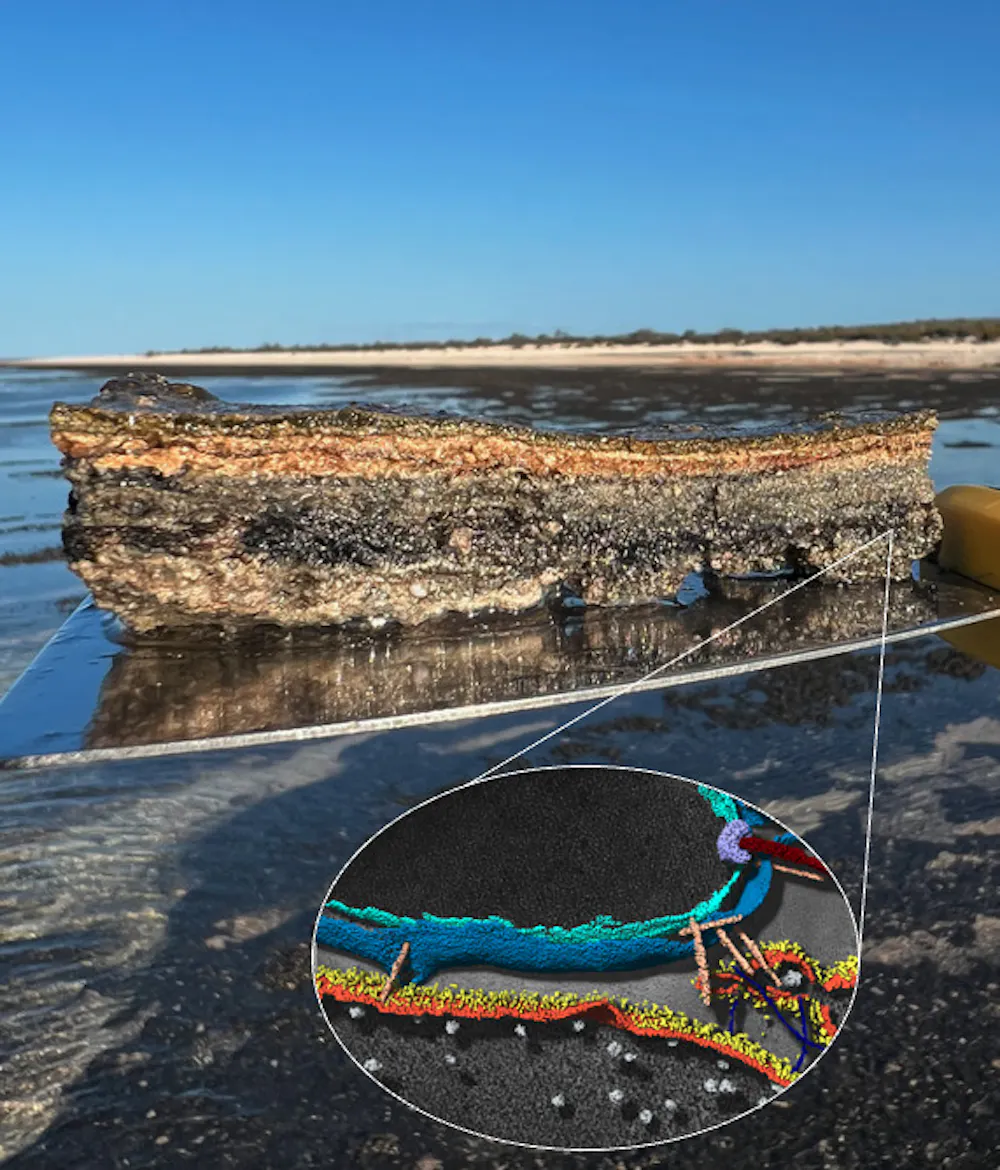
On the shores of the west coast of Australia lies a window to our past: the stromatolites and microbial mats of Gathaagudu (Shark Bay).

To the untrained eye they look like a collection of rocks and slime – but they are in fact teeming with microbial life. And these stromatolites are living “relics” of ancient ecosystems that thrived on Earth billions of years ago.

If you wade past, it feels like you’re walking back through time. In fact, the first bubbles of oxygen that filled the atmosphere on early Earth likely came from ancient stromatolites. You could say we owe our very existence to these piles of rocks.

So, what other secrets of our past could these ecosystems tell us? Through decades of research, we know how early life has woven its path through these “living rocks”. But most recently our team embarked on the greatest genealogy search of them all: searching for our great microbial ancestors, the Asgard archaea.

And in a new paper, published today in the journal Current Biology, we report how this search led to the discovery of a key clue that could help explain how complex life evolved on Earth.

A field of stromatolites in Shark Bay, Western Australia. Brendan Burns

The cells that comprise complex life

Asgard archaea were originally named after Norse gods. This fascinating group of microbes sits on the cusp of one of the most significant events in the evolution of life: the origin of the complex cells that make up plants and animals, known as eukaryotes.

Evidence suggests Asgard archaea are the closest relatives of eukaryotes. And that on an early Earth it was the “marriage” of an ancient Asgard archaeon and a bacterium that led to the first eukaryotes.

They formed an ancient partnership. They shared resources and physically interacted, leading to the first complex cells. Like a Romeo and Juliet tale of two distant families coming together, Asgard archaea and bacteria decided it was time to break from traditional family values.

But we have never seen a model of how this may have occurred. Until now.

Holding up a mirror to the ancient past

Our team used the mats of Shark Bay as a “seed” to establish cultures of these ancient microbes. We are one of only four groups worldwide to achieve this, through years of research with a dedicated team of graduate students nurturing the Asgards like offspring.

But the Asgards were not alone. We found them together with a sulphate-loving bacterium. Could this be a model of how complex life may have started on a primitive Earth?

We began by sequencing the Asgards’ DNA to decipher exactly how these microbes tick at the genetic level. We also used artificial intelligence to model how proteins could have behaved in a world before eukaryotes. Evidence suggested these two microbes were sharing nutrients. In other words, they were cooperating.

But we wanted to delve deeper. What do our great microbial ancestors look like? Here we turned to electron cryotomography, a high-resolution imaging approach that allowed us to observe cells and structures at a nanometre scale.

And here we showed – for the first time – an Asgard archaeon and a bacterium directly interacting. Tiny nanotubes were connecting the two organisms – perhaps reflecting what their great-ancestors did on an early Earth that ultimately led to the explosion of complex life as we know it.

Microbial mat from Gathaagudu (Shark Bay, Australia). Inset: Microscopic image showing Asgard archaeon and bacterium derived from these mats interacting as a model for evolution of complex cells. Iain Duggin/Bindusmita Paul/Debnath Ghosal/Matthew Johnson/Brendan Burns.

Weaving western science with Indigenous knowledge

This was a major discovery – one that originated in Gathaagudu, a World Heritage Site with significant environmental and cultural values.

Aboriginal people first inhabited Gathaagudu over 30,000 years ago. We wanted to recognise and celebrate the language of the Malgana people, one of the traditional language groups of Gathaagudu. We also wanted to connect western science with Indigenous Knowledge in a meaningful way.

To this end and working closely with the world’s foremost Malgana language expert, Kymberley Oakley, and Aboriginal elders, a name was granted for our novel Asgard archaeon from the language of the Malgana people: Nerearchaeum marumarumayae. The species name – marumarumayae – is derived from the Aboriginal language of the Malgana people, meaning “ancient home”, a reference to stromatolites being of ancient origin in Earth’s history.

Weaving Aboriginal language into the naming of our new microbe represents a fitting connection between unique Aboriginal culture in Australia and the ancient microbe discovered that calls the mats of Gathaagudu “home”.

Gathaagudu is under threat from global change, from increased heatwaves, cyclonic events and human activity. And among the values to preserve and conserve are the significant Aboriginal connections as well as the trails of life going back through evolutionary time.

With our study we have peered into our past. And maybe like the Montagues and Capulets of Shakespeare, we see distant families of microbes coming together to bridge the divide and ultimately form the early eukaryotes that eventually led to us: a fragile branch on the evolutionary tree of life.

ref. ‘First contact’ that may have led to complex life on Earth finally witnessed by scientists – https://theconversation.com/first-contact-that-may-have-led-to-complex-life-on-earth-finally-witnessed-by-scientists-280173

Evening Report: https://eveningreport.nz/2026/04/10/first-contact-that-may-have-led-to-complex-life-on-earth-finally-witnessed-by-scientists-280173/

Some countries in Asia are rationing energy – why they’ve been hit hardest by the crisis in the Gulf

Source: The Conversation (Au and NZ) – By Gokcay Balci, Lecturer in Sustainable Freight Transport and Logistics, University of Leeds

The war in Iran has led to a global energy crisis. Shipping traffic through the Strait of Hormuz, a major energy chokepoint that handles roughly 20% of the world’s oil, has been largely blocked by Iran since hostilities broke out in late February. This has, at times, caused oil prices to rise above US$100 a barrel.

As the primary customers of Gulf energy, Asian economies are being hit particularly hard by this crisis. According to figures published by the International Energy Agency in 2025, around 80% of the oil and petroleum products and nearly 90% of the LNG that transited the Strait of Hormuz that year were destined for Asia.

Not all countries in Asia are equally vulnerable. Those most exposed to energy market disruption share a set of structural characteristics: heavy reliance on imported fossil fuels, limited fiscal space and constrained energy systems that make it difficult to switch to alternatives quickly.

Countries such as Bangladesh, Pakistan and Sri Lanka are all heavily dependent on imported oil and gas to meet domestic demand. However, they lack the foreign exchange reserves needed to secure energy supplies in volatile global markets. When prices spike or supplies tighten, these economies are forced into painful trade-offs between energy access, inflation and fiscal stability.

Wealthier Asian economies such as Japan, South Korea, Hong Kong and Singapore have greater financial resources, granting them superior purchasing power in volatile markets. But they, too, are structurally exposed to global energy crises. Their energy systems are also deeply dependent on fuel imported from the Gulf, which leaves them sensitive to supply disruptions.

These countries have the fiscal capacity to maintain strategic energy reserves, providing them with temporary relief from disruption. Japan and South Korea, for example, have both initiated record-breaking releases from their state oil reserves since the start of the Iran war.

But with the exception of China, which has huge stockpiles of oil and LNG as well as robust domestic energy supply, these reserves are not designed to offset prolonged disruptions. Japan and South Korea’s national stockpiles only hold enough oil for around 200 days.

Governments under pressure

Faced with tightening supplies and rising prices, many Asian governments have moved quickly to curb energy demand. One of the most immediate responses has been to limit mobility. The Philippines, Pakistan and Sri Lanka have all introduced four-day working weeks or have extended public holidays to cut commuting and fuel use.

Pakistan has also introduced hybrid working arrangements for public-sector employees, encouraging remote work to reduce transport demand. Education systems have been similarly affected. Bangladesh brought forward Ramadan holidays in universities, while Pakistan closed schools for two weeks from March 10 and shifted higher education online.

In some cases, governments have introduced more direct restrictions. Myanmar’s military leaders have imposed fuel rationing and have restricted private vehicle use to alternating days based on licence plate numbers.

Other interventions have focused on managing demand in less disruptive ways. Thailand, for example, has raised recommended air-conditioning temperatures to 27°C and is encouraging energy-efficient workplace practices such as replacing suits with short-sleeved shirts.

Some Asian governments have turned to subsidies to shield households and businesses from rising energy costs. Indonesia has allocated tens of billions of US dollars to maintain affordable fuel and electricity prices, while Thailand has capped cooking gas prices and promoted alternative fuels such as biodiesel.

However, subsidies are proving difficult to sustain. For lower-income countries in particular, fiscal constraints limit how long such support can be maintained. Pakistan initially introduced targeted subsidies for farmers and the transport sector, but has been forced to scale them back as the crisis has continued.

Perhaps the most consequential response has been in Asia’s power sector. As energy supplies have tightened and prices surged, several Asian countries have reverted to coal – a fuel many nations have been phasing out.

Thailand has restarted two decommissioned units at the Mae Moh coal-fired power plant, while South Korea and Japan have lifted restrictions on coal generation to allow older plants to operate at higher capacity.

The Mae Moh coal-fired power plant in Lampang, Thailand. Tavarius / Shutterstock

The current energy market disruption has exposed structural vulnerabilities in Asia’s energy systems, including import dependence, limited diversification and fiscal constraints. Governments have relied on a mix of demand reduction, subsidies and fuel switching to limit the impact.

However, these are stopgap measures. If disruptions persist, these countries may be forced to rethink their energy strategies more fundamentally. This could accelerate investment in renewables and nuclear power, as well as efforts towards regional energy integration. But it also risks entrenching coal use and, in the process, hindering global climate goals.

Either way, the current crisis is a reminder that energy security and economic stability remain tightly intertwined and that disruptions in a single chokepoint can ripple across the global economy.

ref. Some countries in Asia are rationing energy – why they’ve been hit hardest by the crisis in the Gulf – https://theconversation.com/some-countries-in-asia-are-rationing-energy-why-theyve-been-hit-hardest-by-the-crisis-in-the-gulf-279888

Evening Report: https://eveningreport.nz/2026/04/10/some-countries-in-asia-are-rationing-energy-why-theyve-been-hit-hardest-by-the-crisis-in-the-gulf-279888/

The human body isn’t a masterpiece of design – it’s a patchwork of evolutionary compromise

Source: The Conversation (Au and NZ) – By Lucy E. Hyde, Lecturer, Anatomy, University of Bristol

The human body is often described as a marvel of “perfect design”: elegant, efficient and finely tuned for its purpose. Yet, when we look closer, a rather different picture emerges.

Far from being a flawless machine, the body reads more like a patchwork of compromises shaped by millions of years of evolutionary tinkering. Evolution does not design structures from scratch. Rather, it modifies what already exists.

As a result, many aspects of human anatomy are just “good enough” solutions – functional, but far from perfect. Some of the most familiar medical problems and ailments arise directly from these inherited constraints.

The spine

The human spine tells this story best.

Our vertebral column has evolved little from our four-legged, quadrupedal tree-dwelling ancestors, where it functioned primarily as a flexible beam for smooth movement from branch to branch, while also protecting the spinal cord.

When humans adopted an upright bipedal gait, the spine retained these functions. But it was also repurposed for the additional need of supporting our body weight vertically and maintaining our centre of gravity, while still allowing the flexibility for us to move. These opposing demands creates strain.

The characteristic curves of the human spine helps distribute weight, but it also predisposes us to lower back pain, herniated discs and degenerative changes affecting its most important function – protection the spinal cord and surrounding nerves. These conditions are extraordinarily common, not because the spine is inherently poorly made, but because it’s doing a job it was never originally designed to do.

The neck

Another clear argument against divine design is the recurrent laryngeal nerve, which takes a course that simply makes no sense to invent.

This nerve, which is a branch of the vagus nerve, predominantly controls our organs’ “rest and digest” functions (such as slowing heart rate and breath). The laryngeal nerve also connects the brain and larynx, helping control speech and swallowing.

Logically, one might expect it to use the most direct route to connect brain and larynx. Instead, it descends from the brain into the chest, loops around a major artery, then travels back up to the voice box.

This detour is not a clever design, but a historical leftover from our fish-like ancestors when the nerve took a straightforward path around the gill arches. As necks lengthened over evolutionary time, the nerve was stretched rather than rerouted.

This inefficiency can increase our vulnerability to injury during surgery.

The eyes

Even the eyes reflect evolutionary compromise.

In humans and other vertebrates, the retina (the light-sensitive layer at the back of the eyeball) is wired “backwards.” This means light must pass through layers of nerve fibres before reaching the photoreceptors – specialised cells responsible for detecting light and converting that into a nerve impulse to send to the brain.

The optic nerve then exits through the back of the retina, creating a blind spot just below the horizontal level of the eye where no vision is possible. The brain fills in this gap seamlessly, so we rarely notice it.

Our incredible vision has come with a compromise. mark gusev/ Shutterstock

So while we’ve developed incredible vision and light receptor cells, this has happened at the expense of having a gap in our visual field.

The teeth

Our teeth offer another reminder that evolution prioritises adequacy over durability.

Humans develop two sets of teeth: baby teeth and adult teeth – and that’s all. Once adult teeth are lost, they’re not replaced – unlike sharks, which continually regenerate teeth throughout life.

In mammals, tooth development is tightly regulated and linked to complex jaw growth and feeding strategies. This system worked well for our ancestors, but for modern humans it leaves us vulnerable to decay and tooth loss.

Wisdom teeth provide another example of evolutionary lag. Our ancestors had larger jaws, suited to tougher diets that required heavy chewing. Over time, human diets softened and jaw size decreased. However, the number of teeth did not change as quickly. Many people no longer have space for their third molars – leading to impaction, crowding and often requiring surgical removal.

Wisdom teeth aren’t useless in principle, but they no longer fit comfortably within modern skulls.

The pelvis

Childbirth presents one of the most profound evolutionary compromises. Like the spine, the human pelvis must balance two competing demands: efficient bipedal walking and birthing large-brained infants.

A narrow pelvis improves locomotion, but restricts the birth canal’s size. Meanwhile, human babies have unusually large heads relative to body size, resulting in a difficult and sometimes dangerous birth process – often requiring outside assistance.

This tension between mobility and brain size has shaped not only anatomy but also social behaviour, encouraging cooperative care and cultural adaptations around childbirth.

Evolutionary persistence

Evolution doesn’t necessarily eliminate structures unless they impose a strong disadvantage. So some anatomical features persist despite offering limited benefit.

The appendix, once considered a completely useless evolutionary left-over, is now thought to have minor immune functions. Yet it can become inflamed, causing appendicitis – a potentially life-threatening condition.


Read more: Intelligent design without a creator? Why evolution may be smarter than we thought


Similarly, the sinuses, have unclear functions. They may lighten the skull or influence voice resonance, and we can even use their size and variability for forensic identification. But the sinus’s drainage pathways go direct into the nose, making it prone to regular blockage and infection, a developmental byproduct rather than a purposeful adaptation.

Even tiny muscles around the ears hint at our evolutionary past. In many mammals, tiny ear muscles allow the outer ear (pinna) to swivel, improving directional hearing. Humans have these muscles, but most people cannot use them effectively.

Our bodies are not perfectly designed, but are a living archive of evolution. Anatomy reveals a historical record of adaptation, compromise and contingency. Evolution does not aim for perfection; it works with what is available, modifying structures step by step.

Understanding anatomy through this evolutionary lens can also help us reframe how we see common medical problems. Back pain, difficult childbirth, dental crowding and sinus infections are not random misfortunes. They are, in part, the consequences of our evolutionary history.

ref. The human body isn’t a masterpiece of design – it’s a patchwork of evolutionary compromise – https://theconversation.com/the-human-body-isnt-a-masterpiece-of-design-its-a-patchwork-of-evolutionary-compromise-279343

Evening Report: https://eveningreport.nz/2026/04/10/the-human-body-isnt-a-masterpiece-of-design-its-a-patchwork-of-evolutionary-compromise-279343/

Psilocybin mushrooms are going mainstream, but scientific research and regulation lag behind

Source: The Conversation (Au and NZ) – By Hollis Karoly, Associate Professor of Psychiatry, University of Colorado Anschutz Medical Campus

Amid a renaissance in the science of psychedelics, public interest in psilocybin – or magic mushrooms, as they’ve long been known – is surging.

One study found that rates of psilocybin use increased 44% among adults ages 18-29 from 2019 to 2023, and 188% among those over age 30. This amounts to more than 5 million adults using psilocybin in 2023 alone. And those numbers are rising: A study published in early 2026 found that about 11 million adults in the United States used psilocybin in the previous year.

In many ways, the growing scientific and public interest in psilocybin mirrors the early days of recreational cannabis legalization in the U.S. Much like how cannabis commercialization quickly outpaced the development of regulations necessary to protect public health, the expanding psilocybin market and surging public interest are moving faster than the science and regulations needed to ensure it is used safely.

We are substance use researchers who have spent more than a decade studying the many new, high-THC cannabis products that have flooded the legal-market.

Now, we similarly aim to bridge the gap between public enthusiasm for psilocybin and the limited scientific evidence available about its potential benefits and risks. Currently, this type of real-world data on the effects of psilocybin mushrooms is almost nonexistent.

Psilocybin research is in its infancy, but the market for it is booming. Microgen Images/Science Photo Library via Getty Images

How do psilocybin mushrooms work?

Psilocybin is a prodrug, which means that it has very low activity until the body converts it into psilocin. Psilocin is the compound primarily responsible for the psychoactive effects of psilocybin mushrooms.

Psilocin resembles the chemical messenger serotonin, which is involved in regulating a range of physiological and psychological functions, including mood, appetite, cognition and sensory perception. As a result, when psilocin binds to serotonin receptors, it alters how people think, feel and experience the world.

Importantly, research suggests that psilocin also alters the brain’s ability to strengthen or weaken neural connections, referred to as synaptic plasticity. This process likely underlies the profound and sometimes long-lasting effects psilocybin mushrooms can have on thoughts, emotions and perception.

Psilocybin mushrooms contain numerous other compounds, together known as tryptamines, such as baeocystin, norbaeocystin and aeruginascin. Research on rodents shows that mushrooms containing these compounds may elicit stronger and longer-lasting effects than psilocybin alone.

But very little is known about how these other tryptamines affect humans. This is because federal regulations require researchers to use an isolated, synthetic version of psilocybin in clinical studies rather than the entire mushroom.

Thus, the many ongoing clinical trials testing psilocybin as a treatment for various mental health conditions use synthetic psilocybin that does not contain these other tryptamines.

Psilocybin mushrooms sit in a legal gray area

Psilocybin is more accessible than ever before.

In 2019, Denver, Colorado, became the first American city to decriminalize psilocybin mushrooms. This means that possession becomes the lowest law enforcement priority and criminal penalties are reduced or eliminated, but it does not fully legalize them.

Over the next two years, several other U.S. cities including Oakland and Santa Cruz, California; Seattle, Washington; and Detroit, Michigan, followed suit. In 2020, Oregon legalized psilocybin for supervised use in licensed settings, and Colorado did the same in 2022. These legal, supervised-use programs allow access to psilocybin mushrooms in regulated environments without a prescription.

Even for people living outside those states and cities, the barriers to accessing psilocybin mushrooms are low. With a quick Google search and around US$35, anyone can legally purchase kits containing the materials needed to grow psilocybin-containing mushrooms. These kits are legal to buy and sell because they contain only mushroom spores, which are tiny reproductive cells from which mushrooms grow. Once these spores begin growing into mushrooms, they can produce psilocybin, making the mushrooms a federal Schedule 1 substance.

Because psilocybin mushrooms exist in this legal gray area and are governed by different rules across states, psilocybin mushrooms are essentially unregulated across most of the U.S.

As a result, consumers lack reliable information about what their mushrooms contain, how much they should take and how to use them safely.

Psychedelic mushrooms have been decriminalized in only a handful of states, but many people already grow them at home. OllyPlu/iStock via Getty Images

Psilocybin potency is increasing in the US

Much like the cannabis industry, which has seen a steady increase in product variety and product strength since legalization, the psilocybin mushroom market is experiencing rapid growth.

For instance, psilocybin edibles are now available and increasingly popular.

In addition, selective cultivation practices are being used by individual and commercial growers to systematically increase the amount of psilocybin contained in their mushroom strains. For example, the Oakland Hyphae Cup, a community contest intended to identify the best mushroom strains, has shown wide variability in psilocybin content across samples.

Researchers are identifying a similar pattern of widely variable psilocybin content in scientific studies of psychedelic mushrooms from around the world.

Potential harms of psilocybin

Despite psilocybin’s therapeutic promise, it also carries risks. Psilocybin can cause headaches, nausea, dizziness and changes in blood pressure.

Less commonly, some people experience psychotic symptoms, suicidal thoughts, anxiety, paranoia, confusion or emotional distress.

Another serious potential side effect of psychedelic drugs is what’s known as hallucinogen persisting perception disorder. It involves ongoing perceptual distortions similar to those experienced while directly under the influence of psilocybin, which can persist for weeks, months or years, even once the psilocybin has left the body.

Harms are more likely when people take high doses.

As mushroom potency increases without market regulation, consumers may inadvertently ingest more psilocybin than intended, increasing the risk of harm. Without sufficient research on modern psilocybin products, consumers have little guidance on how to reduce potential harms.

Next steps in research and regulation

Studying psilocybin in the real world requires creative research approaches.

Our team hopes to work within federal restrictions to study people using their own psilocybin mushroom products at home, while providing real-time data to our research team using app-based surveys.

Independent laboratories using state-of-the-art measurement techniques can aid researchers like us by providing information about the potency of the mushroom products that people are using.

While ongoing clinical trials provide important data about the effects of psilocybin under tightly controlled conditions, real-world data is needed to understand how modern psilocybin mushrooms are used and experienced by consumers.

These insights matter not only for scientists and policymakers but for the growing number of people trying psilocybin mushrooms for relief, self-improvement or out of curiosity. In a largely unregulated market, and with few clear guidelines on safe use, consumers are left to simply figure it out on their own.

ref. Psilocybin mushrooms are going mainstream, but scientific research and regulation lag behind – https://theconversation.com/psilocybin-mushrooms-are-going-mainstream-but-scientific-research-and-regulation-lag-behind-277472

Evening Report: https://eveningreport.nz/2026/04/10/psilocybin-mushrooms-are-going-mainstream-but-scientific-research-and-regulation-lag-behind-277472/

¡Ándale! ¡Arriba! Speedy Gonzales set to make his triumphant return to the silver screen

Source: The Conversation (Au and NZ) – By Jared Bahir Browsh, Assistant Teaching Professor of Critical Sports Studies, University of Colorado Boulder

“¡Ándale! ¡Ándale! ¡Arriba! ¡Arriba!”

Meaning “hurry up, let’s go,” the trademark slogan of Speedy Gonzales was, for generations of children, the first Spanish words they learned.

But by the 1980s, ABC had pulled his cartoons due to concerns that his dress, accent and characters like his cousin, Slowpoke Rodriguez, were insensitive toward Mexicans and Mexican Americans. The Cartoon Network followed suit in 1999.

I’ve studied and written about the history of animation, including how characters have been received around the world. Though rooted in a well-intentioned effort at cultural sensitivity, taking Speedy Gonzales off the air was a step too far for many viewers. He was one of the few cartoon characters rooted in Mexican identity, and he’d become a cultural icon across all of Latin America. The ensuing uproar in the wake of his cancellation prompted the Cartoon Network to reinstate the cartoon mouse in 2002.

With Warner Bros. greenlighting a new Speedy Gonzales movie in January 2026, the character’s redemption arc appears complete.

A speedy rise to stardom

“The fastest mouse in all of Mexico” first appeared in the 1953 animated short “Cat-Tails for Two.”

He was redesigned with his iconic yellow sombrero and red kerchief when he starred in his eponymous 1955 film, which won the Oscar for Best Animated Short.

The short film features the general framework for future plots: Speedy helps members of his border community – a place inspired by Ciudad Juarez, just south of El Paso, Texas – evade the conniving Sylvester the Cat.

It opens with a town of starving mice looking longingly at the AJAX cheese factory through a fence establishing an “international border.” They try to determine who will try to outrun Sylvester, the factory’s guard. One of the mice says that his sister is friends with Speedy Gonzales. (Another pipes in that Speedy is friends with everybody’s sister, signaling Speedy as something of a Don Juan.) After they call on Speedy, he uses his speed and smarts to outrun and outwit Sylvester.

The basic premise also appears in a number of cartoons, from Tom and Jerry to Roadrunner and Wile E. Coyote: An antagonist is consistently thwarted by a clever protagonist who avoids increasingly complicated traps and attempts at capture.

Speedy Gonzales is unique, though, in that he was the first cartoon star to be from a Latin American country.

In the 1940s, with the European and Asian markets cut off due to World War II, Disney had turned to the Latin American market. The studio produced “Saludos Amigos” in 1942 and “The Three Caballeros” in 1944 to abide by President Franklin D. Roosevelt’s Good Neighbor Policy, which aimed to leverage diplomacy, trade and cultural exchange to improve relations with Latin America.

Speedy ended up appearing in 45 theatrical shorts. In 1969, Warner Bros. shut down its animation studio, but the character lived on in Saturday morning cartoon anthologies like “The Bugs Bunny Show,” which repackaged older cartoons for younger audiences.

Animation’s racial reckoning

The Cartoon Network pulled Speedy Gonzales from the air at a time when networks and studios were starting to reassess animated characters from earlier eras.

Many early cartoon characters, including Mickey Mouse, had been modeled after blackface minstrel characters. Warner Bros.‘ first star, Bosko, was originally patented as “Negro Boy.”

Since racist tropes were ubiquitous in early-20th-century animation, films and shorts like Disney’s “Dumbo,” “Mickey’s Mellerdrammer” or Warner Bros.’ “All This and Rabbit Stew” were either pulled, edited or updated to feature a content warning.

[embedded content]
Speedy Gonzales’ cousin, Slowpoke Rodriguez, was one of the cartoon’s characters deemed culturally insensitive.

But after The Cartoon Network pulled Speedy Gonzales from the air in 1999, there was unexpected pushback from the Hispanic American community and the character’s Latin American fans. Groups like League of United Latin American Citizens, the oldest Hispanic civil rights organization in the United States, declared Speedy a cultural icon and requested that his cartoons return to the air.

Back when Speedy Gonzales was first introduced to audiences, Hollywood had been filming more movies in Mexico and at the U.S.-Mexico border. However, most of these films depicted Latinos as either incompetent or villains.

In this regard, Speedy represented something different. Though the character’s English speech and accent reflected stereotypes – and he was voiced by a white actor, Mel Blanc – the character was ultimately a clever, quick-witted and good-natured protagonist. And the Spanish dubbing of his cartoons in Latin America had removed the stereotypical accent altogether.

Let the people decide

The trajectory of Speedy Gonzales resembles that of another controversial cartoon character: Apu Nahasapeemapetilon from “The Simpsons.”

An Indian immigrant who earned his Ph.D. in computer science in his home country, Apu becomes the manager of a convenience store in the U.S.

Some critics viewed Apu’s depiction as problematic; voiced by a white actor, Hank Azaria, Apu’s exaggerated Indian-American accent and catchphrase – “Thank you, come again” – was routinely mimicked and mocked by viewers of the show. Others, however, saw Apu as the embodiment of the American Dream: He was intelligent, hardworking and morally grounded.

Cultural theorists like Jacques Derrida and Stuart Hall have written about the complexities of how audiences understand – and either resist or embrace – what they read and watch. They ultimately argue that viewers and readers often interpret media however they see fit, regardless of the creators’ intent. For example, many minority groups who are underrepresented or misrepresented in popular culture will nonetheless find their own meaning and inspiration in characters, even if those characters weren’t supposed to represent those groups in the first place.

This happened with “The Goofy Movie.” Some audiences went on to describe the 1995 film as Disney’s first “Black” animated feature, despite the fact that the characters’ race is never mentioned. There were hints, of course: Black R&B singer Tevin Campbell played the movie’s fictional pop star, Powerline, and the themes of fatherhood and generational tensions eerily echo those in the play “Fences,” written by Black playwright August Wilson.

Of course, in the case of a character like Speedy Gonzales, depictions can become more nuanced as cultural norms and sensitivities change. Jorge R. Gutiérrez is set to direct the animated feature. If his work on films like “The Book of Life” is any indication, he’ll be well-equipped to bring cultural awareness to the animated feature – even if Speedy continues to sport his big, floppy sombrero.

ref. ¡Ándale! ¡Arriba! Speedy Gonzales set to make his triumphant return to the silver screen – https://theconversation.com/andale-arriba-speedy-gonzales-set-to-make-his-triumphant-return-to-the-silver-screen-278753

Evening Report: https://eveningreport.nz/2026/04/10/andale-arriba-speedy-gonzales-set-to-make-his-triumphant-return-to-the-silver-screen-278753/