More GPs will be able to diagnose and treat ADHD – and experts say it’s a positive step

Source: The Conversation (Au and NZ) – By Daryl Efron, Associate Professor, Department of Paediatrics, The University of Melbourne

skynesher/Getty

The Victorian government has announced it will train 150 GPs to diagnose and start treatment for attention deficit hyperactivity disorder (ADHD) in adults and children.

This decision could shorten wait times and lower costs for people yet to be diagnosed. It will also bring Victoria in line with most other Australian states.

But how will it all work?

How do we currently diagnose ADHD?

Diagnosing ADHD requires a comprehensive assessment. This allows the doctor to understand a person’s medical history and the impact of their symptoms on how they function in different settings, for example at school or in social situations.

Then the patient has to learn to manage their ADHD, with the support of professionals such as psychologists and occupational therapists. This might mean modifying aspects of their lifestyle such as sleep, nutrition or exercise.

They may also be given strategies to help them cope at school, home or work, such as scheduling regular rest breaks.

Stimulant medication is often prescribed to help the patient focus better and to reduce impulsive behaviours.

About 6% of boys and 2% of girls under 12 in Australia are prescribed ADHD medications. This figure rises to 9% of boys and 5% girls aged 12–17 years, and 2–3% in adults.

Currently in Victoria, GPs can continue prescribing ADHD medication to a patient if a specialist (such as a paediatrician or psychiatrist) has already made a diagnosis.

At the moment Victorian GPs need a government permit to continue prescribing and the patient must be reviewed by a specialist every two years.

A costly condition

In many parts of Australia, parents wait months or even years to get an appointment with a paediatrician to be assessed for ADHD and related conditions. This is the case in both the public and private health-care systems.

These long wait times can lead to delayed diagnoses in children, which means delays in starting treatment. This can result in ongoing problems such as inattention, impulsivity and hyperactivity, which can have a major impact on learning, relationships and social functioning.

There is also the financial burden on families on getting assessments and diagnoses for ADHD from a specialist.

Similarly, Victorian adults who wish to be assessed for ADHD must see a psychiatrist. This need for specialist appointments makes the diagnosis process more costly than your average GP visit.

One benefit of involving GPs in ADHD care is that this should free up appointments with paediatricians and psychiatrists for people with ADHD or other conditions.

So, how will this training work?

Following the Victorian government’s decision, GPs can undertake additional training to diagnose and treat ADHD in patients aged six years and above. This includes prescribing medication alongside other non-medication care options such as behavioural therapy.

This accredited training program will be overseen by the Royal Australian College of General Practitioners (RACGP).

So far, the Victorian government has committed A$750,000 towards training an initial 150 GPs by September 2026.

Across Australia, ADHD-specific training for GPs varies between states. However, the RACGP is also involved in delivering training to GPs in Western Australia, South Australia and New South Wales.

What’s happening in other states?

Queensland has been the frontrunner in GP-managed ADHD care. Since 2017, Queensland GPs have been able to both diagnose ADHD and prescribe stimulant medication for children. As of December 2025, they can also treat adults with ADHD.

In June 2025, the WA government committed A$1.3 million to train GPs to diagnose and treat ADHD in patients aged ten and older. The first group of 65 local GPs is expected to be trained by the end of 2026.

Since September 2025, GPs in NSW have been able to prescribe stimulant medications to patients with an existing ADHD diagnosis, aged six years and older. However, they must first apply to become a “continuation prescriber” and meet certain criteria.

As of 2026, South Australian GPs can access additional training to diagnose ADHD and prescribe medication to both children and adults, without the need for specialist appointments.

Governments in Tasmania and the Australian Capital Territory have also committed to revise their policies around ADHD care.

The Northern Territory remains the only Australian jurisdiction that has not announced ADHD-related reforms.


Read more:
GPs will be a great help for managing ADHD medications. But many patients will still need specialists


Issues to watch out for

ADHD assessment must consider a range of factors. Most patients with ADHD have one or more other conditions. Common ones in children include learning difficulties, anxiety and autism spectrum disorder.

And in some people, ADHD symptoms might actually be caused by something else, such as sleep deprivation, depression, learning disorders or trauma.

Medication can be extremely helpful to manage symptoms. But patients taking medication need to be regularly reviewed to ensure the medication is having the desired impact. GPs must also monitor any side effects to make sure they are not too severe.

On the whole, this policy change has the potential to improve access to medical care for Victorians with ADHD. However, we must give careful consideration to the details of the training, implementation and supports available.

Daryl Efron has received research grants from the Medical Research Future Fund, National Health and Medical Research Council, Victorian Medical Research Acceleration Fund (Department of Jobs, Precincts and Regions), and the Victorian government Department of Families, Fairness and Housing

Nadia Coscini is currently the paediatrician on the Royal Children’s Hospital/Murdoch Children’s Institute/ North Western Melbourne Primary Health Network ADHD shared care feasibility study which is funded by the North Western Melbourne Primary Health Network. Nadia also receives funding for a postgraduate PhD scholarship through the NHMRC (No. 2031478).

ref. More GPs will be able to diagnose and treat ADHD – and experts say it’s a positive step – https://theconversation.com/more-gps-will-be-able-to-diagnose-and-treat-adhd-and-experts-say-its-a-positive-step-274959

Evening Report: https://eveningreport.nz/2026/02/05/more-gps-will-be-able-to-diagnose-and-treat-adhd-and-experts-say-its-a-positive-step-274959/
Heating up the hāngī pit ahead of Waitangi Day celebrations

Source: Radio New Zealand

Marae assistant chairman and renowned Māori chef Joe Mcleod is helping his marae create around 500 ready-to-eat hāngī packs for the event in Wellington. Layla Bailey-McDowell / RNZ

A Wellington marae is putting its hāngī made up of mostly koha kai underground on Friday, in preparation for the city’s Waitangi Day celebrations tomorrow.

Thousands are expected to gather at Waitangi Park in Te Whanganui a Tara on Friday for large community event Te Rā o Waitangi that honoured the signing of Te Tiriti o Waitangi in 1840.

Ngā Hau e Whā o Paparārangi marae in Newlands helped feed those celebrating Waitangi Day in the city for many years.

Marae assistant chairman and renowned Māori chef Joe Mcleod had previously led hāngī operations to feed thousands at Te Tii Waitangi Marae.

Joe McLeod Supplied/Peter Gordon

This year, he was helping his marae create around 500 ready-to-eat hāngī packs for the event in Wellington, featuring local kai like meat and huawhenua (vegetables).

“Pork, lamb chicken in our packs. Potato, pumpkin, kumara, cabbage and stuffing. That’s the standard pack, and then we have a vegetarian pack,” he said.

“They go real quick.”

Mcleod said much of the kai was donated by the community and local supermarkets, and he was amazed by the support.

“We have a very strong local network.”

He said helping feed the crowds there was a lovely experience, that recognised the important moment in the history of Aotearoa.

“We’re there to celebrate and be there to provide a service for our people,” he said.

“It’s a fun thing. We’re giving back to celebrate with our country, and it’s a special event to celebrate a special moment.”

Mcleod was classically trained in French cuisine and dozens more culinary styles throughout his long career.

These days, he was more focussed on sharing matauranga Māori kai with other marae to pass on his knowledge.

“Letting them know that our food culture is still alive.

“The resources our ancestors used are still here, most of them, and our primary resources are still accessible through various connections that marae networks have.”

Live music, kapa haka and local kai are some of the highlights expected in Wellington from midday tomorrow, ahead of Saturday’s Wellington Pasifika Festival also at Waitangi Park from midday.

Sign up for Ngā Pitopito Kōrero, a daily newsletter curated by our editors and delivered straight to your inbox every weekday.

– Published by EveningReport.nz and AsiaPacificReport.nz, see: MIL OSI in partnership with Radio New Zealand

LiveNews: https://nz.mil-osi.com/2026/02/05/heating-up-the-hangi-pit-ahead-of-waitangi-day-celebrations/

Three people hurt after crash in Waikato

Source: Radio New Zealand

Cambridge Road near Racecourse Road heading towards State Highway 1 was closed. RNZ / Tim Brown

Three people are injured after two vehicles collided in Cambridge, Waikato.

Police said Cambridge Road near Racecourse Road heading towards State Highway 1 was closed after the crash, which was reported just after 2pm.

Three people are injured, one in a serious condition and two sustaining moderate injuries, a police spokesperson said.

“They are receiving medical attention,” they said. “The road will remain closed as emergency services work the scene.

The Serious Crash Unit has been advised.”

Cordons are in place at SH1 Cambridge East exit for southbound traffic and Peake Road for northbound traffic.

Police ask motorists to choose alternative routes or delay travel.

Sign up for Ngā Pitopito Kōrero, a daily newsletter curated by our editors and delivered straight to your inbox every weekday.

– Published by EveningReport.nz and AsiaPacificReport.nz, see: MIL OSI in partnership with Radio New Zealand

LiveNews: https://nz.mil-osi.com/2026/02/05/three-people-hurt-after-crash-in-waikato/

Crime spree ends in custody

Source: New Zealand Police

Police have thwarted a small crime wave across a west Auckland suburb, with a man facing a raft of burglary charges.

Waitematā West Tactical Crime Unit has been investigating the spree of offending in recent weeks in Glen Eden.

Police have laid four burglary charges, with a further 10 burglaries still under investigation.

Detective Sergeant Mike Mead says Police first became aware of an increase in reports of property crime in Glen Eden in late January.

“Our team started looking into instances of burglary and shoplifting around the area,” he says.

“In a lot of cases the same offender description began to emerge.”

The TCU team then set about locating a person of interest.

“Through eyewitness accounts and local knowledge, it didn’t take long to identify the alleged offender,” Detective Sergeant Mead says.

“He was arrested and charged not long afterwards.”

Detective Sergeant Mead says a 23-year-old man is facing charges over four Glen Eden burglaries, and further charges cannot be ruled out.

“I am pleased with the work of our team bringing this alleged offender to account, we will not accept this type of behaviour and offending in our community.”

The man appeared in the Waitākere District Court earlier this week on multiple charges of burglary, theft, receiving, assault, speaking threateningly and shoplifting.

He was remanded in custody and is due to reappear on 26 February.

ENDS.

Amanda Wieneke/NZ Police

LiveNews: https://nz.mil-osi.com/2026/02/05/crime-spree-ends-in-custody/

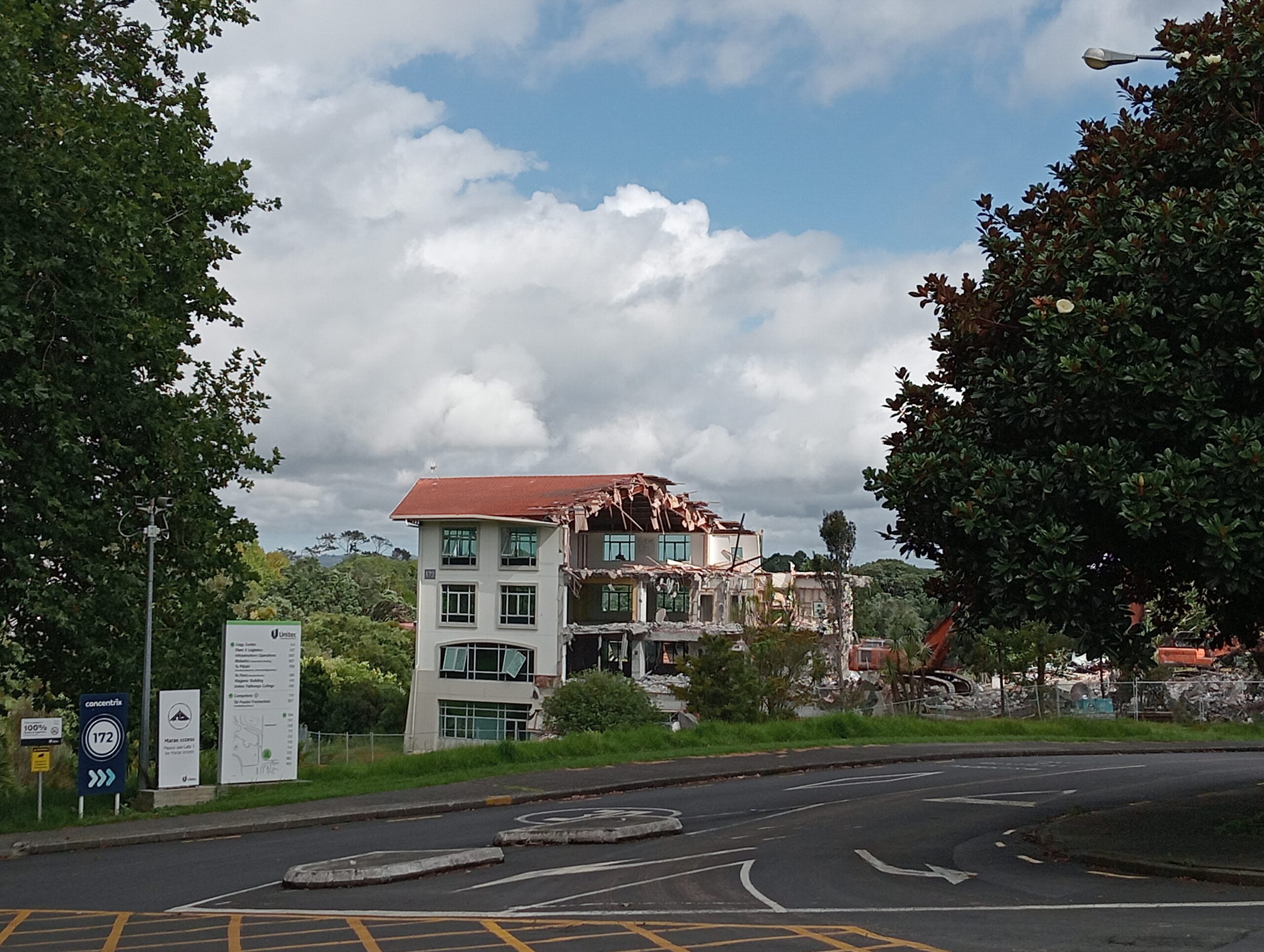
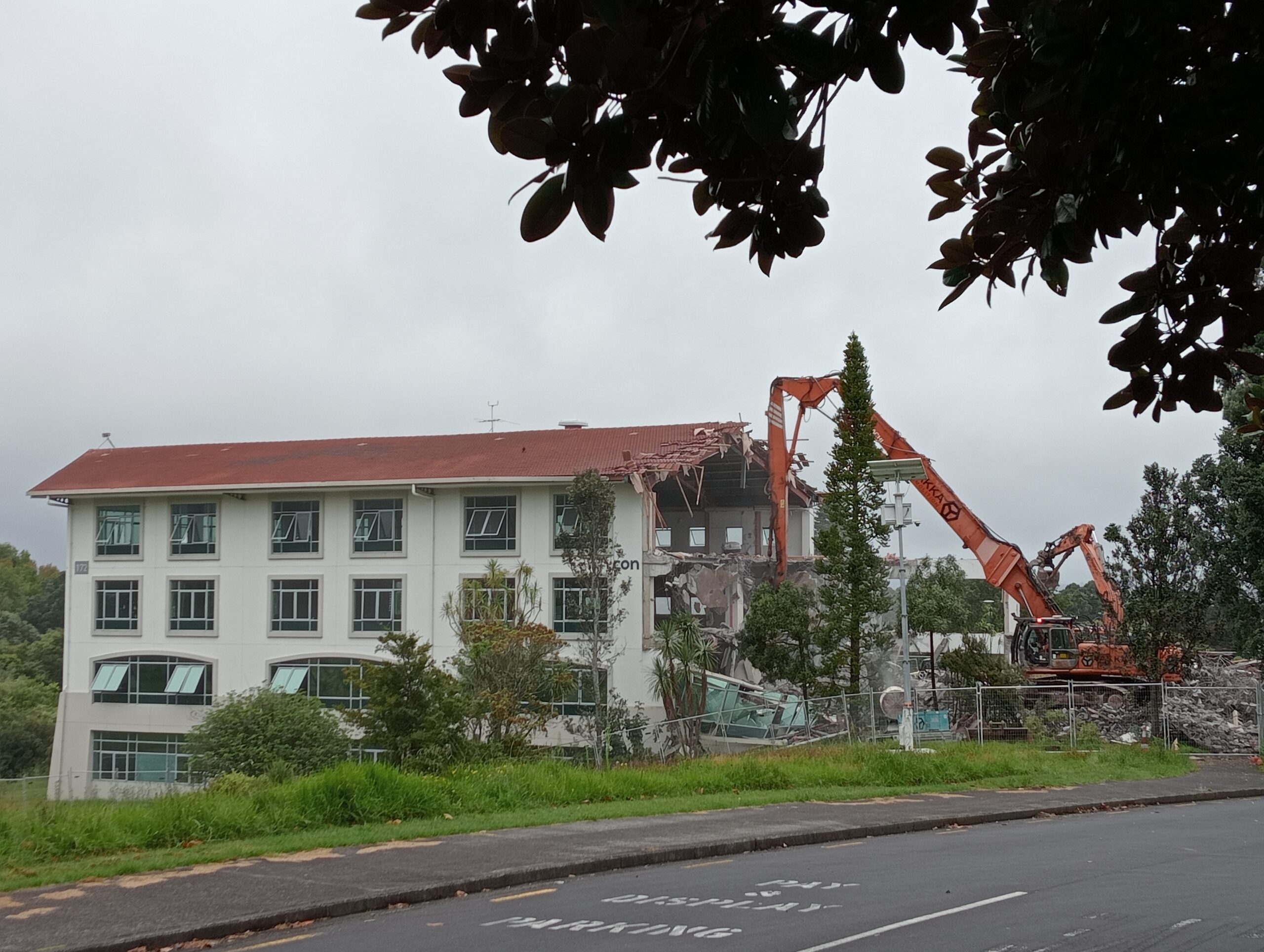
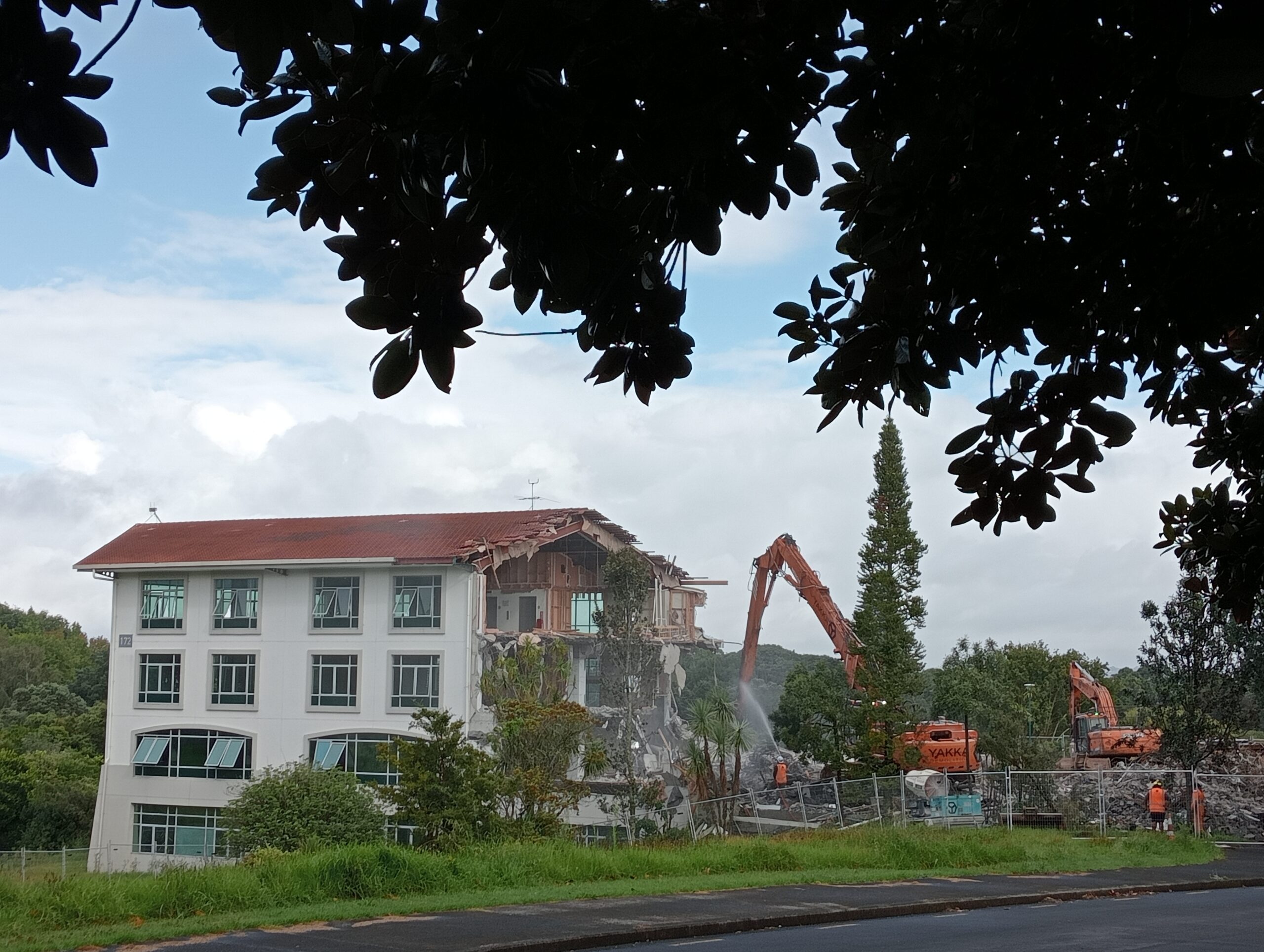
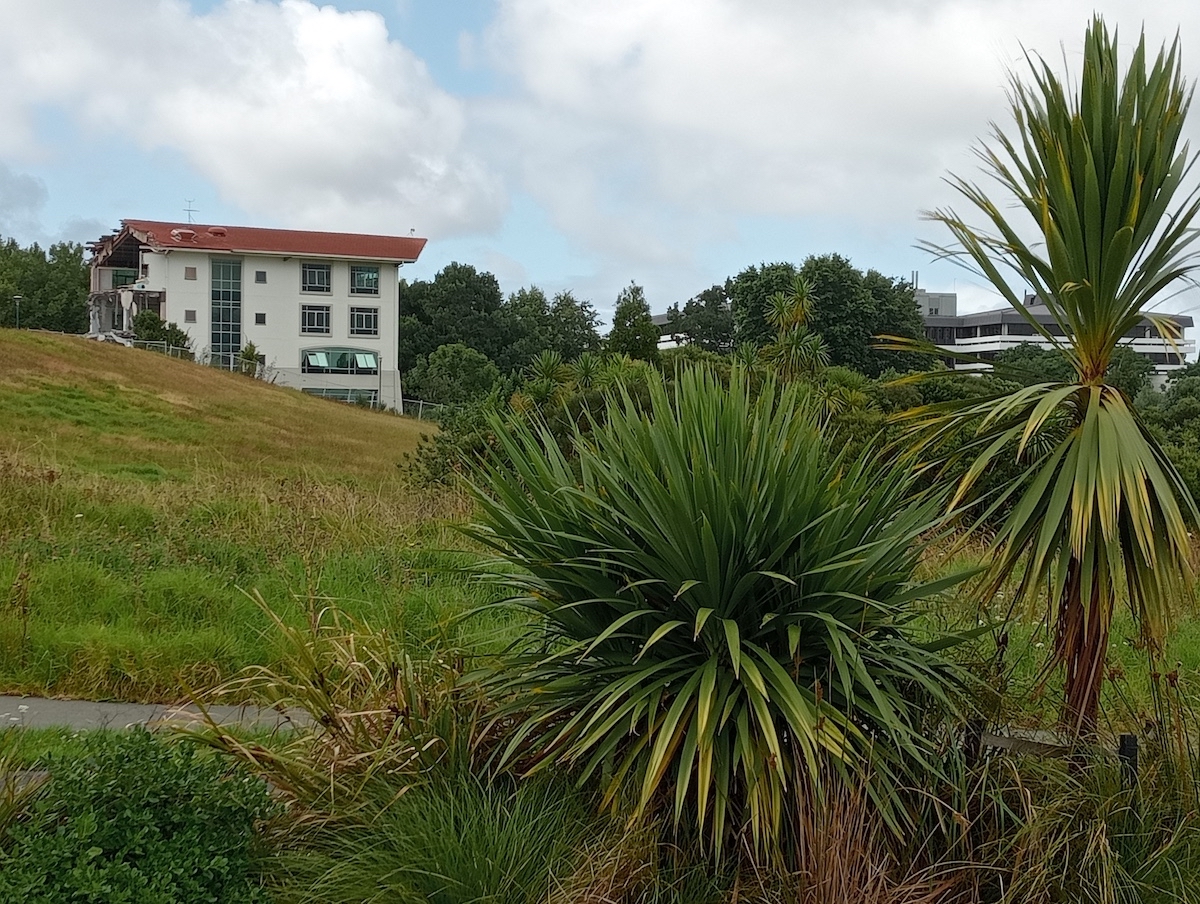
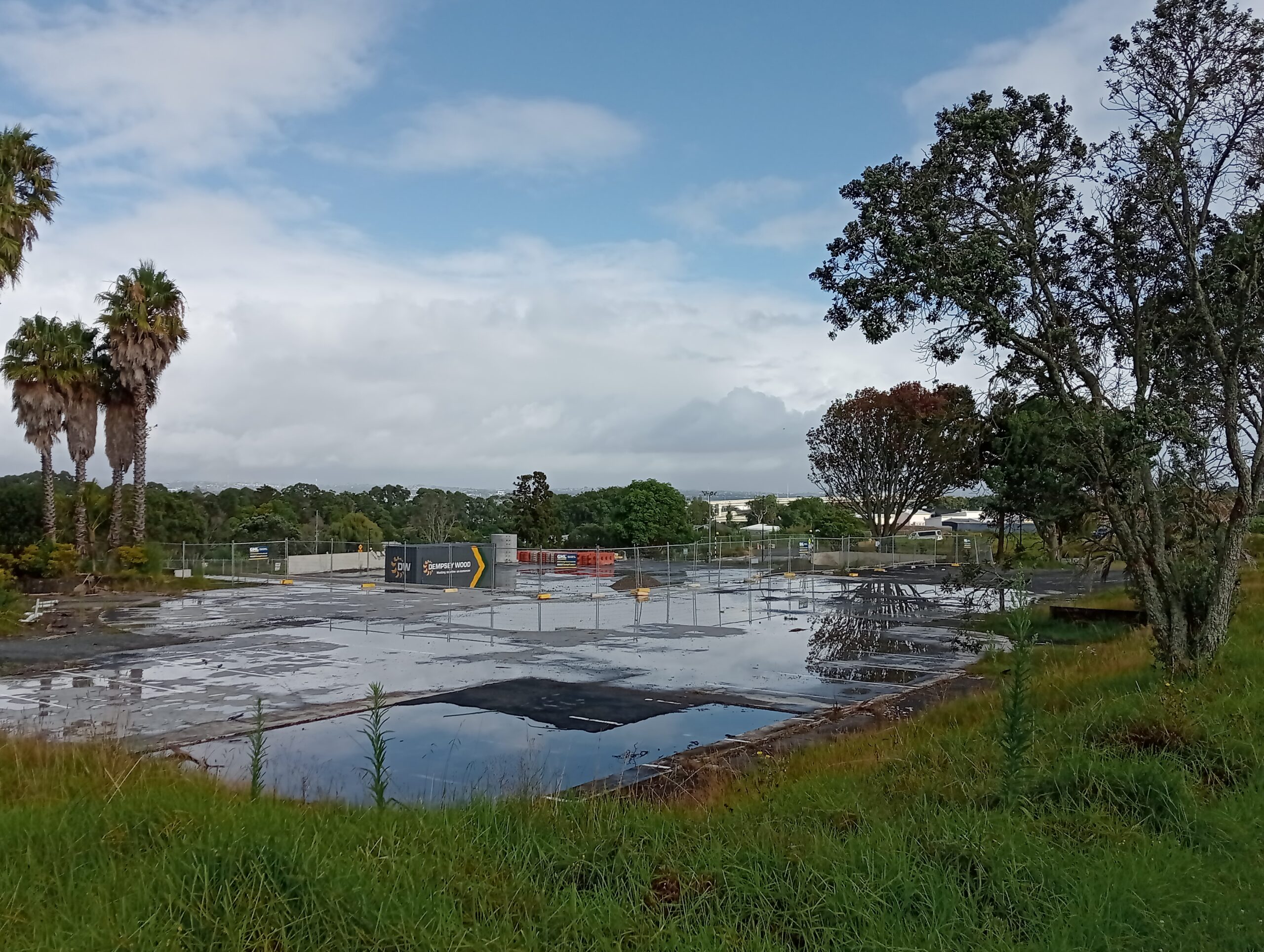
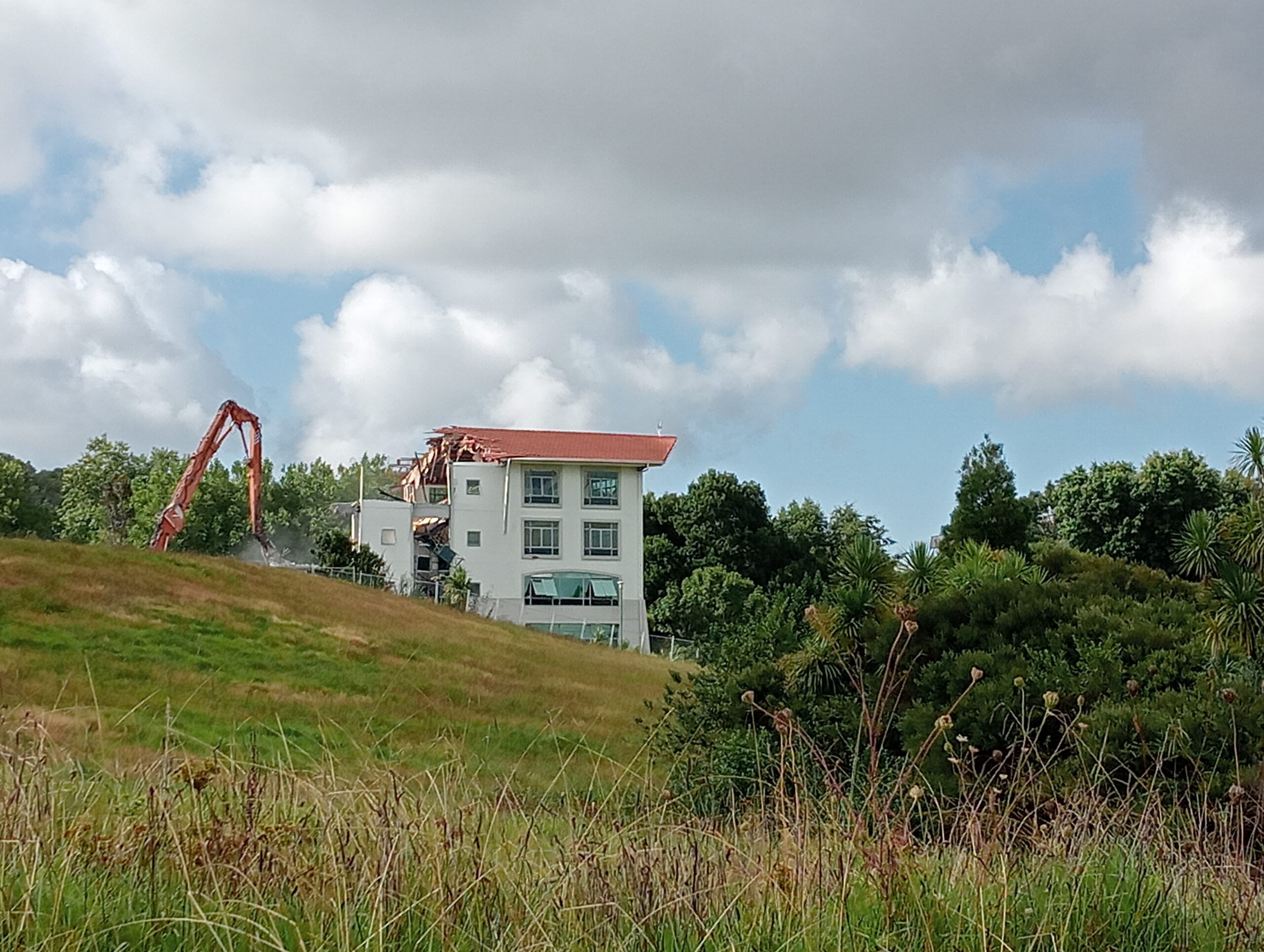
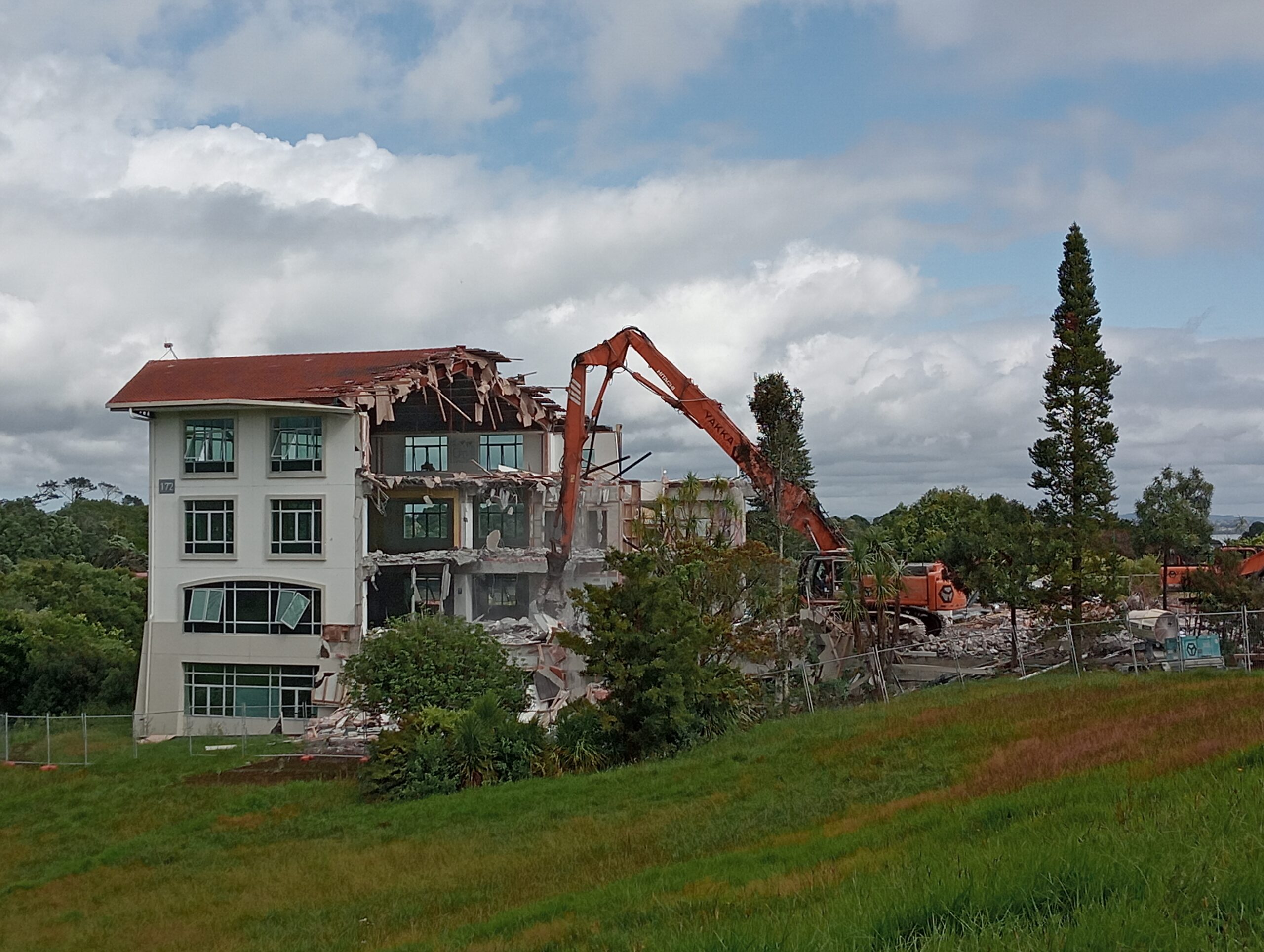
Keith Rankin Essay – Carrington precinct, aka Unitec

Essay by Keith Rankin.

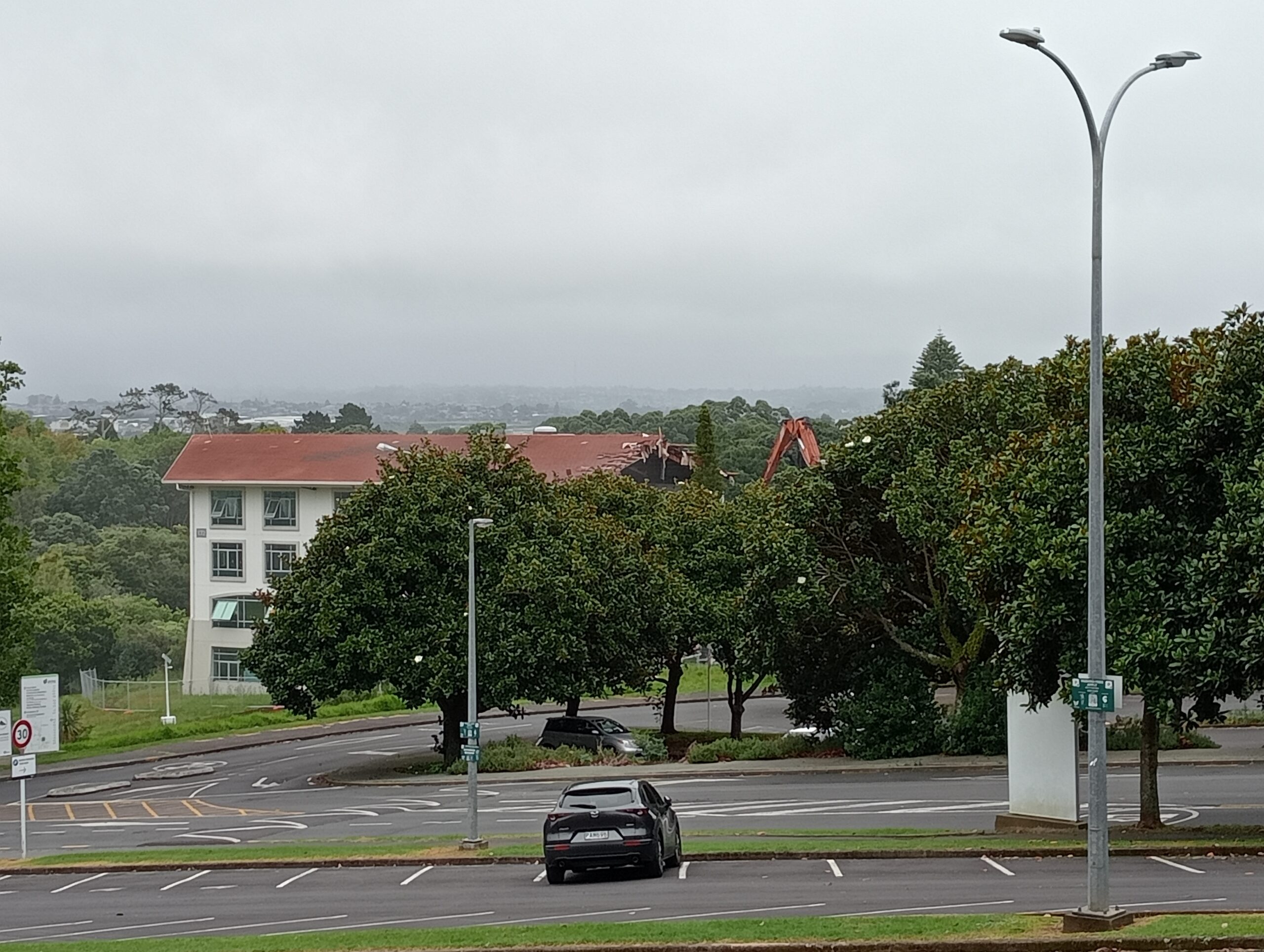
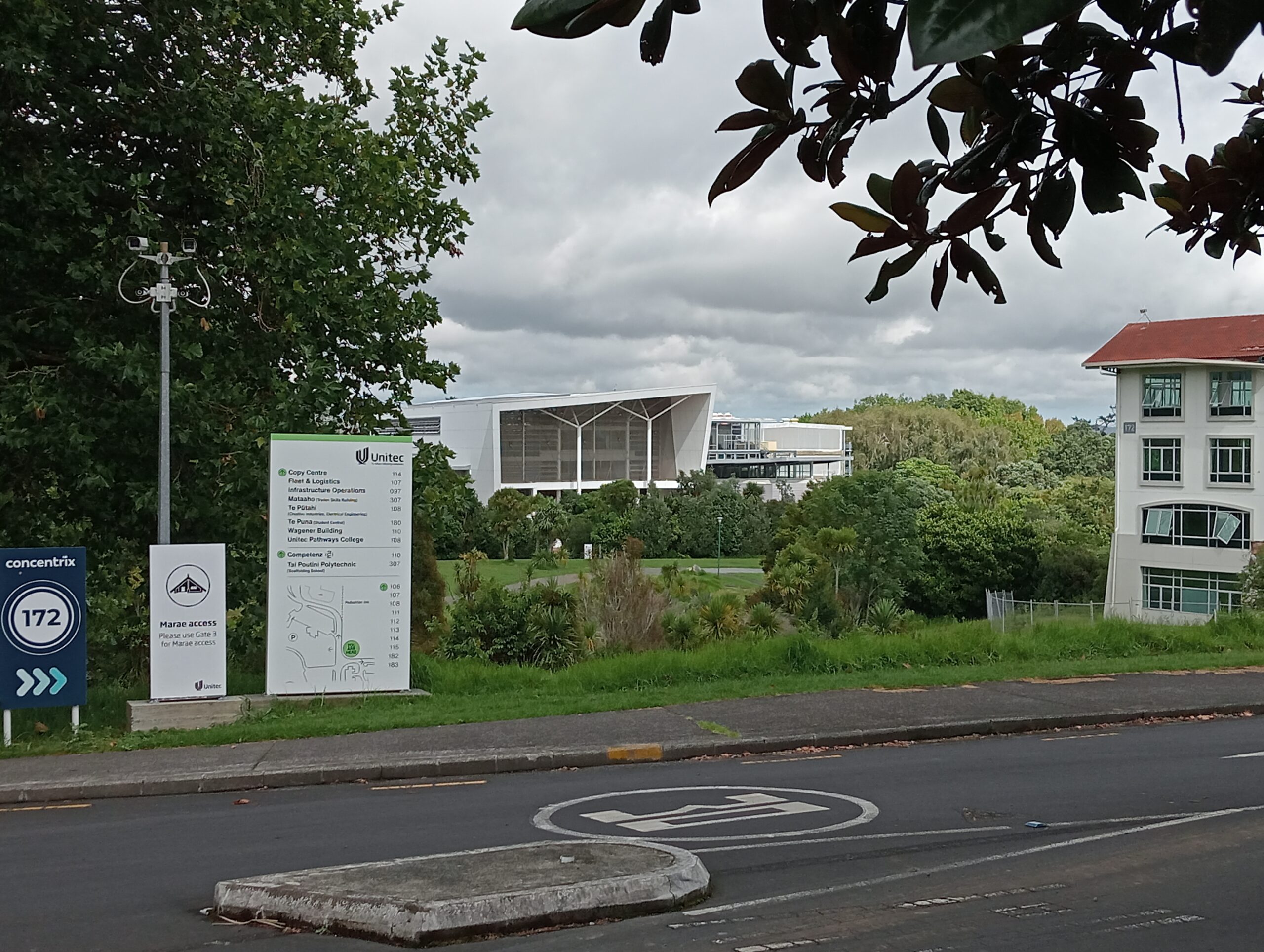
A great academic campus? But note the roof of the Concentrix building.

Photo by Keith Rankin.

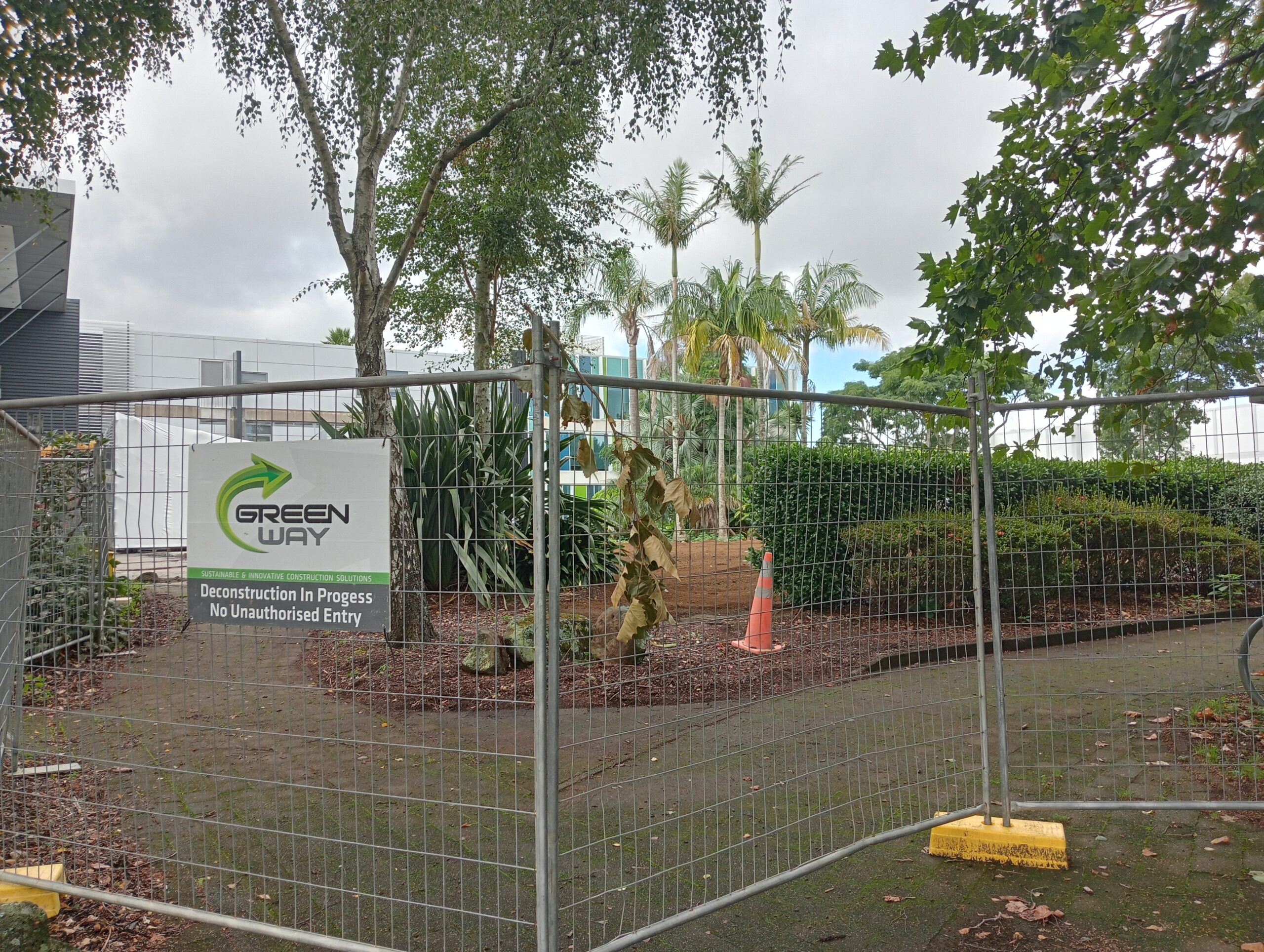
A Green Way?

Photo by Keith Rankin.

Or was it the 1990s’-built Languages Building?

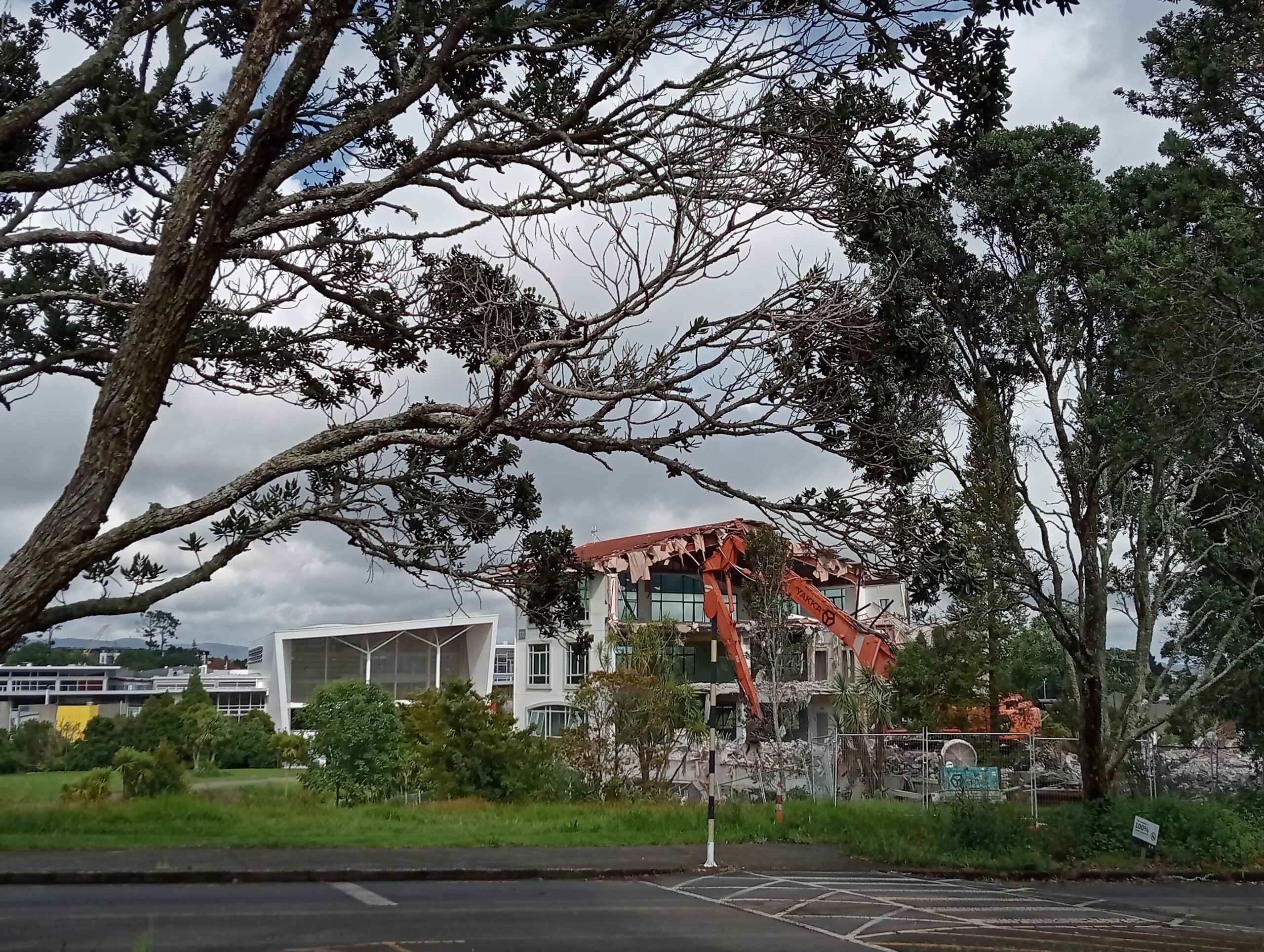
Whoops, there goes Concentrix!

Photo by Keith Rankin.

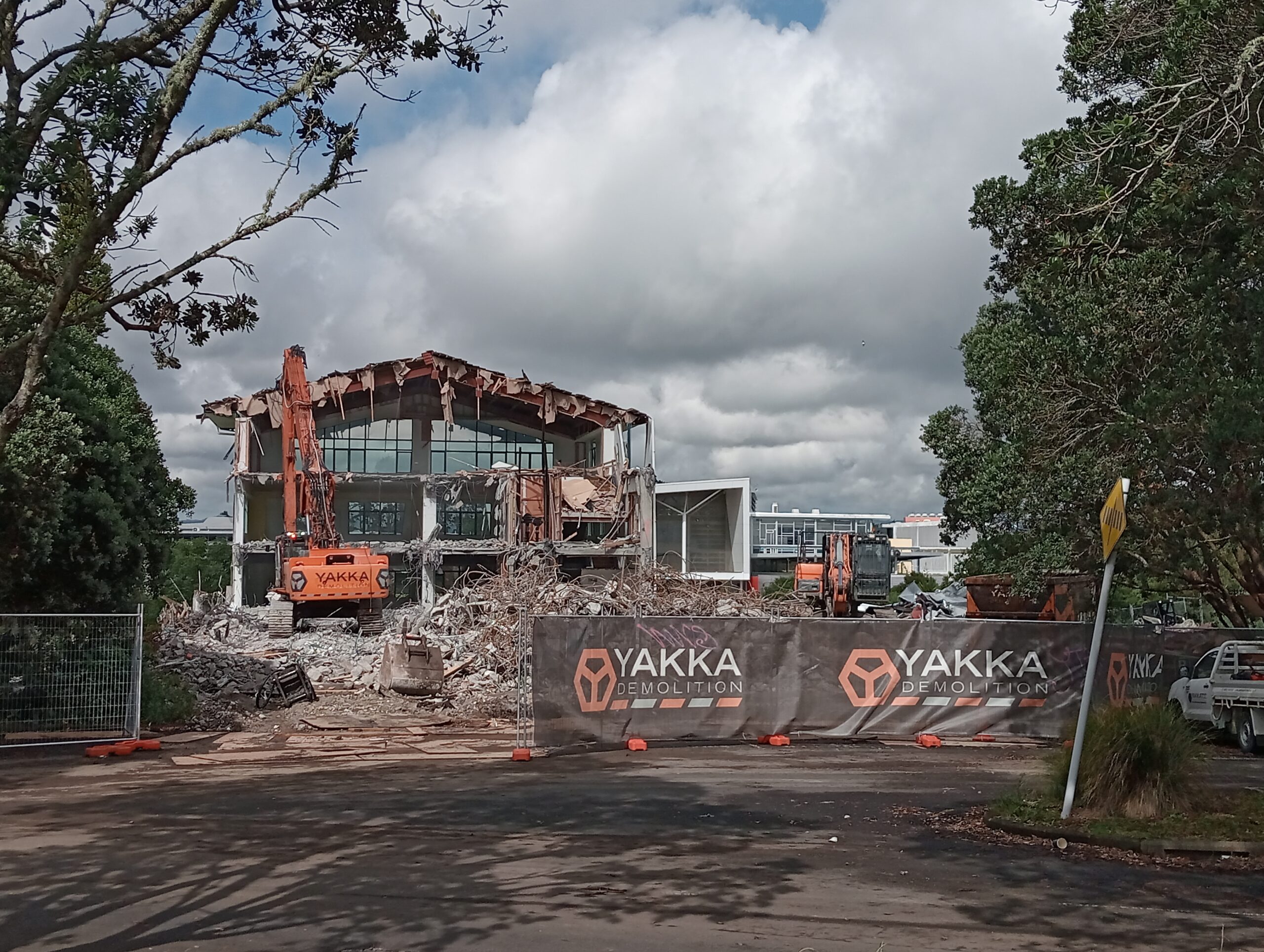
Hard Yakka. Auckland’s answer to the Christchurch Cathedral

Photo by Keith Rankin.


Two days before present

The Martians have landed:

Photo by Keith Rankin.

One Day before present: going, going, …

Photo by Keith Rankin.

Unitec Stadium and Gymnasium (and there were state-of-the-art Squash Courts with a café popular with business staff and students). Once the home of Auckland basketball and netball. And the Auckland Blues – and business staff – trained at the gym, not so long ago.

Photo by Keith Rankin.

Back to today:

Photo by Keith Rankin.

Ouch, from late 2006 to early 2014 that was my modern state-of-the art workplace and teaching place!

Literally the home of the Schools of Communications and Business. Over those years, I had three offices in that building, and many great memories; and sad memories, too, losing two colleagues.

Photo by Keith Rankin.

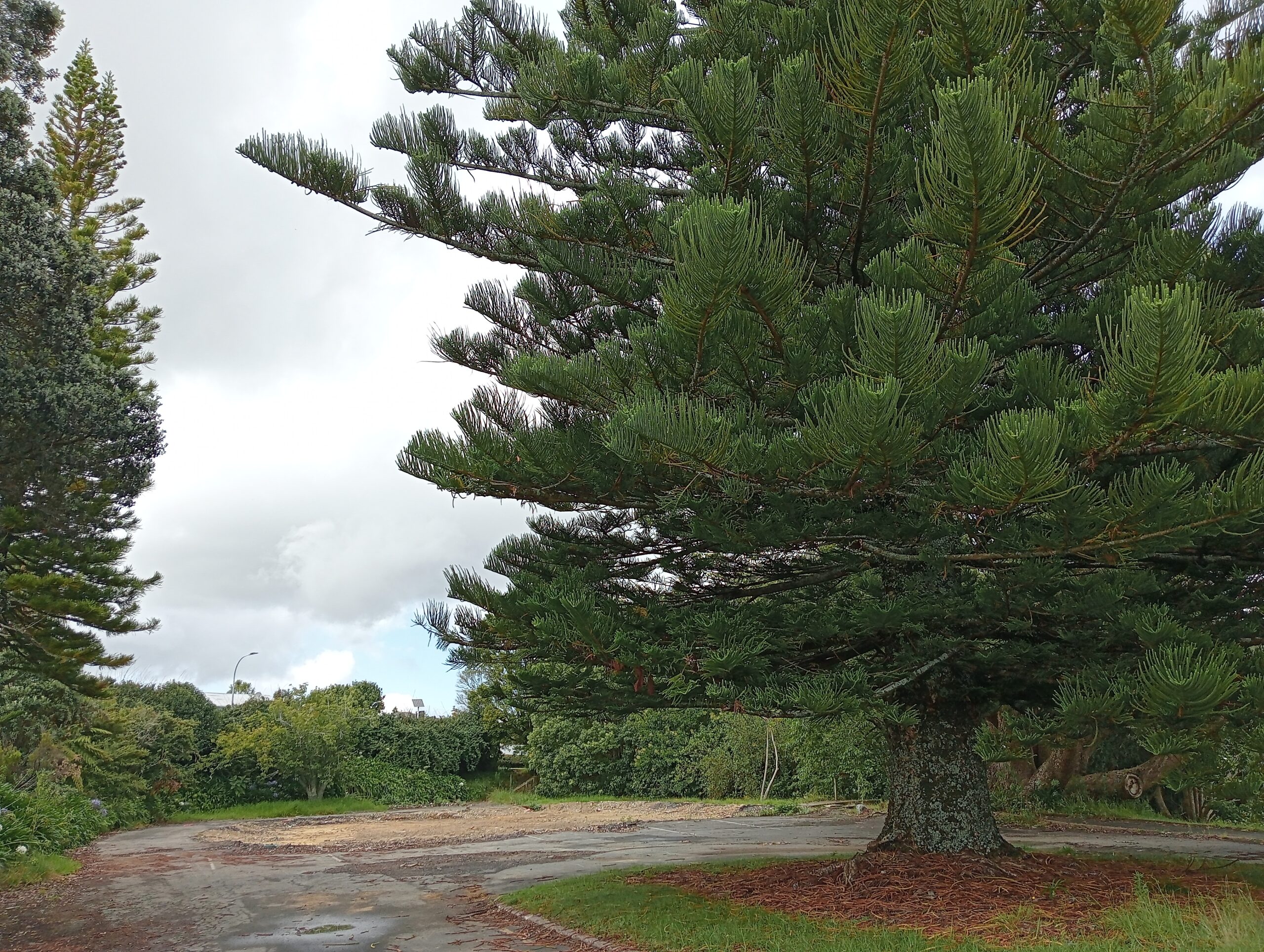
Near the Carrington Campus main entrance on Carrington Road South; erasing 1900s’ as well as 1990s’ history.

Penman House; only the pine tree remains.

Photo by Keith Rankin.

(Who today knows where ‘norfolk pines’ originated? Hint, it’s a place not far away which been erased from our travel maps, despite being a Unesco World Heritage site. I was lucky enough to fly there from Auckland in 2024, when it was still possible. One of these trees is the signature tree at the Waitangi Treaty Grounds.)

See this and other easily googled material about Robyn Hyde’s 1930s’ sanctuary. Fortunately, local MP Helen White was able to save a few heritage mementos from the house, just in the nick of time.

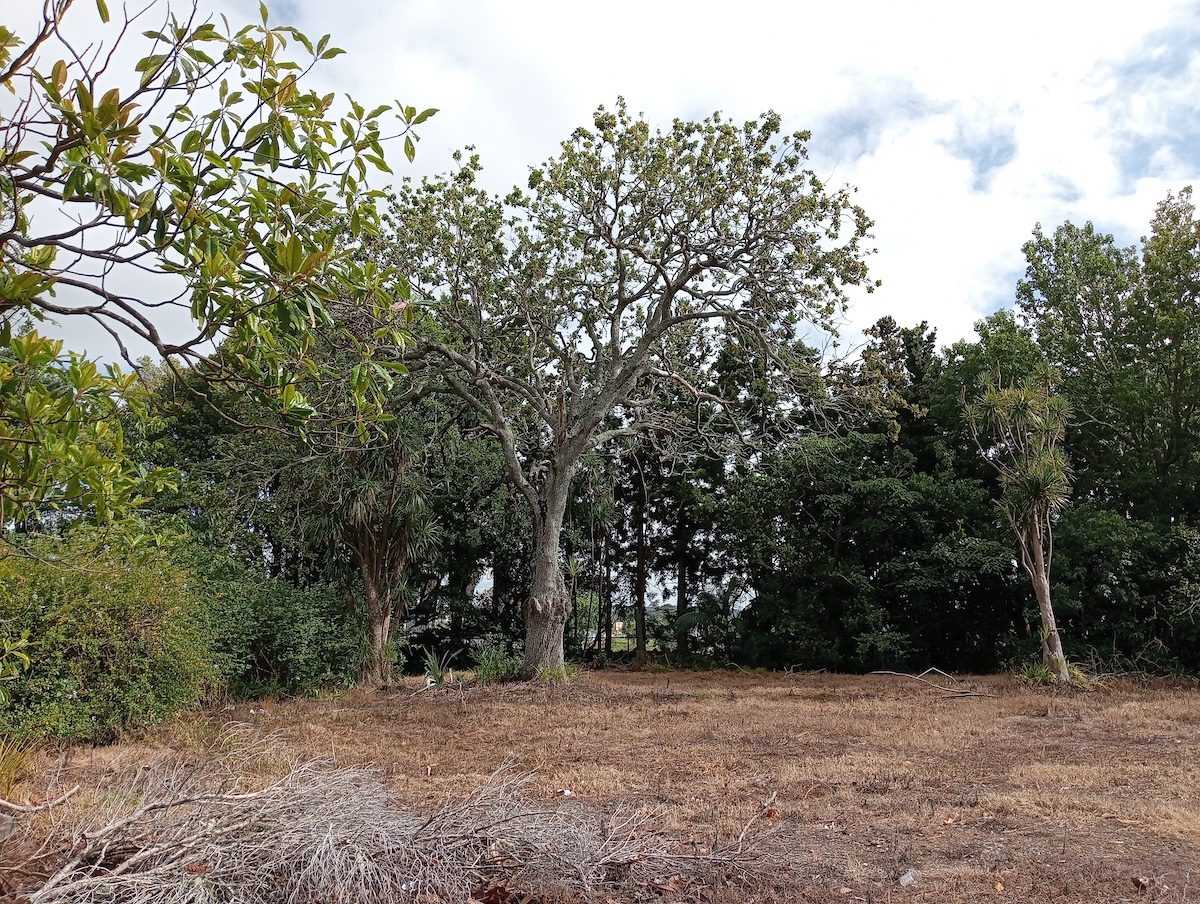
Oakridge House in June 2024 and in October 2024

Photo by Keith Rankin.

Is that an oak tree? Sadly the Unitec Arboretum and Sanctuary Gardens have also gone. At least there are still oaks and norfolks in the Carrington precinct.

Oakridge House became the main sanctuary (especially 2017 to 2019) for the School of Business in the years after Unitec’s flagship business building was tenanted to IBM (in 2012, in an opaque high-level deal) and soon after was abandoned by IBM and became the Concentrix Call Centre. (I understand that the aim of the 2012 eviction was for Unitec to make money through renting out some of its key assets to lucrative high-tech tenants; the template was the University of Ballarat in Australia, with QUT Kelvin Grove being the template for a high level tertiary campus without being ‘saddled with’ heritage and green spaces which government accounts would construe as a ‘lazy asset’.)

There are very few photos of Oakridge House in the public domain; Unitec itself has been remiss in this aspect of the documentation of its past. Here is one poignant photo that I found, in an advertisement labelled “chimney demolition”.

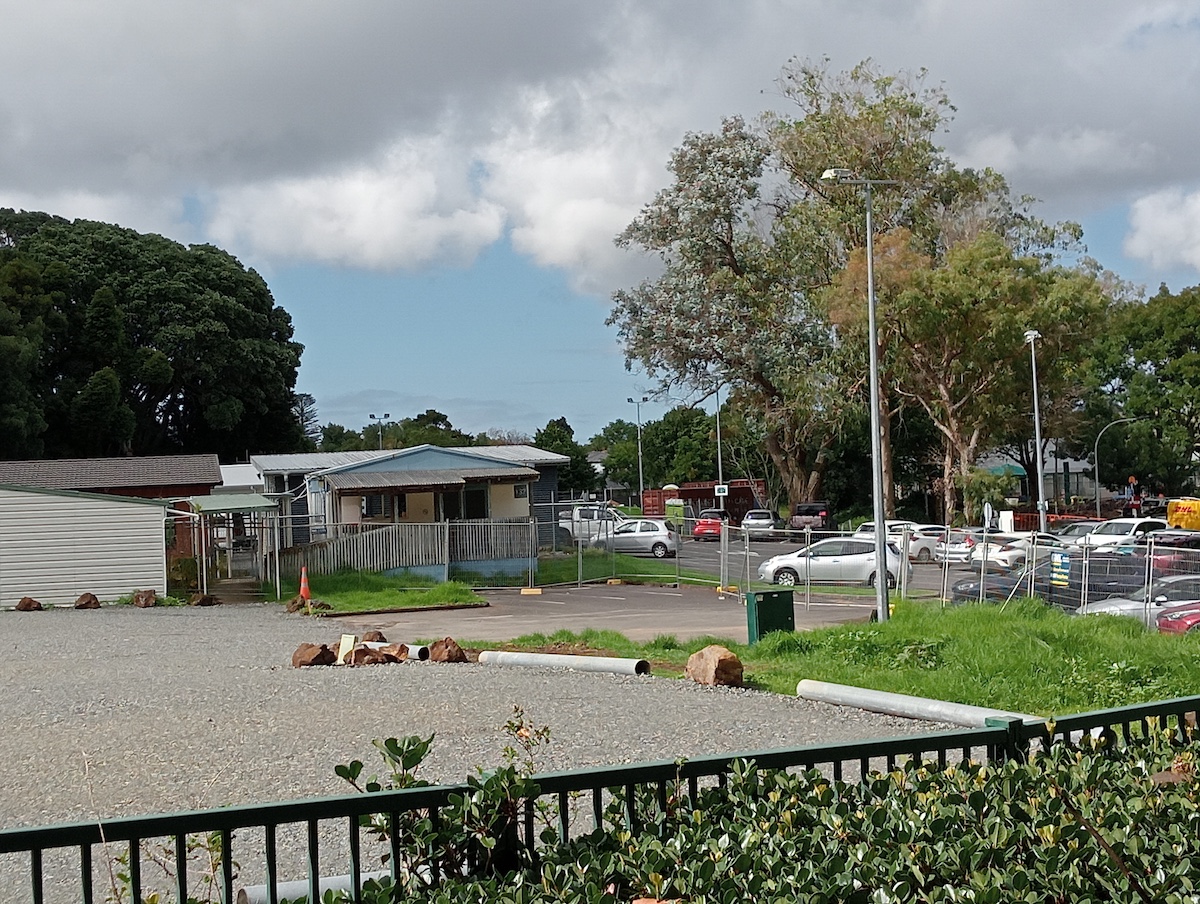
Finally, below, is the former Childcare Centre and another former workplace. (My son attended the demolished childcare centre in the foreground. He was proud to have been a ‘Unitec student’. My 2016 office was in the former building in the distant background.)

Photo by Keith Rankin.

Unitec has now formally merged with Manukau Institute of Technology. It is reputedly going to become a site for city edge tenement housing; some of it, but not all, ‘social housing’. The precinct will need schools, given that nearby schools Gladstone Primary and Mount Albert Grammar are amongst the most oversubscribed schools in the country. It takes little imagination to see that the remnants of Unitec at Mt Albert eventually will become a school (or schools), and that the ongoing Unitec presence of the new Tamaki Institute of Technology (it will probably be called something else) will be at the Henderson ‘campus’, a highrise sandwiched between the Waitakere District Court and the Henderson Library.

Q How do you acquire a small Polytech? A. Establish a large Polytech, then wait.

See Unitec’s extreme financial distress detailed in documents, RNZ, 4 September 2018. Unitec punched above its weight, when it could. Let’s hope that it has not been completely forgotten, by 2050.

And see my yesterday’s photo-essay on Scoop: Carrington: a site for sore eyes.

————-

Keith Rankin (keith at rankin dot nz), trained as an economic historian, is a retired lecturer in Economics and Statistics. He lives in Auckland, New Zealand.

Evening Report: https://eveningreport.nz/2026/02/05/keith-rankin-essay-carrington-precinct-aka-unitec/

Fisher-Black defends time trial cycling title, Olympic triathlete Hayden Wilde fourth

Source: Radio New Zealand

Nelson’s Finn Fisher-Black. © SWpix.com (t/a Photography Hub Ltd)

Finn Fisher-Black has defended his time trial title at the Elite Road National Championships in Cambridge, while Olympic triathlete Hayden Wilde showed he’s right up there with some of New Zealand’s best riders.

Fisher-Black went back to back with a time of 52:24.29 in the men’s 44.2 kilometre event, over a minute faster than Glenn Hayden in second place.

World Tour rider Ben Oliver came third and wild card Hayden Wilde, who is better known on the triathlon circuit, came fourth.

Two-time Olympic medallist Wilde was 2:06 slower than Fisher-Black. He finished faster than the likes of Paris Olympic track rider Tom Sexton, and World Tour riders Reuben Thompson, and George Bennett.

Hayden Wilde during the bike section of the 2024 Ironman in Taupo. PHOTOSPORT

Wilde, 28, is currently ranked the No. 1 male triathlete in the world, having secured the prestigious 2025 T100 Triathlon World Championship title in December 2025.

He is back home for summer on his ‘off-season’. He competed in the 2020 edition of the road race, but Thursday was his first entry in the time trial.

Wilde is also competing in Saturday’s road race at the cycling nationals at Te Awamutu.

In the Elite Women’s time trial Ella Wyllie finished the 27.6 kilometre circuit with the quickest time in 37 minutes 45.34 seconds.

Mikayla Harvey was just 29 seconds behind, and Paris Olympic track rider Bryony Botha came third.

Sign up for Ngā Pitopito Kōrero, a daily newsletter curated by our editors and delivered straight to your inbox every weekday.

– Published by EveningReport.nz and AsiaPacificReport.nz, see: MIL OSI in partnership with Radio New Zealand

LiveNews: https://nz.mil-osi.com/2026/02/05/fisher-black-defends-time-trial-cycling-title-olympic-triathlete-hayden-wilde-fourth/

The sector with 17,000 more full-time jobs

Source: Radio New Zealand

Accommodation and food services saw the largest increase in jobs over the last year, up just over 25,000, with around 17,000 more full-time and 8000 more part-time roles. 123rf

Unemployment has hit its highest level in a decade, but beneath the headline numbers some sectors are faring much better than others.

Stats NZ said this week the unemployment rate hit 5.4 percent in the three months to December, the highest since March 2015.

A total of 165,000 people were unemployed, a rise of 4000 on the previous quarter and 10,000 on a year ago. More people reported being available for work in the quarter.

Brad Olsen, chief executive at Infometrics, said while the number of full-time roles was down 0.9 percent year-on-year, the number of part-time positions had increased 2.1 percent, or 11,400 jobs.

“Accommodation and food services has seen the largest increase in jobs over the last year, up just over 25,000, with around 17,000 more full time and 8000 more part-time roles,” he said.

He said retail, health and information, media and telecommunications also had strong part-time growth in employment.

“For retail, there were 400 fewer roles overall, with 4100 fewer full time roles but 3700 more part-time roles, as retailers look to right-size their workforce for still mixed spending patterns. Health roles are up 7000 jobs overall over the last year, but this is made up of around 3000 fewer full-time roles but nearly 10,000 more part-time roles as the health sector manages budgets.”

In manufacturing, there were 7000 fewer manufacturing roles in December compared to a year earlier, driven by a drop of 7300 full-time positions offset a little by a 200 lift in part-time roles.

He said across the economy as a whole, a quarter of all roles were part-time.

“The increase in part-time work does seem to be a bit around businesses who are needing more capacity but aren’t willing or able to commit to full-time work immediately. That’s probably a bit of a sign of the slight tentativeness in the economy. You’ve had surveys recently which have suggested businesses are more upbeat about the general economy and have stronger expectations that they will both invest and hire more and there’s evidence of that but I think everyone’s just a bit shy at the start.”

He said there was a turnaround in tourism that was helping employment in that sector. “It’s now in a good space above 90 percent of pre-pandemic levels. There does seem to be more consistency in accommodation and food services because you’ve had lifts in both full-time and part-time work.

“Accommodation and food services is one of the industries with a much stronger focus on part-time work anyway but that increase in employment seems fairly broad-based. I do wonder if there’s an element of Kiwis seem to be spending a bit more on food and food-related items compared to straight-up retail options. You’ve seen retail employment actually fall a touch.”

He said people seemed to be spending on groceries and going out to eat a bit more but not as much on physical items.

The biggest declines in job numbers were in manufacturing, construction and some transport activity.

“Construction has seen declines across the board. You’ve got a nearly 11 percent decline over the last year in part-time construction work, an 8.2 percent decrease in full-time construction work, and that leaves an overall 8.4 percent decline.

“There’s just less to do than what there was a couple of years ago, and so the construction workforce has had to right-size a bit more.”

Some industries were facing longer-lasting change than others, he said.

“For construction, I’d find it hard to believe at the moment that construction would make it back to its peak level of employment, just because construction activity levels are likely to remain below peak.

“So if you needed so many workers to do all the work back in 2022-23 when it was really difficult to find builders, if you don’t have quite as much activity, you probably won’t see that high level of construction employment again, not necessarily in the short term at least.

“A lot of those other industries, I’d certainly be expecting as we sort of go through the year a bit more of a transition from that part-time focus to more of a full-time focus. But that will, I guess, for a lot of businesses, again, who are thinking that they’re a bit shy about hiring, they will be wanting to see sort of more stronger levels of sales and activity coming through before they commit to that permanent employment.”

Sign up for Money with Susan Edmunds, a weekly newsletter covering all the things that affect how we make, spend and invest money.

– Published by EveningReport.nz and AsiaPacificReport.nz, see: MIL OSI in partnership with Radio New Zealand

LiveNews: https://nz.mil-osi.com/2026/02/05/the-sector-with-17000-more-full-time-jobs/

Woman arrested after elderly people targeted

Source: New Zealand Police

A brazen offender allegedly ripping off elderly people across Hamilton and Auckland communities will face court.

Police executed a search warrant at a Rānui property today, investigating fraud and burglary offending between December 2025 and January 2026.

A 37-year-old woman has been arrested and now faces court, as enquiries continue.

Detective Sergeant Mike Mead, from the Waitematā West Tactical Crime Unit, says thousands of dollars had allegedly been stolen from the victim’s accounts.

“We will allege in court that this woman’s offending deliberately targeted elderly woman living alone in their homes,” he says.

“In several instances the woman allegedly entered these homes under false pretences, taking advantage of vulnerable victims where bank cards have been taken and used to withdraw cash.”

Police will allege more than $5,000 was fraudulently obtained from these victims, two in Hamilton and one in Auckland.

All up the woman faces four burglary charges, three charges of using a bank card for a pecuniary advantage and shoplifting.

Detective Sergeant Mead says Police will oppose the 37-year-old’s bail when she appears in the Waitākere District Court tomorrow.

“This is nothing short of despicable, targeting victims all aged in their 80s,” he says.

“Our investigators have worked meticulously in piecing together this spate of offending, including CCTV footage and banking records.”

Police enquiries are ongoing, and further charges cannot be ruled out at this stage.

“I know the community will share a dim view of what has happened to these women, taking advantage of their trusting nature.

“This offending has left them fearful and caused a significant amount of distress.

“Police have moved quickly to make an arrest to prevent any further harm to the community.”

ENDS. 

Jarred Williamson/NZ Police

LiveNews: https://nz.mil-osi.com/2026/02/05/woman-arrested-after-elderly-people-targeted/

Name release, fatal crash, Springston

Source: New Zealand Police

Police can now release the name of the person who died following a crash in Springston on 4 February.

He was 10-year-old Alexander Bennett, of Springston.

Our thoughts are with his loved ones at this difficult time.

Enquiries into the circumstances of the crash are ongoing.

ENDS

Issued by Police Media Centre

LiveNews: https://nz.mil-osi.com/2026/02/05/name-release-fatal-crash-springston/

Road closed, Cambridge Road near SH 1

Source: New Zealand Police

Cambridge Road near Racecourse Road heading towards State Highway 1 is closed following a two-vehicle collision, reported just after 2pm.

Three people are injured, one in a serious condition and two sustaining moderate injuries. They are receiving medical attention.

The road will remain closed as emergency services work the scene.

The Serious Crash Unit has been advised.

Police ask motorists to choose alternative routes or delay travel.

Cordons will be in place at SH1 Cambridge East exit for southbound traffic and Peake Road for northbound traffic.

Motorists may experience delays in the area.

ENDS

LiveNews: https://nz.mil-osi.com/2026/02/05/road-closed-cambridge-road-near-sh-1/

ER Report: A Roundup of Significant Articles on EveningReport.nz for February 5, 2026

ER Report: Here is a summary of significant articles published on EveningReport.nz on February 5, 2026.

Milan Cortina Winter Olympics: history, new events and Australian medal chances
Source: The Conversation (Au and NZ) – By Vaughan Cruickshank, Senior Lecturer in Health and Physical Education, University of Tasmania This year’s Winter Olympics will be held in northern Italy, starting on Friday. They will be the most spread out in history: the two main competition sites – Milan and the winter resort of Cortina

Big tech companies are still failing to tackle child abuse material online
Source: The Conversation (Au and NZ) – By Joel Scanlan, Adjunct Associate Professor, School of Law; Academic Co-Lead, CSAM Deterrence Centre, University of Tasmania In the 2024–25 financial year alone, the Australian Centre to Counter Child Exploitation received nearly 83,000 reports of online child sexual abuse material (CSAM), primarily on mainstream platforms. This was a

This central Auckland cottage tells a remarkable tale of the city’s bicultural history
Source: The Conversation (Au and NZ) – By Ahmed Uzair Aziz, PhD Candidate in Māori Studies, University of Auckland, Waipapa Taumata Rau Rose Davis, CC BY-NC-ND This story begins with a 160-year-old cottage, sited in a vortex of overlapping histories, and becomes the tale of a city itself. The green and cream weatherboard house at

French shrug off cocaine case costs with new smugglers ‘strategy’
SPECIAL REPORT: By Jason Brown Fast-paced electronic music pumps in the background as a rapid montage of moving images flash across the screen. In a 20 second video, French sailors hunker down in an inflatable speeding over swells. Another sailor, in bright red shorts, is lowered from a helicopter onto the vessel’s back deck. Captured

Indigenous and Pacific leaders unite at Waitangi with shared messages on ocean conservation
By Coco Lance, RNZ Pacific digital journalist As Waitangi Day commemorations continue drawing people from across Aotearoa and around the world to the Bay of Islands, Te Tii Marae has become a gathering point for Indigenous ocean leadership from across the Pacific. Taiātea: Gathering of the Oceans held its public forum yesterday, uniting more than

One family’s ocean paddle almost ended in tragedy. It reminds us coastal weather is notoriously changeable
Source: The Conversation (Au and NZ) – By Samuel Cornell, PhD Candidate in Public Health, School of Population Health, UNSW Sydney Fernando Garcia/Unsplash The extraordinary rescue this week in Geographe Bay, Western Australia has been described as heroic. A 13-year-old boy swam four hours to shore in rough seas after his family was swept far

In the Australian outback, we’re listening for nuclear tests – and what we hear matters more than ever
Source: The Conversation (Au and NZ) – By Hrvoje Tkalčić, Professor, Head of Geophysics, Director of Warramunga Array, Australian National University ANU Media Tyres stick to hot asphalt as I drive the Stuart Highway from Alice Springs northward, leaving the MacDonnell Ranges behind. My destination is the Warramunga facility, about 500 kilometres north – a

Digital ghosts: are AI replicas of the dead an innovative medical tool or an ethical nightmare?
Source: The Conversation (Au and NZ) – By Jon Cornwall, Senior Lecturer and Education Adviser, University of Otago Elise Racine, CC BY-NC-ND For centuries, work with donated bodies has shaped anatomical knowledge and medical training. Now, digital technologies and artificial intelligence (AI) are reshaping education and we can imagine a future where AI-generated representations of

Can One Nation turn its polling hype into seats in parliament? History shows it will struggle
Source: The Conversation (Au and NZ) – By Kurt Sengul, Research fellow, Far-Right Communication, Macquarie University One Nation is no stranger to the headlines, but it’s been a long time since the party has been talked about as a serious political force. Operating on the fringes of Australian political life for years, suddenly Pauline Hanson

The ‘hot flush gold rush’: how women feel about being flooded with menopause marketing
Source: The Conversation (Au and NZ) – By Samantha Thomas, Professor of Public Health, Deakin University Every person with functioning ovaries will eventually experience menopause. While the biology is relatively universal, the experience varies dramatically between individuals and in the same person over time. Menopause has long been shrouded in stigma and shame but recently

School breaks make up more than an hour of the day. Should they be considered part of learning?
Source: The Conversation (Au and NZ) – By Brendon Hyndman, Associate Professor of Education and Associate Dean (Academic), Faculty of Arts and Education, Charles Sturt University Johnny Greig/ Getty Images Most public debate about schooling focuses on what happens inside the classroom – on lessons, tests and academic results. But students also spend significant time

City skylines need an upgrade in the face of climate stress
Source: The Conversation (Au and NZ) – By Mohamed Shaheen, Lecturer in Structural Engineering, Loughborough University The downtown district of Hong Kong city. Lee Yiu Tung/Shutterstock When structural engineers design a building, they aren’t just stacking floors; they are calculating how to win a complex battle against nature. Every building is built to withstand a

What will a rebuilt Gaza look like? The competing visions for the Strip’s future
Source: The Conversation (Au and NZ) – By Timothy J. Dixon, Emeritus Professor in the School of the Built Environment, University of Reading; University of Oxford A girl walks along a street in Gaza to get food during the war between Hamas and Israel. Jaber Jehad Badwan / Wikimedia Commons, FAL Following a visit to

Why cheaper power alone isn’t enough to end energy poverty in summer
Source: The Conversation (Au and NZ) – By Duygu Yengin, Associate Professor of Economics, Adelaide University Declan Young/Unsplash Australia is an energy superpower. We have abundant natural resources, high average incomes and one of the highest per-capita rates of rooftop solar uptake in the world. Yet every summer, many households across the country skimp on

AC/DC in surgery and lo-fi beats in the office: what the science says about working to music
Source: The Conversation (Au and NZ) – By Emery Schubert, Professor, Empirical Musicology Laboratory, School of the Arts and Media, UNSW Sydney Vitaly Gariev/Unsplash Phil is in prep for surgery. As the anaesthetic is about to be administered, the anaesthetist says: “Oh, and by the way, during the procedure the surgical team will be listening

West Papua Solidarity Forum, mini film festival aim to educate
Asia Pacific Report A two-day West Papua Solidarity Forum and mini film festival is being held in Auckland Tāmaki Makaurau next month featuring West Papuan and local academics, advocates and journalists. Hosted by West Papua Action Tamaki and West Papua Action Aotearoa, keynote speeches, panels and discussion on the opening day, March 7, will focus

Politics with Michelle Grattan: Barnaby Joyce on getting on with Pauline Hanson and One Nation’s rise
Source: The Conversation (Au and NZ) – By Michelle Grattan, Professorial Fellow, University of Canberra Barnaby Joyce’s political career has hit the highest of highs and the lowest of lows. He’s been Nationals leader and deputy prime minister twice. As a senator, he was a maverick, often crossing the floor. As party leader, he had

New Zealand holds out hope for halted PNG electrification aid project
By Johnny Blades, RNZ Pacific bulletin editor The New Zealand government says it hopes an electrification aid project that was halted in Papua New Guinea can still be completed if security improves. Work on the Enga Electrification Project in PNG’s Enga province has stopped due to ongoing violence around the project area in Tsak Valley.

Victoria’s mountain ash forests naturally thin their trees. So why do it with machines?
Source: The Conversation (Au and NZ) – By Elle Bowd, Research Fellow, Fenner School of Environment and Society, Australian National University David Clode/Unsplash, CC BY-ND There has been much global discussion about the best ways to manage Earth’s forests in an era of climate change and more frequent bushfires. Some foresters and forest managers support

‘Journalism is not a crime’ – US journalists arrested for covering anti-ICE protest in church
Report by Dr David Robie – Café Pacific. – AMY GOODMAN: We begin today’s show looking at the arrests of two American journalists for covering a protest at the Cities Church [in the Minnesota Twin City of] St Paul, where a top ICE official serves as pastor. Former CNN anchor Don Lemon and independent journalist

Evening Report: https://eveningreport.nz/2026/02/05/er-report-a-roundup-of-significant-articles-on-eveningreport-nz-for-february-5-2026/

Prime Minister Christopher Luxon heckled during speech at Treaty Grounds

Source: Radio New Zealand

Prime Ministers Christopher Luxon’s speech has been heckled at throughout his 10 minute speech at the Treaty Grounds.

During his speech, Luxon spoke of the recent weather events, the effected communities and the country’s sense of identity, among other things.

The hecklers interrupted his speech multiple times throughout, with some interruptions lasting up to 10 seconds.

“We’ve had enough,” one person yelled.

“Did you bring any KFC?” another asked.

One person can also be heard yelling “treason”.

Prime Ministers Christopher Luxon during his speech. RNZ / Mark Papalii

Luxon said it had been a challenging build-up to Waitangi, particularly for communities affected by severe weather.

“The atmosphere surrounding Waitangi Day and the Treaty itself have sometimes been very heated, and we’ve seen that again today, and that’s for good reason because part of national life in New Zealand is that we do debate difficult things.”

Luxon said attending Waitangi was a “tremendous privilege”.

He sought to reassure people the RMA reforms would contain strict provisions to respect Treaty settlements.

Defending the government’s approach to health targets, Luxon said “should not ask about their family tree but ask about their need”.

Sign up for Ngā Pitopito Kōrero, a daily newsletter curated by our editors and delivered straight to your inbox every weekday.

– Published by EveningReport.nz and AsiaPacificReport.nz, see: MIL OSI in partnership with Radio New Zealand

LiveNews: https://nz.mil-osi.com/2026/02/05/prime-minister-christopher-luxon-heckled-during-speech-at-treaty-grounds/

Weather puts dampener on slight retail spending recovery

Source: Radio New Zealand

Unsplash

Consumers were a shade more willing to spend at the start of the year, although stormy weather put a dampener on things in some parts of the country, according to payments firm Worldline.

Spending at core retail merchants rose by 0.6 percent in January compared with a year ago, with a continued mixed showing between regions and cities, and between the North and South Islands.

Worldline NZ’s chief sales officer, Bruce Proffit, said the modest but positive start to the new year for consumer spending would be welcomed by retailers after the tough past year.

“The annual growth rate seen in January 2026 compared to 2025 was not high but was at least a positive start to the year – but we also noted a sharp fall in spending on Thursday 21 January, the day of storms and heavy rainfall that had tragic impacts in some areas.”

Retail spending across the Worldline NZ network slumped by 5.6 percent that day.

Annual spending growth was highest in Whanganui (+2.5 percent), Hawke’s Bay (+1.9 percent) and Palmerston North (+1.9 percent), and lowest in the Bay of Plenty (-3.4 percent), Taranaki (-3.0 percent) and Gisborne (-1.0 percent).

“The net effect of the storms over the month resulted in Bay of Plenty and Gisborne being amongst the weakest regions in the country in terms of the annual change in spending,” Proffit said.

The negative effect on spending continued over the following Auckland Anniversary long weekend, including at hospitality outlets.

Retail NZ chief executive Carolyn Young remained cautious, saying the latest rise in unemployment to 5.4 percent, pointed to some time before consumers would stop focusing on just getting by.

“Retailers have been experiencing tough trading conditions for some time now, and while business confidence is largely positive overall, it is clear it could be some time before New Zealanders feel confident enough in the economic conditions to increase their discretionary spending.

“Many retailers will be feeling as though they are just treading water as the economy moves sideways, rather than forwards,” she said.

Sign up for Ngā Pitopito Kōrero, a daily newsletter curated by our editors and delivered straight to your inbox every weekday.

– Published by EveningReport.nz and AsiaPacificReport.nz, see: MIL OSI in partnership with Radio New Zealand

LiveNews: https://nz.mil-osi.com/2026/02/05/weather-puts-dampener-on-slight-retail-spending-recovery/

Swells dislodge wrecked catamaran from rocks in Akaroa Harbour

Source: Radio New Zealand

A tourist boat that ran aground in Banks Peninsula’s Akaroa Harbour is now wrecked on shore after swells dislodged it from rocks near the heads.

New photos show the Black Cat Cruises boat wrecked on the shore in Banks Peninsula’s Akaroa Harbour after swells dislodged the catamaran from rocks near the heads.

The boat ran aground in the Akaroa Marine Reserve on Saturday, resulting in the rescue of more than 40 passengers and crew and a Transport Accident Investigation Commission investigation.

The boat was carrying 2240 litres of marine diesel fuel and around 120 litres of other oils in sealed containers and engines combined.

The earlier video footage above shows the boat when it was still grounded on rocks before it was dislodged by swells.

On Thursday Canterbury Regional Council staff were collecting debris and monitoring wildlife after they saw a crested penguin showing signs of potentially being unwell.

On-scene commander Emma Parr said the wildlife team tried to capture the penguin to assess its welfare and whether its behaviour was because of contact with oil.

“After several attempts they were unable to capture the penguin as it dived under water as soon as it was approached,” she said.

“After specialist advice from Wildbase, the decision was made to stop efforts to capture it as continuing could have caused distress to the animal. We continue to observe the penguin as part of our wildlife observation plan and will take any necessary action to help distressed wildlife.”

A plan to salvage the wrecked Black Cat Cruises boat has been adapted after swells dislodged it from rocks. Environment Canterbury

Parr said the boat was now sitting higher up the beach in Nīkau Palm Valley Bay and was expected to move further in the coming days, settling through the tidal cycle.

“This has changed the recovery options available and the salvage plan is being adapted accordingly. The good news is that we expect that less internal debris will be released, making collection more straightforward and minimising environmental impact,” she said.

“Once we have an approved salvage plan, recovery efforts will begin as soon as possible. All parties involved continue to be committed to the removal of the wreck in its entirety from this sensitive area.”

A 200-metre exclusion zone remained in place, with boaties being urged to respect the restrictions.

The regional council temporarily suspended recovery efforts for two days this week because of bad weather.

On Wednesday Black Cat Cruises said its Akaroa Nature Cruise and Swimming with Dolphins experiences had resumed.

“The safety and wellbeing of our customers, crew and the marine environment is always our highest priority. Our team approaches every experience with care, respect, and responsibility,” the company said.

The tour operator has previously said the grounding was the first incident of its kind in more than 40 years.

Sign up for Ngā Pitopito Kōrero, a daily newsletter curated by our editors and delivered straight to your inbox every weekday.

– Published by EveningReport.nz and AsiaPacificReport.nz, see: MIL OSI in partnership with Radio New Zealand

LiveNews: https://nz.mil-osi.com/2026/02/05/swells-dislodge-wrecked-catamaran-from-rocks-in-akaroa-harbour/

Milan Cortina Winter Olympics: history, new events and Australian medal chances

Source: The Conversation (Au and NZ) – By Vaughan Cruickshank, Senior Lecturer in Health and Physical Education, University of Tasmania

This year’s Winter Olympics will be held in northern Italy, starting on Friday.

They will be the most spread out in history: the two main competition sites – Milan and the winter resort of Cortina d’Ampezzo – are more than 400 kilometres apart.

Some 3500 athletes from 93 countries will compete in 16 sports for 245 gold medals.

What’s happening at the 2026 games?

Events are organised into broad categories, including ice sports (such as figure skating and curling), skiing and snowboarding (including moguls and halfpipe), Nordic events (such as cross-country and ski jumping) and sliding events (including skeleton and luge).

For the Milan Cortina games, the program has added eight new events designed to increase variety and gender parity.

The most significant addition is the sport of ski mountaineering, often referred to as “skimo”.


Winter Olympic Games/The Conversation, CC BY-SA

The sport requires competitors to ski uphill, transition to walking up steep climbs and then descend on skis.

The program will be the most gender-balanced winter games to date, with 47% women participation mainly thanks to the introduction of women’s double luge and a women’s large hill event in ski jumping.

While the Winter Olympics have been held in 21 cities in 13 different countries, climate change may limit the number of future host locations.

How the Winter Olympics began

The first Winter Olympics were held in Chamonix, France in 1924.

Current events such as figure skating and ice hockey were actually included in the Summer Olympics in 1908 and 1920.

Following the success of these events, and support from the father of the modern Olympics Baron Pierre de Coubertin, the International Olympic Committee (IOC) decided to hold a separate winter competition in 1924.

This competition was known as the “Winter Sports Week of the 8th Olympiad” and was retroactively recognised as the first Winter Olympics in 1926.

Many of the early Winter Olympics were held in the same year as the summer games – and in the same country.

While the Summer and Winter Olympics have not been held in the some country since 1936, they were held in the same year until 1992.

The IOC then altered their schedule so the summer and winter games were held on alternating even-numbered years.

IOC officials hoped this change would increase the importance of the winter games, which had been regarded as less important than the summer event.

This decision meant the 1994 Winter Olympics in Lillehammer, Norway, were held only two years after the 1992 winter games in Albertville, France.

The next Olympics were the 1996 Summer Olympics, then the 1998 Winter Olympics.

This alternating format continues to this day.

In 1924, 258 athletes from 16 nations came together in Chamonix, France, for what later became the first Winter Olympics.

Australia at the Winter Olympics

Australia’s first winter Olympian was speed skater Ken Kennedy in 1936.

Since then, Australia has competed in every Winter Olympics and its team has grown from one athlete in 1936 to more than 50 in recent games.

Speed skater Colin Coates has represented Australia at the most winter games: six times between 1968 and 1988.

It took 58 years for Australia to claim its first Winter Olympic medal in 1994. Steven Bradbury, Richard Nizielski, Andrew Murtha and Kieran Hansen won bronze in the 5,000m short track speed skating relay.

Bradbury also famously won Australia’s first Winter Olympic gold medal in the 1,000m speed skating in 2002.

Australia has won 19 Winter Olympic medals, including six gold.

It has achieved most success in freestyle skiing events such as aerials and mogul, led by multiple medal winners Alisa Camplin and Lydia Lassila.

Australia’s medal chances in 2026

Australia heads into these games with realistic medal chances in a small number of sports where it has consistently punched above its weight. This may seem surprising for a country better known for beaches than snow but targeted investment and athlete pathways have paid off.

Australia’s strongest gold medal hope is in freestyle skiing moguls, a fast downhill event where athletes ski over steep bumps while performing two jumps.

Jakara Anthony, who won gold in Beijing in 2022, has dominated international competitions since then, regularly winning World Cup events – the highest level of competition outside the Olympics.

Aerial skiing has also emerged as a genuine medal opportunity for Australia.

Laura Peel has continued her strong international form with recent World Cup gold, while Danielle Scott has also topped the podium this season.

With two athletes consistently winning at the highest level outside the Olympics, Australia is a genuine podium contender in this discipline.

Snowboarding also offers strong chances.

In snowboard halfpipe, riders launch out of a giant ice channel and perform aerial tricks while being judged on height, difficulty and style. Scotty James has been among the world’s best for almost a decade and has won multiple World Championship medals.

Australia is also building serious depth through younger athletes such as Valentino Guseli, who has already claimed World Cup gold and is emerging as a genuine podium contender.

In women’s monobob, Bree Walker’s recent World Cup gold shows Australia is now a genuine contender in one of the games’ newer disciplines.

In skeleton, where athletes race head-first down an icy track at speeds exceeding 120 kilometres per hour, Jaclyn Narracott won silver in 2022 – Australia’s first sliding sport medal. Another podium finish is possible for her.

Beyond these core medal prospects, sports such as short track speed skating could also feature in Australia’s medal mix if athletes peak at the right time, with potential for 2026 to rival Australia’s most successful Winter Olympics to date.

The authors do not work for, consult, own shares in or receive funding from any company or organisation that would benefit from this article, and have disclosed no relevant affiliations beyond their academic appointment.

ref. Milan Cortina Winter Olympics: history, new events and Australian medal chances – https://theconversation.com/milan-cortina-winter-olympics-history-new-events-and-australian-medal-chances-271834

Evening Report: https://eveningreport.nz/2026/02/05/milan-cortina-winter-olympics-history-new-events-and-australian-medal-chances-271834/

Christopher Luxon – Waitangi Speech

Source: New Zealand Government

E ngā mana, e ngā reo, e ngā rau Rangatira mā.

Tēnā koutou katoa.

Ki ngā mate, haere, haere, haere atu ra.

Kia tatou te hoonga ora.

E te hau kainga, 

Te Whare Tapu o Ngapuhi 

Ki runga, i te kaupapa, o, te kotahitanga.

Tēnā koutou, tēnā koutou, Tēna tātou katoa.

It is a great privilege to return to this place, where modern New Zealand finds its origins. 

I’d like to take a moment to acknowledge the outstanding leaders our nation has lost in the past year. 

In particular, Sir Tumu Te Heuheu, paramount chief of Tūwharetoa who was widely respected nationally and revered amongst his own people. 

And Jim Bolger, who had interactions with so many of you here. New Zealand is a better place I think for Jim’s moral certainty, which led to the start of Treaty settlements – and we are deeply, deeply committed to continuing that work.  

We will honour their memories, and we will reap the benefit of their foresight for generations to come.

E ngā rangatira, haere, haere, haere atu rā.

The lead-up to Waitangi Day this year has been tough.

It’s been a very challenging beginning to the year for many Kiwis hit by the recent weather events across the North Island – with families losing loved ones at Mount Maunganui, Welcome Bay and Warkworth.

I’ve spent a lot of time in the past few weeks visiting affected communities and had the privilege of meeting those families. And it is in these times of challenge we see New Zealanders at their best.

In every place I’ve visited I’ve met people who just get stuck in – helping with rescue efforts, cooking food, providing a roof for family and strangers alike, or just being a shoulder to cry on. 

Whether it is emergency responders, marae, local sports clubs or volunteers, I’ve been incredibly proud of all the people I’ve met – and the care and manaakitanga they’ve shown.

Marae in particular have stepped up time and time again to support whānau and their local community – and that’s why my Government will continue to invest in their resilience as community hubs.

It speaks so highly of us as a country that we come together at times like this. 

But it’s also relevant on Waitangi Day, as we think about how we have grappled and wrestled with other challenging issues. 

Countries all around the world have battled with their own sense of identity – and New Zealand is no different.

The atmosphere surrounding Waitangi Day, and our conversations about the Treaty itself, have sometimes been very heated. 

And that’s for good reason. Part of national life in New Zealand is that we do debate difficult things. 

Yesterday as an example, was no different – when Government Ministers met with Iwi Chairs to talk about a range of issues – both challenges and opportunities to work on together.

But look around the world right now. In times where difference so often leads to violence and fracture, New Zealanders have decades of experience working through our differences with words, ideas and debate. 

We do not turn on each other. We turn toward the conversation. I think we have the Treaty to thank for that. Because it has made us engage better with each other, and we should take immense pride in that. 

The three articles of the Treaty are three distinct promises made in the founding of our country. I think these promises are even more relevant more than 180 years later, and as we approach our bicentenary in 2040.

Article One provides the right to govern. Not to dominate, but to deliver, for all New Zealanders.

It is the agreement that there is a Sovereign, and one government elected by and responsible for all New Zealanders. 

It means we have a duty to govern well and to make decisions that serve the national interest, even when they are difficult.

That is why I have been unapologetic about lifting economic productivity, restoring law and order, and raising educational and health outcomes.

Because that is what ultimately raises the quality of Kiwis lives and gives us more opportunities and choices on how we get to live our lives. 

That is kāwanatanga in action. A government that governs.

Then there is Article Two: Tino Rangatiratanga. Chieftainship. 

The authority of iwi and hapū to fulfil their own obligations as partners to the Treaty.

Article Two is the source of our greatest debates about the Treaty. It is a recognition not only of property rights, but of responsibility.

The promise of chieftainship over taonga must mean something. It is why iwi and hapū have a significant contribution to make to the protection of our natural environment.

It is why the Crown has reached landmark agreements over the Whanganui River, Taranaki Maunga and other natural features throughout New Zealand. 

It is why our reforms to resource management law contain strict provisions to uphold Treaty settlements and always will.

But rangatiratanga is also recognition of a wider responsibility and role for iwi and hapū.

Honouring Article Two does not mean creating separate, disconnected systems for Māori and other New Zealanders. It does not mean a fractured public service. But nor does it mean an overbearing Crown centralising functions in Wellington on behalf of Māori.

Honouring Article Two does mean devolution and responsibility. 

During the past year, you have seen the Government ramp up social investment – shifting decision-making power out of Wellington and empowering communities, iwi and hapū to solve their own problems and to get results. And we have much more to do in that space together.

You see this in our commitment to Whānau Ora, to charter schools – many opened by Māori providers – and in community housing projects led by iwi.

And more broadly than iwi and hapū, when we empower a charter school, whether it be Whānau Ora or another service provider, we are doing more than just contracting out a service. The Crown is deliberately standing back to allow Māori to drive for and importantly deliver better results on the ground. 

That, to me, is the promise of Article Two.

So let me turn to Article Three: Ōritetanga. Equal Citizenship. 

Nearby us today is Te Rau Aroha, honouring the sacrifice of Māori in service of the Crown – what Sir Apirana Ngata called “the price of citizenship”. 

Every New Zealander should know the story of those honoured in that museum, Māori New Zealanders who went through the hell of the First World War, and then the Second World War, fighting in the desert of North Africa and then in Italy for a country that didn’t always treat them as equals.

In 2026, that promise that we are all equal in the eyes of the state is essential.

Take the justice system. It shouldn’t matter if you are a lawyer or a school leaver. It doesn’t matter who your parents are. You break the law, you face the consequences. Same standard, same judgment. 

Or take our hospitals. When a New Zealander arrives at a hospital in distress or is in line for an operation, the system shouldn’t ask about their family tree to decide how fast they’re seen. It should ask about clinical need. 

Article Three must guarantee equality of opportunity. And while it cannot and should not guarantee equality of outcomes – because that is socialism – it’s the endless work to make the starting line in life more equal by improving education and health, expanding the opportunity to work, and increasing access to entrepreneurship.

It means a relentless and continual focus on education and health targets to ensure that the equal citizenship guaranteed in Article Three means something in practice.

And we are starting to see real results. 

Late last year, Erica Stanford released the results from our first full year of structured literacy, and they were nothing short of transformational. 

In just six months, the number of new entrants reading at or above expectation jumped from 36 per cent to 58 per cent. For Māori students, success rates nearly doubled. 

These aren’t just numbers on a spreadsheet or targets or goals. They are thousands of Kiwi kids – Māori and non-Māori – getting the start in life to create the future they dream of and ultimately deserve.

This is how we give teeth to the promise of Article Three.

So, in closing, New Zealand must continue to evolve in a way that empowers iwi and Māori while steadfastly protecting the unity of the country.

Some people will take a different view of the Treaty to me. That’s fine. We can manage our differences without tearing the house down.

We are a small nation at the bottom of the world. But we are a mature nation. We don’t settle our grievances in the streets with violence. We settle them here, on the marae, and in our Parliament, with robust and sometimes passionate debate.

And we will continue to debate each other with the certainty that each and every one of us always will be, New Zealanders.

Nō reira, tēnā koutou, tēnā koutou, tēnā tātou katoa.

LiveNews: https://nz.mil-osi.com/2026/02/05/christopher-luxon-waitangi-speech/

Waitangi live: Politicians including Hipkins, Seymour, Peters speak following welcome to Treaty Grounds

Source: Radio New Zealand

The Prime Minister and other parliamentarians have been welcomed to the lower Treaty Grounds at Waitangi.

A pōwhiri was held at 11am, before they gathered for speeches.

Christopher Luxon, who was absent from the Treaty Grounds last year, had promised to bring a message of unity.

After meeting with Māori leaders at the Iwi Chairs Forum on Wednesday, he said they were “aligned” on issues like localism, devolution and lifting Māori outcomes in health, education and law and order.

Follow our live coverage of all the action through the day at the top of this page.

Sign up for Ngā Pitopito Kōrero, a daily newsletter curated by our editors and delivered straight to your inbox every weekday.

– Published by EveningReport.nz and AsiaPacificReport.nz, see: MIL OSI in partnership with Radio New Zealand

LiveNews: https://nz.mil-osi.com/2026/02/05/waitangi-live-politicians-including-hipkins-seymour-peters-speak-following-welcome-to-treaty-grounds/

‘Best week ever’ for Phoenix teen and newly named Football Fern Pia Vlok

Source: Radio New Zealand

Pia Vlok scored a triple on the weekend. PHOTOSPORT

Pia Vlok was sitting in the changing rooms still on a high after becoming the first Phoenix women’s player to score an A-League hat-trick on Sunday, when she received a phone call from the Football Ferns coach.

National women’s coach Michael Mayne told Vlok she was getting her first Football Ferns call-up for this month’s World Cup qualifying leg in Solomon Islands.

The 17-year-old high school student had just helped the Phoenix women crush the Jets 5-1 in Newcastle, recording their biggest ever road win.

“After the game in the changing room, Mayne called Bev [Phoenix coach] and then she gave me the phone …it was Mayne and he was like ‘you can come to qualifiers’, it was awesome,” Vlok said.

“So surreal, after the hat-trick I was on such a high and then to get the call-up it was like the best week ever.”

The exciting forward said she had received tonnes of messages since.

“It’s crazy all the people who reach out, my phone’s been going off but it’s so nice and all my old friends.”

It’s fair to say her first season of A-league football has surpassed all her expectations.

“I was kind of just hoping to get some minutes, play some football, get in the squad was a goal …to start games and score goals, I wouldn’t have thought that [this] would happen.”

Vlok said her national call-up has come far sooner than she dared dream.

“I didn’t think it would happen so fast. A goal for me for a couple of years has been the World Cup next year but I didn’t see [this coming].”

Since Vlok got her Phoenix debut she’s looked threatening in front of goal and said on Sunday everything felt open.

“I didn’t even feel like there was a goalkeeper in there you know but I think it’s taken a bit to get there, at the start of the season maybe I was a bit more shy to shoot.”

Vlok, who grew up in Auckland, primarily played for boys’ teams in 2025 but also made some appearances for Auckland United’s women’s team before joining the Phoenix.

Phoenix women’s coach Bev Priestman. Barry Guy RNZ

The power of Vlok’s shots has been impressive and the teenager said playing a lot of football with and against boys had helped her be physically ready for the league.

“It’s just so good for development, especially when I was really young …and having an older brother, I’m always trying to kick the ball harder, be better, stronger, so I think it just comes from that.

“Then going from Auckland United and National League to A-League I found it pretty smooth but definitely a step up, a lot a faster, more physical.”

Having more time to dedicate to training since joining the Phoenix had also made a big difference.

“I’ve got so much stronger, even just in pre-season the improvement’s been crazy.”

Vlok started her first day of the school year on Tuesday after the team got back from Australia.

She is part of the first intake of students at the New Zealand Performance Academy Aotearoa (NZPAA) which opened as a charter school for athletes in Upper Hutt this year.

Vlok was greeted with a lot of ‘that’s so sick’ from her new classmates.

On days when she is training with the Phoenix she heads to school early in the afternoon, otherwise she does a regular school day.

“They are super flexible … on training days I probably do about three hours and then try and catch up after school.”

A win against Perth in Wellington tomorrow would see the Phoenix women go to the top of the A-league table.

“Hopefully I can score again in front of the home fans because they’re great …so exciting being up there and we’ve got so much support now.”

Phoenix coach Bev Priestman said the 17-year-old had not exceeded her expectations.

“I think there’s more to her than probably what people have seen …the minute she got on the pitch with great footballers she was not out of place and she trains like an animal …she’s a competitor,” Priestman said.

Pia Vlok Marty Melville

Priestman said expectations around the teenager would be high now.

“It’s early doors right, people are going to start scouting her now and ask different questions of her game and that’s the journey of a young player is to evolve and keep growing and stay humble and I’ve seen signs of that for sure.”

Does Priestman anticipate overseas clubs might start coming for Vlok?

“Yeah and I think we’ve got to be careful with that right, I think it has to be at the right time, we have Pia on a three-year deal, it’s very early in her career …you’re always advising minutes is the number one thing, young players want to play.

“Getting the right test at the right time can make a career, I’ve had young players in the past go to PSG (Paris Saint-Germain FC) and sit on a bench for an entire season, it’s cost them an Olympic Games. That’s the balance it’s developing players at the right time, I think Pia loves this environment.

“Players eventually go on and write a story of their own career but I think we have a really good environment to foster young talent.”

Priestman said Vlok was unique in that she had both technical ability as well as physical athleticism.

Priestman’s resume includes coaching in the English professional league, assistant coach of the England women’s national team, and head coach of Canada.

She was also an early mentor for Mayne when working for New Zealand Football more than a decade ago and naturally the Football Ferns coach sounded her out about Vlok.

“We have the discussions before selections and talk …that conversation [about Vlok] has been ongoing pretty early to be honest. It was nice …after the hattrick, I text Mayne and we arranged the call there and he got to tell her, which is always nice to see.”

Sign up for Ngā Pitopito Kōrero, a daily newsletter curated by our editors and delivered straight to your inbox every weekday.

– Published by EveningReport.nz and AsiaPacificReport.nz, see: MIL OSI in partnership with Radio New Zealand

LiveNews: https://nz.mil-osi.com/2026/02/05/best-week-ever-for-phoenix-teen-and-newly-named-football-fern-pia-vlok/

Wellington’s City to Sea bridge saved but most seismic work off the table

Source: Radio New Zealand

Wellington’s City to Sea bridge. Paul McCredie

A popular footbridge connecting Wellington’s waterfront to the central city has been saved from demolition – but its seismic risk won’t be addressed.

There’s been a years-long fight over the City to Sea bridge – and the former Capital E building underneath – with officials saying the council could not afford the estimated $85 million strengthening work required.

Advocates for saving it argued cheaper strengthening options were available.

In December 2024, the council agreed to demolish the bridge, but works were paused while Wellington City Council awaited the outcome of the government’s earthquake-prone building review.

The decision to tear the bridge down was revoked in December last year.

On Thursday, councillors voted unanimously to spend about $15m to “renew” the City to Sea bridge and “minimally strengthen and upgrade” the former Capital E building.

“The significant seismic vulnerabilities of the former Capital E building are addressed, with some remaining seismic issues,” meeting agenda documents said.

“Seismic resilience risks identified with the City to Sea Bridge would not be addressed.”

The Capital E building would become a “cold shell”, which is safe for the public but inappropriate for most commercial operations.

Specific types of operations could benefit from its simplicity and flexibility, council officials wrote.

“Potential tenants would complete a fitout at their own cost, protecting the council from cost escalations, delays, and budget and scope creep risks.”

They said the decision required a higher tolerance to seismic risk and was a “significant departure” from the council’s previous approach to resilience within Te Ngakau Civic Square, which the bridge is connected to.

City having ‘a heart transplant’

Councillor Nicola Young said she was happy with the decision, which was democracy in action.

“It’s impossible to please all of the people, all of the time,” she said.

“At last, Wellington’s premier public space is being returned to the city. The bridge has been reopened, the former Capital E structure will have a new life, the central library opens next month, the City Gallery later this year, and the beautiful Town Hall reopens next year.

“Wellington is having a heart transplant.”

The council’s city strategy and delivery committee chairperson, councillor Nureddin Abdurahman, said the decision was practical and made possible by the greater flexibility in the government’s proposed reforms to the earthquake-prone building system.

“This decision balances upgrading the bridge and the former Capital E building with affordability and delivering what Wellingtonians most need and value,” he said.

“We’re able to keep and refurbish the bridge, build a bridge with the community, upgrade the former Capital E site so it can be used, and ensure our investment reflects appropriate financial restraint.”

Officers advised councillors the option provided the best value to benefit ratio.

The work would lift the former Capital E building to the minimum level required under current regulations, and the strengthened building would be considered a non-earthquake prone building under new regulations.

Work would start this month, and be completed by April 2027.

Sign up for Ngā Pitopito Kōrero, a daily newsletter curated by our editors and delivered straight to your inbox every weekday.

– Published by EveningReport.nz and AsiaPacificReport.nz, see: MIL OSI in partnership with Radio New Zealand

LiveNews: https://nz.mil-osi.com/2026/02/05/wellingtons-city-to-sea-bridge-saved-but-most-seismic-work-off-the-table/

Big tech companies are still failing to tackle child abuse material online

Source: The Conversation (Au and NZ) – By Joel Scanlan, Adjunct Associate Professor, School of Law; Academic Co-Lead, CSAM Deterrence Centre, University of Tasmania

In the 2024–25 financial year alone, the Australian Centre to Counter Child Exploitation received nearly 83,000 reports of online child sexual abuse material (CSAM), primarily on mainstream platforms. This was a 41% increase from the year before.

It is in this context of child abuse occurring in plain sight, on mainstream platforms, that the eSafety Commissioner, Julie Inman Grant, requires transparency notices every six months from Google, Apple, Microsoft, Meta and other big tech firms.

The latest report, published today, shows some progress in detecting known abuse material – including material that is generated by artificial intelligence (AI), live-streamed abuse, online grooming, and sexual extortion of children and adults – and reducing moderation times.

However, the report also reveals ongoing and serious safety gaps that still put users, especially children, at risk. It makes clear that transparency is not enough. Consistent with existing calls for a legally mandated Digital Duty of Care, we need to move from merely recording harms to preventing them through better design.

What the reports tell us

These transparency reports are important for companies to meet regulatory requirements.

But the new eSafety “snapshot” shows an ongoing gap between what technology can do and what companies are actually doing to tackle online harms.

One of the positive findings is that Snap, which owns SnapChat, has reduced its child sexual exploitation and abuse moderation response time from 90 minutes to 11 minutes.

Microsoft has also expanded its detection of known abuse material within Outlook.

However, Meta and Google continue to leave video calling services such as Messenger and Google Meet unmonitored for live-streamed abuse. This is despite them using detection tools on their other platforms.

The eSafety report highlights that Apple and Discord are failing to implement proactive detection, with Apple relying almost entirely on user reports rather than automated safety technology.

Apple, Discord, Google’s Chat, Meet and Messages, Microsoft Teams, and Snap are not currently using available software to detect the sexual extortion of children.

The biggest areas of concern identified by the commissioner are live video and encrypted environments. There is still insufficient investment in tools to detect live online child sexual exploitation and abuse. Despite Skype (owned by Microsoft) historically implementing such protections before its closure, Microsoft Teams and other providers still fail to do so.

Alongside the report, eSafety launched a new dashboard that tracks the progress of technology companies.

The dashboard highlights key metrics. These include the technologies and data sources used to detect harmful content, the amount of content that is user reported (which indicates automated systems did not catch it), and the size of the trust and safety workforce within the companies.

The new dashboard provides an interactive summary of the transparency notices. This table shows which technology platforms are using tools to detect child abuse and exploitation within live streams.
eSafety Commissioner

How can we improve safety?

The ongoing gaps identified by the eSafety Commissioner show that current reporting requirements are insufficient to make platforms safe.

The industry should put safety before profit. But this rarely happens unless laws require it.

A legislated digital duty of care, as proposed by the review of the Online Safety Act, is part of the answer.

This would make tech companies legally responsible for showing their systems are safe by design before launch. Instead of waiting for reports to reveal long-standing safety gaps, a duty of care would require platforms to identify risks early and implement already available solutions, such as language analysis software and deterrence messaging.

Beyond detection: the need for safety

To stop people from sharing or accessing harmful and illegal material, we also need to focus on deterrence and encourage them to seek help.

This is a key focus of the CSAM Deterrence Centre, a collaboration between Jesuit Social Services and the University of Tasmania.

Working with major tech platforms, we have found proactive safety measures can reduce harmful behaviours.

Evidence shows a key tool, which is underused, is warning messages that deter and disrupt offending behaviours in real time.

Such messages can be triggered when new or previously known abuse material is shared, or a conversation is detected as sexual extortion or grooming. In addition to blocking the behaviour, platforms can guide users to seek help.

This includes directing people to support services such as Australia’s Stop It Now! helpline. This is a child sexual abuse prevention service for adults who have concerns about their own (or someone else’s) sexual thoughts or behaviours towards children.

Safety by design should not be a choice

The eSafety Commissioner continues to urge companies to take a more comprehensive approach to addressing child sexual exploitation and abuse on their platforms. The technology is already available. But companies often lack the will to use it if it might slow user growth and affect profits.

Transparency reports show us the real state of the industry.

Right now, they reveal a sector that knows how to solve its problems but is moving too slowly.

We need to go beyond reports and strengthen legislation that makes safety the standard, not just an extra feature.


The author acknowledges the contribution of Matt Tyler and Georgia Naldrett from Jesuit Social Services, which operates the Stop It Now! Helpline in Australia, and partners with the University of Tasmania in the CSAM Deterrence Centre.

Joel Scanlan is the academic co-lead of the CSAM Deterrence Centre, which is a partnership between the University of Tasmania and Jesuit Social Services, who operate Stop It Now (Australia), a therapeutic service providing support to people who are concerned with their own, or someone else’s, feelings towards children. He has received funding from the Australian Research Council, Australian Institute of Criminology, the eSafety Commissioner, Lucy Faithfull Foundation and the Internet Watch Foundation.

ref. Big tech companies are still failing to tackle child abuse material online – https://theconversation.com/big-tech-companies-are-still-failing-to-tackle-child-abuse-material-online-274857

Evening Report: https://eveningreport.nz/2026/02/05/big-tech-companies-are-still-failing-to-tackle-child-abuse-material-online-274857/