Treaty concerns push out Santana Mines open-cast mine decision to October

Source: Radio New Zealand

The view towards the proposed mine site between Bendigo and Ophir. RNZ / Tess Brunton

Fast-track panel members are expected to make a decision on a proposed open-cast mine near Cromwell by late October, while Kā Rūnaka has signalled that granting approvals could be in breach of Treaty settlements.

Santana Minerals applied in November for consent to tap into a gold deposit between Bendigo and Ophir.

When fast-track panel convenor Jane Borthwick sought the company’s views on a 110-120 working-day decision timeframe in December Santana Minerals insisted that officials aim towards the default timeframe of 30 working days.

In a statement released on Thursday, Santana Minerals said the panel convener had confirmed a 140 working-day timeframe.

In a memo posted online, Borthwick said the longer time frame was partly because of Kā Rūnaka concerns about potential Treaty settlement breaches.

“Kā Rūnaka say their concerns are significant and immutable,” she said.

A seven-member panel had been appointed to assess the application and would start work on 25 February.

Santana Minerals chief executive Damian Spring Supplied

Santana Minerals chief executive Damian Spring said while a shorter timeframe was preferable, the confirmation of a decision by 29 October was a “critical transition point”.

“This is an important step forward and confirmation of a firm statutory decision date which gives the project clear line of sight through the fast-track process,” he said.

The panel will be chaired by former High Court judge Matthew Muir KC and includes Gina Sweetman, Philip Barry, Roger MacGibbon, Tim Mulliner, Peter Kensington and Douglas Johnson.

Santana said the members had expertise across mining, environmental science, planning, hydrology and geotechnical engineering.

Borthwick said Kā Rūnaka had sought a hearing on cultural evidence and legal issues.

The timeframe also included six weeks for expert conferencing.

Borthwick said she had appointed seven panel members instead of the usual three because of the wide range of subject-matter expertise required.

If approved, the project would carve out a 1000m by 850-metre open pit, plus three smaller satellite pits and a tailings dam.

Santana previously told shareholders that the company planned to extract its first gold by about March 2027.

The project has had [https://www.rnz.co.nz/news/business/571161/otago-locals-range-from-curious-to-staunchly-opposed-on-giant-gold-mine fierce pushback from some residents who argue it could threaten local tourism and viticulture, and cause irreparable harm to the environment, making it unsuitable for fast-tracking.

Santana Minerals said the work to support its consent application was “one of the most intensive and comprehensive studies ever conducted on the Dunstan Mountains”, with environmental considerations central to project planning.

Sign up for Ngā Pitopito Kōrero, a daily newsletter curated by our editors and delivered straight to your inbox every weekday.

– Published by EveningReport.nz and AsiaPacificReport.nz, see: MIL OSI in partnership with Radio New Zealand

LiveNews: https://nz.mil-osi.com/2026/02/05/treaty-concerns-push-out-santana-mines-open-cast-mine-decision-to-october/

Kauri Protection Education Trailer: Te Ara Mātauranga o Te Kauri to launch at Waitangi

Source: NZ Department of Conservation

Date:  05 February 2026

This mobile kauri education resource brings a unique multi-sensory experience to the people of Te Tai Tokerau and its visitors. The public are invited to visit from 9:30 am at the sports field, M1, opposite the Treaty Grounds.

The innovative advocacy and education platform results from a partnership between the Kauri Ora Iwi CoLab (a collective of four Te Tai Tokerau iwi), Northland Regional Council (NRC), and the Department of Conservation, with support from Ministry for Primary Industry’s Tiakina Kauri. The partners share a clear goal: strengthen community understanding of kauri protection and support action on the ground to keep kauri safe.

Debbie Martin from Kauri Ora Iwi CoLab says: “The partnership has been guided by the CoLab’s whakataukī / vision: E kore te kauri e tū mokemoke. Our kauri never stand alone. The forest ecosystem stands with kauri, as do all hapū, iwi and community. Unchecked, disease caused by the pathogen Phytophthora agathidicida (PA), would devastate kauri forests, and consequently the wellbeing of the ngahere and its people. We are all connected.”

Chair of NRC’s Biosecurity and Biodiversity Working Party Jack Craw says: “Protecting our kauri is something every one of us can play a part in. Te Ara Mātauranga o Te Kauri will help grow the awareness and know how our communities need to keep these taonga thriving.”

Martin Akroyd, Plant Pathogen Manager for DOC acknowledges the value of the partnership: “It has been fantastic working together in collaboration on an advocacy initiative to help our communities understand the impact the disease has on kauri, and the behaviours required to ensure the trees are protected when out naturing in the majestic kauri forests in Te Tai Tokerau,” he says.

Visitors to Te Ara Mātauranga o Te Kauri can engage with both visual and hands on immersive learning activities, including:

  • Kauri bark rubbing activity
  • The relationship between kauri and tohorā, brothers of land and sea as told by Ngātiwai
  • Kauri hygiene protocols to prevent the PA disease from spreading
  • Get to know the flora and fauna that live and interact with kauri as whānau
  • Virtual reality experiences within kauri ngahere

Te Ara Mātauranga o Te Kauri will travel across Te Tai Tokerau to kura, schools, and community events Northland. Please email matauranga@kauriora.org.nz for more information.

Background information

The Kauri Ora Iwi CoLab is a collective of four Te Tai Tokerau iwi represented by Te Roroa Commercial Development Limited, Te Rūnanga o Te Rarawa, Ngātiwai Trust Board and Ngāti Kurī Trust Board. Together, these iwi are mana whenua over approximately 60 percent of the remaining kauri whenua in Te Tai Tokerau. The CoLab exists to ensure the survival of kauri through iwi led biosecurity, governance, and operational leadership and excellence.

Te Ara Mātauranga o Te Kauri was inspired by the Waikato Regional Council’s (WRC) kauri trailer resource — an initiative that has proven impactful in community and school settings. We gratefully acknowledge the support and sharing of WRC of resources and guidance.

Featuring Tane Mahuta, Rakau Rangatira from Waipoua, we acknowledge Te Roroa for allowing us to represent their taonga on Te Ara Mātauranga o Te Kauri.

Partners acknowledge the permission to share the Ngātiwai korero of Kauri and Tohorā: Brothers Of Land And Sea.

Partners acknowledge the funding and visuals provided by Tiakina Kauri.

Phytophthora agathidicida

  • Kauri is threatened by a soil-borne pathogen called Phytophthora agathidicida (PA).
  • PA is spread by soil movement, including by:
    – footwear, clothing or equipment that touches the soil
    – vehicles that have driven through infected areas
    – animals, including wild pigs and stock, that have walked through infected areas.
  • PA infects kauri trees through their roots and restricts their ability to transport water and nutrients between their roots and the leaves. This causes the condition known as kauri dieback disease, which eventually starves the kauri.
  • There is no proven way to cure a kauri tree that has been infected by the PA pathogen, and there are limited treatment options.
  • To date, the PA pathogen has been detected in the Northland, Auckland, and Waikato regions, but we do not yet know how many kauri trees have been infected by it.
  • Ensuring the survival of kauri for future generations depends on all of us taking actions and doing everything we can to stop the PA pathogen from spreading.

Contact

LiveNews: https://nz.mil-osi.com/2026/02/05/kauri-protection-education-trailer-te-ara-matauranga-o-te-kauri-to-launch-at-waitangi/

Green Member’s Bill to recognise the personhood of tohorā

Source: Green Party

Green PartyMP Teanau Tuiono has launched his Member’s Bill to recognise whales as legal persons with inherent rights, including the right to freedom ofmovement, a healthy environment, and the ability to thrive alongside humanity. 

“Ourtohorāare sacred ancestors for many communities across Te Moana Nui a Kiwa, but they are under threat from commercial fishing, pollution, and climate change.” says Teanau Tuiono. 

“This Bill represents a transformation in how we protect our marine species and the wider moana, to create a law that would protect whales by legally recognising their mana.” 

The Bill describes te mana o te tohorā through five fundamental principles: Freedom of movement and migration, protection of natural behaviours, protection of social and cultural structures, right to a healthy environment, and the right to restoration and regeneration of habits and ecosystems.  

“Indigenous peoples are the enduring kaitiaki of our moana. When we follow their lead, we can protect our precious species and the places they call home.” 

“TheTohorāOrangaBill will recognise the inherent mana oftohorāand require decision-makers under a range of environmental law to recognise and provide for the rights oftohorā. 

“By recognising the mana oftohorā, this Billrepresentsa transformation in how we protect our marine species and the wider moana.”says Teanau Tuiono.

LiveNews: https://nz.mil-osi.com/2026/02/05/green-members-bill-to-recognise-the-personhood-of-tohora/

News sites are locking out the Internet Archive to stop AI crawling. Is the ‘open web’ closing?

Source: The Conversation (Au and NZ) – By Tai Neilson, Senior Lecturer in Media, Macquarie University

When the World Wide Web went live in the early 1990s, its founders hoped it would be a space for anyone to share information and collaborate. But today, the free and open web is shrinking.

The Internet Archive has been recording the history of the internet and making it available to the public through its Wayback Machine since 1996. Now, some of the world’s biggest news outlets are blocking the archive’s access to their pages.

Major publishers – including The Guardian, The New York Times, the Financial Times, and USA Today – have confirmed they’re ending the Internet Archive’s access to their content.

While publishers say they support the archive’s preservation mission, they argue unrestricted access creates unintended consequences, exposing journalism to AI crawlers and members of the public trying to skirt their paywalls.

Yet, publishers don’t simply want to lock out AI crawlers. Rather, they want to sell their content to data-hungry tech companies. Their back catalogues of news, books and other media have become a hot commodity as data to train AI systems.

Robot readers

Generative AI systems such as ChatGPT, Copilot and Gemini require access to large archives of content (such as media content, books, art and academic research) for training and to answer user prompts.

Publishers claim technology companies have accessed a lot of this content for free and without the consent of copyright owners. Some began taking tech companies to court, claiming they had stolen their intellectual property. High-profile examples include The New York Times’ case against ChatGPT’s parent company OpenAI and News Corp’s lawsuit against Perplexity AI.

Old news, new money

In response, some tech companies have struck deals to pay for access to publishers’ content. NewsCorp’s contract with OpenAI is reportedly worth more than US$250 million over five years.

Similar deals have been struck between academic publishers and tech companies. Publishing houses such as Taylor & Francis and Elsevier have come under scrutiny in the past for locking publicly funded research behind commercial paywalls.

Now, Taylor & Francis has signed a US$10 million nonexclusive deal with Microsoft granting the company access to over 3,000 journals.

Publishers are also using technology to stop unwanted AI bots accessing their content, including the crawlers used by the Internet Archive to record internet history. News publishers have referred to the Internet Archive as a “back door” to their catalogues, allowing unscrupulous tech companies to continue scraping their content.

The Internet Archive has been systematically archiving the web for about three decades.
Serene Lee/SOPA Images/LightRocket via Getty Images

The cost of making news free

The Wayback Machine has also been used by members of the public to avoid newspaper paywalls. Understandably, media outlets want readers to pay for news.

News is a business, and its advertising revenue model has come under increasing pressure from the same tech companies using news content for AI training and retrieval. But this comes at the expense of public access to credible information.

When newspapers first started moving their content online and making it free to the public in the late 1990s, they contributed to the ethos of sharing and collaboration on the early web.

In hindsight, however, one commentator called free access the “original sin” of online news. The public became accustomed to getting their digital editions for free, and as online business models shifted, many mid- and small-sized news companies struggled to fund their operations.

The opposite approach – placing all commercial news behind paywalls – has its own problems. As news publishers move to subscription-only models, people have to juggle multiple expensive subscriptions or limit their news appetite. Otherwise, they’re left with whatever news remains online for free or is served up by social media algorithms. The result is a more closed, commercial internet.

This isn’t the first time that the Internet Archive has been in the crosshairs of publishers, as the organisation was previously sued and found to be in breach of copyright through its Open Library project.

The past and future of the internet

The Wayback Machine has served as a public record of the web for more than three decades, used by researchers, educators, journalists and amateur internet historians.

Blocking its access to international newspapers of note will leave significant holes in the public record of the internet.

Today, you can use the Wayback Machine to see The New York Times’ front page from June 1997: the first time the Internet Archive crawled the newspaper’s website. In another 30 years, internet researchers and curious members of the public won’t have access to today’s front page, even if the Internet Archive is still around.

Today’s websites become tomorrow’s historical records. Without the preservation efforts of not-for-profit organisations like The Internet Archive, we risk losing vital records.

Despite the actions of commercial publishers and emerging challenges of AI, not-for-profit organisations such as the Internet Archive and Wikipedia aim to keep the dream of an open, collaborative and transparent internet alive.

Tai Neilson does not work for, consult, own shares in or receive funding from any company or organisation that would benefit from this article, and has disclosed no relevant affiliations beyond their academic appointment.

ref. News sites are locking out the Internet Archive to stop AI crawling. Is the ‘open web’ closing? – https://theconversation.com/news-sites-are-locking-out-the-internet-archive-to-stop-ai-crawling-is-the-open-web-closing-274968

Evening Report: https://eveningreport.nz/2026/02/05/news-sites-are-locking-out-the-internet-archive-to-stop-ai-crawling-is-the-open-web-closing-274968/

Who is Bad Bunny? Why the biggest music star in the world sings in Puerto Rican Spanish

Source: The Conversation (Au and NZ) – By Beatriz Carbajal-Carrera, Lecturer in Spanish and Latin American Studies, University of Sydney

Bad Bunny is on a roll. Among the three wins at the 68th Grammy Awards, DeBÍ TiRAR MáS FOToS (I should have taken more pictures) became the first Spanish-language record to win Album of the Year. On Sunday, Bad Bunny will be the first Latino and Spanish speaking artist to perform as solo headliner at the Super Bowl halftime show.

Born Benito Antonio Martínez Ocasio, and raised in Borinquen (the Taíno-language name for Puerto Rico), Bad Bunny’s life and music has been marked by political, social and economic crises affecting the archipelago: government corruption, failing infrastructure and debt.

Bad Bunny has used his voice to protest in both his music and public statements against national crises and the ongoing effects of colonialism, while celebrating Latinx and Puerto Rican identities.

Bad Bunny started posting songs on SoundCloud in 2016. In 2018, he released his first album, X 100PRE. Sung in Spanish, the album reached number 11 on the Billboard charts.

His third album, 2020’s El último tour del mundo (The Last World Tour), became the first Spanish-language album to reach number one in the Billboard charts. His fourth record, 2022’s Un Verano Sin Ti (A Summer Without You) also topped this chart, this time for 13 weeks.

DeBÍ TiRAR MáS FOToS stands out against Bad Bunny’s previous albums for its focus on Puerto Rican identity and ongoing fight against colonisation. This is reflected in the album through national symbols, genres and, of course, language. Bad Bunny addresses these themes through companion videos explaining central aspects to the collective memory of Puerto Rico.

In the current climate in the United States of interventionism and mass deportations, DeBÍ TiRAR MáS FOToS has made the domestic Puerto Rican experience resonate among global audiences.

Language and genre

Puerto Rico is an unincorporated territory that belongs to the US, and Puerto Ricans are US citizens, but the territory is not counted as one of the country’s states. The US exerts control over the military, politics and economy of the archipelago.

Spanish plays a complex role in Puerto Rico, as a colonial language that was imposed in the archipelago. More recently, Spanish has been embraced as a resistance to English dominance.

Bad Bunny speaks Puerto Rican Spanish, which combines influences from indigenous Taíno language, African languages, Spanish and English. Studies have found Spanish speakers may consider this variety as incorrect because its characteristics are seen as distant from the Castilian Spanish norm: perceptions anchored in colonial ideologies that privilege Castilian Spanish.

Among other genres, Bad Bunny sings reggaeton, a Caribbean genre that draws on Jamaican dancehall, American hip-hop and Dominican Republic dembow.

Reggaeton is popular music with underground roots and explicit lyrics. In the 1990s, Puerto Rican reggaeton was subject to government prosecution (including confiscation, fines and negative media campaigns) due to its alleged obscenity. That did not stop its increasing popularity among young audiences in the Caribbean, and beyond.

The international popularity of reggeaton artists such as Don Omar, Daddy Yankee, Young Miko, Ozuna and Bad Bunny has changed the perception of Puerto Rican Spanish from a history of deficit views to more social prestige. In the past, the distance from the Castilian Spanish norm was considered something negative, but there is now a strong interest among students of Spanish to learn this variety.

Fluid use of language

Bad Bunny’s language does not reflect a purist vision of language with rigid boundaries. Instead, he embraces a creative use of language with fluid boundaries.

The Puerto Rican slang Bad Bunny uses on DeBÍ TiRAR MáS FOToS features numerous Anglicisms, or words borrowed from English – a feature of Puerto Rican Spanish.

He uses unadapted borrowings – such as the words shot, pitcher, flashback, follow, blondie, glossy, brother, bestie, eyelash, underwater and movie. And he also uses hybrid realisations, compound words that combine English and Spanish components such as janguear (adapted from the English “hang out”), girla (girl), ghosteó (ghosted), stalkeándote (stalking) and kloufrens (close friends).

Bad Bunny embraces his Puerto Rican identity in the pronunciation of lyrics and in public commentary. For example, he pronounces the letter “r” as the letter “l” in songs like NUEVAYoL (New York) and VeLDÁ (Truth).

The letter “l” becomes a strong identity feature of NUEVAYoL when compared to other iconic renditions to the city, such as from Frank Sinatra.

By using his voice to celebrate characteristics of Puerto Rican Spanish previously not perceived as prestigious, Bad Bunny is contributing to the values of linguistic diversity and fighting language ideologies inherited from colonialism.

Music as defiance

The way Bad Bunny uses language has been described as an act of defiance and survival. Bad Bunny does not break down language and make it easier for listeners. Rather, listeners have to make the effort of decoding it.

Notably, the lexicographer Maia Sherwood Droz created a Spanish dictionary for DeBÍ TiRAR MáS FOToS, including definitions of words, phrases and cultural references to decode the meanings in the album.

In an album loaded with references to the ongoing fight to preserve Puerto Rican identity, he evokes community symbols of “pitorro de coco” (homemade clandestine rum) to “la bandera azul clarito” (the light blue flag, referring to a 1895 Puerto Rican emblem.

When accepting an award at the Grammys, Bad Bunny said:

We’re not savage. We’re not animals. We’re not aliens. We are humans, and we are Americans.

Bad Bunny’s acceptance speech is explicitly rejecting dehumanisation in a ceremony where, finally, music in language other than English and, importantly, in Puerto Rican Spanish, was honoured and celebrated as the best album of the year.


Read more:
The backlash to Bad Bunny’s halftime show reveals how MAGA defines who belongs in America


Beatriz Carbajal-Carrera does not work for, consult, own shares in or receive funding from any company or organisation that would benefit from this article, and has disclosed no relevant affiliations beyond their academic appointment.

ref. Who is Bad Bunny? Why the biggest music star in the world sings in Puerto Rican Spanish – https://theconversation.com/who-is-bad-bunny-why-the-biggest-music-star-in-the-world-sings-in-puerto-rican-spanish-274965

Evening Report: https://eveningreport.nz/2026/02/05/who-is-bad-bunny-why-the-biggest-music-star-in-the-world-sings-in-puerto-rican-spanish-274965/

Pacific Media journal research added to Informit global database

Pacific Media Watch

A new Pacific Media research publication and outlet for academics and community advocates has now been added to the Informit database for researchers.

Two editions of the new journal, published by the Aotearoa-based independent Asia Pacific Media Network (APMN) and following the traditions of Pacific Journalism Review, have been included in the database’s archives for institutional access.

Most university and polytech journalism schools in Australia, New Zealand and the Pacific subscribe to Informit which delivers expert-curated and extensive information from sectors such as health, engineering, business, humanities, science and law — and also journalism and media.

Informit also offers an Indigenous Collection with a broad scope of scholarship related to Indigenous culture, health, human geography in Australia, New Zealand and the Pacific.

Pacific Media offers journalists, journalism academics and community activists and researchers an outlet for quality research and analysis and more opportunities for community collaborative publishing in either a journal or monograph format.

While associated with Pacific Journalism Review, the new publication series provides a broader platform for longer form research than has generally been available in the PJR, featured here at ANU’s Development Policy Centre. The full 30-year archive of PJR is on the Informit database.

Earlier editions of Pacific Journalism Monographs have included a diverse range of journalism research from media freedom and human rights in the Asia-Pacific to Asia-Pacific research methodologies, climate change in Kiribati, vernacular Pasifika media research in New Zealand, and post-coup self-censorship in Fiji.

Managing editor Dr David Robie, who founded both the PJR and PM, welcomed the Informit initiative and also praised the Tuwhera DOJ platform at AUT University.

“There is a real need for Pacific media research that is independent of vested interests and we are delighted that our APMN partnership developed with Informit is continuing with our new Pacific Media journal,” he said

The first edition, themed on “Pacific media challenges and futures”, was partnered with the The University of the South Pacific and edited by Associate Professor Shailendra Singh and Dr Amit Sarwal and published last year.

The second edition, themed on “Media construct, constructive media”, was partnered with the Asian Congress for Media and Communication (ACMC) and edited by Khairiah A Rahman and Dr Rachel E Khan, and was also recently published.

Article by AsiaPacificReport.nz

Evening Report: https://eveningreport.nz/2026/02/05/pacific-media-journal-research-added-to-informit-global-database/

Auckland FC expand search to end goalkeeper shortage

Source: Radio New Zealand

Oli Sail’s Auckland FC debut was shortlived after he was stretchered off the field with a knee injury on Saturday. Andrew Cornaga/www.photosport.nz

In one fateful hour, Auckland FC went from having goalkeeping riches to needing to go to market in a global search for a new shotstopper.

All White Oli Sail had played back-up to Michael Woud between the sticks for 14 consecutive games in the A-League this season.

Sail finally got a call-up off the bench on Saturday, against his former side Perth Glory, a game he was subbed out of just after the hour mark with a season-ending knee injury.

The 30-year-old had surgery on Wednesday and coach Steve Corica said Sail could be sidelined for six to seven months.

With Sail out and the team’s other contracted goalkeeper, Joe Knowles, also injured, as well as Reserves goalkeeper Eli Jones battling glandular fever and the club’s OFC Pro League keepers in Papua New Guinea, Corica said the club was actively looking for another goalie to join the ranks.

“There’s a lot of goalkeepers around, but a lot of them are unavailable at the moment,” Corica said.

A-League experience was not critical in the search for the replacement, but if they knew the league, Corica did see that as a bonus.

“The window’s open so we can bring players in. We can look overseas as well to bring a young goalkeeper back, the search is wide.”

After getting dropped, Woud was not benched for long and could now be crucial to turning around Auckland’s defensive lapses.

“He had a good start to the season, I think the last couple of games he’s made a couple of errors which was the decision to change him.

“But he knows what he’s done and how good he can play. I spoke to him [on Thursday] and he seems in good spirits and he’s going to have to be.

“He’s got his second chance really quickly so it’s up to him now.”

Confidence as a cure-all

Logan Rogerson is being called on by his coach to get on the scoresheet this season. RNZ / Marika Khabazi

Corica sees confidence as a cure-all to the situation Auckland FC are in.

Third on the A-League ladder with one win from six games in January, the team has conceded 10 goals in the calendar year and scored eight.

Corica has identified the next three games on the schedule – Sydney FC home, Sydney FC away and Wellington Phoenix away – as important for the team’s spirits.

He believed double success against Sydney would buoy them for the third and final New Zealand derby of the season.

Auckland’s leading goalscorers look different this season from last.

Jessie Randall, Lachie Brook and Sam Cosgrove are joint leaders on the club’s goalscoring tally this season with six each.

Guillermo May and Logan Rogerson who were leading that tally last season, have yet to make much of an impact on the scoresheet, with May slotting one goal and Rogerson still goalless.

Corica wanted more from that duo to ease the load on Randall, Brook and Cosgrove.

Sam Cosgrove of Auckland FC celebrates his goal with Jesse Randall. Andrew Cornaga/www.photosport.nz

“Football is all about confidence and some players are confident players and if they’re feeling a little bit hard done by or not getting in the right positions to score that’s up to them to change that.

“We can try and help them in that department as well but we do have players that can score more goals and the more goals we score then we maybe aren’t in that situation that we let teams back into games.”

In Auckland’s first season in the A-League the club was known for scoring late winners or salvaging results after the 90-minute mark. In season two, late in the game is where Auckland have dropped points, especially of late.

“It really only started against Melbourne City, which was three weeks ago and that was the first time we’ve ever lost from a leading margin but since then the Central Coast game they came back and got a draw out of it but we expected to win that game at home and obviously against Perth it happened again so it’s a confidence thing as well.

“It’s like winning, when you’re winning games it just comes naturally and when you’re conceding goals late on and that period comes again this weekend they’ll start to think about it and it’s how we deal with it and the mentality and the strength we have to get through that period.”

Corica rued some missed opportunities to put distance between them and the other clubs earlier in the season but was up for the challenge of getting back to the top of the ladder with 11 games still to play.

“We’re still in a good position right now and I think the league is a lot closer this year from top to bottom, so the team that wins the league probably won’t get as many points as we did last season because everyone is beating everyone.”

Sign up for Ngā Pitopito Kōrero, a daily newsletter curated by our editors and delivered straight to your inbox every weekday.

– Published by EveningReport.nz and AsiaPacificReport.nz, see: MIL OSI in partnership with Radio New Zealand

LiveNews: https://nz.mil-osi.com/2026/02/05/auckland-fc-expand-search-to-end-goalkeeper-shortage/

Police investigation launched after man turns up at hospital with gunshot wound in Auckland

Source: Radio New Zealand

RNZ / Angus Dreaver

Police are investigating after a man was shot in the Auckland suburb of Māngere overnight.

Officers were alerted by ambulance staff just after 12.30am.

The man took himself to Middlemore hospital, presenting with a gunshot wound.

Police said he had suffered non-life threatening injuries.

Detective Inspector Shaun Vickers said police were looking into how and where the man was injured.

He was asking anyone in the community with information to get in contact.

“If anyone in the community has information, they can contact Police online now or call 105 using the reference number 260205/5954.”

“Information can also be provided anonymously via Crime Stoppers on 0800 555 111.”

Sign up for Ngā Pitopito Kōrero, a daily newsletter curated by our editors and delivered straight to your inbox every weekday.

– Published by EveningReport.nz and AsiaPacificReport.nz, see: MIL OSI in partnership with Radio New Zealand

LiveNews: https://nz.mil-osi.com/2026/02/05/police-investigation-launched-after-man-turns-up-at-hospital-with-gunshot-wound-in-auckland/

‘Girl queen and a bit of skin’: The thrifted and homemade outfits of Laneway

Source: Radio New Zealand

Thrift it, borrow it or make it was the motto for this year’s Laneway festival -goers.

Some wore cowboy hats and sparkly clothes that paid tribute to headliner Chappell Roan, known for her album The Rise and Fall of a Midwest Princess.

Others, who were more thrilled to see artists such as Lucy Dacus and Geese, ignored the cowboy princess theme and opted to prioritise their comfort, favourite colour schemes and sun safety. 

Auckland’s Western Springs hosted Laneway this year.

RNZ / Cole Eastham-Farrelly

– Published by EveningReport.nz and AsiaPacificReport.nz, see: MIL OSI in partnership with Radio New Zealand

LiveNews: https://nz.mil-osi.com/2026/02/05/girl-queen-and-a-bit-of-skin-the-thrifted-and-homemade-outfits-of-laneway/

Child fatally struck by car in rural Canterbury town named as 10-year-old Alexander Bennett

Source: Radio New Zealand

Springston School. Anna Sargent

A child who died after being hit by a car in a rural Canterbury town has been identified as a 10-year-old boy from Springston.

Police said Alexander Bennett was walking on Leeston Road near Springston when he was hit about 3.30pm on Wednesday.

He died at the scene.

Bennett was a pupil at Springston School.

In a statement, the Springston School Te Kura o Makonui board said its thoughts were with the child’s family, and staff and students were being supported.

“We have had a tragic passing of a student of our school. We are unable to provide any further details at this point as the police investigation is continuing,” they said.

Police said enquires into the circumstances of the crash were ongoing.

Sign up for Ngā Pitopito Kōrero, a daily newsletter curated by our editors and delivered straight to your inbox every weekday.

– Published by EveningReport.nz and AsiaPacificReport.nz, see: MIL OSI in partnership with Radio New Zealand

LiveNews: https://nz.mil-osi.com/2026/02/05/child-fatally-struck-by-car-in-rural-canterbury-town-named-as-10-year-old-alexander-bennett/

Man arrested following Taupō CBD fire

Source: New Zealand Police

The quick action of Police has resulted in the arrest of one person following an investigation into a suspicious fire at a commercial premises on Oruanui Street in Taupō.

The fire was reported to emergency services around 10.30pm on Tuesday 3 February.

One property sustained substantial damage, and spread to the adjoining building, which sustained minor fire damage.

Thankfully, the premises were unoccupied, and no injuries were reported.

A fire investigator inspected the scene on Wednesday morning, indicating the fire was lit deliberately.

Evidence led to a 53-year-old man being charged with arson. He appeared in the Taupō District Court today and is remanded in custody until 17 March.

As the matter is now before the courts, Police cannot comment further.

ENDS

Issued by Police Media Centre

LiveNews: https://nz.mil-osi.com/2026/02/05/man-arrested-following-taupo-cbd-fire/

Lanes blocked, Southern Motorway, Auckland

Source: New Zealand Police

The Southern motorway is down to one lane following a four-vehicle crash this afternoon.

The crash was reported to Police at 4.05pm.

One vehicle has flipped on to its side and is blocking the right-hand lanes.

There are multiple injuries reported ranging from minor to moderate.

Motorists are asked to delay travel if possible and expect delays.

ENDS.

Amanda Wieneke/NZ Police

LiveNews: https://nz.mil-osi.com/2026/02/05/lanes-blocked-southern-motorway-auckland/

Joint action stops 4.2 tonnes of cocaine

Source: New Zealand Government

New Zealand agencies have collaborated with French authorities in a major international operation that has intercepted 4.24 tonnes of cocaine in French Polynesia, Customs Minister Casey Costello announced today.

The New Zealand Customs Service, New Zealand Defence Force (NZDF) and the Government Communications Security Bureau (GCSB) supported French authorities, with assistance from the United States Drug Enforcement Agency (DEA), to stop a vessel and seize 4.24 tonnes of cocaine on Monday 2 February.

“One of the explicit actions in the new Transnational, Serious and Organised Crime (TSOC) Action Plan launched in December was for these agencies to work together on a maritime campaign to target and take down transnational organised crime networks operating across the Pacific,” Ms Costello said. 

 “This is the first major success of that campaign, Operation Kiwa, and I am delighted at the agility with which the agencies have swung into action and worked with their French and US partners to deliver this result. Stopping transnational organised crime requires international cooperation and strong partnerships.

“Operation Kiwa combines the expertise and capabilities of Customs, NZDF and the GCSB to deliver enhanced intelligence operations and maritime surveillance to patrol the region and protect New Zealand and our Pacific partners.

 “We want to stop organised crime groups and their products from reaching anyone’s shores and causing harm to our people and economies.”

LiveNews: https://nz.mil-osi.com/2026/02/05/joint-action-stops-4-2-tonnes-of-cocaine/

Indonesia’s leader is going after critics with a vengeance. This could complicate relations with Australia

Source: The Conversation (Au and NZ) – By Tim Lindsey, Malcolm Smith Professor of Asian Law and Director of the Centre for Indonesian Law, Islam and Society, The University of Melbourne

Indonesian President Prabowo Subianto waited decades for his chance to lead the country. The controversial former general finally won the office on his third attempt in a 2024 landslide election.

Since then, Prabowo has wasted little time moving against Indonesia’s fragile democracy, accelerating a process that began under his predecessor, Joko “Jokowi” Widodo.

As Australia and Indonesia grow closer, this matters. The two neighbours agreed on an important bilateral security treaty in November, and it is expected to be formally signed in the coming days during Prime Minister Anthony Albanese’s trip to Indonesia.

Yet, the countries seem to be moving further apart when it comes to freedom of speech and respect for civil society. This could complicate matters for Albanese, particularly as Prabowo ramps up his crackdown on critics of his administration.

Distaste for democracy

Indonesia’s vulnerable democratic system has been under repeated attack from government for most of the last decade. Under the administrations of Widodo and now Prabowo, a laundry list of actions have been taken to chip away at it. To name just a few:

  • the independence of the once-feared anti-corruption commission (KPK) has been profoundly compromised

  • blatant efforts have been made to stack the Constitutional Court

  • the army has been invited back into civil administration, with laws passed to make it possible

  • nepotistic appointments have been made to high public offices, including ministries, the central bank, the courts and even the vice presidency

  • unconstitutional laws prohibiting criticism of the government have been reinstated

  • laws have passed allowing the government to ban civil society organisations without judicial intervention

  • a new proposal has been made to end direct elections of local government heads.

Many predicted these events. Prabowo has never made secret his distaste for democracy and enthusiasm for the authoritarian New Order regime of Soeharto, his former father-in-law.

In fact, Gerindra, Prabowo’s political party, still has as its No. 1 objective reinstating the old constitution under which Soeharto ruled. This would mean dumping most of the key democratic reforms of the past 30 years.

But recent developments suggest the dismantling of democratic freedoms is speeding up. Prabowo seems to be using the Soeharto playbook to move against those who oppose what he is doing – mainly pro-democracy activists.


Read more:
Indonesia’s new president, Prabowo Subianto, finds democracy ‘very tiring’. Are darker days ahead for the country?


Increasing attacks on critics

It’s not hard to understand why. Prabowo’s grand ruling coalition now includes almost every party in the legislature – all of them right or centre-right – and political discourse rarely involves detailed policy debates.

This means civil society – in particular, Indonesia’s tiny but vibrant activist community – has become the only real source of opposition.

After Soeharto’s fall, activist NGOs emerged as key drivers of reform, progressive policy and government monitoring in Indonesia. At times, they partnered with government to deliver new policy initiatives. But under Jokowi, NGOs also led massive demonstrations against regressive policies.

Now, Prabowo’s administration has identified them as the enemy.

In August, huge protests broke out after politicians voted to give themselves extravagant allowances. A brutal police response then triggered wild violence against authorities across the archipelago. These riots shook the ruling elite to the core.

In response, the government came down heavily on civil society activists. It blamed them for the riots, even though they were mostly a spontaneous popular response to abusive actions by the authorites. Prabowo, however, said activists were engaging in “treason and terrorism”.

Thousands were arrested and, detainees claim, some were tortured. Hundreds now face trial for subversion and incitement. This has tied up the small activist groups working frantically to defend their colleagues.

Prabowo has also used the Soeharto-era approach of associating his critics with shadowy foreign enemies. He has railed against “foreign intervention” he says is intended to “divide the country”. He claims there are “foreign lackeys” backed by foreign powers “that do not want to see Indonesia prosper”.

Last year, Prabowo even accused the highly-respected news outlet Tempo of being a foreign stooge because it won a grant from the Media Development Investment Fund, a not-for-profit linked to George Soros.

This week, he claimed to have unspecified proof that foreign forces were behind the August riots.

A draconian new law against ‘foreign propaganda’

“Let the dogs bark,” Prabowo told a press conference last March in response to his critics. “We will keep moving forward. We are on the right path”.

But, in reality, Prabowo is determined to stop the barking. His government has now proposed a law against disinformation and foreign propaganda that could revive Soeharto-era media controls and censorship.

A so-called “academic draft” putting forth the rationale for the law says Indonesia needs “a comprehensive and integrated legal instrument to prevent, detect, and counter disinformation and foreign propaganda”. It alleges that disinformation and foreign propaganda is being “powered by social media, artificial intelligence and transnational networks” of malicious actors.

If this law is passed in the form the draft suggests, it could be used to ramp up the government’s crackdown on civil society groups. Activists and journalists could potentially be charged with offences of spreading “foreign propaganda”.

The draft also proposes restricting “foreign capital” to stop the threat posed by so-called foreign agents.

Many civil society groups in Indonesia are affiliated with international NGOs, such as Amnesty and Transparency. Many others receive funding from overseas aid organisations, including Australia’s, or private philanthropists. Most depend on these streams of income to pay wages and day-to-day expenses. They would collapse without this funding.

It’s not clear what exactly “foreign capital restrictions” means. But it could cast a wide net over all activist groups, as well as foreign organisations working in Indonesia that have an online presence.

Indonesians targeted in Australia

But the net may reach even further than this. The draft suggests the law would apply across borders. This could effectively target government critics based overseas, including in Australia.

Despite the dramatic decline in Indonesian studies in our schools and universities, Australia is still a major global centre for research on Indonesia. Indonesian critics of different regimes in Jakarta have sought sanctuary in Australia over the decades, and many thousands of Indonesians have studied here.

Australia is also home to a small but active Indonesian diaspora community. In August, they held their own demonstrations in cities across Australia in support of the protests in Indonesia.

As Prabowo’s administration moves Indonesia closer to becoming a “new New Order”, where opposition is routinely met with repression and censorship prevails, Australia’s role as a hub for open dialogue, free speech, analysis and criticism of Indonesia will become even more important.

We can be sure this will be no more welcome in Prabowo’s Indonesia than it was under Soeharto. Then, Australian academics and journalists were often denied entry and critical articles sometimes led to a freeze in diplomatic relations.

Today, however, the Indonesian government has coercive digital capabilities, which it can deploy against its critics in the diaspora. To make matters worse, Australia and Indonesia have an active extradition agreement. Theoretically, it might be deployed against Indonesians in Australia who have fallen afoul of the proposed disinformation and foreign propaganda law.

Indonesia is the dominant economic and political force in Southeast Asia, and an emerging global player. It is crucial to Australia’s defence strategies and an important partner on immigration, trade and education.

This means Canberra must have a good working relationship with Jakarta. Agreements about trade and defence are part of that, as is the constant flow of ministerial visits between the two countries.

But all that will become way more difficult to manage if this xenophobic new law is passed and used to stifle free speech and target legitimate criticism of the government.

Tim Lindsey receives funding from the Australian Research Council.

ref. Indonesia’s leader is going after critics with a vengeance. This could complicate relations with Australia – https://theconversation.com/indonesias-leader-is-going-after-critics-with-a-vengeance-this-could-complicate-relations-with-australia-274947

Evening Report: https://eveningreport.nz/2026/02/05/indonesias-leader-is-going-after-critics-with-a-vengeance-this-could-complicate-relations-with-australia-274947/

More GPs will be able to diagnose and treat ADHD – and experts say it’s a positive step

Source: The Conversation (Au and NZ) – By Daryl Efron, Associate Professor, Department of Paediatrics, The University of Melbourne

skynesher/Getty

The Victorian government has announced it will train 150 GPs to diagnose and start treatment for attention deficit hyperactivity disorder (ADHD) in adults and children.

This decision could shorten wait times and lower costs for people yet to be diagnosed. It will also bring Victoria in line with most other Australian states.

But how will it all work?

How do we currently diagnose ADHD?

Diagnosing ADHD requires a comprehensive assessment. This allows the doctor to understand a person’s medical history and the impact of their symptoms on how they function in different settings, for example at school or in social situations.

Then the patient has to learn to manage their ADHD, with the support of professionals such as psychologists and occupational therapists. This might mean modifying aspects of their lifestyle such as sleep, nutrition or exercise.

They may also be given strategies to help them cope at school, home or work, such as scheduling regular rest breaks.

Stimulant medication is often prescribed to help the patient focus better and to reduce impulsive behaviours.

About 6% of boys and 2% of girls under 12 in Australia are prescribed ADHD medications. This figure rises to 9% of boys and 5% girls aged 12–17 years, and 2–3% in adults.

Currently in Victoria, GPs can continue prescribing ADHD medication to a patient if a specialist (such as a paediatrician or psychiatrist) has already made a diagnosis.

At the moment Victorian GPs need a government permit to continue prescribing and the patient must be reviewed by a specialist every two years.

A costly condition

In many parts of Australia, parents wait months or even years to get an appointment with a paediatrician to be assessed for ADHD and related conditions. This is the case in both the public and private health-care systems.

These long wait times can lead to delayed diagnoses in children, which means delays in starting treatment. This can result in ongoing problems such as inattention, impulsivity and hyperactivity, which can have a major impact on learning, relationships and social functioning.

There is also the financial burden on families on getting assessments and diagnoses for ADHD from a specialist.

Similarly, Victorian adults who wish to be assessed for ADHD must see a psychiatrist. This need for specialist appointments makes the diagnosis process more costly than your average GP visit.

One benefit of involving GPs in ADHD care is that this should free up appointments with paediatricians and psychiatrists for people with ADHD or other conditions.

So, how will this training work?

Following the Victorian government’s decision, GPs can undertake additional training to diagnose and treat ADHD in patients aged six years and above. This includes prescribing medication alongside other non-medication care options such as behavioural therapy.

This accredited training program will be overseen by the Royal Australian College of General Practitioners (RACGP).

So far, the Victorian government has committed A$750,000 towards training an initial 150 GPs by September 2026.

Across Australia, ADHD-specific training for GPs varies between states. However, the RACGP is also involved in delivering training to GPs in Western Australia, South Australia and New South Wales.

What’s happening in other states?

Queensland has been the frontrunner in GP-managed ADHD care. Since 2017, Queensland GPs have been able to both diagnose ADHD and prescribe stimulant medication for children. As of December 2025, they can also treat adults with ADHD.

In June 2025, the WA government committed A$1.3 million to train GPs to diagnose and treat ADHD in patients aged ten and older. The first group of 65 local GPs is expected to be trained by the end of 2026.

Since September 2025, GPs in NSW have been able to prescribe stimulant medications to patients with an existing ADHD diagnosis, aged six years and older. However, they must first apply to become a “continuation prescriber” and meet certain criteria.

As of 2026, South Australian GPs can access additional training to diagnose ADHD and prescribe medication to both children and adults, without the need for specialist appointments.

Governments in Tasmania and the Australian Capital Territory have also committed to revise their policies around ADHD care.

The Northern Territory remains the only Australian jurisdiction that has not announced ADHD-related reforms.


Read more:
GPs will be a great help for managing ADHD medications. But many patients will still need specialists


Issues to watch out for

ADHD assessment must consider a range of factors. Most patients with ADHD have one or more other conditions. Common ones in children include learning difficulties, anxiety and autism spectrum disorder.

And in some people, ADHD symptoms might actually be caused by something else, such as sleep deprivation, depression, learning disorders or trauma.

Medication can be extremely helpful to manage symptoms. But patients taking medication need to be regularly reviewed to ensure the medication is having the desired impact. GPs must also monitor any side effects to make sure they are not too severe.

On the whole, this policy change has the potential to improve access to medical care for Victorians with ADHD. However, we must give careful consideration to the details of the training, implementation and supports available.

Daryl Efron has received research grants from the Medical Research Future Fund, National Health and Medical Research Council, Victorian Medical Research Acceleration Fund (Department of Jobs, Precincts and Regions), and the Victorian government Department of Families, Fairness and Housing

Nadia Coscini is currently the paediatrician on the Royal Children’s Hospital/Murdoch Children’s Institute/ North Western Melbourne Primary Health Network ADHD shared care feasibility study which is funded by the North Western Melbourne Primary Health Network. Nadia also receives funding for a postgraduate PhD scholarship through the NHMRC (No. 2031478).

ref. More GPs will be able to diagnose and treat ADHD – and experts say it’s a positive step – https://theconversation.com/more-gps-will-be-able-to-diagnose-and-treat-adhd-and-experts-say-its-a-positive-step-274959

Evening Report: https://eveningreport.nz/2026/02/05/more-gps-will-be-able-to-diagnose-and-treat-adhd-and-experts-say-its-a-positive-step-274959/

Heating up the hāngī pit ahead of Waitangi Day celebrations

Source: Radio New Zealand

Marae assistant chairman and renowned Māori chef Joe Mcleod is helping his marae create around 500 ready-to-eat hāngī packs for the event in Wellington. Layla Bailey-McDowell / RNZ

A Wellington marae is putting its hāngī made up of mostly koha kai underground on Friday, in preparation for the city’s Waitangi Day celebrations tomorrow.

Thousands are expected to gather at Waitangi Park in Te Whanganui a Tara on Friday for large community event Te Rā o Waitangi that honoured the signing of Te Tiriti o Waitangi in 1840.

Ngā Hau e Whā o Paparārangi marae in Newlands helped feed those celebrating Waitangi Day in the city for many years.

Marae assistant chairman and renowned Māori chef Joe Mcleod had previously led hāngī operations to feed thousands at Te Tii Waitangi Marae.

Joe McLeod Supplied/Peter Gordon

This year, he was helping his marae create around 500 ready-to-eat hāngī packs for the event in Wellington, featuring local kai like meat and huawhenua (vegetables).

“Pork, lamb chicken in our packs. Potato, pumpkin, kumara, cabbage and stuffing. That’s the standard pack, and then we have a vegetarian pack,” he said.

“They go real quick.”

Mcleod said much of the kai was donated by the community and local supermarkets, and he was amazed by the support.

“We have a very strong local network.”

He said helping feed the crowds there was a lovely experience, that recognised the important moment in the history of Aotearoa.

“We’re there to celebrate and be there to provide a service for our people,” he said.

“It’s a fun thing. We’re giving back to celebrate with our country, and it’s a special event to celebrate a special moment.”

Mcleod was classically trained in French cuisine and dozens more culinary styles throughout his long career.

These days, he was more focussed on sharing matauranga Māori kai with other marae to pass on his knowledge.

“Letting them know that our food culture is still alive.

“The resources our ancestors used are still here, most of them, and our primary resources are still accessible through various connections that marae networks have.”

Live music, kapa haka and local kai are some of the highlights expected in Wellington from midday tomorrow, ahead of Saturday’s Wellington Pasifika Festival also at Waitangi Park from midday.

Sign up for Ngā Pitopito Kōrero, a daily newsletter curated by our editors and delivered straight to your inbox every weekday.

– Published by EveningReport.nz and AsiaPacificReport.nz, see: MIL OSI in partnership with Radio New Zealand

LiveNews: https://nz.mil-osi.com/2026/02/05/heating-up-the-hangi-pit-ahead-of-waitangi-day-celebrations/

Three people hurt after crash in Waikato

Source: Radio New Zealand

Cambridge Road near Racecourse Road heading towards State Highway 1 was closed. RNZ / Tim Brown

Three people are injured after two vehicles collided in Cambridge, Waikato.

Police said Cambridge Road near Racecourse Road heading towards State Highway 1 was closed after the crash, which was reported just after 2pm.

Three people are injured, one in a serious condition and two sustaining moderate injuries, a police spokesperson said.

“They are receiving medical attention,” they said. “The road will remain closed as emergency services work the scene.

The Serious Crash Unit has been advised.”

Cordons are in place at SH1 Cambridge East exit for southbound traffic and Peake Road for northbound traffic.

Police ask motorists to choose alternative routes or delay travel.

Sign up for Ngā Pitopito Kōrero, a daily newsletter curated by our editors and delivered straight to your inbox every weekday.

– Published by EveningReport.nz and AsiaPacificReport.nz, see: MIL OSI in partnership with Radio New Zealand

LiveNews: https://nz.mil-osi.com/2026/02/05/three-people-hurt-after-crash-in-waikato/

Crime spree ends in custody

Source: New Zealand Police

Police have thwarted a small crime wave across a west Auckland suburb, with a man facing a raft of burglary charges.

Waitematā West Tactical Crime Unit has been investigating the spree of offending in recent weeks in Glen Eden.

Police have laid four burglary charges, with a further 10 burglaries still under investigation.

Detective Sergeant Mike Mead says Police first became aware of an increase in reports of property crime in Glen Eden in late January.

“Our team started looking into instances of burglary and shoplifting around the area,” he says.

“In a lot of cases the same offender description began to emerge.”

The TCU team then set about locating a person of interest.

“Through eyewitness accounts and local knowledge, it didn’t take long to identify the alleged offender,” Detective Sergeant Mead says.

“He was arrested and charged not long afterwards.”

Detective Sergeant Mead says a 23-year-old man is facing charges over four Glen Eden burglaries, and further charges cannot be ruled out.

“I am pleased with the work of our team bringing this alleged offender to account, we will not accept this type of behaviour and offending in our community.”

The man appeared in the Waitākere District Court earlier this week on multiple charges of burglary, theft, receiving, assault, speaking threateningly and shoplifting.

He was remanded in custody and is due to reappear on 26 February.

ENDS.

Amanda Wieneke/NZ Police

LiveNews: https://nz.mil-osi.com/2026/02/05/crime-spree-ends-in-custody/

Keith Rankin Essay – Carrington precinct, aka Unitec

Essay by Keith Rankin.

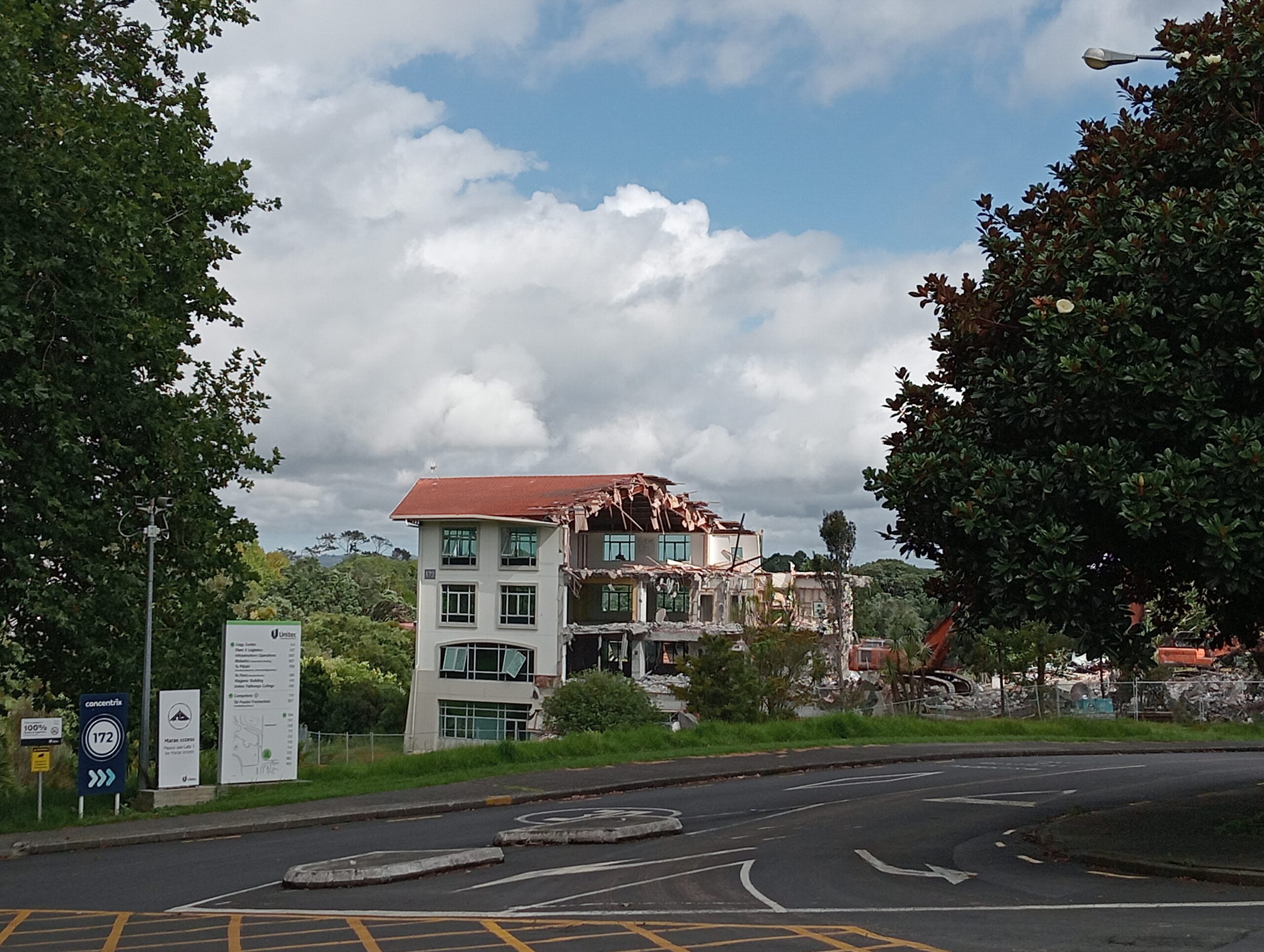
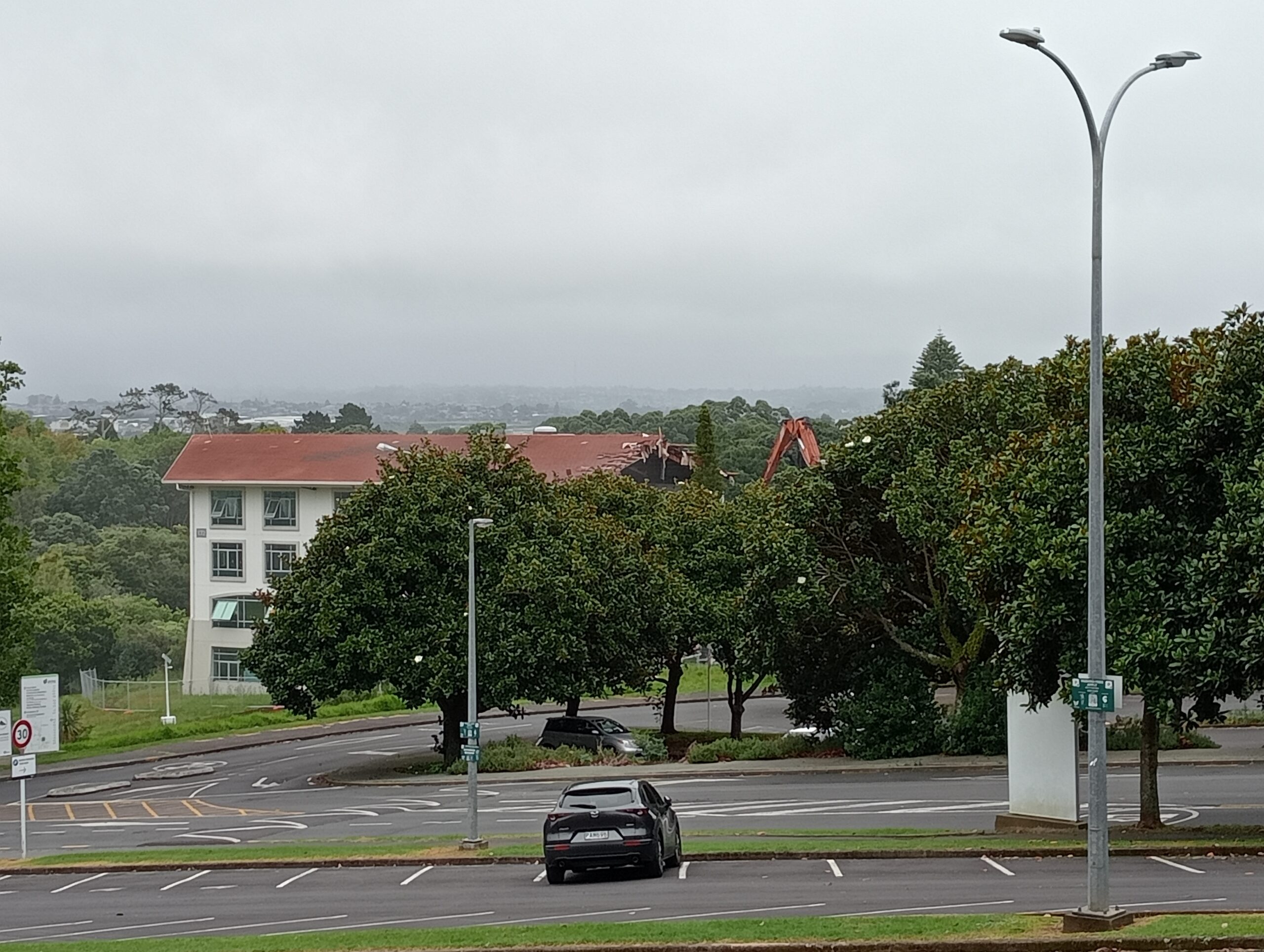
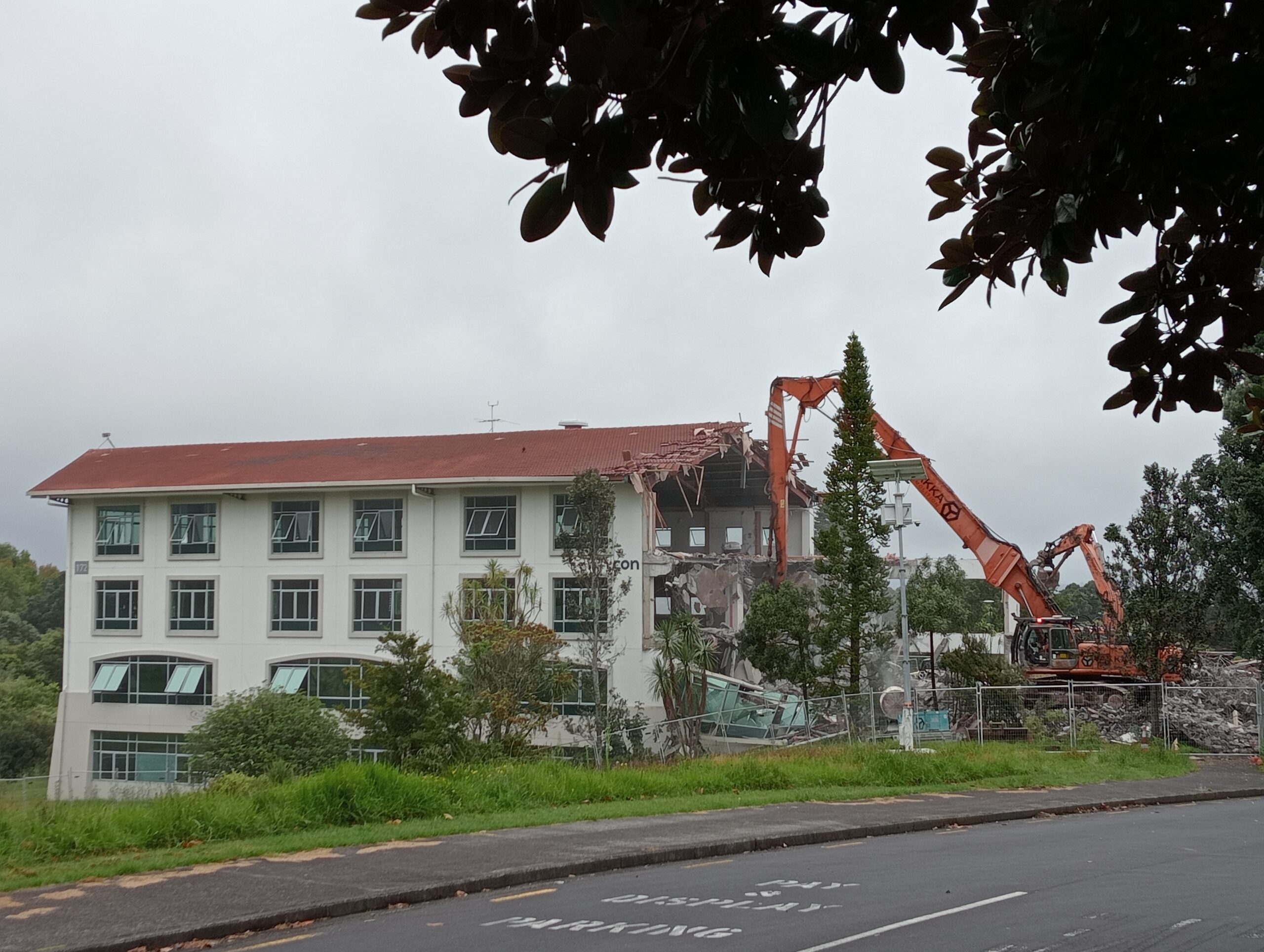
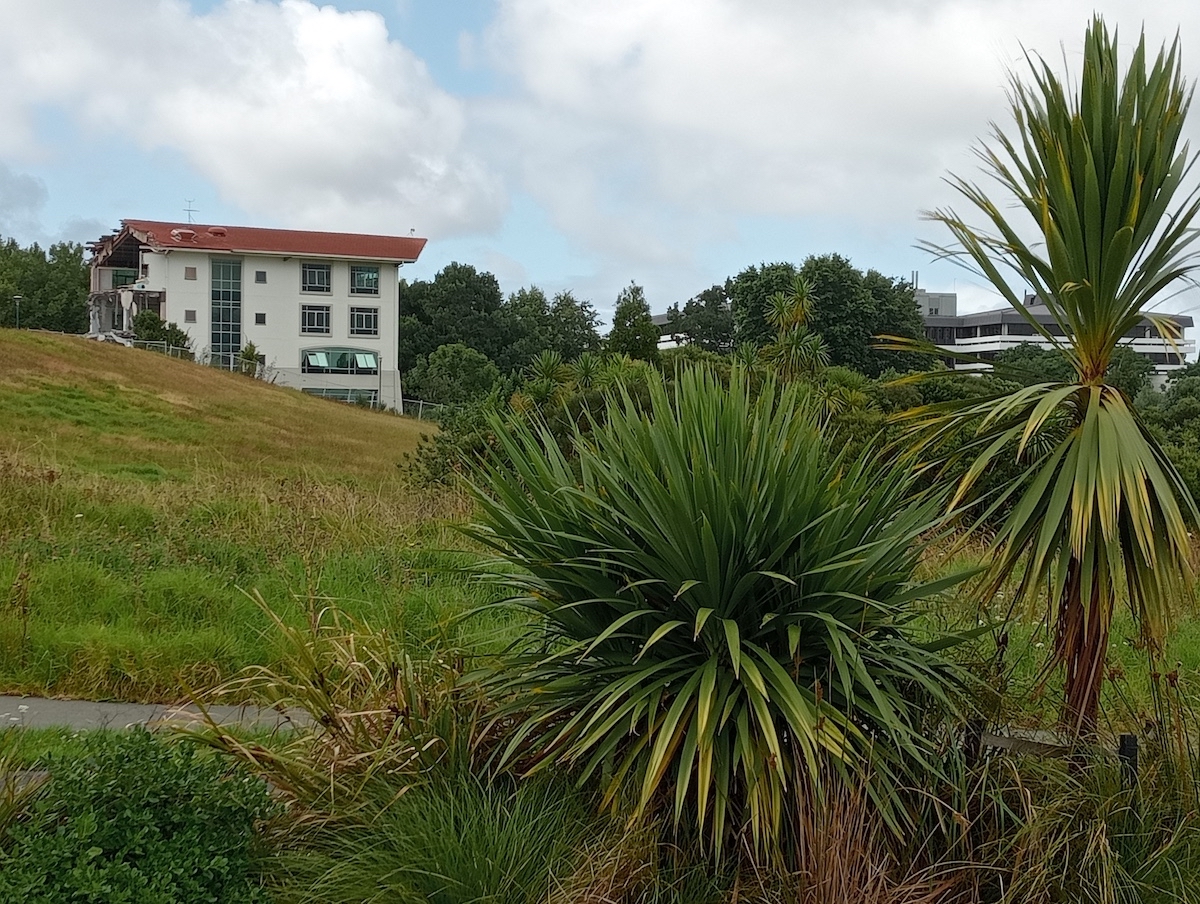
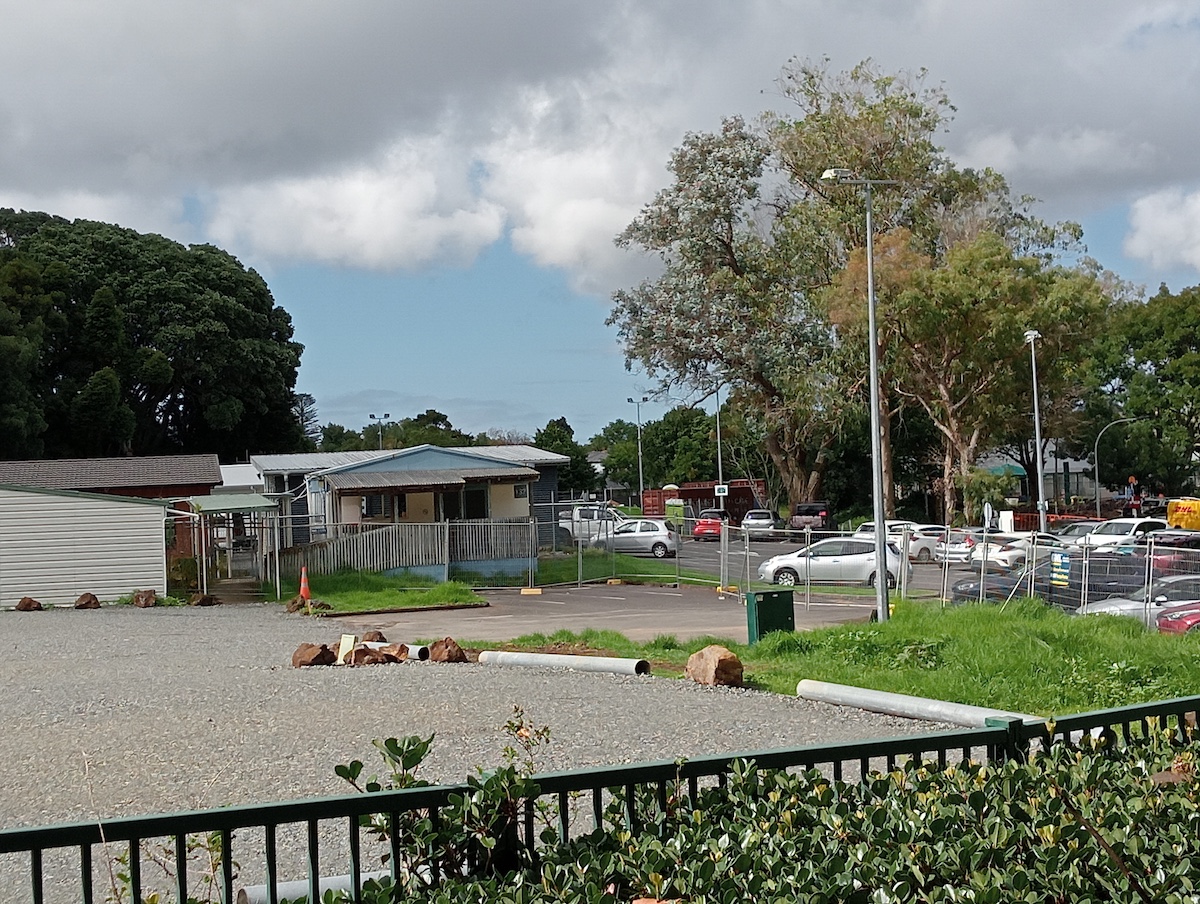
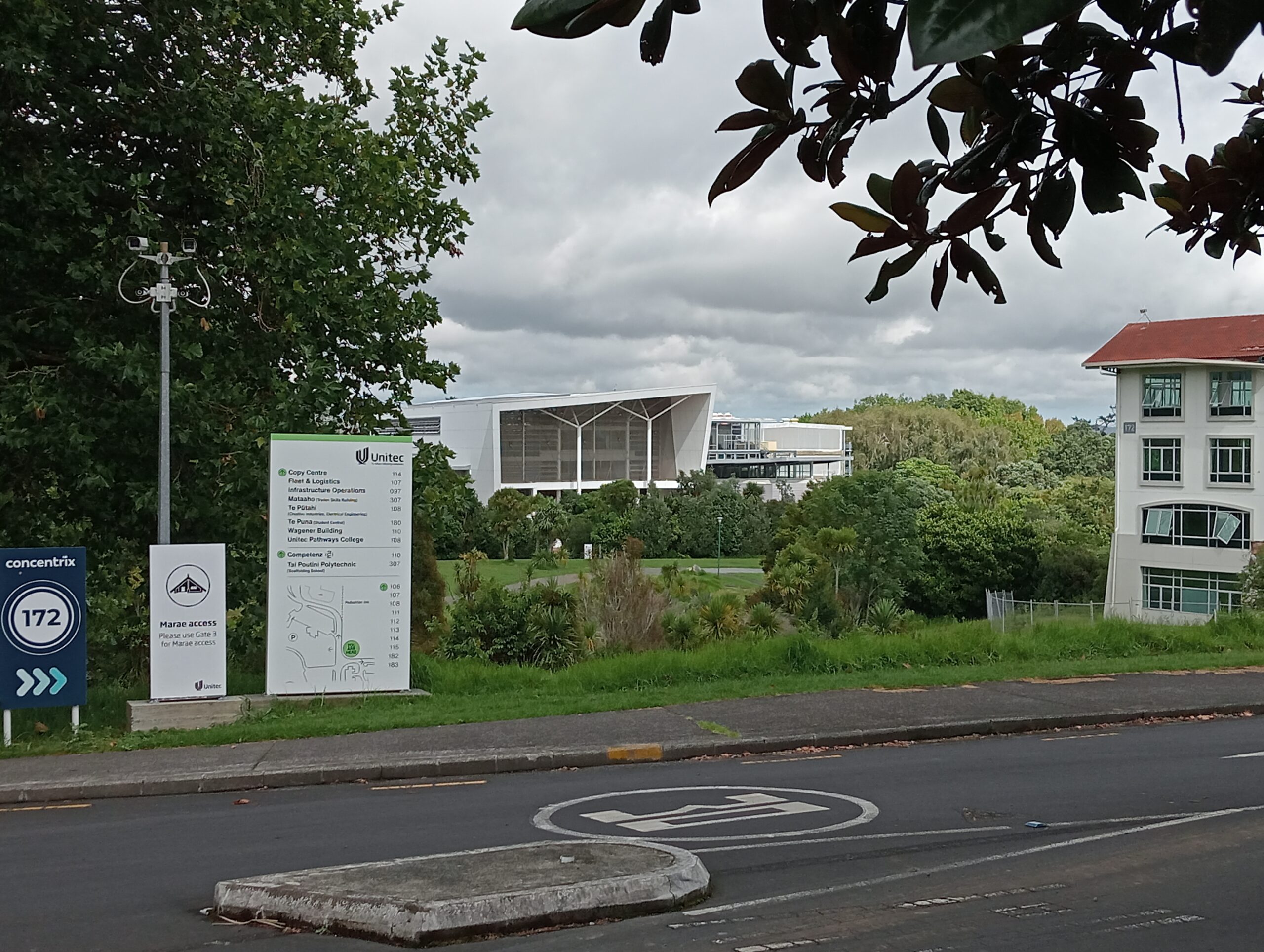
A great academic campus? But note the roof of the Concentrix building.

Photo by Keith Rankin.

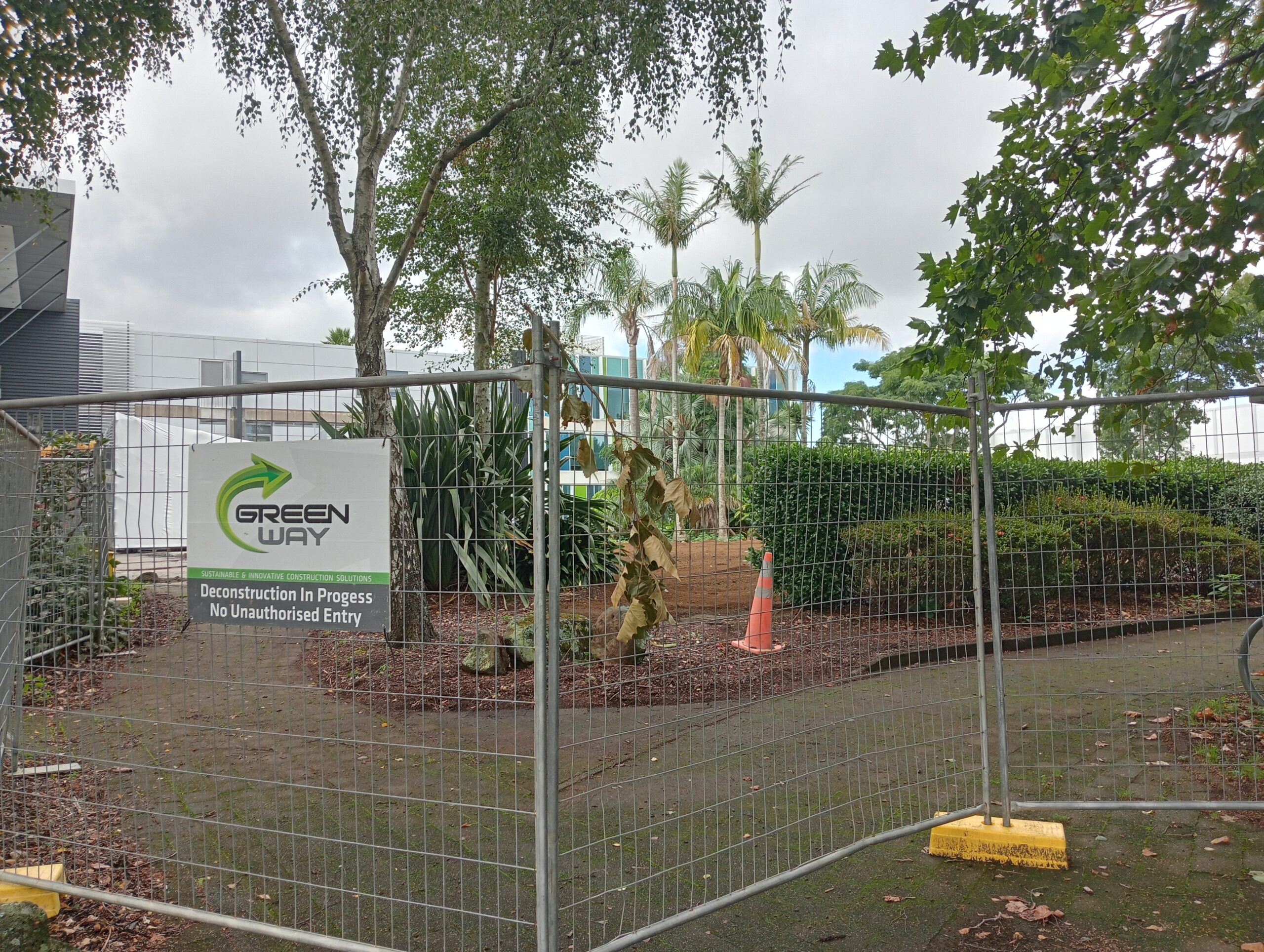
A Green Way?

Photo by Keith Rankin.

Or was it the 1990s’-built Languages Building?

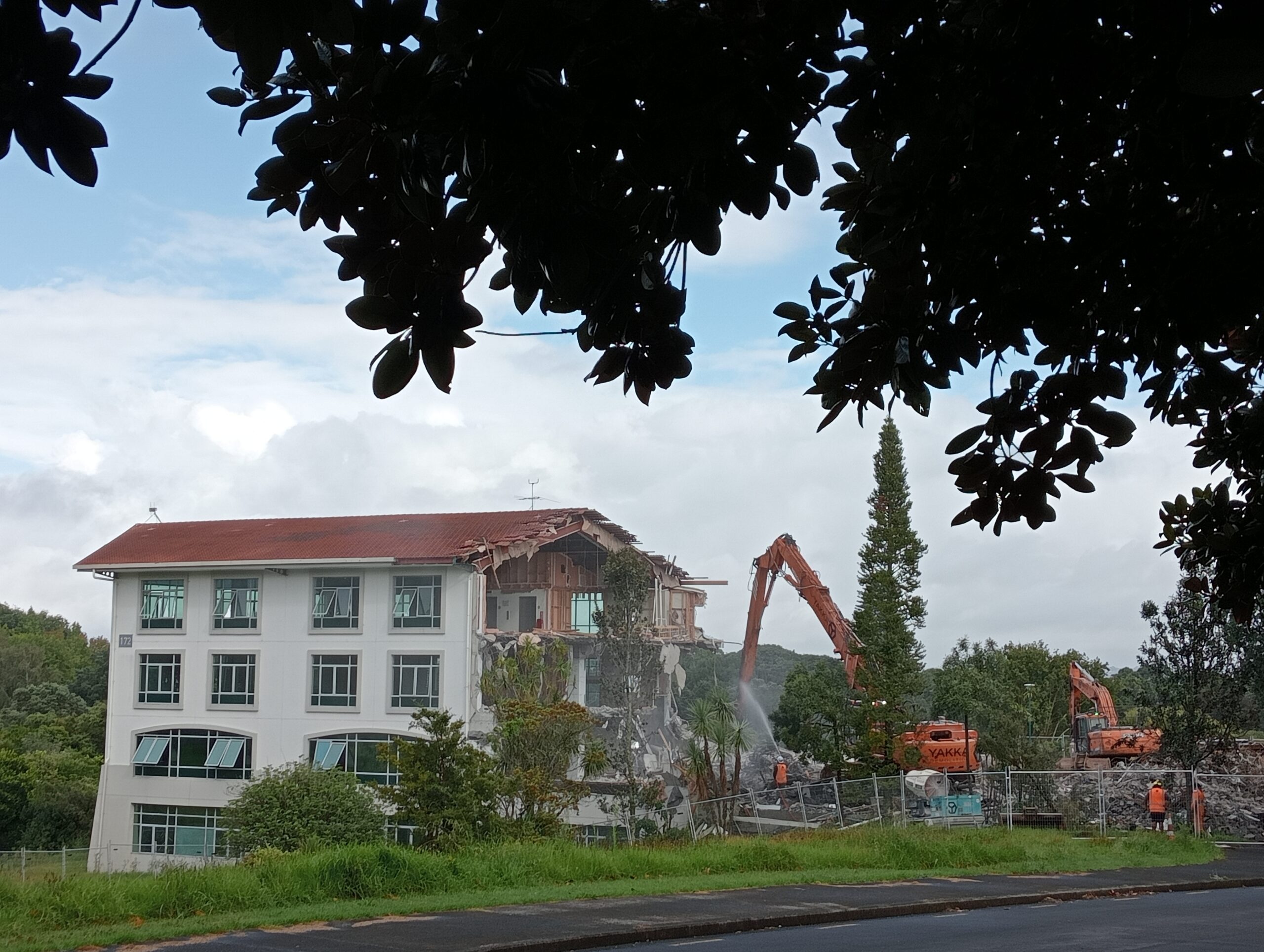
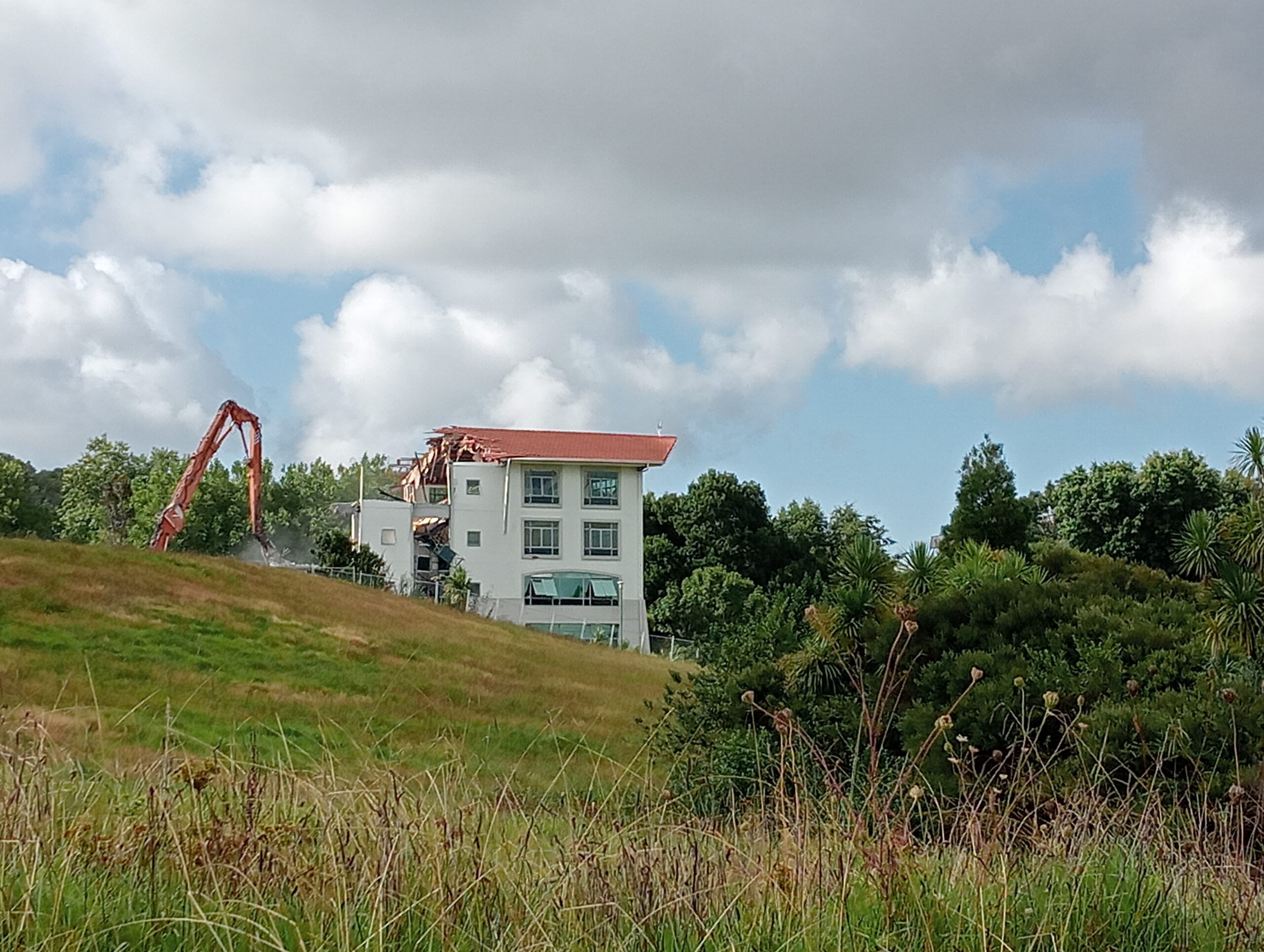
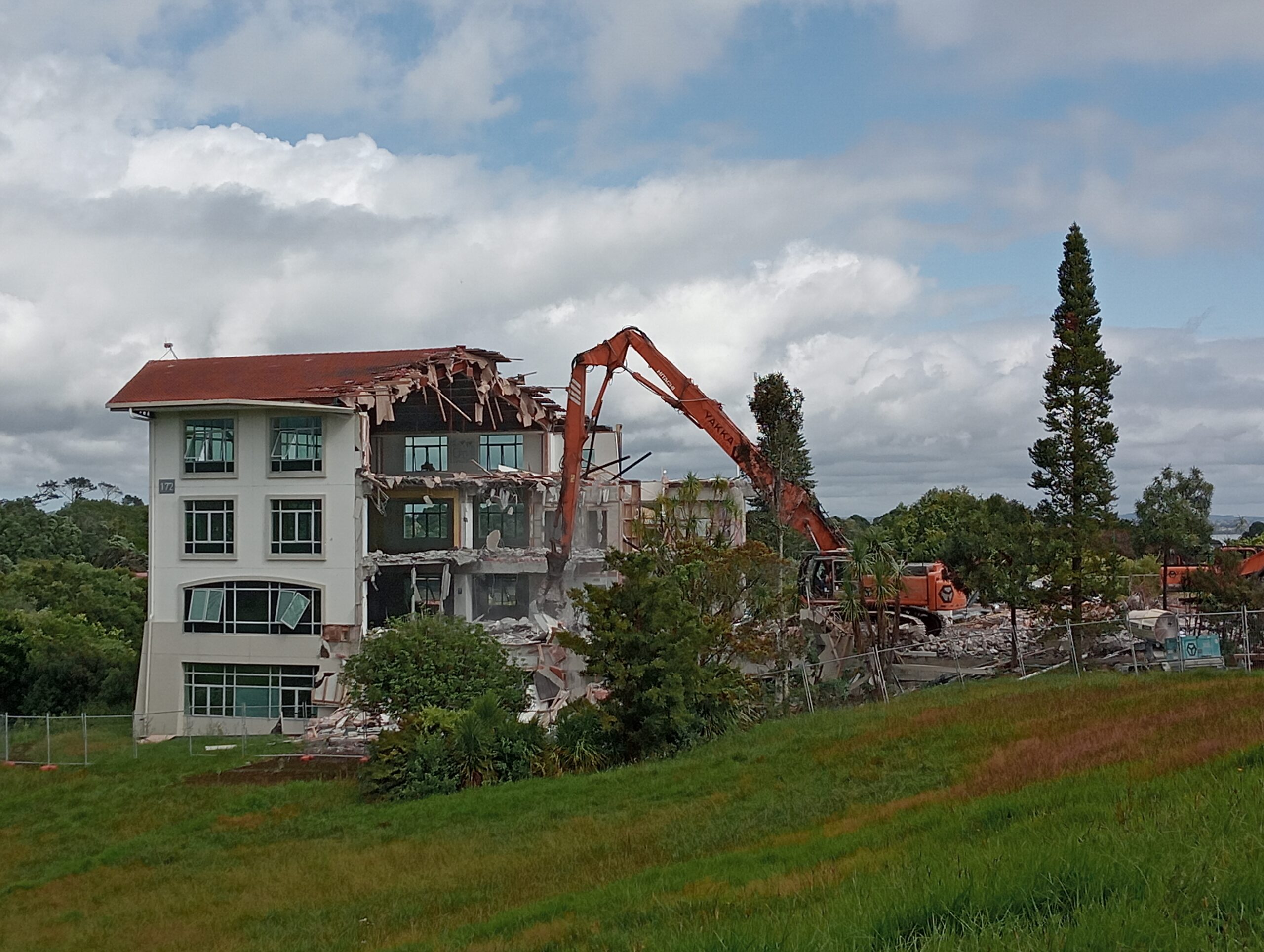
Whoops, there goes Concentrix!

Photo by Keith Rankin.

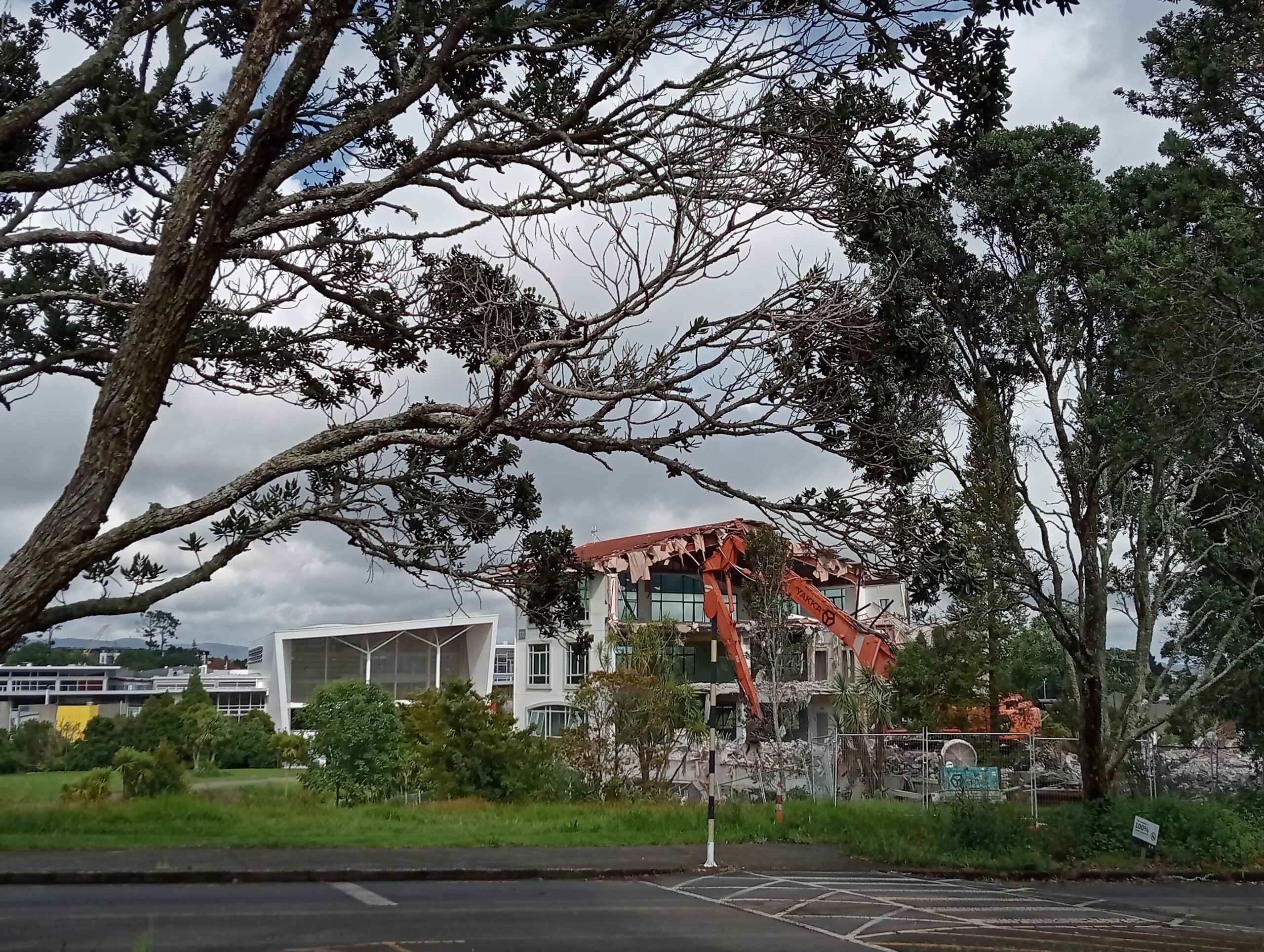
Hard Yakka. Auckland’s answer to the Christchurch Cathedral

Photo by Keith Rankin.


Two days before present

The Martians have landed:

Photo by Keith Rankin.

One Day before present: going, going, …

Photo by Keith Rankin.

Unitec Stadium and Gymnasium (and there were state-of-the-art Squash Courts with a café popular with business staff and students). Once the home of Auckland basketball and netball. And the Auckland Blues – and business staff – trained at the gym, not so long ago.

Photo by Keith Rankin.

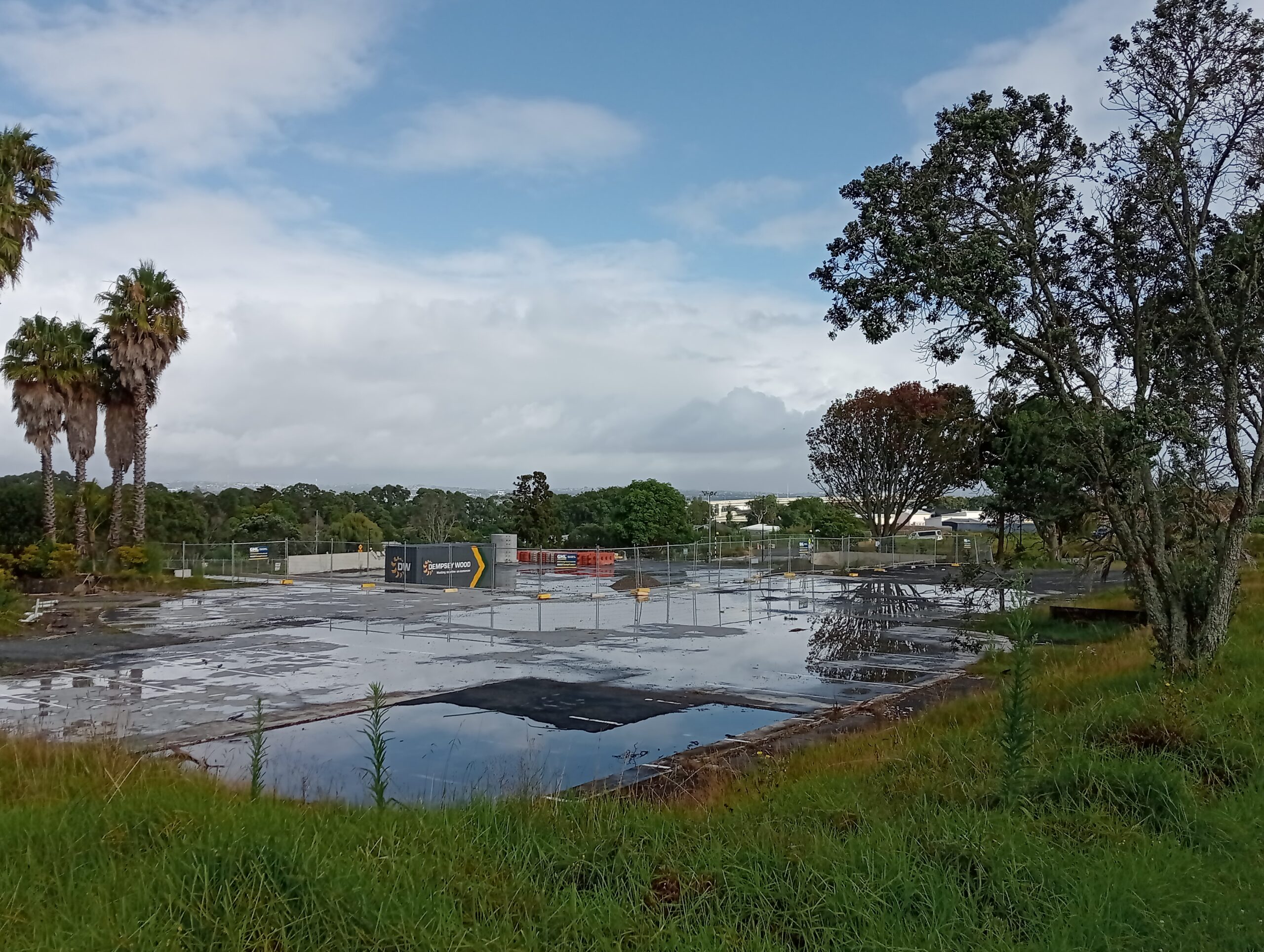
Back to today:

Photo by Keith Rankin.

Ouch, from late 2006 to early 2014 that was my modern state-of-the art workplace and teaching place!

Literally the home of the Schools of Communications and Business. Over those years, I had three offices in that building, and many great memories; and sad memories, too, losing two colleagues.

Photo by Keith Rankin.

Near the Carrington Campus main entrance on Carrington Road South; erasing 1900s’ as well as 1990s’ history.

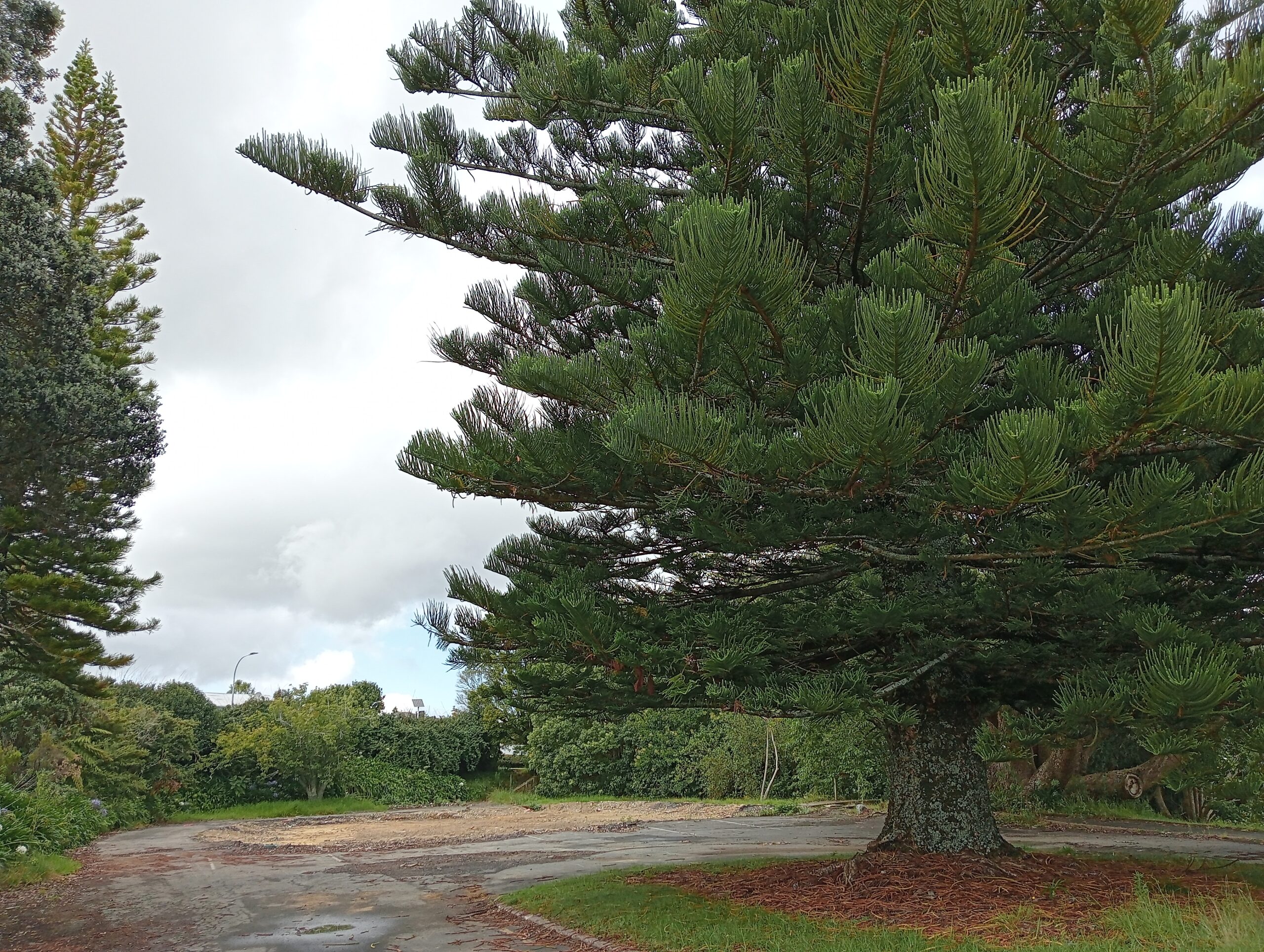
Penman House; only the pine tree remains.

Photo by Keith Rankin.

(Who today knows where ‘norfolk pines’ originated? Hint, it’s a place not far away which been erased from our travel maps, despite being a Unesco World Heritage site. I was lucky enough to fly there from Auckland in 2024, when it was still possible. One of these trees is the signature tree at the Waitangi Treaty Grounds.)

See this and other easily googled material about Robyn Hyde’s 1930s’ sanctuary. Fortunately, local MP Helen White was able to save a few heritage mementos from the house, just in the nick of time.

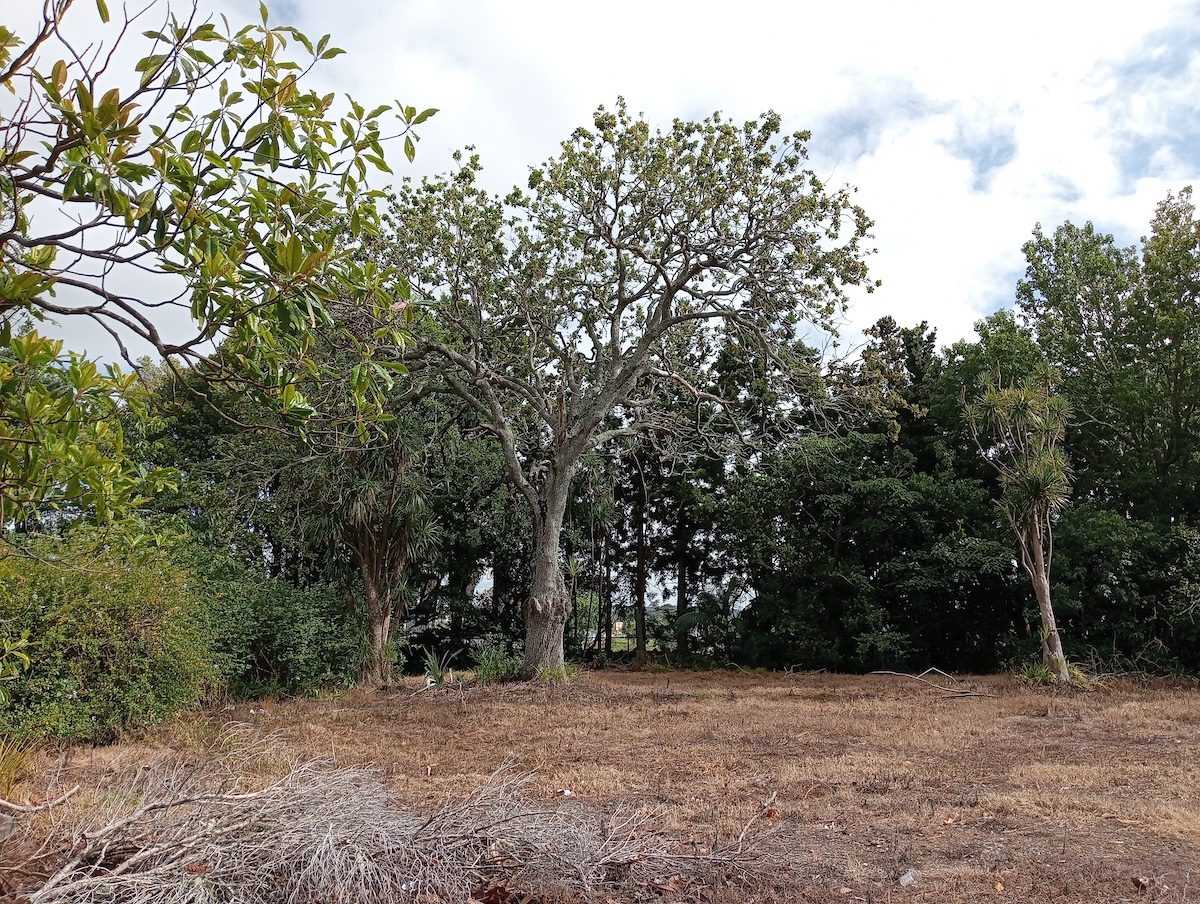
Oakridge House in June 2024 and in October 2024

Photo by Keith Rankin.

Is that an oak tree? Sadly the Unitec Arboretum and Sanctuary Gardens have also gone. At least there are still oaks and norfolks in the Carrington precinct.

Oakridge House became the main sanctuary (especially 2017 to 2019) for the School of Business in the years after Unitec’s flagship business building was tenanted to IBM (in 2012, in an opaque high-level deal) and soon after was abandoned by IBM and became the Concentrix Call Centre. (I understand that the aim of the 2012 eviction was for Unitec to make money through renting out some of its key assets to lucrative high-tech tenants; the template was the University of Ballarat in Australia, with QUT Kelvin Grove being the template for a high level tertiary campus without being ‘saddled with’ heritage and green spaces which government accounts would construe as a ‘lazy asset’.)

There are very few photos of Oakridge House in the public domain; Unitec itself has been remiss in this aspect of the documentation of its past. Here is one poignant photo that I found, in an advertisement labelled “chimney demolition”.

Finally, below, is the former Childcare Centre and another former workplace. (My son attended the demolished childcare centre in the foreground. He was proud to have been a ‘Unitec student’. My 2016 office was in the former building in the distant background.)

Photo by Keith Rankin.

Unitec has now formally merged with Manukau Institute of Technology. It is reputedly going to become a site for city edge tenement housing; some of it, but not all, ‘social housing’. The precinct will need schools, given that nearby schools Gladstone Primary and Mount Albert Grammar are amongst the most oversubscribed schools in the country. It takes little imagination to see that the remnants of Unitec at Mt Albert eventually will become a school (or schools), and that the ongoing Unitec presence of the new Tamaki Institute of Technology (it will probably be called something else) will be at the Henderson ‘campus’, a highrise sandwiched between the Waitakere District Court and the Henderson Library.

Q How do you acquire a small Polytech? A. Establish a large Polytech, then wait.

See Unitec’s extreme financial distress detailed in documents, RNZ, 4 September 2018. Unitec punched above its weight, when it could. Let’s hope that it has not been completely forgotten, by 2050.

And see my yesterday’s photo-essay on Scoop: Carrington: a site for sore eyes.

————-

Keith Rankin (keith at rankin dot nz), trained as an economic historian, is a retired lecturer in Economics and Statistics. He lives in Auckland, New Zealand.

Evening Report: https://eveningreport.nz/2026/02/05/keith-rankin-essay-carrington-precinct-aka-unitec/

Fisher-Black defends time trial cycling title, Olympic triathlete Hayden Wilde fourth

Source: Radio New Zealand

Nelson’s Finn Fisher-Black. © SWpix.com (t/a Photography Hub Ltd)

Finn Fisher-Black has defended his time trial title at the Elite Road National Championships in Cambridge, while Olympic triathlete Hayden Wilde showed he’s right up there with some of New Zealand’s best riders.

Fisher-Black went back to back with a time of 52:24.29 in the men’s 44.2 kilometre event, over a minute faster than Glenn Hayden in second place.

World Tour rider Ben Oliver came third and wild card Hayden Wilde, who is better known on the triathlon circuit, came fourth.

Two-time Olympic medallist Wilde was 2:06 slower than Fisher-Black. He finished faster than the likes of Paris Olympic track rider Tom Sexton, and World Tour riders Reuben Thompson, and George Bennett.

Hayden Wilde during the bike section of the 2024 Ironman in Taupo. PHOTOSPORT

Wilde, 28, is currently ranked the No. 1 male triathlete in the world, having secured the prestigious 2025 T100 Triathlon World Championship title in December 2025.

He is back home for summer on his ‘off-season’. He competed in the 2020 edition of the road race, but Thursday was his first entry in the time trial.

Wilde is also competing in Saturday’s road race at the cycling nationals at Te Awamutu.

In the Elite Women’s time trial Ella Wyllie finished the 27.6 kilometre circuit with the quickest time in 37 minutes 45.34 seconds.

Mikayla Harvey was just 29 seconds behind, and Paris Olympic track rider Bryony Botha came third.

Sign up for Ngā Pitopito Kōrero, a daily newsletter curated by our editors and delivered straight to your inbox every weekday.

– Published by EveningReport.nz and AsiaPacificReport.nz, see: MIL OSI in partnership with Radio New Zealand

LiveNews: https://nz.mil-osi.com/2026/02/05/fisher-black-defends-time-trial-cycling-title-olympic-triathlete-hayden-wilde-fourth/