Why has it taken so long to return to the Moon?

Source: The Conversation (Au and NZ) – By Domenico Vicinanza, Associate Professor of Intelligent Systems and Data Science, Anglia Ruskin University

At 13:24:59 Central Standard Time on December 19 1972, the Apollo 17 command module splashed down in the Pacific Ocean, about 350 nautical miles south-east of Samoa, concluding the last mission to the Moon.

During his career, Apollo 17’s commander, Eugene A. Cernan, logged 566 hours and 15 minutes in space, of which more than 73 hours were spent on the surface of the Moon. Cernan was the second American to have walked in space, and the last person to leave his footprints on the surface of the Moon.

The conclusion of the Apollo 17 journey marked not only the end of a mission, but the close of an era. Between 1969 and 1972, 12 astronauts walked on the Moon over the course of six separate landings.

Half a century later, Nasa is preparing to return under its Artemis programme. For the Artemis II mission, set to launch on April 1 2026, four astronauts will travel in a loop around the Moon in Nasa’s next-generation Orion crew capsule.

More than 50 years is a long gap, and it is only natural to ask if Americans could reach the Moon routinely in the early 1970s, why did it take so long for them to try to go back?

The Apollo 17 mission in 1972 marks the last time humans set foot on the Moon. Nasa

The answer is not simple. It has little to do with technology and much more with how politics, money and global support work. The place to start is with Apollo itself: its model of exploration was not built to last, and was clearly not sustainable.

On May 25 1961, before a joint session of Congress, President John F. Kennedy committed the US to the goal, before the decade was out, of landing a man on the Moon and returning him safely to the Earth.

After Kennedy’s assassination in 1963, President Lyndon B. Johnson ensured that this Moon landing goal was met. But rising costs from the Vietnam war and domestic reforms reduced his appetite for further space investment.

John F Kennedy’s speech at Rice University in 1962 reaffirmed America’s commitment to landing on the Moon. JFK Library

In fact, Nasa’s budget peaked in 1966 and began falling even before Apollo’s success, undermining prospects for sustained exploration. Further funding was declined, planned missions were cancelled, and Apollo ended in 1972 – not because it failed, but because it had accomplished its task.

Sustainable exploration (in space as on Earth) requires stable political commitment, predictable funding, and a clear long-term purpose. After Apollo, the US struggled to maintain all three at once.

Policymakers began to ask what direction Nasa should take next. In 1972, President Richard Nixon directed the space agency to begin building the space shuttle. It would lead Nasa to shift its focus away from deep space exploration towards operations in low-Earth orbit.

‘Space truck’: the shuttle was marketed as providing affordable access to low-Earth orbit. The reality was somewhat different. Nasa

Marketed as a reusable “space truck”, the space shuttle was intended to make orbital access routine and affordable. However, it would turn out to be a vehicle of incredible complexity, marred by technical failures and human tragedies – the Challenger and Columbia accidents in which 14 astronauts’ lives were lost.

Eight years into the shuttle programme, some in the space community believed it was time for the US to once again set its sights on the Moon – and the tantalising prospect of a landing on Mars. On July 20 1989, the 20th anniversary of Apollo 11’s first Moon landing, President George H.W. Bush announced the Space Exploration Initiative (SEI).

The plan aimed for a long-term commitment to construct Space Station Freedom, return astronauts to the Moon “to stay”, and finally send humans to the red planet.

However, the high estimated costs of SEI, reaching hundreds of billions of dollars, led to its downfall. Weak support in Congress along with other factors led to its cancellation under Bill Clinton’s presidential administration.

The ISS became a symbol of scientific cooperation, but consumed resources that might have been used for deep space exploration. Nasa

During the 1990s, the International Space Station (ISS) project cemented low-Earth orbit as the priority for human exploration. The space shuttle was the US’s means of building the station and transporting crews to and from the orbiting outpost.

The ISS became a symbol of scientific cooperation and technical prowess. Experiments carried out on the station generated valuable insights into everything from medical research to materials science. However, it also soaked up resources that might otherwise have supported deep-space exploration.

The Columbia disaster in 2003 – in which a space shuttle broke up over Texas with the loss of its crew – led to another rethink of America’s direction in space. As a result, President George W. Bush announced the Vision for Space Exploration.

The aim of this proposal, which would give rise to what was known as the Constellation programme, was to rebuild Nasa’s capability for reaching the Moon, with Mars as its longer-term goal. But independent reviews warned that costs and schedules were unrealistic. Congress never really gave full financial support to Constellation, leading to its cancellation in 2010 during Barack Obama’s presidency.

This repeated cycle of cancelled space projects exposes some inherent limitations to the system for funding lunar exploration. A sustainable Moon programme needs strong multi-sector commitment, and mechanisms in place for guaranteed multi-decade funding.

Constellation would have sent astronauts to the lunar surface on a lander called Altair. Nasa

But such large programmes must compete each year with defence, healthcare and social spending. Electoral turnover and shifting committee leadership in the US further weaken the prospect of continuity.

Lunar exploration has also suffered from an unresolved strategic question: why go back at all? Apollo’s purpose was largely geopolitical, and after the cold war no equally compelling justification really emerged.

Scientific returns from human space missions are limited compared with robotic exploration. Commercial prospects remain uncertain, and prestige alone rarely sustains or secures large budgets.

Maybe a more fitting question is: why does Artemis appear to have escaped the pattern? Well, Nasa argues that sending astronauts back to the lunar surface – and in particular, establishing a sustained presence there – will help researchers learn “how to live and work on another world as we prepare for human missions to Mars”. That is true, up to a point.

Nasa also emphasises that Artemis will be built through commercial partnerships and international cooperation, creating the first long-term human foothold on the Moon.

With Artemis, has Nasa finally found a rationale to maintain a more enduring presence on the Moon? Nasa

The programme seems to sit at a carefully crafted intersection of US government leadership, commercial launch capabilities, and a broad coalition of international partners brought together under the Artemis Accords. The accords are a set of common principles regarding the use of the Moon and other targets in outer space, agreed between the US and other countries.

The main difference from previous promises to return to the Moon is that this, at least in theory, spreads risk and widens the base of political support. In practice, though, Artemis remains costly and exposed to shifting budgets and priorities.

There is also a cultural dimension to this question. Apollo created a powerful – albeit fragile – myth of swift, heroic technological advance. Artemis is building its large technological base in societies and democratic contexts where investments and commitments tend to evolve slowly, shaped by negotiation, compromise and competing interests.

If Artemis succeeds, it will be because all the political, economic, societal and scientific incentives have finally aligned in a durable way. But until that alignment is proven, the 50-year gap between Apollo and Artemis is less an engineering puzzle than a reminder of how difficult sustained exploration is for modern democracies.

ref. Why has it taken so long to return to the Moon? – https://theconversation.com/why-has-it-taken-so-long-to-return-to-the-moon-274640

Evening Report: https://eveningreport.nz/2026/04/01/why-has-it-taken-so-long-to-return-to-the-moon-274640/

The Emperor’s New Clothes – a fairy tale for our times?

Source: The Conversation (Au and NZ) – By Nicola Welsh-Burke, Sessional Academic in Literary and Cultural Studies, Western Sydney University

In mid-March, an activist group in Rutland County, Vermont, held its usual weekly rally protesting the actions of US president Donald Trump. One protester, Marsha Cassel, led the crowd, dressed as a naked Trump wearing a crown and holding a staff. Cassel was followed by another protester holding a sign proclaiming “THE EMPEROR HAS NO CLOTHES!”.

This is not the first time Trump has been compared to Hans Christian Andersen’s bumbling emperor, who marched naked through the streets while claiming to be dressed in finery – a fiction many of his subjects willingly indulged.

Who was Andersen, what aspects of his life informed this particular story and why might this be useful to know in the age of Trump?

Andersen was born in Odense, Denmark, in 1805. While his grandfather supposedly claimed noble origins for the family, Andersen’s father was a cobbler and his mother an illiterate washerwoman.

Goodreads

After his father died, Andersen moved to Copenhagen for work, where he found a patron, theatre director Jonas Collin, who paid for his education. Andersen started writing after graduating from university, becoming well known for his fairy tales, which he began publishing in the 1830s.

The Emperor’s New Clothes is in his 1837 work, Fairy Tales Told for Children, which featured other memorable tales such as The Steadfast Tin Soldier and The Little Mermaid.

The story follows a vain and clothes-obsessed emperor who commissions clothing from two travelling conmen. These men, posing as weavers, visit his court to show off a new kind of material, which is supposedly rendered invisible to a man “unfit for the office he held”, or “extraordinarily simple in character”.

Afraid to reveal that he cannot see the material, the emperor sends in several aides to review the process, who all lie about being able to see the clothes being made.

llustration by Edmund Dulac from Stories from Hans Andersen, published 1938. Universal Images Group via Getty Images

Once the “outfit” is finished, the emperor dons it and parades naked through the town. The townsfolk compliment the garments, until a small child bursts the bubble, yelling out that the emperor has no clothes.

Unable to admit this, the emperor continues on his way. But the townsfolk now laugh.

This simple tale powerfully criticises rulers who tell untruths, performing intelligence and leadership, as well as those who uncritically allow this.

An outsider looking in

Like many fairy tales, the origins of this one stretch back centuries. Older versions date to medieval times. All feature people in power being duped by conmen who play on their vanities about their own intelligence. Literary scholar Hollis Robbins suggests Andersen’s version reflects a newly-emerging working class culture where “professional competence” was “quickly overtaking legitimacy and heritage as a source of aristocratic anxiety”.

In his book The Enchanted Screen: The Unknown History of Fairy-Tale Films, fairy tale scholar Jack Zipes claims Andersen was “embarrassed by his proletarian background” and “rarely mingled with the lower classes” once he found success as a writer.

Andersen never married and more recently, has been understood as a bisexual man. He had infatuations with both men and women, including Edvard Collin (the son of his patron Jonas) and Swedish opera singer Jenny Lind. After a fall in 1872, from which he never recovered, he died in 1875.

Hans Christian Andersen in an 1836 portrait. Wikimedia Commons

Andersen’s lower class background, argues Zipes, meant he was particularly well suited to biting cultural commentary about the difficult path for those escaping poverty.

In one translation of The Emperor’s New Clothes, the child who proclaims the nudity of the emperor is called “the voice of innocence” by his father. This voice spreads through the crowd, leading to the comical image of the naked emperor’s aides striving to lift the invisible train of his outfit even higher.

Regardless of one’s position in life, this story suggests you cannot escape “suffering, humiliation, and torture,” writes Zipes.

Indeed, many of Andersen’s tales feature characters (often frail, young women) who suffer immensely before dying nobly. The Emperor’s New Clothes, with its child character as the voice of reason, has an ending that, while not “happily ever after”, is as lighthearted as Andersen gets.

The power of fairy tales

The fairy tale is one of the most recognisable literary genres. We hear them from such a young age it is almost like we were born knowing them. Beginning as oral folktales, many of the tales we know today were first written down in 16th and 17th century France, Italy and Germany as social commentary and educational stories.

It is difficult to identify the “originals” of many tales, given their folkloric origins. Still, while it is almost stereotypical now to note that the “original fairy tales” (before contemporary Disney adaptations) were surprisingly dark Andersen’s are noticeably, and notably, bleak.

The Emperor’s New Clothes has been retold many times, with print, screen and musical adaptations. As Donald Trump, in the words of one pundit, continues to “construct a narrative, declare it to be true and relentlessly force the world to submit to it”, the story resonates today.

Indeed, literary academic Naomi Wood has argued that in a post 9/11 world, a “terrifying possibility” emerges in readings of the tale.

The truth of the fairy tale is not its glorification of the voice of innocence, free from corruption and untruth. Rather, it is that adults will continue to believe their own lies, even when they are clearly revealed. As a result, we allow the parade to continue, even while knowing it is farcical.

ref. The Emperor’s New Clothes – a fairy tale for our times? – https://theconversation.com/the-emperors-new-clothes-a-fairy-tale-for-our-times-279558

Evening Report: https://eveningreport.nz/2026/04/01/the-emperors-new-clothes-a-fairy-tale-for-our-times-279558/

Jane Ward Tost was a trailblazer in natural sciences – until history forgot her

Source: The Conversation (Au and NZ) – By Jane Melville, Senior Curator, Terrestrial Vertebrates, Museums Victoria Research Institute

In the 19th century, natural history was a field dominated by men: collectors, curators and naturalists. Names such as John Gould and John James Audubon are well known for their contributions to ornithology.

Far less familiar is Jane Catherine Tost (nee Ward, 1816–1889), a skilled taxidermist and naturalist who worked alongside leading figures of her era, and became the first woman employed in a professional role at an Australian museum.

Recent archival research has brought new attention to Tost’s life and career, revealing the extent of her contribution to 19th century natural history. While, to our knowledge, no images of her have survived, many of her works are still in museum collections.

Tost’s story is the subject of my new book, For Her Love of Birds, published by Museums Victoria.

Early life in London

Jane Catherine Ward was born in 1816 into a family closely connected to the London bird trade. Her father was a bird breeder, and her older brothers, like Jane, were taxidermists.

In 1825, her eldest brother, James Frederick Ward, entered a partnership with the young naturalist John Gould. Operating from Golden Square, London, the pair advertised themselves as “bird stuffers to the King”, preparing specimens for elite clients.

Evidence uncovered for this book confirms James Frederick Ward was Gould’s first business partner, a detail not recognised in previous histories. The partnership ended in 1828 after Gould was appointed to a curatorial role at the Zoological Society of London.

But the Ward family remained active in scientific circles. They developed an association with the naturalist John James Audubon, and Jane’s brothers travelled to the United States to assist him in collecting bird specimens. Her brother Edwin Henry Ward accompanied Audubon on his first trip into the Florida Territories in 1831.

Jane remained in London, where she developed her own expertise as a taxidermist. By 1838, at the age of 21, she was working for Gould, preparing bird specimens for his projects – including those from his travels across Australia.

A Tasmanian masked owl (Tyto novaehollandiae castanops), from the John Gould Collection, at the time Jane Tost worked for Gould in London. Jon Augier/Museums Victoria

Her position was unusual, considering how few women worked in paid scientific fields back then. Indeed, in 1838, of the 18 taxidermists listed in the trade directories, none were women.

But in the 1841 census, Jane listed herself as a taxidermist (or bird stuffer, as they were known then).

Hardship and emigration

Jane married Charles Tost, a Prussian-born pianoforte maker, in 1839. Yet she continued working while raising a family.

During the 1840s they experienced financial hardship. And, like many others living in London during this period, they faced the threat of disease, instability, and personal tragedy.

Moving from London to Nottingham 1850, Jane opened her own business, advertising herself as a leading naturalist and using her maiden name “Ward” alongside her married name. Her work as an independent, professional naturalist gathered considerable attention in the local papers.

Newspaper advertisement introducing Jane Ward Tost’s new business as a naturalist and ‘bird stuffer’ to Nottingham. Published in the Nottingham Journal, August 16 1850. British Library, St Pancras – London.

In 1855, the family emigrated to Australia. Although it has been previously reported they travelled to Australia on the Indian Queen, research for this new book uncovered documentation they sailed on the fast-clipper Schomberg, bound for Melbourne.

The voyage was fraught with problems, which came to a head on a stormy night two days after Christmas when the ship wrecked on the Victorian coast. Although all passengers were rescued, the ship was lost.

The Tost family eventually continued on to Tasmania, all their belongings at the bottom of the sea.

Schomberg leaving Liverpool, 1855. Colour Lithograph by T G Dutton

A new career in Australia

In Hobart Town, Jane began working for the Royal Society of Tasmania, preparing specimens for their new museum, which would later become the Tasmanian Museum and Art Gallery. Her work was well regarded, and she contributed to displays that would be shown internationally, including in an 1862 exhibition held at the Crystal Palace.

Seeking broader professional opportunities, Jane moved her family to Sydney. There she established a taxidermy business and undertook work for private clients and public exhibitions. Her work, including a well-publicised display of alpacas that won medals at the International Exhibition in London in 1862, helped establish her reputation.

Her most significant appointment came when Australian Museum director and curator Gerard Krefft employed her as a taxidermist in 1863. She was paid £10 per week, the same wage as the men. In this role, she repaired and prepared specimens for display when the museum’s collections required extensive restoration.

Her employment marked a milestone: she was the first woman appointed to a professional position at the Australian Museum, and likely one of the first at a museum globally.

The Australian Museum in Sydney, 1860s, with Gerard Krefft (right) pictured in the skeleton gallery. Henry Barnes Snr © Australian Museum (only for use with this article)

Her legacy

Despite her achievements, Jane’s career was not free from difficulty. Heated disputes within the museum led to the dismissal of her husband, who had also been employed there, and she subsequently lost her position. The family again faced financial strain.

Irrawaddy squirrel (Callosciurus pygerythrus) specimens prepared by Jane Tost while she worked as a taxidermist at the Australian Museum, Sydney, in the 1860s. Photo by M. Dean-Jones © Australian Museum (only for use with this article)

Following further tragedies, Jane and her daughter Ada established a taxidermy business opposite the museum. Over time, it became one of the leading taxidermy establishments in Australia, supplying specimens to museums and private collectors globally.

Jane continued working until her death in 1889, exhibiting at international exhibitions in London, Paris, Calcutta and Chicago.

Although her name faded from mainstream accounts of scientific history, Jane Ward Tost played a significant role in the development of natural history collections in both Britain and Australia.

The full extent of her life – spanning professional achievement, migration, personal loss and resilience – is finally being fully documented.

Her story offers a new perspective on the people who underpinned 19th century museums and natural history, and on the women whose expertise helped build museum collections that still exist today.

Plains pocket gopher (Geomys bursarius) specimen prepared by Jane Tost while she worked as a taxidermist at the Australian Museum, Sydney, in the 1860s. Photo by M. Dean-Jones © Australian Museum (only for use with this article)

ref. Jane Ward Tost was a trailblazer in natural sciences – until history forgot her – https://theconversation.com/jane-ward-tost-was-a-trailblazer-in-natural-sciences-until-history-forgot-her-276764

Evening Report: https://eveningreport.nz/2026/04/01/jane-ward-tost-was-a-trailblazer-in-natural-sciences-until-history-forgot-her-276764/

How Taiwan is viewing the Iran war – and what it reveals about US credibility

Source: The Conversation (Au and NZ) – By Bonnie Yushih Liao, Assistant Professor of Diplomacy & International Relations, Tamkang University

The United States and Israeli strikes on Iran have become increasingly concerning for the world due to the risks of further escalation and the impact on energy markets.

In Taiwan, however, the focus has shifted in a different direction.

Rather than treating the war as geographically distant, Taiwanese political leaders and analysts are viewing it as a real-time indicator of how the United States operates under strategic pressure.

The key question is less about whether the United States would act if a conflict with China were to break out in the Indo-Pacific region, and more about how it would manage competing pressures if multiple crises unfolded at once.

A test of limits, not intentions

There is growing recognition in Taiwan that US resources are not unlimited.

The Middle East war has caused energy prices to fluctuate and stoked fears of rising inflation in the United States, demonstrating the domestic costs of military operations.

US President Donald Trump’s approval ratings have also taken a hit, with some in his own party now questioning his rationale for going to war.

Some reports have indicated US supplies of interceptor missiles are running low. The US military has, for example, had to move some THAAD missile interceptors from South Korea to the Middle East. The US has also struggled to defend against Iran’s use of asymmetrical fighting tactics.

This has direct implications for the deterrence Washington has long maintained in the Indo-Pacific. This deterrence depends not only on US war-fighting capability, but on the expectation this capability will remain intact under strain.

Conflicts elsewhere may not weaken the US resolve to intervene if China were to invade or pressure Taiwan in some fashion. But they can drain American resources and influence where these items are prioritised.

Shifting thresholds for the use of force

The US has also framed its strikes on Iran as a “preventive” action aimed at mitigating a future threat rather than responding to an imminent attack. This raises broader questions about the changing threshold for the use of force in the Indo-Pacific.

For Taiwan, this is not an abstract notion. If the threshold for military action is lowered from imminent threat to potential risk, the strategic environment becomes less predictable in the Indo-Pacific.

This broadens the range of circumstances under which force by the United States may be justified.

The speed with which the Trump administration has acted in Iran has also increased uncertainty for regional partners like Japan and South Korea in assessing when and how the United States would act against China.

The US’ NATO partners weren’t told about the Iran strikes before they happened. This could make Japan and South Korea similarly worried about a lack of communication on potential US actions over Taiwan.

South Korean protesters rallying against the US and Israel attacks on Iran in Seoul on March 24. Ahn Young-joon/AP

Wars rarely follow anticipated pathways

The Iran war has also raised broader questions about how the United States adapts as crises evolve.

Much of the discussion around Taiwan has traditionally centred on the possibility of a large-scale Chinese invasion. However, recent developments suggest escalation may be less linear than this.

Rather than following a single, predictable pathway, conflicts can develop through a sequence of smaller decisions, the ambiguity over signals sent by an adversary, or rapidly changing political conditions.

This has contributed to a shift in strategic discussion in Taiwan. Recent defence policy debates and security forums have increasingly examined scenarios in which China pressured Taiwan with grey-zone tactics, blockades and incremental escalatory moves, rather than focusing solely on full-scale invasion.

As a result, attention is shifting to how such pressure might build over time – through cyber operations, maritime restrictions or limited military actions – and possibly spiral out of control.

The current crisis in the Strait of Hormuz has been watched closely in Taiwan as an example of how disruption of a strategic chokepoint can quickly impact the world. This raises questions about whether similar dynamics could emerge in the Taiwan Strait, and how prepared external actors – including the US – would be to respond.

The US has also been unable to prevent the Iran war from spilling over into the Persian Gulf states. This raises questions about whether a war over Taiwan could be contained or produce wider regional effects.

The USS Antietam (CG-54) conducting operations in the Taiwan Strait in August 2022. US Navy handout/EPA

The risk of misinterpretation

For Taiwan, the most immediate challenge comes from how China interprets US actions in Iran. If Beijing concludes that diminishing military resources or domestic pressures would limit the US’ ability to wage a sustained conflict in the Indo-Pacific, it may reassess the risks of applying coercive pressure on Taiwan.

This does not imply immediate conflict is likely over Taiwan. However, it increases the likelihood that China would try to pressure or coerce Taiwan just below the threshold of full-scale war.

History suggests that escalation is often shaped by how situations are interpreted by adversaries, rather than by clear shifts in power. When states believe conditions are more favourable than they actually are, the risk of misjudgement increases.

For Taiwan, the challenge is therefore not only to assess developments in the Middle East, but to ensure that its own position is not misunderstood. This involves:

  • maintaining credible defensive capabilities
  • reinforcing internal cohesion against possible threats
  • signalling clearly that any attempt at coercion would face robust resistance.

Deterrence depends not only on what a country can do, but what others believe it will do — and whether those beliefs discourage risk-taking.

ref. How Taiwan is viewing the Iran war – and what it reveals about US credibility – https://theconversation.com/how-taiwan-is-viewing-the-iran-war-and-what-it-reveals-about-us-credibility-279102

Evening Report: https://eveningreport.nz/2026/04/01/how-taiwan-is-viewing-the-iran-war-and-what-it-reveals-about-us-credibility-279102/

I’m close to retirement age. What are my options for drawing on my super savings?

Source: The Conversation (Au and NZ) – By Di Johnson, Senior Lecturer, Finance and Financial Planning, Griffith University

Retiring well means making a series of decisions to ensure a financially secure post-work life. One practical step is to work out the income you need each week to survive and thrive when you stop working.

If you are one of the many Australians still working and growing your super, knowing more about tailored retirement income products might help to plan.

There are two main ways to use super savings in retirement:

  • through products that provide an income stream, and/or
  • through lump sums.

CC BY-NC

It’s easy to put off thinking about superannuation when retirement is years away. In this five-part series, we ask top experts to explain how to sort your super in a few simple steps, avoid greenwashing, and set goals for retirement.


Account-based pensions

The most common product for a retirement income stream in super is an account-based pension. These can be set up outside super, but there are advantages inside super. Around 80% of retired super fund members have one or more account-based pensions in super.

These products offer flexibility, control and continued exposure to investment markets. They allow retirees to convert part, or all, of their super balance into an income stream while keeping an allocated sum invested.

More than one can be set up, at different times, and with different investment choices, so your investment balance keeps growing while providing income in the short-term. Retirees can choose how much they withdraw, as long as they meet the government’s minimum withdrawal requirements.

Arguably, the greatest advantage of an account-based pension within super is its tax effectiveness compared to investments outside super. Once a super member is fully retired, both the investment earnings and income drawn from an account-based pension in super is tax-free.

One of the disadvantages of account-based pensions in super is that the age-based minimum drawdown rates might not suit your investment timing or income preferences. Investment returns are not guaranteed, and you don’t know how many years of income will be needed.

If you die before the funds are fully drawn, however, your beneficiary can receive the remaining money.

One or more retirement products can provide steady income for retirees. Greta Hoffman, Pexels

Another option for regular income: annuities

Retirees can also use their super to buy another type of income product called an annuity. There are a few main types of annuities and you can choose if you want the income payments:

  • guaranteed over a fixed period of time
  • investment-linked over a fixed period or for life, or
  • guaranteed for the rest of your life, typically adjusted for inflation.

The cost of the annuity will vary depending on these factors. Annuities provide more certainty both in the payments and timeframe for income, regardless of investment market performance.

In Australia, fewer than 5% of super member accounts are annuities. But that may be changing, as more retirees realise the advantages of including an annuity in their super income planning.

Annuities can be bought using super or non-super money, but using super has the advantage of tax-free earnings and income.

In addition, for age pension eligibility, Centrelink only takes into consideration 60% of the value of a lifetime annuity compared to 100% of an account-based pension. This favourable treatment means your super savings can last longer, because your retirement income will be supplemented with more age pension.

On the downside, annuities have less flexibility. Once you have committed a lump sum of super to purchase the annuity, you cannot convert that back into a lump sum.

The income from annuity returns may also not be as high as in an account-based pension, because there is a trade-off between investment returns and guaranteed income.

Choosing the right mix for your circumstances

Retirees may benefit from a retirement income strategy that includes a combination of account-based pensions and annuities, depending on their personal needs and circumstances.

Once aged 67, retirees will also be eligible for the age pension, within asset or income limits. More than 60% of retirees receive at least some age pension, around 40% as their main income.

There is a maximum amount that can be transferred to pension phase within super, regardless of whether you choose an account-based pension or annuity, or a combination. That cap currently sits at A$2 million.

What about lump sums?

Once a super fund member reaches preservation age, usually age 60, and ceases at least one job, they may be able to access some or all their super as a lump sum. Alternatively, a member can access some or all their super as a lump sum when they turn 65, regardless of their employment.

With more people heading into retirement with mortgages, lump sums can be used to pay down debt, or for home repairs, holidays or even gifting.

How the lump sum is used may affect your age pension. In 2025, the average lump sum taken out by newly retired members was around $58,000.

While income stream products have a range of advantages within super, taking at least some super as a lump sum is common, even later in retirement. More than $71 billion was paid out in lump sums from superannuation in 2025 across 2.26 million member accounts.

Advice can help

Getting advice on coordinating super income streams and age pension entitlements can make a big difference to maximising your income while managing risk. Licensed financial advisers are in high demand, either within or outside your super fund.

Super funds can provide a range of valuable information, calculators and support. Other online tools are also available that can help with retirement income planning, including taking age pension eligibility into account.

Disclaimer: This article provides general information only and is not intended as financial advice.

ref. I’m close to retirement age. What are my options for drawing on my super savings? – https://theconversation.com/im-close-to-retirement-age-what-are-my-options-for-drawing-on-my-super-savings-276377

Evening Report: https://eveningreport.nz/2026/04/01/im-close-to-retirement-age-what-are-my-options-for-drawing-on-my-super-savings-276377/

Family ‘devastated with worry’ over French man Antoine Richard who’s missing in central Otago

Source: Radio New Zealand

Antoine Richard hasn’t been seen since 21 March. Supplied / NZ Police

The family of French national Antoine Richard is appealing for more help in the search for the 21-year-old who was reported missing in Cromwell on the weekend of 21-22 March.

Richard was last seen on 21 March, around 11.45pm at the Victoria Arms Hotel on the corner of Achil Street and Melmore Terrace.

A statement issued by police on behalf of the family on Wednesday said: “An enormous amount of work has already been carried out by the police, the Search and Rescue team, Carrick winery where he worked, his friends, the Cromwell Rugby Team, local residents, and everyone who has taken part in the search.

“We are infinitely grateful to them.”

The family, Hervé, Marithé, Claudine, Elise, Noémie, Valentin and Corentin Richard, said they were asking for people’s help with these aspects of the case:

  • A Croc shoe that had been found
  • If you or someone you know owns a property in Cromwell, please check your surroundings, gardens, and outbuildings
  • If you have a security camera, please review the footage from after 11:30pm on 22 March
  • Anyone who gave a lift to Richard in the early hours of 22 March

“We have been devastated with worry since we heard the news.

“We are writing on behalf of his entire family, his friends, his colleagues in France and New Zealand, and all the people he loves, in the hope of finding him as soon as possible.”

Police are also appealing for residents to check their properties and any CCTV footage which can be uploaded here.

They also want to hear from anyone who may have seen a person matching Richard’s description either hitchhiking or walking in Cromwell in the early hours of 22 March.

Supplied / NZ police

Detective Phill Hamlin said searches have been conducted by LandSAR members from throughout the Otago and Southland area, police, Coastguard and many members of the community.

“We remain dedicated and focused on locating Antoine,” he said.

The Police National Dive Squad will also search areas of Lake Dunstan.

Search teams located a grey rubber Croc branded sandal from the shore of Lake Dunstan and would like to speak to anyone who may have seen somebody wearing the footwear.

Richard was last seen also wearing light coloured knee length shorts and a black t-shirt, police said.

Anyone who has seen him or has information regarding his whereabouts, is urged to contact police via 105, using the reference file number 260324/5771.

Sign up for Ngā Pitopito Kōrero, a daily newsletter curated by our editors and delivered straight to your inbox every weekday.

– Published by EveningReport.nz and AsiaPacificReport.nz, see: MIL OSI in partnership with Radio New Zealand

LiveNews: https://nz.mil-osi.com/2026/04/01/family-devastated-with-worry-over-french-man-antoine-richard-whos-missing-in-central-otago/

Will medicinal cannabis help my mental health? Here are the evidence and the risks

Source: The Conversation (Au and NZ) – By Suzanne Nielsen, Professor and Deputy Director, Monash Addiction Research Centre, Monash University

Anxiety, depression and post-traumatic stress disorder (PTSD) are among the most common mental health conditions for which Australians are prescribed medicinal cannabis.

Most prescriptions for mental health conditions, and for other conditions more broadly, are for products containing higher levels of THC (tetrahydrocannabinol). This is the part of cannabis that causes a “high” and can affect thinking and mood.

Many of these prescriptions are for inhaled products, such as dried leaf or flower that people smoke or inhale.

This pattern of use – of inhaled, higher-THC content for mental health conditions – appears to be partly driven by prescribing trends among 18 to 44-year-old men.

For anxiety alone, there are almost three times more approvals for the products containing the highest levels of THC than for products containing only CBD (cannabidiol).

But this prescribing pattern doesn’t line up with the best available research. Most higher-quality clinical trials for anxiety have tested CBD-based products, not THC.

This is just one example of how Australians are using medicinal cannabis to treat mental health conditions without the best available evidence to back it.

Let’s start with anxiety

Anxiety is the most common mental health reason people seek medicinal cannabis in Australia.

There is emerging evidence CBD may help some people with anxiety, but the findings are inconsistent.

The largest and most comprehensive systematic review on medicinal cannabis and mental health found it did not meaningfully improve anxiety symptoms. The authors said we still need larger, high-quality trials, and studies that reflect how people use medicinal cannabis in the real world.

Evidence for THC is even more mixed. In our previous article we described how some people find THC makes them feel calmer, but others say it worsens their anxiety. As few trials have investigated THC for anxiety, it is hard to draw firm conclusions.


CC BY-NC

Medicinal cannabis prescriptions have skyrocketed in Australia, mostly for legal but unapproved products we don’t even know work or are safe. In this series, experts tease out what’s fuelling the rise of medicinal cannabis, the fallout, and what needs to happen next.


How about PTSD?

The evidence so far for using medicinal cannabis to treat PTSD is limited.

While some people report benefit, the findings from the small number of high-quality randomised controlled trials (the gold standard for medical evidence) are mixed.

In one very small study, only five people completed the entire protocol. This tested vaporised cannabis containing either a combination of 10% THC and 10% CBD, or a product with mainly 10% THC.

Both products appeared to improve PTSD symptoms in the short term, but the trial had trouble recruiting participants. A larger study would be needed to know if the results are reliable.

Another trial tested smoked cannabis with three strengths: 12% THC, one mainly containing CBD, and one with equal amounts of THC and CBD. There was no change in the severity of PTSD symptoms for any of the products compared to placebo. Smoking cannabis, including medicinal cannabis, is also not recommended because of its well known harms.

The limited and uncertain evidence is one reason the Department of Veterans’ Affairs has decided not to fund medicinal cannabis to treat mental health conditions, including PTSD.

What about depression?

There is even less high-quality evidence for using medicinal cannabis to treat depression. A recent systematic review found no relevant randomised controlled trials.

A small pilot study tested 150–300 milligrams a day of CBD alongside standard treatment for bipolar depression. CBD was well tolerated, meaning it didn’t cause serious side effects, but it didn’t help symptoms.

Studies for different types of depression are mixed. Some show possible benefits but also unfavourable effects including worse symptoms or acute mental health effects such as psychosis, suicidal thoughts or anxiety. It is also unclear whether unfavourable effects are due to the product or underlying mental health condition.

Is medicinal cannabis safe?

Emerging evidence shows psychosis has been reported among people using medicinal cannabis containing higher levels of THC.

Australia’s medicines regulator, the Therapeutic Goods Administration (or TGA) says products containing THC are generally not appropriate for people who have a personal or family history of psychosis or schizophrenia. This caution also extends to people with past or current mood or anxiety disorders.

This is largely because THC can worsen or trigger symptoms in people who are already vulnerable to these conditions.

Why the increased risk?

Is this due to the THC or were these people already at higher risk? It’s likely a mix of both.

Daily or near-daily cannabis use (which is common with medicinal use) is linked to a higher risk of psychosis, or it may contribute to developing it.

Young people may be particularly vulnerable to side effects after taking medicinal cannabis (and cannabis in general) for mental health conditions as their brains are still developing.

Other research shows higher-strength THC products appear to carry higher mental health risks for everyone. People who use frequently, or for long periods, are at further risk.

So the emerging picture is that the product used, how it is used, and the person matter and can influence health outcomes. Higher THC products raise risks across the board, but those risks are increased in people who start young, use often, or continue long term.

What happens when I stop taking it?

Some people whose mental health symptoms increase when they stop taking medicinal cannabis see that as evidence their medicine was working. But that’s not necessarily the case. They could be experiencing withdrawal from cannabis.

Many people who use cannabis (medicinal or otherwise) experience a rebound in symptoms – such as anxiety or sleep difficulties – when they stop. This can feel very similar to the symptoms that prompted them to seek treatment.

We also know around one in three or four people who use cannabis medically will develop cannabis dependence and are likely to experience withdrawal symptoms if they stop using it suddenly.

So, cannabis withdrawal may be more common than people realise, and may well explain symptoms that emerge when someone stops taking it.

How do I know what is right for me?

Many studies that look at whether medicinal cannabis could help different mental health conditions are low quality or have conflicting findings. So the evidence is not yet strong enough to recommend it as the best treatment for any mental health condition.

So talk to your trusted, regular medical professional to help you weigh up the potential benefits and risks of medicinal cannabis, especially if you have a history of mental health concerns.

Given the mixed evidence and the TGA’s cautions, it’s really important to seek personalised medical advice.


If you or someone you know is struggling with anxiety, mood changes, or any mental health concerns – whether or not these relate to cannabis use – the following support is available: Beyond Blue (24/7 support): 1300 22 4636 and Lifeline (crisis support): 13 11 14.

ref. Will medicinal cannabis help my mental health? Here are the evidence and the risks – https://theconversation.com/will-medicinal-cannabis-help-my-mental-health-here-are-the-evidence-and-the-risks-271196

Evening Report: https://eveningreport.nz/2026/04/01/will-medicinal-cannabis-help-my-mental-health-here-are-the-evidence-and-the-risks-271196/

Cutting fuel excise is a sugar hit – we need a plan to slash dependence on imports

Source: The Conversation (Au and NZ) – By Hussein Dia, Professor of Transport Technology and Sustainability, Swinburne University of Technology

As fuel prices spike, many Australians are understandably anxious. Photos of empty bowsers, long queues, and high prices create the impression of a system under strain.

What we are seeing isn’t a collapse of Australia’s fuel supply chain. Shipments are still arriving and most deliveries continue as planned. While some cargoes have been disrupted, governments and industry have actively secured alternative supplies. What this crisis shows is the lack of a clear, long-term strategy to reduce dependence on fuel shipped from conflict zones thousands of kilometres away.

Because Australia is so reliant on trucks running on imported fuel, rising diesel costs are now flowing through the economy and pushing up the cost of freight, food and everyday goods.

The federal government has moved to underwrite fuel imports, relax fuel standards and tap reserves. The government has also flagged the possible need to ration fuel if supplies keep shrinking in its new fuel security plan.

These are sensible responses to a disruption more complex and potentially longer-lasting than first thought. But they are not a long-term plan to end reliance on importing fuel in a very uncertain world.

[embedded content]
Victoria makes public transport free as fuel prices climb.

No unifying strategy

Australia’s plans for the future of transport include a national electric vehicle strategy and the New Vehicle Efficiency Standard.

These steps are necessary. The problem is, they tend to exist in silos. There’s no clear roadmap aimed at a practical outcome: reducing dependence on imported fuels and strengthening our long-term energy security as part of the transition to net zero.

Electrification at scale

Every kilometre travelled using electricity is one that didn’t depend on a tanker arriving from overseas. Unlike oil, renewable energy is not exposed to global supply disruptions in the same way.

Electric vehicles aren’t just a question of consumer choice. Electrifying transport is a full system transition.

Waiting for households to gradually switch to electric cars will be slow. Working to electrify high-impact segments such as urban freight, commercial fleets, buses and government vehicles will be much faster. Over time, this should reduce the hundreds of tanker shipments needed to keep the country moving each year.

Fastest response? Reduce demand

The quickest way to cut fuel dependence is to reduce how often we drive.

Around the world, governments and businesses are already encouraging reduced travel, flexible work and more efficient use of transport.

These temporary measures should become a core part of long-term strategy, as they can deliver immediate and lasting reductions in fuel use at very low cost.

Public transport as resilience

Every trip taken by train, tram or bus reduces demand for imported fuel. The same applies to walking, cycling and micromobility options, such as electric bikes or scooters.

Victoria and Tasmania have moved to make public transport free – and reduce demand for fuel.

If Australia had an integrated transport system in which public transport, cycling and other alternatives get a boost, it would give people viable alternatives when driving becomes more expensive or difficult.

Rethinking fuel reserves

The International Energy Agency requires member countries to hold 90 days of fuel reserves. Australia has long struggled to meet that benchmark.

Decades of economic stability left Australia underprepared for fuel security challenges. Australia has long relied on continuous global supply of fuel, stocks held by the private sector and relatively lean inventories. While efficient under normal conditions, this system has little buffer when supply becomes uncertain.

To boost fuel security, authorities should expand onshore storage, diversify import pathways, and strengthen distribution networks so fuel can reach crucial regional sectors and communities when supply is disrupted.

Policy coherence matters

Even as Australia’s power grid runs more and more on renewables, policymakers continue to approve more and more investment in fossil fuels.

With one foot in each camp, it’s hard to have a coordinated strategy to shift rapidly to forms of transport that don’t rely on long fuel supply chains.

Policy discussions around reducing incentives for EVs and introducing distance-based road user charges for EV drivers risk sending mixed signals to consumers and industry.

A credible transition to a new technology requires a clear sequence: first, give incentives and support, and move to pricing reform only once the adoption trend is established.

Avoiding ‘quick fixes’

In every energy crisis, bad ideas come back from the dead.

The move to temporarily halve the fuel excise is one such idea.

The move will lower petrol and diesel prices by around 26 cents per litre. While this provides short-term relief, it also weakens the price signal. Making fuel cheaper will simply encourage people to use more of it – a bad idea in a supply crunch.

Economists are warning the move could push fuel consumption higher and prolong inflationary pressures.

[embedded content]
The temporary fuel excise cut will provide short-term relief but does little to shield households from ongoing volatility in global oil markets.

Other countries are already reducing fuel dependence

China has linked industrial policy, renewable energy and EV deployment into a coordinated transition, demonstrating how scale and coordination can reduce reliance on imported fuels.

Singapore has taken a whole-of-system approach, linking energy, transport, land use and infrastructure into a coordinated transition to reduce emissions, manage demand and limit reliance on fossil fuels.

Japan maintains large fuel reserves well beyond minimum requirements, equivalent to 254 days of domestic consumption.

None of these models is perfect. But they show reducing fuel dependence is a matter of economic resilience and national security, not just environmental policy.

A moment to reset

The modern world has long been built on oil. This crisis shows how fragile that system is.

Despite widespread fears, Australia isn’t running out of fuel. But even this tightening of supply shows how quickly global disruptions can affect us. Short-term interventions won’t be enough, while sugar hits such as cutting fuel excise will have the opposite effect.

Policymakers should use the crisis to build a transport system less exposed to less reliable supply chains, built on locally produced electricity and aligned with a low-carbon future.

ref. Cutting fuel excise is a sugar hit – we need a plan to slash dependence on imports – https://theconversation.com/cutting-fuel-excise-is-a-sugar-hit-we-need-a-plan-to-slash-dependence-on-imports-279556

Evening Report: https://eveningreport.nz/2026/04/01/cutting-fuel-excise-is-a-sugar-hit-we-need-a-plan-to-slash-dependence-on-imports-279556/

From spaghetti harvests to fake news: why the glory days of April Fools gags are over

Source: The Conversation (Au and NZ) – By Phoebe Hart, Associate Professor, Film Screen & Animation, Queensland University of Technology

April Fools’ Day is a funny one. Developed over centuries, it’s a tradition that gives people the permission to prank. Some leg-pulls are delightful – while others can cause distress and damage, especially if they’re rolled out on a large scale.

There’s a fine line between jokes that charm and those that harm. This overstep, especially in regard to the media and politics, warrants close attention.

A cheeky pasta prank

Historians conjecture the mischief most likely began in earnest in the 1500s in France, when the Julian calendar – which started the year on April 1 – was replaced by the Gregorian calendar we use today.

But not everyone got the memo; those who continued to celebrate the new year on April 1 were branded “April fools”, and were often sent on fools’ errands. Some examples, according to folklorist Nancy Cassell McEntire, include being sent for:

a left-handed screwdriver or wrench, a board-stretcher, a stick with one end, a bucket of striped paint, a bucket of steam, pigeon milk, a jar of elbow grease […] or a fallopian tube.

There was often a subversive edge to the hoaxes, which grew in scale over time.

Fast forward to the 20th century and the advent of broadcast media. Industry and governments began to hold advertisers, television and journalists accountable for dishonesty and deception.

Even so, respectable media organisations joined in on the condoned capers offered by April Fools’ Day. The BBC was famous for its ornate hoaxes, which borrowed the conventions of conventional reportage to pull the wool over viewers’ eyes.

One classic example was the “spaghetti harvest” segment broadcast on the channel’s current affairs show, Panorama, in 1957. The three-minute bit claimed to show Swiss farmers plucking pasta directly from trees.

It’s thought to be the first April Fools prank ever pulled on TV.

[embedded content]

When the Opera House was sinking

In Australia, institutions such as the Australian Broadcasting Commission (now Corporation) also began a lighthearted tradition of fooling the public on the first day of April.

The ABC’s flagship current affairs program, This Day Tonight (1967–78), reported on serious issues every other night of the year (although it also ran satirical content).

But in 1970, the April 1 program included a fishy report on a new invention called the “Dial-O-Fish” – a device guaranteed to aid even the most inept angler.

A few April Fools’ later came the bogus story on how the iconic Sydney Opera House, which opened in 1973, was sinking into the harbour. There were shots of divers inspecting the foundations underwater; it was convincing.

Then, in 1975, the program announced Australia would soon be converting to “metric time” following on from the introduction of metric currency in 1966. According to an ABC report, “under the new system there would be 100 seconds to the minute, 100 minutes to the hour, and 20-hour days”.

The segment featured shots of Adelaide Town Hall with a new ten-hour clockface. South Australian Deputy Premier Des Corcoran took part in the prank by heartily supporting the change on camera.

Audiences were divided. Many called the station. Some were amused, while others upset. More than a few were confused.

Importantly, these jokes were psychologically benign – and the reveal came quickly before any real damage was done.

Routine April Fools’ Day ruses still occur on television breakfast shows, commercial radio and in advertising – but news broadcasters walk a trickier tightrope.

No longer laughing along

The key difference before and after the digital revolution is how production, platforms and audiences have transformed.

Broadcast news audiences used to be large and trusting. Millions gathered in front of television and radio sets every evening and believed most of what they saw and heard.

Now, when everyone and anyone has the means to film and publish a story on their mobile phone, audiences are fractured and suspicious. News is suffering a crisis of confidence in an era of misinformation, and many in the industry are loath to do anything that might instil more distrust among the public.

Moreover, attention is a scarce commodity on social media, where information is delivered with less context. Short video clips, deep fakes and fake news jostle for space – and all too often, April Fools’ jests backfire.

Last year, Australian-born British ITV presenter Georgina Burnett made a social media post pretending to be pregnant as an April Fools’ prank. Instead of generating excitement, she ended up offending a lot of people – including people struggling to start a family.

On the same day, Queensland politician Ryan Murphy’s misjudged post claimed Brisbane City Council had annexed the neighbouring shire of Redlands.

The language was official – alluding to Donald Trump’s proposed annexation of Greenland. And the reaction to the post was harsh and swift; the good folks of Redlands didn’t like the idea of paying higher rates, nor being governed by another wealthier city.

Pranks in a post-truth world

Jests about personal sovereignty and safety never seem to land well, especially when issued from a source of authority. Gone are the days of the Aussie larrikin who could transgress without a care.

In the past, most forgave this (usually white, male) character when others become targets of his hazing.

Today, onlookers are digitally-savvy. They are aware they’re living in a world with entrenched inequality, scammers and bad actors, immoral leaders and elites, and corruptible institutions. No wonder we’re quicker to denounce lies and insensitivity.

ref. From spaghetti harvests to fake news: why the glory days of April Fools gags are over – https://theconversation.com/from-spaghetti-harvests-to-fake-news-why-the-glory-days-of-april-fools-gags-are-over-279331

Evening Report: https://eveningreport.nz/2026/04/01/from-spaghetti-harvests-to-fake-news-why-the-glory-days-of-april-fools-gags-are-over-279331/

‘No actual change’: Chris Bishop downplays scaling down of Auckland housing plans

Source: Radio New Zealand

Housing Minister Chris Bishop. RNZ / Marika Khabazi

The housing minister says nothing has fundamentally changed as the government scales back Auckland’s minimum housing target even further.

Auckland Council had been progressing a plan to accommodate up to 2 million homes in the next 30 years. But in February that was reduced to 1.6 million, and on Tuesday that dropped again to 1.4 million homes.

The council opted out of medium-density rules that apply to most major cities on the proviso it set up zoning for 30 years of growth, instead adopting its own process called Plan Change 120. RNZ previously reported this approach was made under pressure from proponents of heritage homes, who raised concerns about further intensification in character areas that were already seeing major development.

Chris Bishop told Morning Report on Wednesday 1.4m was the new legal minimum, but with upzoning around the City Rail Link (CRL) stations and other areas, officials were expecting to settle closer to 1.6m.

“We’re just making sure we can get some certainty into the Parliament and into the community. And I think hopefully – he says, crossing his fingers behind his back – that this will settle the issue once and for all… Nothing’s actually fundamentally changed. It’s still the same process. And actually, what Auckland Council’s doing right now, they can just charge on with because there’s no actual change to any of that.”

In response to a suggestion it was a “bit confusing”, Bishop responded: “Yeah, well, tell me about it.”

“On the margins, the 1.4m will allow the council a bit more flexibility, but I’m told that with all of the legal requirements around the national policy statement, urban development, rapid transit stations, for example, and the CRL, that the practical effect will be the council ends up at about 1.6m, which is a big improvement on the status quo and will make a significant difference to housing and development opportunities in Auckland, which is ultimately what I’m trying to achieve here.”

He said much of the debate around PC120 last year was “not exactly that helpful”, and the original target of 2m homes “became a bit of a lightning rod”.

“Everyone wants Auckland to grow, but we want to make sure it grows in the right places. We want to make sure that there’s a social license and community consensus around density. There’s no point having endless debates without making a lot of progress. And so that’s what I’ve been focused on, actually making progress.”

As for which suburbs might see less or more development under the latest plan, Bishop said that was up to Auckland Council.

“Having made this decision, we are now kicking the issue into Auckland Council’s hands and saying, ‘It’s now over to you. You wanted more flexibility over the medium density standards, we’ve given you that. You wanted to take the number down, we’ve given you that. It is now over to you and Auckland communities and constituents and councillors to work out exactly where density in Auckland happens.’ So it’s now over to the council…

“And 1.6m is a big advance on the current Auckland plan, the Auckland Unitary Plan, which is about 1.2m. So we are making progress in Auckland.”

Mayor Wayne Brown. RNZ/Marika Khabazi

Mayor Wayne Brown said in a statement on Tuesday the change would give Auckland more flexibility to grow into the city it wants to be, “a global city, not embarrassingly the world’s biggest suburb”.

“This has been going on for years, over successive governments. If we waited for everyone to agree, we’d never get anywhere. It’s time to stop the talk, for Wellington to get out of the way, and let Auckland get on with building Auckland.”

He also noted it would give greater ability to downzone for natural hazards and retain intensification where it makes the most sense, such as along major transport routes and the CRL.

National’s coalition partner ACT wanted fewer homes built if they were not going to be greenfields developments.

“The council has said they don’t want to do that. I think that’s really disappointing. They’ve said that they want most development to be within 10km of Queen Street,” leader David Seymour said.

“That’s their right and their choice as a council, but it’s also caused a change in the target number that the government has set.”

Sign up for Ngā Pitopito Kōrero, a daily newsletter curated by our editors and delivered straight to your inbox every weekday.

– Published by EveningReport.nz and AsiaPacificReport.nz, see: MIL OSI in partnership with Radio New Zealand

LiveNews: https://nz.mil-osi.com/2026/04/01/no-actual-change-chris-bishop-downplays-scaling-down-of-auckland-housing-plans/

‘Needed more than ever’: Living wage rises to $29.90 per hour

Source: Radio New Zealand

The living wage was set by Living Wage Aotearoa NZ. (File photo) RNZ / Rebekah Parsons-King

The living wage will rise to $29.90 per hour from 1 April, a 95c increase from the previous $28.95.

The living wage is independently calculated by the Family Centre Social Policy Unit and released by Living Wage Aotearoa NZ, a coalition of unions, faith, and community groups.

The organisation argued higher fuel costs were putting extra pressure on low-paid workers, many of whom were shift workers with no choice but to drive to work.

Muriel Tunoho, the coalition chairperson, said: “Right now, in a cost-of-living crisis that seems to be getting worse every day, the Living Wage is needed more than ever.

Muriel Tunoho. (File photo) RNZ

“Low-paid workers are struggling to keep their heads above water and to cover the absolute basics like rent, power, and kai.”

More than 340 employers were accredited Living Wage Employers.

There was no legal requirement for employers to pay more than minimum wage, which is $6 below living wage.

The living wage increase was double that of minimum wage, which also rises to $23.95 on Wednesday – an increase which did not keep up with inflation.

Living Wage lead organiser Finn Cordwell said the living wage would help struggling families live a life of dignity which was not possible currently on the minimum wage.

“We would like the government to reflect on how out of step the minimum wage has become for low-paid workers and whether anyone around that Cabinet table could actually live on $23.95 an hour.”

Sign up for Ngā Pitopito Kōrero, a daily newsletter curated by our editors and delivered straight to your inbox every weekday.

– Published by EveningReport.nz and AsiaPacificReport.nz, see: MIL OSI in partnership with Radio New Zealand

LiveNews: https://nz.mil-osi.com/2026/04/01/needed-more-than-ever-living-wage-rises-to-29-90-per-hour/

What’s going wrong for New Zealand small businesses?

Source: Radio New Zealand

123RF

New Zealand small businesses have ranked last out of 11 Asia-Pacific countries in terms of their growth, for the second year in a row.

CPA Australia has released the results of its 18th small business survey. It found only 38 percent of New Zealand small businesses reported growth in 2025, up from 36 percent last year.

The average across other countries was 62 percent.

Rick Jones, CPA Australia’s regional head, said it highlighted persistent challenges.

“While small businesses across most of the Asia-Pacific are growing, New Zealand remains at the bottom of the table. In Vietnam, 84.5 percent of small businesses grew last year. In Singapore, the figure was 43.5 percent. In New Zealand, it was 38 percent. The https://www.rnz.co.nz/news/on-the-inside/583808/nz-s-low-productivity-is-often-blamed-on-businesses-staying-small-that-could-be-a-strength-in-2026 gap is significant and it’s not closing].”

Only 5 percent of businesses had plans for a new product or service this year, compared to 29 percent across the survey.

Only 7 percent were planning to hire this year, compared to 36 percent across the region.

New Zealand small business owners also tended to be older. Businesses whose owners were under 40 were much more likely to be reporting growth.

“Of the over 300 New Zealand small businesses that were surveyed, 68 percent of those were aged over 50.

“What we’re seeing from the survey is that those respondents aged under 40, for example, are more likely to adopt new technologies. And it’s certainly not an age thing in isolation, but we want to encourage younger New Zealanders to start a business or potentially acquire an existing one.

“But we also need a comprehensive small business strategy, to lift the overall performance… we need a comprehensive strategy to support business owners of all ages, particularly around the digital support programmes.”

But 79 percent of small business owners said they were satisfied with running their business.

“The data tells a clear story. New Zealand’s small businesses are falling behind their Asia-Pacific peers, and the gap is widening on the measures that matter – growth, innovation, technology adoption and job creation.

Businesses have been under pressure and the recent fuel price increases were another hurdle. Nick Monro

“Growth doesn’t have to mean rapid expansion. For many small businesses, it’s about having the tools and support to take the next step – whether that’s hiring another employee, moving sales online, or investing in a system that saves them time.

“Lifting small business technology adoption should be a central priority. Our data consistently shows that businesses which invest effectively in technology grow faster, hire more people and are more likely to innovate. Countries like Singapore have demonstrated what targeted digital support programmes can achieve – there are proven approaches in our region that could work here.”

Jones said businesses had been under pressure and the latest fuel price increases were another hurdle.

“It is tough and increasing costs is a challenge and that was noted even in last year’s results. And then you add that to the current fuel crisis, which is only escalating that problem.”

Sign up for Money with Susan Edmunds, a weekly newsletter covering all the things that affect how we make, spend and invest money.

– Published by EveningReport.nz and AsiaPacificReport.nz, see: MIL OSI in partnership with Radio New Zealand

LiveNews: https://nz.mil-osi.com/2026/04/01/whats-going-wrong-for-new-zealand-small-businesses/

Nuts about food science: Torere Macadamias partners with Riddet Institute

Source: Radio New Zealand

Riddet Institute acting director Paul Moughan and Torere Macadamias general manager Vanessa Hayes discuss macadamias at the Riddet Institute Agrifood Summit in Wellington in February. Supplied / Riddet Institute

A partnership between Torere Macadamias Ltd and the Riddet Institute is aiming to grow the presence of Māori in agribusiness.

Torere Macadamias Ltd is an organic macadamia nursery, orchard and nut company based in the small settlement of Torere in eastern Bay of Plenty.

General manager Vanessa Hayes said the partnership began with a PhD research project by Faruk Ahmed, supervised by Riddet Institute scientist Ali Rashidinejad, to investigate macadamia husks, shells and leaves for bioactive compounds that could be used in functional food products or pharmaceutical supplements.

Hayes said her interest in the husks was sparked by an observation of some of the local animals.

“The cows on our neighbouring property kept pushing the fence over to eat the husks of our macadamia nuts when they were harvested and in bins. So I knew that they were highly attractive to the cows who just couldn’t stop eating them.”

The results of the research project to date had demonstrated that macadamia husks contain major phenolic compounds (a potent source of antioxidants) with considerable potential for future applications.

Hayes said the results had been so significant that Riddet were keen to continue the partnership for another five years.

There had also been interest in research on using macadamia shells for smoking food, in the same way that manuka wood chips would be used, but Hayes said macadamia shells had a “light smoke flavour” that did not overpower the food.

“There’s so many exciting things that we can use from our macadamia. So that’s the husks, the shells, the oil and the kernels. We haven’t got to the leaves yet.”

Macadamia honey muesli produced by Torere Macadamias Ltd. The company has formed a strategic partnership with the Riddet Institute to further advance innovations. Supplied/Hannah Jairam photography

Hayes said getting more Māori involvement in agribusiness had been another goal of hers for years.

“I wasn’t any different then just leasing out my block for maize to pay the rates. And that doesn’t give you any empowerment to use your own block for probably better food production that, you know, Māori are all good at growing food, or used to be. So taking back ownership of our land and utilising areas and just gradually building from there is what I’ve been trying to encourage our Māori landowners to do.”

The overall strategic plan was to involve Māori groups of growers under collectives. At this stage, they already had one set up, based at Waihau Bay and Raukokore, she said.

Through the partnership with Riddet she hoped to establish career pipelines for rangatahi Māori into agribusiness.

“So that’s the first step, is to basically train and get our Māori participants to learn about growing macadamias, get them qualified, make them feel confident in what they’re doing. We also, through the Riddet Institute, have a relationship with the Pūhoro STEMM Academy and they do more than just the agribusiness.”

The Riddet Institute is an internationally recognised Centre of Research Excellence in food science and related disciplines, hosted by Massey University in Palmerston North.

The Institute’s acting director, Distinguished Professor Paul Moughan, said the Riddet Institute was delighted to collaborate with Torere Macadamias Ltd to explore new frontiers in high-value food and ingredient development.

The partnership would promote local expertise and indigenous know-how, together with cutting-edge science, he said.

“This strategic partnership is a powerful example of how indigenous enterprise and advanced food science can work together to generate real economic and social impact.

“Macadamias present exciting opportunities for future foods and bioactive ingredients, and we are extremely proud to support the aspirations of Torere Macadamias Ltd and Māori capability building through research projects that connect young rangatahi to meaningful careers in food science.”

Sign up for Ngā Pitopito Kōrero, a daily newsletter curated by our editors and delivered straight to your inbox every weekday.

– Published by EveningReport.nz and AsiaPacificReport.nz, see: MIL OSI in partnership with Radio New Zealand

LiveNews: https://nz.mil-osi.com/2026/04/01/nuts-about-food-science-torere-macadamias-partners-with-riddet-institute/

New Zealand relies increasingly on migrants to pay our tax: Is that a problem?

Source: Radio New Zealand

A paper written by a Treasury principal adviser has found that people born elsewhere are becoming increasingly important for the country’s tax base. RNZ

People who were born overseas and migrated to New Zealand are paying an increasing share of the country’s tax, a new paper shows.

The paper, published by Treasury to support its long-term fiscal statement, but not necessarily reflecting the view of Treasury overall, was written by principal adviser Tim Hughes.

It finds that, in aggregate, people born elsewhere are becoming increasingly important for the country’s tax base.

“Foreign-born people made up 24 percent of the population in 2000, also paying 24 percent of individual tax on market income,” Hughes noted.

“Since then, the foreign-born’s share of the population has grown, and their share of tax paid has grown even faster. In the tax year ending March 2024, the foreign-born made up 32 percent of the population, and paid 38 percent of the tax.”

He said that was partly due to the fact that they tended to be younger than the population born in New Zealand.

“However, age composition alone does not explain all the difference, and there is also substantial variation in the amount of tax paid by different migrants.”

He said it showed the growing importance of migration policy settings for the country’s fiscal sustainability.

Treasury has been warning about the increasing pressure that an ageing population will put on the tax system, through higher health and pension costs.

Murat Ungor, a senior lecturer in the Otago University department of economics, said the paper followed on from Hughes’ earlier work that showed up to 30 percent of people born in New Zealand were living overseas by the time they were 30.

He said it had been identified that New Zealand had a productivity problem, and relying on migration to help fill tax gaps created vulnerabilities.

“Treasury research highlights a key tension. New Zealand invests heavily in human capital, yet a significant share of that investment leaves the country through emigration.

“Previous Treasury research shows that New Zealand loses approximately $4 billion in public investment in human capital each year through emigration, with 25 percent to 30 percent of each birth cohort living overseas by age 30. That is a substantial drain on the taxpayer investment that raised those New Zealanders.”

He said the issue was not immigration itself but structural reliance on it.

“When fiscal sustainability depends on a steady inflow of skilled migrants, the country becomes exposed to global competition for talent, policy volatility, and domestic pressures on housing and infrastructure.”

Migration would remain part of the solution, particularly in addressing short-term labour shortages, he said.

“However, relying on population growth as the default economic lever is inherently risky. So, is it a problem that New Zealand increasingly depends on inward migration to support its tax base?

“Yes, not because migration is undesirable, but because over-reliance on any single lever creates vulnerability.

“The larger challenge is to build a more productive and resilient economy. That means prioritising long-term productivity growth, with automation and innovation at its core.”

Another option would be to pursue productivity advances through automation, he said.

“If New Zealand accelerates the adoption of artificial intelligence, robotics, and process automation across sectors such as agriculture, logistics, finance, and public services, it can increase output per capita without needing rapid population expansion. A sustained lift in productivity would materially strengthen the country’s fiscal position. Automation is one pathway to achieving this.”

Sign up for Money with Susan Edmunds, a weekly newsletter covering all the things that affect how we make, spend and invest money.

– Published by EveningReport.nz and AsiaPacificReport.nz, see: MIL OSI in partnership with Radio New Zealand

LiveNews: https://nz.mil-osi.com/2026/04/01/new-zealand-relies-increasingly-on-migrants-to-pay-our-tax-is-that-a-problem/

Lane blocked: Upper Harbour Highway, Greenhithe

Source: New Zealand Police

An eastbound lane of the Upper Harbour Highway near Greenhithe is blocked following a crash this morning.

Police were notified at around 6.10am of a two-vehicle crash near the Tauhinu Road off-ramp.

There are no reports of injury.

Motorists are advised to expect delays.

ENDS

Frankie Le Roy/NZ Police

LiveNews: https://nz.mil-osi.com/2026/04/01/lane-blocked-upper-harbour-highway-greenhithe/

PM Edition: Top 10 Business Articles on LiveNews.co.nz for April 1, 2026 – Full Text

PM Edition: Here are the top 10 business articles on LiveNews.co.nz for April 1, 2026 – Full Text

Linklogis Releases 2025 Annual Results: Total Volume of Processed Supply Chain Assets Exceeds RMB500 Billion, Unveiling the “SC+ Platform”

April 1, 2026

Source: Media Outreach

SHENZHEN, CHINA – Media OutReach Newswire – 31 March 2026 – On March 31, 2026, Linklogis Inc. (09959.HK, “Linklogis”) released its 2025 annual results. During the year, the total revenue and income amounted to RMB983 million. Revenue and income in the second half of the year increased significantly by 62% compared with the first half of the year, reaching RMB608 million. In 2025, the total volume of supply chain assets processed by its technology solutions reached RMB508.1 billion, representing a 27% year-on-year increase, while the number of anchor enterprises served increased to 3,145. As of the end of 2025, Linklogis had cumulatively served more than 430,000 SMEs with efficient and convenient digital inclusive fintech services. The company maintained a solid financial position, with cash reserves reaching RMB4.9 billion, while liquidity remained ample.

In addition, Linklogis has always placed shareholder interests at the core of its corporate governance, rewarding investors’ trust through sustained and tangible actions. In August 2025, the Board approved a new share repurchase program of no less than US$80 million to be implemented over a one-year period. Under this repurchase program, the company has cumulatively repurchased shares totaling HK$365 million (approximately US$47 million), demonstrating its confidence in its long-term value through concrete actions.

Focusing on Core Business, Accelerating Business Structure Optimization

In 2025, Linklogis remained focused on its core business and accelerated the optimization of its business structure. The total volume of supply chain assets processed by its technology solutions reached RMB508.1 billion, up 27% year-on-year. With a market share of 22%, the company ranked first in the industry for the sixth consecutive year. The number of anchor enterprises served increased to 3,145, including 54 of China’s Top 100 enterprises and 151 of China’s Top 500 enterprises, while the number of financial institution partners reached 428, further improving the efficiency of industry-finance collaboration.

Linklogis’ supply chain finance technology solutions include Anchor Cloud, which consists of Multi-tier Transfer Cloud, AMS Cloud and Treasury Cloud, as well as FI Cloud, which consists of ABS Cloud and eChain Cloud. In 2025, the total volume of supply chain assets processed by Anchor Cloud reached RMB369.6 billion, representing a year-on-year increase of 31%. The total volume of supply chain assets processed by Multi-tier Transfer Cloud reached RMB304.2 billion, surging 47% year-on-year, with its contribution to the group’s total asset volume rising from 52% in 2024 to 60% in 2025. The total volume of supply chain assets processed by AMS Cloud, however, was RMB65.4 billion, down 13% year-on-year due to the continued decline in issuance volume in the supply chain asset securitization market.

The total volume of supply chain assets processed by FI Cloud reached RMB128.9 billion, up 20% year-on-year. Both ABS Cloud and eChain Cloud recorded solid double-digit growth in transaction volume, contributing to a 25% year-on-year increase in FI Cloud revenue. In the ABS Cloud segment, the total volume of supply chain assets processed reached RMB69.1 billion, rising 28% year-on-year. In the eChain Cloud segment, the total volume of supply chain assets processed reached RMB59.7 billion, increasing 13% year-on-year.

Linklogis focused on six key industries, including infrastructure and construction, new energy and advanced manufacturing, and worked with its subsidiary Bytter Technology to deepen targeted cross-selling, achieving breakthroughs in high-quality customer acquisition. Leveraging its one-stop comprehensive industrial-finance solutions and innovative scenario-based applications, Linklogis worked with a number of central and state-owned enterprises and leading private enterprises, including Shougang Group, China Coal Mine Construction Group Corporation and JA Solar Technology, to launch integrated industrial-finance platform projects. At the same time, it provided targeted support to 17 high-quality enterprises, including Shanghai Construction Group, Yunnan Construction and Investment Holding Group and Luzhou Laojiao, covering scenarios such as order financing, bill collateral, and supply chain bill transfer, supporting coordinated growth in both scale and value creation.

Building the “Second Growth Curve”, Unlocking Global Trade Finance Potential

2025 marked a pivotal year for Linklogis’ international business as the company embarked on a new chapter and accelerated the development of its “second growth curve.” During the year, Linklogis officially launched a comprehensive rebranding of its international business, introducing “Unloq” as its new identity for the global market, reflecting its vision of unlocking the potential and efficiency of global trade finance. Guided by a core strategy centered on cross-border trade corridors, scenario-based finance and technology-driven risk management, Unloq is committed to building a globally connected digital supply chain finance platform with strong local execution capabilities.

In line with its core strategy, the company has leveraged its cloud-native technology to launch the innovative “SC+ Platform”, designed to connect global real-world trade with digital finance. The “SC+” signifies its core function of connecting smart contracts with compliant digital payment instruments, forming a technology-enabled solution for global trade finance. The platform is dedicated to building the next-generation digital infrastructure for global trade finance and addressing systemic challenges in cross-border trade, including credit verification, fund turnover, and clearing and settlement efficiency. Through the platform, funders can utilize various compliant payment methods to purchase trade receivables.

To date, Unloq has completed the deployment of the core architecture of the SC+ Platform. Working with multiple commercial partners, Unloq has advanced the rollout of innovative applications leveraging compliant digital payment methods. In 2025, Linklogis successfully secured the bid for a Web3.0-based supply chain finance platform project for a leading central state-owned enterprise, marking a new milestone in its technological capabilities and industry recognition in the field of digital trade infrastructure.

In its international business, Unloq accelerated the expansion of cross-border trade services. In addition to traditional B2B goods trade, cross-border e-commerce and online travel agencies, it also expanded into cross-border logistics, bringing the total number of platform customers to 1,550, representing a net year-on-year increase of 451. With the deeper penetration of the SC+ Platform in cross-border trade finance, the continued expansion of its global localized service network, and the accelerated integration of solutions supporting Chinese enterprises’ overseas expansion, Linklogis’ cross-border and international business is expected to enter a phase of exponential growth in both asset volume and revenue in 2026, embarking on a new chapter of high-quality and sustainable development.

Advancing the “AI-powered Industrial Finance” Strategy: From Internal Empowerment to Industry Value Co-Creation

Linklogis remains committed to its “AI-powered Industrial Finance” strategy and continues to promote the deep integration of AI with supply chain finance across the entire value chain. Built on years of technological expertise and scenario-based refinement, its AI capabilities have evolved from internal productivity tools into a sophisticated intelligence engine that empowers the entire industrial ecosystem. By deeply integrating leading domestic large language models with its proprietary supply chain finance scenario knowledge graph and multimodal business elements, the company has systematically advanced the ongoing iteration and capability enhancement of its self-developed vertical model, LDP-GPT. Building on this foundation, Linklogis has developed the “BeeLink AI Agent” product matrix, covering more than ten core scenarios including intelligent trade document checking, intelligent PBOC registration, intelligent KYC, and intelligent risk management.

In 2025, BeeLink AI Agent continued to deliver breakthroughs in market penetration and commercialization. The number of customers served rose to 42, including domestic and overseas financial institutions and industry leaders such as Standard Chartered Bank, Bank of Hangzhou, and China Electrical Equipment Finance. Processing efficiency improved by 20 times, while accuracy in key processes reached 99%. As AI continues to evolve toward an agent-based paradigm, Linklogis will take “AI Agent+” as a strategic lever to comprehensively upgrade BeeLink AI Agent from functional tools to intelligent collaboration. It will prioritize breakthroughs in advanced capabilities such as cross-system task coordination, natural-language interactive decision-making, and adaptive workflow optimization, enabling customers to move from point intelligence to enterprise-wide intelligence, and from business insights to intelligent decision-making, thereby delivering end-to-end value across the entire value chain.

Linklogis actively responded to China’s “dual carbon” strategy and high-quality development agenda by embedding ESG principles into product innovation and the entire service lifecycle, leveraging technology to advance green finance, inclusive finance, and sustainable development. In 2025, the volume of sustainable supply chain assets served by the company exceeded RMB66.8 billion, representing a year-on-year increase of 80%, with its share of total serviced assets rising from 9% in 2024 to 13% in 2025. During the year, SMEs that obtained financing through Linklogis Supply Chain Multi-tier AR Transfer Platform benefited from an average financing cost of only 2.85%. The company continued to deepen its presence in four key sectors—renewable energy, rural revitalization, environmental protection, and public health—while further expanding into sustainable sectors such as the new energy vehicle supply chain, green buildings, and the circular economy. Through these initiatives, it directed financial resources more precisely to key segments that generate both green and low-carbon benefits and strong social impact, gradually building a broader and more influential sustainable development ecosystem that integrates industry and finance.

Expanding Full-scenario Deployment, Enhancing the Smart Industrial Finance Treasury Product Matrix

Through the acquisition of Bytter Technology, Linklogis made a strategic entry into the corporate treasury management sector. By synergizing management teams and business operations, the company successfully established the Treasury Cloud product line, providing diverse customers with end-to-end treasury management services covering settlement operations, cash planning, financing management, risk monitoring, and intelligent decision-making. As a key component of Linklogis’ “Smart Industrial Finance Treasury” strategy, Treasury Cloud is anchored by a dual-engine approach powered by AI and data, and has established a comprehensive product matrix, including the F1 treasury management system and T6 cash management system for anchor enterprises, the bank treasury system for financial institutions, and the Yingzilian SaaS platform for SMEs.

Since September 11, 2025, Bytter Technology has been consolidated into the group’s financial statements. The integration of the Treasury Cloud business has been fully completed. Linklogis will continue to deepen resources integration and business collaboration between Treasury Cloud and the group’s other supply chain finance technology businesses in areas such as product R&D, channel expansion and customer service. The company will accelerate the development of an integrated, intelligent and scalable Smart Industrial Finance Treasury platform, providing customers with one-stop digital solutions covering treasury management and industrial-finance collaboration.

Charles Song, founder, Chairman and CEO of Linklogis, said: “The year 2026 marks the tenth anniversary of Linklogis. As we stand at the threshold of a new decade, we will remain firmly committed to a core strategy of being technology-driven and globally connected, while steadfastly advancing our dual-engine approach of deepening domestic industrial finance and expanding global digital trade. We will seize opportunities amid transformation and strengthen our competitive advantages through innovation. In the domestic market, we will continue to advance the “AI-powered Industrial Finance” strategy. Anchored by the comprehensive upgrade of BeeLink AI Agent, we will accelerate AI’s evolution from scenario-based enablement to ecosystem-level collaboration. At the same time, leveraging our full-stack capabilities in Smart Industrial Finance Treasury solutions, we will continue to refine our integrated one-stop solutions, consolidate our market leadership, and ensure the steady growth of our core business. In international markets, we will accelerate the expansion of global cross-border digital trade networks through Unloq and roll out the SC+ Platform along key global trade corridors. We aim to become a key builder and connector in the ongoing digital and intelligent transformation of global trade finance. The future is already unfolding. Only the adaptable can prevail, and only the persistent can go the distance. With technology as our oar and industry as our vessel, Linklogis will continue to join forces with our partners, embarking together on the magnificent journey toward a digital and intelligent future for global industrial finance.”

Hashtag: #Linklogis

The issuer is solely responsible for the content of this announcement.

– Published and distributed with permission of Media-Outreach.com.

Back to index · Read original article


PHANCY Announces 2025 Annual Results Revenue Exceeds RMB 7 Billion as Company Turns Profitable

March 31, 2026

Source: Media Outreach

HONG KONG SAR – Media OutReach Newswire – 31 March 2026 – Phancy Group Co., Ltd. (“Phancy” or the “Company”, Stock Code: 6682.HK), a leading Artificial General Intelligence (AGI) company, today announced its annual results for the year ended December 31, 2025 (the “Reporting Period”).

In 2025, Phancy reported total revenue of RMB7.135 billion, representing a strong year-on-year increase of 35.6%. Adjusted net profit attributable to the parent company reached RMB17.84 million, a milestone reflecting significant advance in operational efficiency, business model strength, and resilience. During the reporting period, the three core business segments — AI Platform, API, and Agentic AI — delivered synergistic growth, with revenues of RMB6.552 billion, RMB79.9 million, and RMB503 million respectively, representing year-on-year increases of 32.0%, 129.2%, and 93.2%. The company has a total of over 1,000 contracted clients with deep penetration across more than 20 high-value industries, including energy, manufacturing, finance, retail, and telecommunications. Order on hand amounted to over RMB8.9 billion, surpassing the Company’s total revenue in 2025.

Dr. Dai Wenyuan, Founder, Chairman of the Board, and Chief Executive Officer of Phancy Group Co., Ltd. said, “2025 was a landmark year for Phancy. We completed a comprehensive strategic upgrade from ‘Fourth Paradigm’ to ‘Phancy Group’, signifying our transformation from an enterprise AI platform to a full-stack AI ecosystem and officially entering the AI 2.0 era. This performance breakthrough validates the development philosophy and strategic vision we have long pursued, demonstrating our forward-looking industry insight and long-term value creation capabilities. As we embrace the next wave of AI, we will continue to focus on ‘AI Agent + World Model’ as our core technology path, strengthen computing power and foundational capabilities, drive deeper value realization of AI, and work with ecosystem partners to build a sustainable intelligent future.”

Performance Highlights:

  • Total revenue reached RMB7.135 billion, up 35.6% year-on-year; adjusted net profit amounted to RMB17.84 million, marking the first full-year profitability.
  • According to IDC, Phancy ranked first in China’s machine learning platform market for seven consecutive years, with a 34% market share.[i]
  • Orders on hand amounted to over RMB8.9 billion, surpassing the Company’s total revenue in 2025.
  • AI Platform contributed RMB6.552 billion in revenue, up 32.0% year-on-year, accounting for 91.8% of total revenue and serving as the core growth pillar.
  • API business, driven by a token-based model, became the fastest-growing segment with revenue of RMB79.9 million, representing explosive year-on-year growth of 129.2%.
  • Agentic AI business, centered on a “Result-as-a-Service” model, achieved revenue of RMB503 million, up 93.2% year-on-year, demonstrating strong momentum and sustainable scalability.

Business Highlights:

In 2025, Phancy’s three core business segments — AI Platform, API, and Agentic AI — established a multi-engine growth model, creating a cycle of synergy and mutual reinforcement.

AI Platform: Sustained Growth Driver

Driven by strong domestic demand for localization and the national “AI+” initiative, the AI Platform remained the Company’s core growth engine. With its full-stack product portfolio and leading market position, the segment delivered deep integration between computing power and platform services, lowering barriers to AI adoption. Supported by a comprehensive technology framework and a strong customer base, the AI Platform effectively boosted performance and contributed to the Company’s profitability breakthrough.

The Company continued to drive technological iteration, with a strategic focus on three core offerings: PhanthyCloud, HAMi vGPU, and ModelHub XC.

  1. PhanthyCloud – the backbone of the full-stack AI PaaS cloud service, integrating diverse AI capabilities to provide efficient, cloud-based services. Seamlessly connected to ModelHub XC and HAMi vGPU, PhanthyCloud delivers model adaptation and computing power scheduling, while maintaining broad compatibility with mainstream domestic chips to support digital transformation.
  2. HAMi vGPU – a core GPU resource management product that allows GPUs to be flexibly shared and scheduled. Customers can tailor GPU configurations to their business needs, significantly improving utilization rates.
  3. ModelHub XC – China’s largest ITAI (information technology application innovation) model community, designed to promote deep adaptation between domestic chips and AI models. The number of adapted and certified models has now surpassed 30,000. The Company had initially planned to scale the number of adapted models to the hundred-thousand level within a year, a milestone it has already achieved ahead of schedule.

API Business: Fastest Growth Engine

With the rapid adoption of AI Agents, token consumption has grown exponentially. Phancy’s API business, built on a flexible pay-as-you-go model and a comprehensive ecosystem, achieved leapfrog growth, and became the Company’s fastest growing segment. Token revenue for the first quarter of 2026 alone has already surpassed the full-year total for 2025.

The API business is anchored by the Phanthy platform, complemented by PhanRouter and PhanClaw, creating a comprehensive token ecosystem in synergy with the Sage Platform:

  1. Phanthy – the core platform of the token-based ecosystem. It integrates cloud services with more than 30,000 adapted models and industry-specific vertical models, delivering accessible API capabilities that reach over 100 million of terminal products and support the large-scale deployment of AI capabilities.
  2. PhanRouter – a unified API gateway for large models. It enables developers and enterprises to seamlessly connect with dozens of mainstream model providers, it is compatible with the OpenAI standard and major domestic chips, and supports both private deployment and token-based payment, reducing customer costs and easing operational complexity.
  3. PhanClaw – an agent platform deeply integrated within PhanthyCloud and serves as an extension of the OpenClaw ecosystem. It is designed to provide users with secure, controllable, and cost-efficient digital assistant services. Working in synergy with Phanthy and PhanRouter, PhanClaw manages the token lifecycle, including risk control, permission management, and log auditing, meeting the stringent security and compliance requirements of industries, such as finance and government affairs.

Agentic AI: Long-Term Sustainable Growth

Agentic AI serves as the Company’s revenue cornerstone and a “value multiplier” for empowering a wide range of industries. Operating under a Result-as-a-service model and aligned with national “AI+” energy development policies, this segment expanded rapidly across high-value industries, achieving economies of scale and strong growth momentum. Working in synergy with the AI Platform and API businesses, Agentic AI provides long-term support for revenue and contributes to the high-quality development of the Company’s operations.

In terms of business expansion, the Company is focusing on core scenarios in spot electricity trading and medium- to long-term electricity trading. It has developed a full-chain AI solution encompassing forecasting, decision-making, risk control, and post-trading review. This solution has already been deployed in multiple pilot provinces and recognized by key customers, effectively improving efficiency and profitability in wind power, photovoltaics, and energy storage. This model is now being rapidly extended to other industries, including manufacturing and finance.

Future Outlook:

Looking ahead to 2026, Phancy will continue to advance its four strategic priorities: deepening its AI 2.0 roadmap, accelerating the deployment of industrial-grade AI Agents, driving international expansion, and further extending into the consumer market.

In terms of the AI 2.0 roadmap, the Company will continue to pursue its core philosophy of “AI for Everyone”, focusing on foundational technology R&D and real-world deployment. By refining its end-to-end technology system, Phancy aims to lower barriers to AI adoption and enable more enterprises and users to benefit from AI. For industrial-grade AI Agents, the Company will accelerate deployment under a Result-as-a-service model, deepening its presence in key sectors such as energy and finance, and developing replicable, scalable industry solutions, to expand business scale and profitability. On international expansion, Phancy will strengthen partnerships with overseas brands and channels, building a robust global operations framework to support worldwide growth. In the consumer market, the Company will focus on core consumer needs by launching high-experience smart terminal products, further expanding its customer base and establishing a dual-driven growth model powered by both technology and market reach.

Hashtag: #PHANCY

The issuer is solely responsible for the content of this announcement.

– Published and distributed with permission of Media-Outreach.com.

Back to index · Read original article


ISCA Holds First Annual Ceremony in Shanghai, Honours Members and Announces New Collaboration With SCCCI

March 31, 2026

Source: Media Outreach

SINGAPORE – Media OutReach Newswire – 31 March 2026 – The Institute of Singapore Chartered Accountants (ISCA) held its first Annual Ceremony in Shanghai on 29 March, bringing together over 150 members and partners from China and Singapore.

The ceremony marked a significant milestone in ISCA’s internationalisation efforts, recognising long-serving members, honouring accredited institutions and partners, and unveiling a new partnership with the Singapore Chinese Chamber of Commerce & Industry (SCCCI) to enhance business and professional linkages between China and Singapore.

ISCA has continued to expand its presence on the global stage, as it has a steadily growing international community of members, students and partners worldwide, with 12 overseas chapters in nine countries and six overseas offices across four countries.

Within China, ISCA has established its China offices in Shanghai and Nanjing. A partnership with the Nanjing University of Finance and Economics has also been developed, embedding the Singapore Charted Accountant Qualification (SCAQ) into its curriculum to allow Chinese students to graduate with a degree in accounting, while also providing them a fast track to the Chartered Accountant (Singapore) designation. This marks ISCA’s first embedded degree since the SCAQ programme was launched in 2014.

Ms Claire Qian, ISCA Shanghai Chapter Chairperson said: “ISCA’s growing presence in China reflects strong demand for deeper professional and business linkages between China and Singapore. This ceremony highlights our commitment to supporting members in China while strengthening cross-border collaboration and opportunities.”

The ceremony also heralded the announcement of a new collaboration by ISCA and SCCCI in developing a practical executive programme that addresses the challenges that Chinese companies face in expanding into Southeast Asia.

ISCA President Mr Teo Ser Luck shared: “China is a key market in ISCA’s internationalisation strategy, given the size of its enterprises and the growing interest in Southeast Asia as a growth market. Through our Professional Services Centres, we provide businesses with the capabilities, insights and networks they need to expand and invest in China and Southeast Asia. As we marked ISCA’s first anniversary in China, we stay committed to build strong foundations for cooperation and investment between Singapore and Chinese enterprises, supported by trusted professional services partners.”

Mr Huang Fei, Centre Director, Singapore Enterprise Centre (SCCCI Shanghai Representative Office) said: “We are pleased to announce this collaboration with ISCA, and are eager to impart our combined insights into the world of business development within Chinese enterprises. Participants can look forward to resources aimed at providing members with practical and insightful support in approaching regional development opportunities, with additional information to be shared as we navigate new possibilities.”

The ceremony also celebrated over 30 member achievements, recognising various members ranging from new Chartered Accountants, Experienced Professionals, members milestones spanning 10 to 30 years and Fellow Chartered Accountants.

Mr Kelvin Lam, CFO of NTT Data (China), a Chartered Accountant, said: “As an overseas ISCA member, this event has been deeply fulfilling. As it brings together ISCA members within China and Singapore, it has allowed us to share valuable insights with each other, and to develop strong bonds that will only continue to grow. As a Chartered Accountant, I would also like to commend ISCA for their dedication and support for overseas members, as they have provided countless resources and opportunities for us to seize and grow as accountants.”

Hashtag: #ISCA #DifferenceMakers #Accounting #Accountancy #CharteredAccountants #ChooseAccountancy #Shanghai

The issuer is solely responsible for the content of this announcement.

– Published and distributed with permission of Media-Outreach.com.

Back to index · Read original article


Speech to the Wellington Chamber of Commerce – How can lessons from the COVID Response help navigate fuel shortages?

March 31, 2026

Source: New Zealand Government

How can lessons from the COVID Response help navigate fuel shortages?

Thank you, Matthew, and thank you all for being here this morning. 

I’d like to speak plainly to you about the event affecting every part of business right now. I’d like to cast it through another lens we try not to think about, let alone see the world through.

Current situation

There is no point pretending this conflict in Iran is abstract or somebody else’s problem. As soon as the waterway that carries around one-fifth of global petroleum liquids consumption is thrown into uncertainty it becomes real for an isolated island nation like ours. Insurance costs, supply chains, energy markets, all the bills businesses pay, and the prices families see at the pump are all affected. 

Right now we have sufficient fuel stocks in New Zealand and we are working hard across diplomatic, commercial, and industry channels to ensure that remains the case. 

Here are the facts:

Our national fuel stocks continue to be robust across petrol, diesel, and jet fuel.

Latest projections show that New Zealand has 59.3 days of petrol supply, 54.5 days of diesel supply, and 50.4 days of jet fuel supply available nationally. We have five ships expected to arrive in coming days and another ten ships a few weeks away. 

Last week we announced a fuel plan detailing the planning in place for if this situation worsens. Introducing restrictions on fuel use is NOT the plan, but it is better to have a plan you don’t use than get caught with no plan at all.

Plan A is to keep working with energy companies and foreign governments to ensure supply keeps up. The supply-side comes first. So far, the available days of supply has bounced around, and people have argued over which ships to count, but supply has stayed over six weeks’ worth for the last three weeks. Our first goal is to keep it that way.

If, and only if, there is a risk of running out, would we go to demand-side restrictions. 

Finer details of the plan are still being worked on. Government departments are talking to people in different industries every day to work out how the plan could work if it came to that. 

There are still details to come, we are continuing to work on it and will give updates as soon as possible.

However, for now, we have enough supply, and our aim is to use the supply side to keep it that way.

Five lessons from the COVID response

Nobody wants to relive COVID, but that period had many lessons if we want to learn them. We’d be mad to ignore a live experiment in politics and policy during a scary global situation.

I spent those years in opposition, but I half joked that I wanted to be the ‘leader of the proposition.’ During that time we didn’t just criticise the Government, as was our party’s constitutional role, we also put up a series of papers about how we’d do it better.

Today we face another event that is global, could be scary, and has already invoked a response from Government. What a time to dust off some of those reflections from that time.

Avoid the time trap

The first and most important lesson was not to let the situation warp time. During COVID the Government slowed down time. The daily press conferences made 24 hours seem like a year, and the first 24 minutes we spent waiting to hear the day’s figures felt like a month.

We forgot that New Zealand would outlive the pandemic, and our country would have a big future, but decisions made then would cast a long shadow on that future.

The fiscal situation was the most obvious time warp victim. The figures were eye watering. The Government borrowed a net $100 billion in the four years from June 2019 to June 2023.

That’s why the financial support announced to date is:

Targeted, at low-income working households with children
Timely, it can be done with existing tax credits rather than creating a new mechanism
Temporary, it will end in either a year or when regular petrol falls below $3, linking it to the problem
Funded, it comes from within the allowance announced in the December Budget Policy Statement, so it will require savings elsewhere instead of new spending

The time trap lesson also puts a stark lens on some of the other proposals being put about. We’re told we should cancel excise taxes or road user charges, cancel road projects, or enable online learning. 

These ideas would all have long tails of effects that we cannot ignore.

Balancing human needs
Do it with, not to the people
Remember we’re all human, all New Zealanders
Learn from the world, and don’t reinvent the wheel

Education points to the second COVID lesson. We need to keep all of New Zealanders’ goals in perspective. I am still astonished at how quickly education was glossed over.

In many ways, education is the only investment that matters. Thoughtful people can solve lots of problems. Unthinking people can cause lots of problems. How educated the population is will trump any other variable across a generation. But, in the COVID time trap we abandoned it.

Last week I was asked countless times whether I thought students should be learning from home because of the fuel crisis. I said of course not, because we cannot afford to put education back at the bottom of the totem pole after working so hard to get students back at school. And I wondered, as I was being asked that question, whether attendance had actually fallen significantly. It hadn’t. We know that because we’ve made daily attendance data available online.

In response to a crisis, you have to think about all human priorities and you have to follow the facts. That’s why education, for one thing, is not going to be sacrificed in the event this Government needs to move to demand-side rationing.

The third lesson was to work with, rather than against people.  The COVID response took on its own momentum. By the end of 2021, we’d been in a state of crisis management for 18 months. The then Prime Minister’s nearly belligerent refrain ‘if you want to do x, y, or z, get vaccinated,’ confirmed she had gone too far.

But vaccination was only the most infamous flashpoint. Many others felt the response was being done to rather than with them.

There was the school that had its Australian approved RAT tests confiscated, how dare they, take initiative?! 

There were the Auckland restaurants who were told one morning they could open for the America’s Cup that day. They had to explain that they were very grateful but to serve lunch they needed to roster staff and order food the night before, at least.

There were the hairdressers and event promoters who showed they could operate as safely as very similar industries, but found deaf ears and frustration.

That’s why the Government has been working double time behind the scenes to do two things: Keep fuel supply up and be ready to manage demand as a last resort.

There are extensive discussions with businesses of every sector about how those steps are or would be taken. Rather than jumping to the podium, we are quietly making plans we hope to never use.

The Red Tape Tipline

We’re not only working with business and community to help solve problems we know about, we’re open to hearing new solutions altogether.

For all the briefings we get from officials – in fact I’d be at one right now if I wasn’t here – there will also be businesses on the frontline who are experiencing the strain firsthand and experiencing what is going on before a government department has figured it out.

If we’re learning lessons from our COVID approach, we might as well do the same from other countries. Taiwan implemented an approach during the COVID outbreak where they went ‘this is a tough time for everyone, since you’re the ones dealing with it every day, what do you need us to do to help?’. Through public feedback they were able to develop tools that improved their response, with apps that helped with contact tracing and collated data.

That’s why I’m also encouraging businesses to come directly to the Ministry for Regulation with areas we can relax regulations and support the response. 

In a disruption, every unnecessary delay matters. If there are rules, forms, approvals, or compliance requirements that make it harder to import, store, distribute, or use fuel efficiently, those issues should be identified now, not when the pressure is at its peak.

People can submit examples of regulations that could be reviewed, suspended, simplified, or better coordinated to support New Zealand’s fuel resilience via the red tape tipline.

This could include barriers affecting fuel transport, storage, distribution, local delivery, freight movements, business operations, or the ability of firms to adapt quickly to changing supply conditions.

The tipline has already fixed many things that matter to Kiwis, whether it’s allowing them to build sheds on their property, fixing scaffolding regulations and ending prohibition on medical conferences taking place.

Already there’s been more than 75 submissions, with some very interesting ideas. These are currently being analysed to see which amount to the most common-sense changes and will be able to have the most tangible impact on our response. I’ll have more to say on that soon. 

We are lucky to have democracy and due process. They give each person the dignity of being seen and heard. The COVID response was a lesson in what not to do. 

The closure of Parliament can be debated. Other countries closed more, our still functioned online at times, but there was something else I think we should worry about. 

People accepted the suspension of democracy and the rule of law so easily. When the Police Commissioner said the police would follow people around and perhaps ‘take them to our place’ without any actual law to enforce, people shrugged. When the Leader of the Opposition couldn’t get to Parliament, too many people including the media shrugged again. 

It’s essential that any possible restrictions on normal life are done clearly and transparently, with no short cuts on democracy or due process. That matters in a fuel crisis just as much as it did in COVID, because any move to ration demand or limit normal activity will touch millions of ordinary New Zealanders. If people are being asked to change how they live, they are entitled to know the rules, the reasons, and the legal basis for them.

Otherwise, you risk ignoring the fourth lesson, and people feel they haven’t been listened to. That’s when you get riots on the lawns of Parliament.  

New Zealanders during COVID could be forgiven for thinking we were the only country on earth. Everything had to be done our way, as if it was being done for the first time.

Those Aussie-approved thermometers being confiscated was a good example. Today we’ve already harmonised fuel standards with Australia, in stark contrast to that approach.

Like COVID, our isolation is a big factor in the current fuel situation. Then, we had several weeks’ notice as each variant crawled across the globe. Today, we’re tracing back ships coming to Marsden Point from Korean and Singaporean refineries, and then the ships going to those refineries. 

If we can see what’s coming, we can take time to prepare, and we can watch what others are doing to plan our own response. We should never be too proud to learn from another country. We’re pretty good, but we don’t have a monopoly on wisdom.

Why the response matters

We can’t let today’s crisis erode our country’s future. 

The latest Treasury figures put net core Crown debt at $191.4 billion. That alone is a reason to treat every new commitment seriously, because every dollar we borrow today is a dollar we lose the freedom to use tomorrow. 

Fiscal discipline is what stops the first shock being followed by a second one. It is what helps contain inflation pressure. It is what protects interest rates from staying higher for longer. And it is what means that if genuine hardship support becomes necessary, government can provide it without making everything else worse.

So, when we say do not take your eye off the fiscals, we are not changing the subject.

You can already hear the other instinct from the opposition. More spending. More intervention. More borrowed relief. More politics built around the appearance of action. That’s what would be happening if the other lot were in charge for this. 

With cool heads, we can respond to fuel shortages from the Iran war without committing the knee-jerk mistakes made during COVID.

It means understanding that our long-term future must not be eroded by short-term political theatrics. That is the approach we have to bring to this response.

We cannot prevent every external shock. But we can make sure New Zealand responds with fiscal discipline and common sense. That will be the evidence that we’ve learnt our lessons. 

Thank you.

MIL OSI

Back to index · Read original article


PERSOL Unveils Unified Regional Outsourcing Brand to Drive Digital Transformation and Operational Excellence in Singapore

March 31, 2026

Source: Media Outreach

PERSOL Outsourcing will deliver tailored end-to-end solutions for today’s evolving business landscape

SINGAPORE – Media OutReach Newswire – 31 March 2026 – PERSOL, Asia Pacific’s leading HR solutions provider, today announced the official launch of PERSOL Outsourcing. This strategic rebranding brings together the collective strengths of P-Serv and EVO, creating a unified, future-ready outsourcing brand designed to help businesses navigate an increasingly complex and tech-driven market.

The rebranding of P-Serv and EVO as PERSOL Outsourcing marks a significant milestone in PERSOL APAC’s regional growth strategy. By combining three decades of operational stability with digital capabilities, PERSOL Outsourcing is positioned to deliver tailored end-to-end solutions that integrate People, Process, and Technology.

“The launch of PERSOL Outsourcing reflects our commitment to scaling smarter and innovating faster for our clients,” said Foo See Yang, Managing Director and Strategic Business Group Head, PERSOL APAC. “By unifying our business process design and technical expertise under one brand, we can deliver more comprehensive, scalable, and future-ready solutions to our clients in the region. The rebranding allows PERSOL APAC to better support clients’ evolving needs in areas such as digital transformation, workforce optimisation, and operational resilience.”

Tailored Solutions for an Increasingly Complex Landscape

PERSOL Outsourcing addresses the rising demand for agile delivery models in a regional Business Process Outsourcing (BPO) market that is expected to reach US$147.06 billion by 2032. As regional enterprises increasingly seek partners who can navigate this rapid growth through specialised domain expertise, PERSOL Outsourcing will focus on delivering solutions across three core pillars:

  • Customer Experience: Supporting service delivery across all touchpoints, from customer service management to omnichannel contact centre operations and front-of-house operations.
  • Corporate Services: Streamline complex shared service operations through a comprehensive suite of solutions including Human Resource Advisory, Finance, Marketing, and Compliance. Services include the management of intricate administrative, facility, and regulatory requirements based on organisational needs and growth trajectories.
  • Technical: Driving digital transformation through engineering and IT infrastructure management. Capabilities span cloud operations, digital support, and platform management, leveraging AI implementation and automation to innovate and improve core business processes.

Effective immediately, P-Serv and EVO will operate under the PERSOL Outsourcing brand. The integration will allow clients to tap into an expanded suite of regional resources and digital innovations designed to drive greater operational efficiency.

For more information, please visit https://www.persoloutsourcing.com/.

Hashtag: #PERSOLOutsourcing

The issuer is solely responsible for the content of this announcement.

– Published and distributed with permission of Media-Outreach.com.

Back to index · Read original article


Proposed import requirements for fresh blueberries (Vaccinium spp.) for human consumption

March 31, 2026

Source: NZ Ministry for Primary Industries

Have your say

From 31 March to 15 May 2026, the Ministry for Primary Industries (MPI) invites comment on proposed import requirements for fresh blueberries (Vaccinium spp.) for human consumption.

This page outlines:

  • our assessment of market access requests from Chile, Mexico, Morocco, Peru, and the USA
  • our approach to preventing the introduction of harmful pests and diseases through fresh blueberry imports.

We want your feedback, technical information, industry knowledge, and suggestions on:

  • pests requiring additional measures that we may have missed
  • the measures we’re proposing
  • the feasibility of importing under the proposed requirements
  • our consultation process.

Reasons for developing an import health standard for blueberries

Five countries (Chile, Mexico, Morocco, Peru, and the USA) have requested to export blueberries to New Zealand. To protect our environment, economy, and health, we need to ensure that pests, which may harm them, are managed to an acceptable level on imported blueberries. At the same time, we seek to enable safe and fair trade with our international partners.

Our goal is to strike the right balance, keeping New Zealand safe and enabling trade that benefits our economy and our trading partners. It is important that our biosecurity measures align with international standards and are evidence-based.

Consultation document and information

Draft Import Health Standard: Fresh Blueberries for Human Consumption [PDF, 562 KB]

Risk assessment

Proposals for allowing the import of fresh blueberries

Answers to questions you might have about allowing the import of fresh blueberries

Related documents

WTO notification [PDF, 118 KB]

Making your submission

We welcome your feedback about the proposals and the draft import health standard. We’re accepting submissions until 5pm on 15 May 2026.

If you’re happy with what we’re proposing, you don’t need to do anything else, but we’d appreciate an email from you letting us know.

You can send us your feedback by email or post.

Email

blueberryproject@mpi.govt.nz

Post

Plant Products Team
Biosecurity Import and Export Standards Directorate
Biosecurity New Zealand
Ministry for Primary Industries
PO Box 2526
Wellington 6140
New Zealand.

If you need more information from us before making your submission, email blueberryproject@mpi.govt.nz

Note that submissions received after the closing date will be kept on file and considered during future reviews.

We value all feedback on our work, whether complimentary or critical. If we’ve done something well, let us know so we can keep going in the right direction.

Risk assessment for importing blueberries

We developed the draft import health standard (IHS) after assessing and reviewing all the potential risks.

What we are proposing

The draft IHS contains all requirements that we propose must be met for the importation of fresh blueberries for human consumption into New Zealand.

Answers to questions you might have

Submissions are public information

Note that all, part, or a summary of your submission may be published on this website. Most often this happens when we issue a document that reviews the submissions received.

People can also ask for copies of submissions under the Official Information Act 1982 (OIA). The OIA says we must make the content of submissions available unless we have good reason for withholding it. Those reasons are detailed in sections 6 and 9 of the OIA.

If you think there are grounds to withhold specific information from publication, make this clear in your submission or contact us. Reasons may include that it discloses commercially sensitive or personal information. However, any decision MPI makes to withhold details can be reviewed by the Ombudsman, who may direct us to release it.

Official Information Act 1982 – NZ Legislation

MIL OSI

Back to index · Read original article


PERSOL Introduces Unified Regional Outsourcing Brand to Boost Digital Transformation and Operational Excellence in Malaysia

March 31, 2026

Source: Media Outreach

PERSOL Outsourcing will deliver tailored end-to-end solutions for today’s evolving business landscape

KUALA LUMPUR, MALAYSIA – Media OutReach Newswire – 31 March 2026 – PERSOL, Asia Pacific’s leading HR solutions provider, today announced the official launch of PERSOL Outsourcing. This strategic rebranding brings together the collective strengths of P-Serv and EVO, creating a unified, future-ready outsourcing brand designed to help Malaysia businesses navigate an increasingly complex and tech-driven market.

The rebranding of P-Serv and EVO as PERSOL Outsourcing marks a significant milestone in PERSOL APAC’s regional growth strategy. By combining three decades of operational stability with digital capabilities, PERSOL Outsourcing is positioned to deliver tailored end-to-end solutions that integrate People, Process, and Technology.

“The transition to PERSOL Outsourcing is a natural evolution of our deep-rooted presence in Malaysia and the wider region,” said Brian Sim, Managing Director and Country Head of PERSOL Malaysia. “By unifying the specialised domain expertise of P-Serv and EVO, we are better positioned to help our clients navigate the evolving business and workforce landscape. Our clients will continue to work with the same expert teams they trust, but with the added benefit of unified regional scale and enhanced digital capabilities that drive long-term resilience and efficiency.”

Tailored Solutions for an Increasingly Complex Landscape

PERSOL Outsourcing addresses the rising demand for agile delivery models in a regional Business Process Outsourcing (BPO) market that is expected to reach US$147.06 billion by 2032. In Malaysia, Customer Experience BPO market generated US$1.43 billion in 2024 and is projected to grow at a CAGR of 12.5% by 2030. As local and regional enterprises increasingly seek partners who can navigate this rapid growth through specialised domain expertise, PERSOL Outsourcing will focus on delivering solutions across three core pillars:

  • Customer Experience: Supporting service delivery across all touchpoints, from customer service management to omnichannel contact centre operations and front-of-house operations.
  • Corporate Services: Streamline complex shared service operations through a comprehensive suite of solutions including Human Resource Advisory, Finance, Marketing, and Compliance. Services include the management of intricate administrative, facility, and regulatory requirements based on organisational needs and growth trajectories.
  • Technical: Driving digital transformation through engineering and IT infrastructure management. Capabilities span cloud operations, digital support, and platform management, leveraging AI implementation and automation to innovate and improve core business processes.

Effective immediately, P-Serv and EVO will operate under the PERSOL Outsourcing brand. The integration will allow clients to tap into an expanded suite of regional resources and digital innovations designed to drive greater operational efficiency.

For more information, please visit https://www.persoloutsourcing.com/.

Hashtag: #PERSOLOutsourcing

The issuer is solely responsible for the content of this announcement.

– Published and distributed with permission of Media-Outreach.com.

Back to index · Read original article


War on Iran a ‘bazooka’ through government’s LNG plan – gentailer CEO

March 31, 2026

Source: Radio New Zealand

Energy Minister Simon Watts. RNZ / Mark Papalii

The Energy Minister is expressing confidence in the government’s plans to build a liquefied natural gas (LNG) terminal, even as the Prime Minister says it will not go ahead if the business case does not stack up.

Two of the country’s gentailers have expressed their own doubts on the future of the terminal, while Labour has asked the auditor-general to look at the decision-making process.

The government intends to build a billion-dollar LNG import facility in Taranaki as a back-up to address dry-year risk.

Confirmation the government would proceed with the terminal was announced in February, shortly before the United States and Israel attacked Iran.

The ensuing energy crisis has led to LNG prices rises of 143 percent in Asia since 28 February, leading to criticism from Labour the government was signing New Zealand up to more volatile price spikes in the future.

A decision on procurement is due to be made by the middle of the year, with the aim of having the facility operational and receiving gas in 2028.

The prime minister indicated its future would rely on the business case.

“If it doesn’t stack up, we won’t be doing it. Until we see the commercials on it, we’ll make the decision then,” Christopher Luxon said on Tuesday.

Energy bosses express mixed views

Appearing at the energy sector conference Downstream in Wellington on Tuesday morning, gentailer chief executives were asked what the crisis meant for the LNG terminal.

“It depends which day you read the news, doesn’t it? I think LNG stands for ‘likely no gas’ to be honest,” Genesis chief executive Malcolm Johns said.

“The reality is that only 30 percent of New Zealand’s energy comes from electricity, 70 percent comes from other forms. Fifty percent of our overall footprint is imported, so we have a highly exposed energy system to the rest of the world. Whether you add LNG to that or not is not going to make one iota of difference to New Zealand’s exposure to the imported fuel regime to the world.”

Meridian chief executive Mike Roan agreed.

Meridian chief executive Mike Roan. Meridian Energy

“It feels like the Americans might have put a bazooka, literally, through that proposal,” he said.

“I think it’s the challenge that we have as an industry, which is, how do we take charge of the resources that are at our fingertips and actually build out a resilient, secure, and affordable electricity system for not only today, but for the generations that follow? Because that’s what people were able to do before us.”

Others on the panel were more optimistic.

David Prentice, chief executive of the Gas Industry Company, said “first and foremost” the LNG terminal was about providing insurance for a dry year.

“We all have insurance in our homes and our cars, and we grumble and moan about it, but at the end of the day, I would bet that most people would still have insurance.”

Transpower executive general manager of operations Chantelle Bramley said LNG would bring new energy into a constrained system, and would buy New Zealand time to “build out” renewables.

“It gives us optionality. And in times of uncertainty, creating more options is actually a really good thing.

“We’re a tiny country at the bottom of the South Pacific. We are not an interconnected power system. There are things that will happen in our domestic market that at some point we’ll also want to be looking at that international fuel mix. The war in Iran won’t be going on forever, so I think that that optionality is also really important.”

Firefighters attempt to extinguish a fire following a projectile impact on a refinery in Israel’s northern city of Haifa on 3 March, 2026. JACK GUEZ / AFP

Energy minister wants ‘a good deal’

Energy Minister Simon Watts said there were “two conversations” at play, involving the procurement of the import terminal and then the procurement of the LNG itself.

Watts said the government was proceeding with the procurement process “as planned”, but like any procurement process the government wanted to get “a good deal”.

Officials had advised him the procurement process was on track.

“First and foremost, we’re doing a procurement process to build a strategic LNG importation terminal. The second conversation is around procurement of that gas.

“Obviously, the procurement of the gas will be for winter ’28, which is obviously not on Tuesday, and that long-term contracting process will follow once the terminal is built. So we’ve got to separate out. There’s two conversations here. We’re talking about the procurement to build the ability to import.”

Watts said the underlying problem of a lack of gas to make electricity in a dry year remained, and a PwC report two weeks ago had outlined that not having gas in the economy would be “catastrophic” for regional jobs and GDP growth.

The PwC report said introducing LNG would help “stabilise total gas supply and prices,” as well as reduce structural scarcity pressures and restore confidence in the market to support an “orderly” gas transition.

“We need the capability to import, and then we need to do long-term contracting to get that gas when we need it, acknowledging we don’t know exactly when we are going to have a dry year, but having that insurance policy gives us more options,” Watts said.

‘A dangerous idea’ – Labour

Cabinet has delegated the authority for the contract to be signed off by the ministers of finance, energy and infrastructure.

Labour energy spokesperson Megan Woods said she was concerned it was not the “usual” way for a billion-dollar project to be decided on.

“There’s power to ministers to decide, rather than the usual kind of officials process that you’d have in a case like this,” Woods said.

“I’ve actually written to the auditor-general, and I’ve asked the auditor-general to look at that, because I think it is highly atypical that you’d be having political decisions around a billion-dollar project, when the government’s already shown that it doesn’t have the ability to think things through.”

Megan Woods. RNZ / Samuel Rillstone

Woods’ letter questioned whether the decision-making criteria at each stage was sufficiently clear, documented, and robust.

It asked the auditor-general to consider whether it was consistent with the Government Procurement Rules, as well as the Cabinet Manual and the auditor-general’s own guidance on procurement.

Of particular concern for Woods was whether the level of ministerial involvement in shortlisting and choosing suppliers was “appropriate for a procurement of this size and risk”, and whether that created a real or perceived risk to the independence and integrity of the process.

“The Cabinet material describes a process where the minister for energy approves the shortlist and a small group of ministers selects the preferred supplier. That appears to be a high degree of direct ministerial involvement in what is, at heart, a commercial evaluation and selection exercise for a very large contract,” her letter said.

Woods said LNG was “always” going to be a more volatile and insecure way for New Zealand to secure its energy system, and accused the government of brushing aside other ways in which it could be done.

“It was a dangerous idea when the government announced it. I think the last three or four weeks have just shown how precarious it is. New Zealand should not be banking its energy security on a volatile fuel like LNG.”

Sign up for Ngā Pitopito Kōrero, a daily newsletter curated by our editors and delivered straight to your inbox every weekday.

– Published by EveningReport.nz and AsiaPacificReport.nz, see: MIL OSI in partnership with Radio New Zealand

Back to index · Read original article


Auditors warn big companies may fail

April 1, 2026

Source: Radio New Zealand

Unsplash

Auditors have issued business failure warnings for 15 percent of New Zealand’s listed companies, a new report says.

Chartered Accountants Australia New Zealand (CA ANZ) released data that shows an increase in the number of companies where auditors have highlighted a material uncertainty related to a going concern.

It was up from 13 percent in 2021, and well up from about 8 percent in 2023.

The report examined auditor reports of NZX-listed companies that issued financial statement in 2025.

In Australia, 30 percent had a going concern warning.

CA ANZ reporting and assurance leader Amir Ghandar said it showed how difficult operating conditions had become, particularly for companies reliant on ongoing access to capital.

“Auditors are now flagging greater uncertainty than during the pandemic itself, which shows how sustained economic pressures around liquidity, refinancing and future profitability can be just as challenging for businesses as an acute shock.”

Ghandar said New Zealand was in a comparatively stronger position than Australia, but was not immune.

CA ANZ reporting and assurance leader Amir Ghandar. (File photo) Supplied / Chartered Accountants Australia and New Zealand

“Certain sectors are under sustained pressure. Going concern flags are most frequent in consumer staples, health care and information technology, sectors where business models are often capital intensive, dependent on future growth, or exposed to volatile input costs.

“In these sectors, access to funding, confidence in future earnings and the ability to absorb cost shocks really matter.”

Neil Paviour-Smith, managing director at Forsyth Barr, said an increase compared to 2021 was not surprising because it had been a relatively strong time for the economy.

“While the world was still grappling with the effects of Covid, in the aftermath, in a business sense, you had governments providing subsidies, you had zero interest rates, you had governments or reserve banks printing money.

“It was a pretty strong economic recovery… since then things have tailed off, we’ve had inflation, cost pressures and other factors… it’s a much more difficult environment now relative to 2021.”

He said auditors were pointing out the pressure was on, that there were challenges to the businesses’ ability to remain a going concern.

“It’s sort of accounting language for continuing to be viable as a business and meeting its obligations.”

He said businesses could still turn around.

“It can be hard slog to get there. In some instances it means deep restructuring, cost cutting, asset sales, changes in the way in which business is performing in order to salvage the business.

“That’s where boards and management are looking very hard at – do we have a viable business? Or it may well be that the market has so fundamentally change that you’re hanging on to the past rather than looking ahead.”

For some the environment might have changed too much to continue, he said.

“If you look at retail for example, there are certain brands, whether it’s fashion or whether it’s hospitality where certain bars and restaurants just aren’t supported by customers, they like going to other places… same with retail. If you’re in a sector that’s struggling, the strongest will prevail.”

He said the fuel price pressure would flow through to inflation and higher wage demands from staff.

“At a time when households and businesses are probably going to act somewhat cautiously in terms of their own spending, which will have a revenue consequence.

“I imagine it wouldn’t be surprising if you saw the number of companies with material uncertainties increasing again because of the environment we’re in.”

Sign up for Money with Susan Edmunds, a weekly newsletter covering all the things that affect how we make, spend and invest money

– Published by EveningReport.nz and AsiaPacificReport.nz, see: MIL OSI in partnership with Radio New Zealand

Back to index · Read original article


‘Unsettling times for businesses’ as confidence falls

March 31, 2026

Source: Radio New Zealand

Retail is more concerned about the exchange rate than other sectors, ANZ’s chief economist says. RNZ

Business confidence has dived as firms continue to digest the implications of the war in Iran, mirroring last week’s consumer confidence survey.

The ANZ Bank’s monthly business survey shows confidence fell 26-points in March to a net 33 percent from 59 percent in February, while other indicators also plummeted.

Inflation indicators also rose, with a net 60 percent of firms expecting to raise prices in the next three months – an increase of 7 points.

ANZ said survey results gathered during the past week were weaker still, which did not bode well for April’s reading.

The net percent of firms expecting cost increases rose to a net 85 percent from 79 percent, which was the highest rate in about three years.

“It’s unsettling times for businesses,” ANZ chief economist Sharon Zollner said.

“Just as the economic recovery was starting to feel real, dark clouds have gathered. It’s not just anxiety about the future.

“Many firms are already reporting that their activity has taken a hit as people defer their decision-making in the face of uncertainty.”

In terms of impacts already being experienced, overall activity fell to net 18 percent from 23 percent of firms reporting stronger activity than a year ago.

The retail sector was down 20 points to 5 percent, with construction down 16 points to a negative 13 percent.

She said past activity, which was the best indicator of GDP, took a hit, particularly in the late-month data.

“The fall in the activity indicators as the month went on is understandable, as it has become increasingly clear that this is not a short-lived shock, but something more persistent.

“Firms are understandably in a mood to reduce their risk-taking, but the unfortunate truth is that one firm’s risk (a purchase, an investment, a hire) is someone else’s opportunity.”

She said the weakness was broad-based.

Biggest problems

Zollner said competition was still the number one problem facing businesses, while non-wage costs were also starting to grow, along with concerns about the Middle East and government policy.

“By sector, retail is more concerned about the exchange rate than other sectors,” she said.

“Construction is particularly concerned about competition, and turnover remains a significant worry for retail, construction and manufacturing.”

Sign up for Ngā Pitopito Kōrero, a daily newsletter curated by our editors and delivered straight to your inbox every weekday.

– Published by EveningReport.nz and AsiaPacificReport.nz, see: MIL OSI in partnership with Radio New Zealand

Back to index · Read original article


LiveNews: https://livenews.co.nz/2026/04/01/pm-edition-top-10-business-articles-on-livenews-co-nz-for-april-1-2026-full-text/

AM Edition: Top 10 Politics Articles on LiveNews.co.nz for April 1, 2026 – Full Text

AM Edition: Here are the top 10 politics articles on LiveNews.co.nz for April 1, 2026 – Full Text

Speech to the Wellington Chamber of Commerce – How can lessons from the COVID Response help navigate fuel shortages?

March 31, 2026

Source: New Zealand Government

How can lessons from the COVID Response help navigate fuel shortages?

Thank you, Matthew, and thank you all for being here this morning. 

I’d like to speak plainly to you about the event affecting every part of business right now. I’d like to cast it through another lens we try not to think about, let alone see the world through.

Current situation

There is no point pretending this conflict in Iran is abstract or somebody else’s problem. As soon as the waterway that carries around one-fifth of global petroleum liquids consumption is thrown into uncertainty it becomes real for an isolated island nation like ours. Insurance costs, supply chains, energy markets, all the bills businesses pay, and the prices families see at the pump are all affected. 

Right now we have sufficient fuel stocks in New Zealand and we are working hard across diplomatic, commercial, and industry channels to ensure that remains the case. 

Here are the facts:

Our national fuel stocks continue to be robust across petrol, diesel, and jet fuel.

Latest projections show that New Zealand has 59.3 days of petrol supply, 54.5 days of diesel supply, and 50.4 days of jet fuel supply available nationally. We have five ships expected to arrive in coming days and another ten ships a few weeks away. 

Last week we announced a fuel plan detailing the planning in place for if this situation worsens. Introducing restrictions on fuel use is NOT the plan, but it is better to have a plan you don’t use than get caught with no plan at all.

Plan A is to keep working with energy companies and foreign governments to ensure supply keeps up. The supply-side comes first. So far, the available days of supply has bounced around, and people have argued over which ships to count, but supply has stayed over six weeks’ worth for the last three weeks. Our first goal is to keep it that way.

If, and only if, there is a risk of running out, would we go to demand-side restrictions. 

Finer details of the plan are still being worked on. Government departments are talking to people in different industries every day to work out how the plan could work if it came to that. 

There are still details to come, we are continuing to work on it and will give updates as soon as possible.

However, for now, we have enough supply, and our aim is to use the supply side to keep it that way.

Five lessons from the COVID response

Nobody wants to relive COVID, but that period had many lessons if we want to learn them. We’d be mad to ignore a live experiment in politics and policy during a scary global situation.

I spent those years in opposition, but I half joked that I wanted to be the ‘leader of the proposition.’ During that time we didn’t just criticise the Government, as was our party’s constitutional role, we also put up a series of papers about how we’d do it better.

Today we face another event that is global, could be scary, and has already invoked a response from Government. What a time to dust off some of those reflections from that time.

Avoid the time trap

The first and most important lesson was not to let the situation warp time. During COVID the Government slowed down time. The daily press conferences made 24 hours seem like a year, and the first 24 minutes we spent waiting to hear the day’s figures felt like a month.

We forgot that New Zealand would outlive the pandemic, and our country would have a big future, but decisions made then would cast a long shadow on that future.

The fiscal situation was the most obvious time warp victim. The figures were eye watering. The Government borrowed a net $100 billion in the four years from June 2019 to June 2023.

That’s why the financial support announced to date is:

Targeted, at low-income working households with children
Timely, it can be done with existing tax credits rather than creating a new mechanism
Temporary, it will end in either a year or when regular petrol falls below $3, linking it to the problem
Funded, it comes from within the allowance announced in the December Budget Policy Statement, so it will require savings elsewhere instead of new spending

The time trap lesson also puts a stark lens on some of the other proposals being put about. We’re told we should cancel excise taxes or road user charges, cancel road projects, or enable online learning. 

These ideas would all have long tails of effects that we cannot ignore.

Balancing human needs
Do it with, not to the people
Remember we’re all human, all New Zealanders
Learn from the world, and don’t reinvent the wheel

Education points to the second COVID lesson. We need to keep all of New Zealanders’ goals in perspective. I am still astonished at how quickly education was glossed over.

In many ways, education is the only investment that matters. Thoughtful people can solve lots of problems. Unthinking people can cause lots of problems. How educated the population is will trump any other variable across a generation. But, in the COVID time trap we abandoned it.

Last week I was asked countless times whether I thought students should be learning from home because of the fuel crisis. I said of course not, because we cannot afford to put education back at the bottom of the totem pole after working so hard to get students back at school. And I wondered, as I was being asked that question, whether attendance had actually fallen significantly. It hadn’t. We know that because we’ve made daily attendance data available online.

In response to a crisis, you have to think about all human priorities and you have to follow the facts. That’s why education, for one thing, is not going to be sacrificed in the event this Government needs to move to demand-side rationing.

The third lesson was to work with, rather than against people.  The COVID response took on its own momentum. By the end of 2021, we’d been in a state of crisis management for 18 months. The then Prime Minister’s nearly belligerent refrain ‘if you want to do x, y, or z, get vaccinated,’ confirmed she had gone too far.

But vaccination was only the most infamous flashpoint. Many others felt the response was being done to rather than with them.

There was the school that had its Australian approved RAT tests confiscated, how dare they, take initiative?! 

There were the Auckland restaurants who were told one morning they could open for the America’s Cup that day. They had to explain that they were very grateful but to serve lunch they needed to roster staff and order food the night before, at least.

There were the hairdressers and event promoters who showed they could operate as safely as very similar industries, but found deaf ears and frustration.

That’s why the Government has been working double time behind the scenes to do two things: Keep fuel supply up and be ready to manage demand as a last resort.

There are extensive discussions with businesses of every sector about how those steps are or would be taken. Rather than jumping to the podium, we are quietly making plans we hope to never use.

The Red Tape Tipline

We’re not only working with business and community to help solve problems we know about, we’re open to hearing new solutions altogether.

For all the briefings we get from officials – in fact I’d be at one right now if I wasn’t here – there will also be businesses on the frontline who are experiencing the strain firsthand and experiencing what is going on before a government department has figured it out.

If we’re learning lessons from our COVID approach, we might as well do the same from other countries. Taiwan implemented an approach during the COVID outbreak where they went ‘this is a tough time for everyone, since you’re the ones dealing with it every day, what do you need us to do to help?’. Through public feedback they were able to develop tools that improved their response, with apps that helped with contact tracing and collated data.

That’s why I’m also encouraging businesses to come directly to the Ministry for Regulation with areas we can relax regulations and support the response. 

In a disruption, every unnecessary delay matters. If there are rules, forms, approvals, or compliance requirements that make it harder to import, store, distribute, or use fuel efficiently, those issues should be identified now, not when the pressure is at its peak.

People can submit examples of regulations that could be reviewed, suspended, simplified, or better coordinated to support New Zealand’s fuel resilience via the red tape tipline.

This could include barriers affecting fuel transport, storage, distribution, local delivery, freight movements, business operations, or the ability of firms to adapt quickly to changing supply conditions.

The tipline has already fixed many things that matter to Kiwis, whether it’s allowing them to build sheds on their property, fixing scaffolding regulations and ending prohibition on medical conferences taking place.

Already there’s been more than 75 submissions, with some very interesting ideas. These are currently being analysed to see which amount to the most common-sense changes and will be able to have the most tangible impact on our response. I’ll have more to say on that soon. 

We are lucky to have democracy and due process. They give each person the dignity of being seen and heard. The COVID response was a lesson in what not to do. 

The closure of Parliament can be debated. Other countries closed more, our still functioned online at times, but there was something else I think we should worry about. 

People accepted the suspension of democracy and the rule of law so easily. When the Police Commissioner said the police would follow people around and perhaps ‘take them to our place’ without any actual law to enforce, people shrugged. When the Leader of the Opposition couldn’t get to Parliament, too many people including the media shrugged again. 

It’s essential that any possible restrictions on normal life are done clearly and transparently, with no short cuts on democracy or due process. That matters in a fuel crisis just as much as it did in COVID, because any move to ration demand or limit normal activity will touch millions of ordinary New Zealanders. If people are being asked to change how they live, they are entitled to know the rules, the reasons, and the legal basis for them.

Otherwise, you risk ignoring the fourth lesson, and people feel they haven’t been listened to. That’s when you get riots on the lawns of Parliament.  

New Zealanders during COVID could be forgiven for thinking we were the only country on earth. Everything had to be done our way, as if it was being done for the first time.

Those Aussie-approved thermometers being confiscated was a good example. Today we’ve already harmonised fuel standards with Australia, in stark contrast to that approach.

Like COVID, our isolation is a big factor in the current fuel situation. Then, we had several weeks’ notice as each variant crawled across the globe. Today, we’re tracing back ships coming to Marsden Point from Korean and Singaporean refineries, and then the ships going to those refineries. 

If we can see what’s coming, we can take time to prepare, and we can watch what others are doing to plan our own response. We should never be too proud to learn from another country. We’re pretty good, but we don’t have a monopoly on wisdom.

Why the response matters

We can’t let today’s crisis erode our country’s future. 

The latest Treasury figures put net core Crown debt at $191.4 billion. That alone is a reason to treat every new commitment seriously, because every dollar we borrow today is a dollar we lose the freedom to use tomorrow. 

Fiscal discipline is what stops the first shock being followed by a second one. It is what helps contain inflation pressure. It is what protects interest rates from staying higher for longer. And it is what means that if genuine hardship support becomes necessary, government can provide it without making everything else worse.

So, when we say do not take your eye off the fiscals, we are not changing the subject.

You can already hear the other instinct from the opposition. More spending. More intervention. More borrowed relief. More politics built around the appearance of action. That’s what would be happening if the other lot were in charge for this. 

With cool heads, we can respond to fuel shortages from the Iran war without committing the knee-jerk mistakes made during COVID.

It means understanding that our long-term future must not be eroded by short-term political theatrics. That is the approach we have to bring to this response.

We cannot prevent every external shock. But we can make sure New Zealand responds with fiscal discipline and common sense. That will be the evidence that we’ve learnt our lessons. 

Thank you.

MIL OSI

Back to index · Read original article


Who the winners and losers of Christopher Luxon’s election-year Cabinet reshuffle might be

April 1, 2026

Source: Radio New Zealand

Prime Minister Christopher Luxon will be juggling disappointment and elation when announcing his election-year Cabinet reshuffle on Thursday. RNZ / Nathan Mckinnon

Analysis: Prime Minister Christopher Luxon will be juggling disappointment and elation when announcing his election-year Cabinet reshuffle on Thursday.

With senior minister Judith Collins set to become president of the Law Commission in the middle of the year, and Shane Reti also retiring from politics at the election, Luxon has a number of portfolios up for redistribution.

Collins currently holds minister of Defence, the Public Service, the spy agencies, digitising government, and space – as well as the Attorney-General, the government’s top lawyer.

Judith Collins. VNP/Louis Collins

Reti, who was on the receiving end of a big demotion in Luxon’s reshuffle at the start of last year losing health, still holds the portfolios of Universities, Science and Technology, Pacific Peoples and Statistics.

With both Collins and Reti in Cabinet, which is currently 20 ministers, it would make room for two elevations to the top table.

Shane Reti. RNZ / Samuel Rillstone

Chris Penk, minister for building and construction, veterans, small business, and associate defence minister has long been tipped to take over from Collins in the defence role.

Penk is himself a veteran and knows the portfolio well and is currently a minister outside of cabinet.

Asked by RNZ earlier this month if he wanted the job he refused to say yes or no, instead saying that was a decision for others to make.

Chris Penk. RNZ / Nathan McKinnon

Another possible contender to move inside cabinet is Minister for South Island, youth, hunting and fishing and associate transport, James Meager.

The former Beehive staffer is one of National’s rising stars and has the benefit of rural South Island roots, which would help bring some geographical diversity to the table.

James Meager. RNZ / Nathan McKinnon

Luxon’s reshuffle will only affect National ministers as the coalition agreements with Act and New Zealand First make any other changes too difficult.

For that reason, despite Brooke van Velden last week announcing her intention to retire at the election, she will keep her ministerial portfolios.

Brooke van Velden. RNZ / Samuel Rillstone

One of the biggest appointments Luxon needs to deal with is that of Attorney General.

While tradition means the role is usually held by a lawyer, it’s not a legal requirement.

That could leave the door open for Justice Minister Paul Goldsmith to take on the job.

He’s already filled in for Collins when she has handed her powers over due to conflicts of interest.

Paul Goldsmith. RNZ / Samuel Rillstone

If Luxon wanted to stick with the usual convention, then Penk and Conservation Minister Tama Potaka are lawyers, and Housing and Transport Minister Chris Bishop holds a law degree.

It’s likely Bishop will shed at least one portfolio given the workload he is under and the huge amount of legislation, including the Resource Management Act reform work he’s in charge of, that still needs to work its way through the House.

Chris Bishop. RNZ/Marika Khabazi

Reshuffles always have winners and losers and it’s a balancing act for any leader to keep everyone happy.

While safe pairs of hands are required on the big jobs, there’s also an opportunity for Luxon to reward talented and hard-working MPs by promoting them to ministerial positions outside of Cabinet.

There would be two such spaces available on Thursday if Luxon fills vacant Cabinet positions with ministers currently sitting outside.

Hawke’s Bay MPs Catherine Wedd and Katie Nimon could well be in the mix, as could chair of the heavy-weight finance and expenditure select committee Cameron Brewer.

Andrew Bayly. RNZ / REECE BAKER

One MP who will be watching closely to see if he’s being brought back into the fold is former minister Andrew Bayly.

Last year Bayly resigned to the Prime Minister after an incident involving a staff member that he said didn’t meet the expectations he set for himself.

Bayly has already announced he won’t be running in his safe Port Waikato seat at the election due to his family moving south but has left the option of running on the party list.

That option is motivated by a desire to be a minister again but with Luxon extremely unlikely to entertain the idea, Thursday’s reshuffle will almost certainly confirm his exit from politics in November.

Sign up for Ngā Pitopito Kōrero, a daily newsletter curated by our editors and delivered straight to your inbox every weekday.

– Published by EveningReport.nz and AsiaPacificReport.nz, see: MIL OSI in partnership with Radio New Zealand

Back to index · Read original article


Deputy PM David Seymour outlines 5 lessons learned from Covid in addressing NZ’s fuel response

March 31, 2026

Source: Radio New Zealand

The Deputy Prime Minister is pointing to parts of the Covid-19 pandemic response the government will avoid in navigating potential fuel shortages, saying “our long-term future must not be eroded by short-term political theatrics”.

David Seymour, who was highly critical of parts of the previous government’s pandemic response, spoke to the Wellington Chamber of Commerce on Tuesday morning about “the event affecting every part of business right now”.

He said there was no point pretending the conflict in Iran was “abstract or somebody else’s problem” given the impact it had on an “isolated island nation like ours”.

He referenced current fuel stocks as being robust, and said “if, and only if, there is a risk of running out, would we go to demand-side restrictions”.

Seymour then outlined five lessons to learn from the Covid period, saying it would be “mad to ignore a live experiment in politics and policy during a scary global situation” given the country was facing another global event that “could be scary”.

David Seymour. RNZ / Samuel Rillstone

1. Avoid the time trap

He said the first and most important lesson was not to let the situation “warp time”.

He said during Covid, the daily press conferences made “24 hours seem like a year” and the “first 24 minutes we spent waiting to hear the day’s figures felt like a month”. He also said the fiscal situation was the “most obvious time warp victim”.

To date during the current global situation, he said the financial support announced by the government in response to the current crisis was targeted, timely, temporary and funded.

2. Balancing human needs

Seymour said he was still astonished at how quickly education was “glossed over” during Covid.

“How educated the population is will trump any other variable across a generation. But, in the Covid time trap we abandoned it,” he said.

Seymour said he did not think students should be learning from home because of the fuel crisis, “because we cannot afford to put education back at the bottom of the totem pole after working so hard to get students back at school”.

He said education would not be sacrificed if the government needed to move to demand-side rationing.

3. Do it with, not to, the people

Seymour said the Covid response “took on its own momentum” and by the end of 2021, “we’d been in a state of crisis management for 18 months”.

“Many others felt the response was being done to rather than with them,” he said.

That was why the current government had been working “double time” behind the scenes to “keep fuel supply up and be ready to manage demand as a last resort”.

“Rather than jumping to the podium, we are quietly making plans we hope to never use.”

He also encouraged businesses to come directly to the Ministry for Regulation with suggestions for where regulations could be relaxed.

4. Remember we’re all human, all New Zealanders

He said when it came to democracy, the Covid response was a lesson in “what not to do”.

“People accepted the suspension of democracy and the rule of law so easily.”

He said any move to ration demand or limit normal activity would affect millions of New Zealanders, so people were entitled to know the rules and legal basis for them.

“Otherwise, you risk ignoring the fourth lesson, and people feel they haven’t been listened to. That’s when you get riots on the lawns of Parliament.”

5. Learn from the world, and don’t reinvent the wheel

He said New Zealand’s isolation was a big factor in the current fuel situation, similar to Covid.

“Then, we had several weeks’ notice as each variant crawled across the globe. Today, we’re tracing back ships coming to Marsden Point from Korean and Singaporean refineries, and then the ships going to those refineries.”

He said if the government could see what was coming, it could take time to prepare, and watch what others did to plan New Zealand’s response.

“We should never be too proud to learn from another country. We’re pretty good, but we don’t have a monopoly on wisdom.”

He concluded these lessons mattered because the government could not let “today’s crisis erode our country’s future”.

“Fiscal discipline is what stops the first shock being followed by a second one.

“So, when we say do not take your eye off the fiscals, we are not changing the subject,” he said.

He said with “cool heads” the government could respond to fuel shortages from the war without committing the “knee-jerk mistakes made during Covid”.

“We cannot prevent every external shock. But we can make sure New Zealand responds with fiscal discipline and common sense.”

Sign up for Ngā Pitopito Kōrero, a daily newsletter curated by our editors and delivered straight to your inbox every weekday.

– Published by EveningReport.nz and AsiaPacificReport.nz, see: MIL OSI in partnership with Radio New Zealand

Back to index · Read original article


Live: Deputy PM David Seymour on New Zealand’s fuel response

March 31, 2026

Source: Radio New Zealand

The Deputy Prime Minister is pointing to parts of the Covid-19 pandemic response the government will avoid in navigating potential fuel shortages, saying “our long-term future must not be eroded by short-term political theatrics”.

David Seymour, who was highly critical of parts of the previous government’s pandemic response, spoke to the Wellington Chamber of Commerce on Tuesday morning about “the event affecting every part of business right now”.

He said there was no point pretending the conflict in Iran was “abstract or somebody else’s problem” given the impact it had on an “isolated island nation like ours”.

He referenced current fuel stocks as being robust, and said “if, and only if, there is a risk of running out, would we go to demand-side restrictions”.

Seymour then outlined five lessons to learn from the Covid period, saying it would be “mad to ignore a live experiment in politics and policy during a scary global situation” given the country was facing another global event that “could be scary”.

David Seymour. RNZ / Mark Papalii

1. Avoid the time trap

He said the first and most important lesson was not to let the situation “warp time”.

He said during Covid, the daily press conferences made “24 hours seem like a year” and the “first 24 minutes we spent waiting to hear the day’s figures felt like a month”. He also said the fiscal situation was the “most obvious time warp victim”.

To date during the current global situation, he said the financial support announced by the government in response to the current crisis was targeted, timely, temporary and funded.

2. Balancing human needs

Seymour said he was still astonished at how quickly education was “glossed over” during Covid.

“How educated the population is will trump any other variable across a generation. But, in the Covid time trap we abandoned it,” he said.

Seymour said he did not think students should be learning from home because of the fuel crisis, “because we cannot afford to put education back at the bottom of the totem pole after working so hard to get students back at school”.

He said education would not be sacrificed if the government needed to move to demand-side rationing.

3. Do it with, not to, the people

Seymour said the Covid response “took on its own momentum” and by the end of 2021, “we’d been in a state of crisis management for 18 months”.

“Many others felt the response was being done to rather than with them,” he said.

That was why the current government had been working “double time” behind the scenes to “keep fuel supply up and be ready to manage demand as a last resort”.

“Rather than jumping to the podium, we are quietly making plans we hope to never use.”

He also encouraged businesses to come directly to the Ministry for Regulation with suggestions for where regulations could be relaxed.

4. Remember we’re all human, all New Zealanders

He said when it came to democracy, the Covid response was a lesson in “what not to do”.

“People accepted the suspension of democracy and the rule of law so easily.”

He said any move to ration demand or limit normal activity would affect millions of New Zealanders, so people were entitled to know the rules and legal basis for them.

“Otherwise, you risk ignoring the fourth lesson, and people feel they haven’t been listened to. That’s when you get riots on the lawns of Parliament.”

5. Learn from the world, and don’t reinvent the wheel

He said New Zealand’s isolation was a big factor in the current fuel situation, similar to Covid.

“Then, we had several weeks’ notice as each variant crawled across the globe. Today, we’re tracing back ships coming to Marsden Point from Korean and Singaporean refineries, and then the ships going to those refineries.”

He said if the government could see what was coming, it could take time to prepare, and watch what others did to plan New Zealand’s response.

“We should never be too proud to learn from another country. We’re pretty good, but we don’t have a monopoly on wisdom.”

He concluded these lessons mattered because the government could not let “today’s crisis erode our country’s future”.

“Fiscal discipline is what stops the first shock being followed by a second one.

“So, when we say do not take your eye off the fiscals, we are not changing the subject,” he said.

He said with “cool heads” the government could respond to fuel shortages from the war without committing the “knee-jerk mistakes made during Covid”.

“We cannot prevent every external shock. But we can make sure New Zealand responds with fiscal discipline and common sense.”

Watch David Seymour’s full speech in the player above.

Sign up for Ngā Pitopito Kōrero, a daily newsletter curated by our editors and delivered straight to your inbox every weekday.

– Published by EveningReport.nz and AsiaPacificReport.nz, see: MIL OSI in partnership with Radio New Zealand

Back to index · Read original article


Politics and Environment – Empty promises from National-led govt as ‘ocean exploitation bill’ voted through – Greenpeace

March 31, 2026

Source: Greenpeace

Greenpeace is slamming the decision by the coalition government today to vote through the Fisheries Amendment Bill, in the wake of mass public outcry against the legislation.
The controversial Fisheries Amendment Bill, which blocks public access to cameras on boats footage and incentivises the most destructive form of fishing, bottom trawling, passed its first reading in parliament today. It will go to Select Committee later this year.
Greenpeace Aotearoa oceans lead Ellie Hooper says the coalition has ignored the tens of thousands of New Zealanders who said the bill should be rejected.
“This bill is a dumpster fire that should have been voted down today. While opposition parties voted against the Bill, the coalition of National, Act and NZ First have voted it through – ignoring the New Zealanders they’ve all claimed to have listened to this past week. Clearly, the statements these politicians made on the Bill were just hot air.”
Greenpeace says New Zealanders have made their feelings about the bill, and the destructive fishing practices it will further enable, abundantly clear.
“We need political parties to step up and do what New Zealanders are overwhelmingly calling for – commitments to restrictions on destructive bottom trawling to protect the ocean and ensure abundance for the future,” says Hooper.
“People are wise to the fact that anything less is not going to address the real problems we have with commercial fishing in this country.
“Fisheries and ocean health are key election issues. Politicians must take note and commit to banning bottom trawling from where it does the most harm – starting with seamounts and features, and in the embattled Hauraki Gulf Marine Park.”Every year New Zealand trawlers rip up tonnes of coral, wiping out essential ocean habitats and also kill dolphins, fur seals and seabirds in trawl nets as ‘bycatch’ collateral.
“The cost of this destructive fishing method is too high – and voters know it,” says Hooper.
The Fisheries Amendment Bill reading follows public outrage that forced Minister Shane Jones to do a u-turn on part of the bill that would have allowed commercial fishers to land and sell undersized fish.
But environmentalists and recreational fishers alike assert too many problematic aspects of the bill remain. These include provisions which would block public access to cameras on boats footage, introducing a fine of up to $50,000 for anyone leaking the footage.
Groups also objected to catch limits moving to five year reviews instead of annually, more limited public consultation, and restrictions on the ability for legal challenges to be launched on fisheries decisions.
Hooper says that while New Zealanders will continue to oppose the bill through to the Select Committee stage – political parties need to recognise and act on the calls for real change with urgency.
“New Zealanders from across the political spectrum, and from many different walks of life care deeply about the ocean and want to cast their vote for politicians who will actually make meaningful changes to protect it.
“Over 100,000 people have signed petitions calling for end to bottom trawling on seamounts. Polling data shows that 84% of people living around the Hauraki Gulf, also want trawling banned in the Marine Park.

MIL OSI

Back to index · Read original article


The resurrection of the Lake Onslow pumped hydro scheme

April 1, 2026

Source: Radio New Zealand

The Lake Onslow pumped hydro scheme is back on the table, after industry players formed a private planning group. Flickr / Shellie Evans

The same government that scrapped the Lake Onslow pumped hydro project has put it on the fast-track list. But whether this country can pull off a project of its size is another question.

It was hyped as the answer to the country’s energy anxiety – a giant “battery” in the deep south that could keep the lights on when the lakes run dry.

But when the coalition government was voted in, the project was voted out, deemed too big and too expensive.

Now, the Lake Onslow pumped hydro scheme is back – or at least, back in the conversation – thanks to a private consortium group, and somewhat ironically, the government has agreed to refer the scheme for possible fast-tracking.

“There’s a view that the fast-track system makes it a lot easier to consent to a lot of different things, but this is a really big project,” says Newsroom senior political reporter Marc Daalder, who has been covering the story.

“It’s hard to overstate how significant this would be, both in terms of its broader energy system and national economic impact, but also just in terms of the actual size of the thing they are proposing to build.

“And that’s the real question, right? People often say it’s hard to build things in New Zealand. Well, this is a really big thing. Can we build it?

“Recent history would suggest no, not without significant cost overruns and significant regulatory difficulty. The government likes to think that they have tackled those issues. I guess we will find out.”

Today, The Detail looks into the pumped hydro scheme concept, which is deceptively simple: pump water uphill when electricity is plentiful, then release it when it’s scarce, with energy stored at a scale never seen before in New Zealand.

Supporters say it’s exactly what’s needed to tackle the country’s biggest vulnerability – the dreaded “dry year”, when hydro lakes drop, gas runs tight, and coal-fired generation has to ramp up.

The Labour government liked the idea, but when they looked into it, the bill was around $16 billion, with years, likely more than a decade, before anything tangible would be delivered.

So in 2023, not long after being elected, the coalition government pulled the pin.

“The theory was, at the time, that the opposition to Onslow was that it was creating too much uncertainty in the market because it would have a really significant effect on the electricity market,” Daalder says.

“It would basically be buying a lot of power when power prices are low, in order to charge up the battery as it were, in order to pump that water up the hill, and then when power prices were high, it could be used to depress those because you could flick it on, like with the flick of a switch, and generate power.

“So it would bring up the low prices, but cap off the high prices; it would have quite a significant effect on the markets. There were concerns that people weren’t investing in new generation, as a result of that.”

But it turns out the project wasn’t dead in the water, with industry players circling and forming a private planning group. The Clutha Pumped Hydro Consortium includes former Meridian Energy chief executive and Transpower chairperson Keith Turner, former environment minister David Parker, Christchurch lawyer John Hardie, and Reserve Bank board chair Rodger Finlay.

Turner told RNZ’s Morning Report that they estimated their build would cost around $8-10b, and if successful, it could be up and running by 2035. International investors had already shown interest in the project, he said.

And now their plan is being considered for fast-track consenting that could, in theory, bulldoze through years of red tape – thanks to the same government that axed the scheme.

“I asked the Energy Minister, Simon Watts, who has spoken before about the chilling impact that the Lake Onslow project had on the electricity market, whether he was worried about it having a chilling effect,” Daalder says.

“He said ‘no’ but he said it is different because this is the private market, rather than the government making its decisions.

“I don’t know if that logic fully holds. We know that private players in the energy market can have significant impacts on investment decisions, so, for example, we often hear how the uncertainty over whether Tiwai Point would stay or go for five years – between 2019 and 2024 – meant that people weren’t investing in new generation because they thought if the smelter was going to close there would be all this power available.

“It’s hard to see why you would get a different result or a significantly different result, depending on who is actually funding it.”

Lake Onslow Shellie Evans 2014/Wikipedia

In limbo

So, where does this leave Lake Onslow? Right now, it’s in limbo. Not quite dead, not quite alive, but very much in the realm of unfinished business with fast-track in its sights.

It was hyped as the answer to the country’s energy anxiety – a giant “battery” in the deep south that could keep the lights on when the lakes run dry.

But when the coalition government was voted in, the project was voted out, deemed too big and too expensive.

Now, the Lake Onslow pumped hydro scheme is back – or at least, back in the conversation – thanks to a private consortium group, and somewhat ironically, the government has agreed to refer the scheme for possible fast-tracking.

“There’s a view that the fast-track system makes it a lot easier to consent to a lot of different things, but this is a really big project,” says Newsroom senior political reporter Marc Daalder, who has been covering the story.

“It’s hard to overstate how significant this would be, both in terms of its broader energy system and national economic impact, but also just in terms of the actual size of the thing they are proposing to build.

“And that’s the real question, right? People often say it’s hard to build things in New Zealand. Well, this is a really big thing. Can we build it?

“Recent history would suggest no, not without significant cost overruns and significant regulatory difficulty. The government likes to think that they have tackled those issues. I guess we will find out.”

‘Too much uncertainty’

Today, The Detail looks into the pumped hydro scheme concept, which is deceptively simple: pump water uphill when electricity is plentiful, then release it when it’s scarce, with energy stored at a scale never seen before in New Zealand.

Supporters say it’s exactly what’s needed to tackle the country’s biggest vulnerability – the dreaded “dry year”, when hydro lakes drop, gas runs tight, and coal-fired generation has to ramp up.

The Labour government liked the idea, but when they looked into it, the bill was around $16 billion, with years, likely more than a decade, before anything tangible would be delivered.

So in 2023, not long after being elected, the coalition government pulled the pin.

“The theory was, at the time, that the opposition to Onslow was that it was creating too much uncertainty in the market because it would have a really significant effect on the electricity market,” Daalder says.

“It would basically be buying a lot of power when power prices are low, in order to charge up the battery as it were, in order to pump that water up the hill, and then when power prices were high, it could be used to depress those because you could flick it on, like with the flick of a switch, and generate power.

“So it would bring up the low prices, but cap off the high prices; it would have quite a significant effect on the markets. There were concerns that people weren’t investing in new generation, as a result of that.”

David Parker RNZ / Cole Eastham-Farrelly

But it turns out the project wasn’t dead in the water, with industry players circling and forming a private planning group. The Clutha Pumped Hydro Consortium includes former Meridian Energy chief executive and Transpower chairperson Keith Turner, former environment minister David Parker, Christchurch lawyer John Hardie, and Reserve Bank board chair Rodger Finlay.

Turner told RNZ’s Morning Report that they estimated their build would cost around $8-10b, and if successful, it could be up and running by 2035. International investors had already shown interest in the project, he said.

And now their plan is being considered for fast-track consenting that could, in theory, bulldoze through years of red tape – thanks to the same government that axed the scheme.

“I asked the energy minister, Simon Watts, who has spoken before about the chilling impact that the Lake Onslow project had on the electricity market, whether he was worried about it having a chilling effect,” Daalder says.

“He said ‘no’ but he said it is different because this is the private market, rather than the government making its decisions.

“I don’t know if that logic fully holds. We know that private players in the energy market can have significant impacts on investment decisions, so, for example, we often hear how the uncertainty over whether Tiwai Point would stay or go for five years – between 2019 and 2024 – meant that people weren’t investing in new generation because they thought if the smelter was going to close there would be all this power available.

“It’s hard to see why you would get a different result or a significantly different result, depending on who is actually funding it.”

So, where does this leave Lake Onslow? Right now, it’s in limbo. Not quite dead, not quite alive, but very much in the realm of unfinished business with fast-track in its sights.

Check out how to listen to and follow The Detail here.

You can also stay up-to-date by liking us on Facebook or following us on Twitter.

– Published by EveningReport.nz and AsiaPacificReport.nz, see: MIL OSI in partnership with Radio New Zealand

Back to index · Read original article


War on Iran a ‘bazooka’ through government’s LNG plan – gentailer CEO

March 31, 2026

Source: Radio New Zealand

Energy Minister Simon Watts. RNZ / Mark Papalii

The Energy Minister is expressing confidence in the government’s plans to build a liquefied natural gas (LNG) terminal, even as the Prime Minister says it will not go ahead if the business case does not stack up.

Two of the country’s gentailers have expressed their own doubts on the future of the terminal, while Labour has asked the auditor-general to look at the decision-making process.

The government intends to build a billion-dollar LNG import facility in Taranaki as a back-up to address dry-year risk.

Confirmation the government would proceed with the terminal was announced in February, shortly before the United States and Israel attacked Iran.

The ensuing energy crisis has led to LNG prices rises of 143 percent in Asia since 28 February, leading to criticism from Labour the government was signing New Zealand up to more volatile price spikes in the future.

A decision on procurement is due to be made by the middle of the year, with the aim of having the facility operational and receiving gas in 2028.

The prime minister indicated its future would rely on the business case.

“If it doesn’t stack up, we won’t be doing it. Until we see the commercials on it, we’ll make the decision then,” Christopher Luxon said on Tuesday.

Energy bosses express mixed views

Appearing at the energy sector conference Downstream in Wellington on Tuesday morning, gentailer chief executives were asked what the crisis meant for the LNG terminal.

“It depends which day you read the news, doesn’t it? I think LNG stands for ‘likely no gas’ to be honest,” Genesis chief executive Malcolm Johns said.

“The reality is that only 30 percent of New Zealand’s energy comes from electricity, 70 percent comes from other forms. Fifty percent of our overall footprint is imported, so we have a highly exposed energy system to the rest of the world. Whether you add LNG to that or not is not going to make one iota of difference to New Zealand’s exposure to the imported fuel regime to the world.”

Meridian chief executive Mike Roan agreed.

Meridian chief executive Mike Roan. Meridian Energy

“It feels like the Americans might have put a bazooka, literally, through that proposal,” he said.

“I think it’s the challenge that we have as an industry, which is, how do we take charge of the resources that are at our fingertips and actually build out a resilient, secure, and affordable electricity system for not only today, but for the generations that follow? Because that’s what people were able to do before us.”

Others on the panel were more optimistic.

David Prentice, chief executive of the Gas Industry Company, said “first and foremost” the LNG terminal was about providing insurance for a dry year.

“We all have insurance in our homes and our cars, and we grumble and moan about it, but at the end of the day, I would bet that most people would still have insurance.”

Transpower executive general manager of operations Chantelle Bramley said LNG would bring new energy into a constrained system, and would buy New Zealand time to “build out” renewables.

“It gives us optionality. And in times of uncertainty, creating more options is actually a really good thing.

“We’re a tiny country at the bottom of the South Pacific. We are not an interconnected power system. There are things that will happen in our domestic market that at some point we’ll also want to be looking at that international fuel mix. The war in Iran won’t be going on forever, so I think that that optionality is also really important.”

Firefighters attempt to extinguish a fire following a projectile impact on a refinery in Israel’s northern city of Haifa on 3 March, 2026. JACK GUEZ / AFP

Energy minister wants ‘a good deal’

Energy Minister Simon Watts said there were “two conversations” at play, involving the procurement of the import terminal and then the procurement of the LNG itself.

Watts said the government was proceeding with the procurement process “as planned”, but like any procurement process the government wanted to get “a good deal”.

Officials had advised him the procurement process was on track.

“First and foremost, we’re doing a procurement process to build a strategic LNG importation terminal. The second conversation is around procurement of that gas.

“Obviously, the procurement of the gas will be for winter ’28, which is obviously not on Tuesday, and that long-term contracting process will follow once the terminal is built. So we’ve got to separate out. There’s two conversations here. We’re talking about the procurement to build the ability to import.”

Watts said the underlying problem of a lack of gas to make electricity in a dry year remained, and a PwC report two weeks ago had outlined that not having gas in the economy would be “catastrophic” for regional jobs and GDP growth.

The PwC report said introducing LNG would help “stabilise total gas supply and prices,” as well as reduce structural scarcity pressures and restore confidence in the market to support an “orderly” gas transition.

“We need the capability to import, and then we need to do long-term contracting to get that gas when we need it, acknowledging we don’t know exactly when we are going to have a dry year, but having that insurance policy gives us more options,” Watts said.

‘A dangerous idea’ – Labour

Cabinet has delegated the authority for the contract to be signed off by the ministers of finance, energy and infrastructure.

Labour energy spokesperson Megan Woods said she was concerned it was not the “usual” way for a billion-dollar project to be decided on.

“There’s power to ministers to decide, rather than the usual kind of officials process that you’d have in a case like this,” Woods said.

“I’ve actually written to the auditor-general, and I’ve asked the auditor-general to look at that, because I think it is highly atypical that you’d be having political decisions around a billion-dollar project, when the government’s already shown that it doesn’t have the ability to think things through.”

Megan Woods. RNZ / Samuel Rillstone

Woods’ letter questioned whether the decision-making criteria at each stage was sufficiently clear, documented, and robust.

It asked the auditor-general to consider whether it was consistent with the Government Procurement Rules, as well as the Cabinet Manual and the auditor-general’s own guidance on procurement.

Of particular concern for Woods was whether the level of ministerial involvement in shortlisting and choosing suppliers was “appropriate for a procurement of this size and risk”, and whether that created a real or perceived risk to the independence and integrity of the process.

“The Cabinet material describes a process where the minister for energy approves the shortlist and a small group of ministers selects the preferred supplier. That appears to be a high degree of direct ministerial involvement in what is, at heart, a commercial evaluation and selection exercise for a very large contract,” her letter said.

Woods said LNG was “always” going to be a more volatile and insecure way for New Zealand to secure its energy system, and accused the government of brushing aside other ways in which it could be done.

“It was a dangerous idea when the government announced it. I think the last three or four weeks have just shown how precarious it is. New Zealand should not be banking its energy security on a volatile fuel like LNG.”

Sign up for Ngā Pitopito Kōrero, a daily newsletter curated by our editors and delivered straight to your inbox every weekday.

– Published by EveningReport.nz and AsiaPacificReport.nz, see: MIL OSI in partnership with Radio New Zealand

Back to index · Read original article


Greens deny former sex worker’s background was a factor in candidate decision

March 31, 2026

Source: Radio New Zealand

Members of the Fired Up Stilettos group at a 2023 protest at Parliament. Fired Up Stilettos / Supplied

The Green Party says its decision not to select a former sex worker as a candidate has nothing to do with her background.

Sex worker advocacy group Fired Up Stilettos’ chairperson Bianca Beebe was not selected this year, with the group in a statement claiming the vetting process fixated on her former job, and that she was told it posed a reputational risk to the party.

“Much was made of her having previously advertised sex work online, and they asked how she would feel if the opposition found archives of those now-deleted photos,” the statement said.

“She quipped ‘all of my advertising photos were great, so it would be pretty funny to have people attempt to shame me by sharing photos of me looking amazing’.

“She pointed out that lots of adults-in and out of Parliament-share nude photos with other consenting adults, but that hadn’t prevented anyone else’s candidacy. The committee chair furiously erupted, ‘Who? Who is sharing nudes?’.”

The group said the Greens’ selection process included an intial interview, followed by an email with 28 questions, 21 of which related to sex work, and a subsequent interview with the party’s candidate committee.

The statement says the committee chair expressed concern about Beebe’s sex work past and activism would distract from the party’s messaging goals, including Beebe having done sex work while on a work visa.

But co-leader Marama Davidson has disputed those claims.

“We have always and will always continue to advocate for sex workers, for the role that sex work advocacy groups play in this country.

“Yes, we have criteria that keeps our party, the kaupapa and the applicant safe. The final thing, the process is confidential but we want to make it clear that there was no relationship to a sex worker background in the party’s decision on this.”

She said the party was not “at all” concerned about Beebe’s background, or that she may have been working illegally, or that political parties could use that to attack them.

“There are so many different reasons to make sure that candidates and applicants are ready to face the pressure of government, but I’ll be clear again, the sex worker background of the applicant did not have any bearing on the final decision.”

The Green Party’s candidate selection process has been changed ahead of the coming election after a series of personnel problems.

“We have had a new robust process come in and that process upholds the long-standing political positions and values of the Green Party. The bold and courageous positions we have taken when it comes to advocating for sex workers rights, when it comes to advocating for crime prevention, for example,” Davidson said.

“It is a process that better prepares and keeps candidates and the party safe.”

She refused to say why Beebe had not been selected, saying that was confidential – but it was not her past as a sex worker.

Sign up for Ngā Pitopito Kōrero, a daily newsletter curated by our editors and delivered straight to your inbox every weekday.

– Published by EveningReport.nz and AsiaPacificReport.nz, see: MIL OSI in partnership with Radio New Zealand

Back to index · Read original article


Prime Minister expected to announce Cabinet reshuffle this week

March 31, 2026

Source: Radio New Zealand

Prime Minister Christopher Luxon. (File photo) RNZ / Samuel Rillstone

Prime Minister Christopher Luxon is expected to announce a Cabinet reshuffle on Thursday.

He would need to reallocate the portfolios held by Judith Collins, who was set to become president of the Law Commission in the middle of the year.

Collins was minister of Defence, the Public Service, the spy agencies, digitising government, and space – as well as the Attorney-General, the government’s top lawyer.

Shane Reti was also retiring from politics at the election, and Luxon may want to give the Universities, Science and Technology, Pacific Peoples and Statistics portfolios to someone else.

Cabinet currently had 20 ministers, there were eight ministers outside Cabinet, and there were two Parliamentary undersecretaries.

Sign up for Ngā Pitopito Kōrero, a daily newsletter curated by our editors and delivered straight to your inbox every weekday.

– Published by EveningReport.nz and AsiaPacificReport.nz, see: MIL OSI in partnership with Radio New Zealand

Back to index · Read original article


Fuel crisis the priority, not style guides, Judith Collins tells ACT

March 31, 2026

Source: Radio New Zealand

Public Service Minister Judith Collins. VNP/Louis Collins

Public Service Minister Judith Collins has shrugged off pressure from coalition partner ACT over the government’s English-first policy, suggesting the matter is not a key priority.

“To be frank, right at the moment, my concern is fuel,” she told RNZ. “That’s my big focus. I’m not too worried about everything else.”

ACT MP Todd Stephenson wrote to Collins a fortnight ago warning of “growing concern” that https://www.rnz.co.nz/news/political/505103/act-nz-first-hesitant-to-criticise-national-over-kainga-ora-name coalition commitments] were not being “visibly implemented” across the public service.

He pointed to the Public Service Commission style guidelines which still displayed the te reo Māori phrase “Te Kāwanatanga o Aotearoa” in bold above the English “New Zealand Government”.

Speaking at Parliament on Tuesday, Collins said she had responded with a “very nice” letter noting that changes would be handled on a “case-by-case basis”, with cost front of mind.

She said she was sure the commission would issue new guidance to departments “at some stage”, but its focus – like hers – was on the current fuel crisis.

“You’ve just got to [prioritise]… what’s going to make the boat go faster, and it’s possibly not style guides.”

Collins said she did not want agencies spending significant time or money on rebranding and expected any updates to be done as cheaply as possible.

In her letter to Stephenson, she said she had instructed officials to advise her on the potential costs and timeframe for reviewing the guidelines.

She noted that public agencies and Crown entities had recently been reminded to be “to be mindful of the fiscal environment, to minimise unnecessary expenditure associated with rebranding, and to learn from other agencies’ experiences to avoid undue costs”.

In a separate statement, Stephenson said the update would not be a significant change but would set an example for the wider public service.

ACT MP Todd Stephenson. VNP / Phil Smith

“ACT does not support costly rebrands involving consultants or flash new signage and stationery. But Brooke van Velden delivered a digital-first rebrand at the Department of Internal Affairs for just $741. The Public Service Commission could follow her example.”

The National-NZ First coalition agreement included a commitment to “ensure all public service departments have their primary name in English, except for those specifically related to Māori”.

It also committed the coalition to require “public service departments and Crown entities to communicate primarily in English except those entities specifically related to Māori”.

Sign up for Ngā Pitopito Kōrero, a daily newsletter curated by our editors and delivered straight to your inbox every weekday.

– Published by EveningReport.nz and AsiaPacificReport.nz, see: MIL OSI in partnership with Radio New Zealand

Back to index · Read original article


LiveNews: https://livenews.co.nz/2026/04/01/am-edition-top-10-politics-articles-on-livenews-co-nz-for-april-1-2026-full-text/

PM Edition: Top 10 Business Articles on LiveNews.co.nz for April 1, 2026 – Full Text

PM Edition: Here are the top 10 business articles on LiveNews.co.nz for April 1, 2026 – Full Text

KiwiSaver contribution rates rise

April 1, 2026

Source: Radio New Zealand

Employers are generally prepared for Wednesday’s KiwiSaver changes, business groups say. 123RF

Employers are generally prepared for Wednesday’s KiwiSaver changes, business groups say.

From 1 April, the default rate for KiwiSaver contributions for employers and employees will lift to 3.5 percent, from 3 percent.

This would happen for all members who had not requested a temporary rate reduction.

Katherine Rich, chief executive of Business NZ, said most employers would be prepared for the change.

Those who used major software-based payroll systems would have assistance to make sure it happened.

At the Employers and Manufacturers Association, head of advocacy Alan McDonald said he thought most were aware of what they needed to do.

“We’ve had a slight increase in calls around KiwiSaver but they are mainly confirming the date it will kick in and how they do it when they are using the total remuneration approach. The increase is no more than we would get when there is any new bit of legislation coming in.

“The same applies to the new minimum wage kicking in – again a slight increase in calls mainly confirming the timing and how much of an increase.”

When someone was paid by total remuneration – where the employer set an amount the person was paid and both their employer and employee KiwiSaver contributions were taken from that – they would have to fund the combined 1 percent increase.

Deloitte tax partner Robyn Walker said there seemed to have been more reminders coming from Inland Revenue.

Commentators earlier said it was likely to mean that overall people received lower pay rises this year than might otherwise be the case.

“In the end, employers will pay a total level of remuneration in line with prevailing supply and demand trends in the market,” Westpac chief economist Kelly Eckhold told RNZ.

“Changing the allocation of what employees do with that remuneration is not likely to change that assessment. Having said this it will be impossible to know the counterfactual as we can only observe what employees are paid as opposed to what they might have been paid.”

Sign up for Money with Susan Edmunds, a weekly newsletter covering all the things that affect how we make, spend and invest money.

– Published by EveningReport.nz and AsiaPacificReport.nz, see: MIL OSI in partnership with Radio New Zealand

LiveNews: https://livenews.co.nz/2026/04/01/kiwisaver-contribution-rates-rise/

Back to index · Read original article


Start-up asked for regulation changes to allow controversial marine carbon storage

Source: Radio New Zealand

RNZ

An international start-up has been pushing for regulation changes to allow it to carry out controversial marine carbon storage in New Zealand waters.

The company, Gigablue, says its technology could be game-changing for the climate, with the potential to store ‘gigatons’ of carbon in the deep ocean and create local jobs.

Its latest trial off the Otago coast is underway right now.

But experts in marine science and law are urging New Zealand to proceed with caution, saying that type of technology is hard to prove, hard to measure, and, at worst, unsafe for the environment.

The company says it needs to be able to carry out ocean research to build its evidence base – but wants to be able to generate carbon credits, in order to fund its work.

It says commercial viability is essential but for now it is prioritising the generation of scientific evidence.

Documents released to RNZ under the Official Information Act show that in meetings with the Ministry for the Environment last year, Gigablue proposed changes to marine regulations that would allow it to go ahead without consents.

The company was assisted in its lobbying by former climate change minister James Shaw, who told RNZ the climate crisis was bad “and we should explore all scientific options that might help us to stop it getting even worse”.

Privately, though, officials appeared frustrated as their questions about gaps in the research and evidence base, and how these would be filled, went unanswered for months.

That frustration was shared by the Environmental Protection Agency (EPA), which turned down two applications from the company to carry out research within New Zealand’s exclusive economic zone in late 2025.

It had previously allowed two much smaller sea trials to go ahead.

In documents provided to RNZ, the EPA concluded that Gigablue’s plans to deploy 1000 tonnes of its proprietary particles into the ocean amounted to dumping, which is illegal under domestic and international law.

The agency was also concerned about the environmental effects, and not convinced that the company’s plans amounted to scientific research – for which an exemption can be granted.

However, earlier this year it agreed to “a significantly modified activity”, which began in March and will finish later this week.

Co-founded by four Israeli entrepreneurs, Gigablue says its ‘microalgae carbon fixation and sinking’ (MCFS) technology stimulates a natural cycle where tiny organisms in the water, called phytoplankton, absorb carbon dioxide from the surface ocean through photosynthesis.

When these microalgae die, some sink – taking the carbon into the deep ocean, where slow-moving currents mean it can stay stored for decades, centuries or longer.

In turn, this allows the surface ocean to suck more climate change-inducing carbon dioxide from the atmosphere.

Phytoplankton are at the beginning of the marine food chain and need light and nutrients to grow. Dick (@willapalens), CC BY-NC-SA 2.0, via Flickr

It is one type of marine carbon dioxide removal (mCDR), a growing field of research that proponents say could help to limit or even reverse global warming.

The company said its technology had undergone comprehensive scientific review, and was “measurable, scalable, and environmentally responsible”.

It intends to sell carbon credits for the extra carbon it manages to store, and has already signed an agreement with aviation services provider SkiesFifty to sequester 200,000 tonnes of CO2 by 2029.

However, marine and climate scientists and maritime law experts who spoke to RNZ expressed similar concerns to those voiced by officials.

They said that, based on publicly-available documents, the technology was indistinguishable from ocean fertilisation, a type of carbon removal that involves encouraging algal blooms and is currently commercially prohibited under international protocols.

Gigablue said its technology was neither ocean fertilisation nor marine dumping, and that it had the backing of local scientists.

It claims it can “responsibly scale its technology toward gigaton-level impact”.

But experts said that even if the company could legally go ahead, proving that any marine carbon removal technology actually worked was fraught with difficulty.

They also pressed the need for updated regulations, but said efforts should be focused on allowing genuine research, not commercialisation.

“In theory, it can sequester carbon,” University of Tasmania marine biologist Lennart Bach said. “We have lots of model studies that can show that.”

The difficulty was proving it.

“Whenever I hear gigaton, I’d be very careful.

“I think it needs to be shown [for] one tonne, 1000 tonnes, 10,000 tonnes. And if you show a million tonnes is reasonably feasible, then maybe you can start talking about a gigaton.”

Current regulations a ‘hindrance’

Gigablue first began operating in New Zealand in 2024, when the EPA gave it permission to conduct two small-scale ocean trials to test how its particles would drift and then sink.

It chartered a vessel from crown research institute NIWA (now part of Earth Sciences New Zealand) to carry out the second trial and also contracted the institute to review its methodology.

However, by 2025 it was looking for a more permissive way to conduct its activities, with an eye to selling carbon credits to businesses wanting to offset their emissions – known as the voluntary carbon market.

As well as the contract with SkiesFifty, it recently raised US$20 million (NZ$35m) in venture capital.

ESNZ (formerly NIWA) vessel Kaharoa II was used in Gigablue’s second trial, in October 2024. Supplied / NIWA

The company first met with senior MfE officials, including the ministry’s chief of staff, in early March 2025.

In a follow-up letter, Gigablue co-founder and chief technology officer Sapir Markus-Alford said the current regulations were “a hindrance” to marine carbon removal, because it was so new that it was not recognised in New Zealand’s system.

The company’s suggestion was to make it a new type of ‘permitted activity’ under EEZ regulations, meaning Gigablue’s activities would not need a consent. Further regulatory changes could follow in future.

But officials had identified a problem.

What Gigablue was proposing sounded extremely similar to ocean fertilisation, in which iron (and sometimes other nutrients) is added to areas where it’s scarce – including large parts of the Southern Ocean – to encourage more phytoplankton to grow.

Other than for “legitimate scientific research”, ocean fertilisation is prohibited under international law, via a 2013 amendment to the London Protocol, the main international agreement governing marine dumping.

In 2023, a protocol meeting agreed that ocean fertilisation “has the potential to cause deleterious effects that are widespread, long-lasting or severe”, such as harmful algal blooms and affecting marine food chains.

New Zealand has not ratified the amendment, but agreed to it, and is a member of the protocol. Under domestic EEZ laws, marine geoengineering and marine dumping are also not allowed.

“However, marine scientific research is considered a permitted activity,” one official noted. “The EPA has allowed Gigablue to undertake research in line with these requirements.”

Gigablue says there are crucial differences between its methodology, and ocean fertilisation, and gave RNZ a document prepared by Tonkin + Taylor outlining the distinctions.

Instead of adding iron directly to the ocean, it is ’embedded’ in small particles designed to accumulate the microalgae as it grows – therefore containing and controlling that growth.

The substrate is then meant to sink quickly to the ocean floor before the algae can decay or be eaten.

Gigablue says this method will store much more carbon than just encouraging free-floating phytoplankton blooms.

University of Canterbury law professor Karen Scott, who specialises in marine law, said the description was “clearly ocean fertilisation” under the protocol.

The ban remained non-binding, Scott said. “But it is arguably persuasive in terms of how states should respond to it.”

University of Canterbury marine law professor Karen Scott University of Canterbury

Efficacy evidence ‘top of the list’ – ministry request

In May 2025, MfE officials and Gigablue met for a two-day series of in-person meetings, with Gigablue executives flying in from overseas, joined online by James Shaw and Gigablue’s advisors for Māori engagement.

Personal notes taken by one adviser were punctuated with sceptical remarks about some of the science and environmental claims the company made: “questionable”, “skimmed over” – even “lol”.

Following the meeting, the company provided a summary of the scientific methodology review from ESNZ, along with some studies the company had commissioned from the Nelson-based Cawthron Institute.

After reviewing the documents, the same adviser emailed colleagues with a long list of gaps and assumptions she had identified, for both the environmental effects and for how much carbon would be stored, for how long.

ESNZ had found that the methodology was “scientifically sound and consistent with current scientific understanding of marine carbon dioxide removals”, but stated it had not considered the regulatory framework, environmental thresholds, or the operational scalability, she said.

The Cawthron studies on environmental safety noted “low statistical power” and that the trends should be “interpreted with caution”, she wrote.

Notes from a May meeting with Gigablue show some ministry officials were still sceptical of the company’s claims. RNZ / Kate Newton

There were other ocean-based mCDR start-ups operating overseas, using various different technologies, but they provided “much more public documentation of their methodology and research”, she said.

Not all her colleagues were so sceptical. In emails debriefing the meetings, one senior adviser said she found Gigablue “very inspiring”.

“It’s a cool idea and I found myself very persuaded.”

More emails and phone calls followed, with officials pressing the need each time for further information about existing and planned research.

In early July, a senior official emailed Markus-Alford a page-long list of what the ministry wanted, including high-priority items that officials felt were “unsighted to peer review”.

“The efficacy evidence is top of the list for us,” the official said.

In mid-September, the adviser who had reviewed the initial documents asked her manager if Gigablue had provided “any of the information we requested a few months ago”.

No, he replied. “At this stage until they share anything with us I don’t think we need to be doing anything.”

EPA turned down larger trial

At the same time that Gigablue was engaging with ministry officials, it was also seeking permission from the EPA to go ahead with a much larger trial offshore from Otago, starting in late 2025.

Marine scientific research can go ahead without a consent, but the agency still has to assess whether it meets the criteria for a “permitted activity”.

In Gigablue’s pre-activity notice filed in February 2025, it said the volumes of particles it had used in its two previous field trials – a few tonnes each – had been too small to track into the deep ocean.

This time, it wanted to release up to 1000 tonnes of particles, in five lots.

Modelling showed that by the time the particles made it to the seafloor, they would be “a scant, scattered presence” and were not expected to smother any sea life, the application said.

“Adverse effects on seabirds, fish, zooplankton and marine mammals are also unlikely.”

The authority asked for further information, including a more detailed environmental impact assessment.

The company finally provided a draft summary assessment in late September, but the authority was unmoved.

In a formal notification, the EPA’s compliance manager said the company’s plans – including a second trial it filed details of in August – could not proceed as permitted activities, because the disposal of particles fell within the definition of dumping.

The authority was also concerned the environmental effects were underestimated, and not satisfied that the proposal fell within the definition of marine scientific research.

“That was not the response we were hoping for,” a Gigablue executive wrote back. The planned research would have to stop, “with a significant cost”.

EPA told RNZ its discussions with Gigablue were “ongoing” and the company submitted a “significantly modified activity” in January this year.

That activity was given permission to go ahead, “strictly in accordance with the description provided and that all mitigation measures are fully implemented and adhered to”.

Instead of the 1000 tonnes it proposed releasing last year, the smaller trial involved just 55kg of substrate, contained within ‘pens’ that would drift up to 180km before being collected.

No change – for now

Although it has only so far applied to carry out research, the MfE documents make it clear that Gigablue wanted to start verifying carbon credits.

An early discussion between officials shows some uncertainty about how to define the company’s activities: “Are they still classified as research or have they shifted to commercial?”

In July, Markus-Alford shared its legal advice with officials “to help us understand the legal state of using the data from a scientific experiment activity for the registration of credits”.

In an interview with RNZ, she said all of Gigablue’s planned activities were still research, but it was “essential” to get carbon credits verified to fund voyages, equipment and expertise.

“These are all research activities that need to still be somehow paid [for].”

It was up to New Zealand to decide how to classify that.

“Our conversations with the New Zealand government is to figure out what the regulator in New Zealand will think is most appropriate, and we will follow it.”

Senior marine scientist James Kerry has been following Gigablue’s progress for several years and believes the company should be focusing on smaller-scale, contained trials. Supplied / James Cook University

James Kerry, a senior marine scientist at European NGO OceanCare and adjunct research fellow at Australia’s James Cook University, said there were plenty of much smaller-scale lab or tank-based studies the company should be doing to demonstrate the basics of its approach before it moved to any kind of open ocean trials.

“It’s certainly possible to begin to gain confidence in your claims or in your expectations without going to what was proposed in one of the requests for a permitted activity, which was to deposit a thousand tons of particles in the ocean.”

An MfE spokesperson told RNZ there was no current work happening to change EEZ legislation or to develop a regime for marine carbon dioxide removal.

There had been communication with Gigablue since October over a proposed visit, and the company had provided some further information, which the ministry was reviewing.

The ministry did not have a position on the efficacy or environmental safety of Gigablue’s technology, nor whether it met the definition of either marine geoengineering or ocean fertilisation, a spokesperson said.

Despite the delayed voyages, the benefit for Gigablue of operating in New Zealand – apart from access to the Southern Ocean – was one of perception.

“We actually came to New Zealand because of its strict environmental approach,” Markus-Alford told RNZ.

Gigablue’s website and public material still lean heavily on the involvement of New Zealand agencies.

The website features photos of the ESNZ vessel at sea during the 2024 voyages, and chief oceans scientist Mike Williams – who declined an interview with RNZ – appears in a promotional video.

A sub-heading says Gigablue’s activities are “Permitted by the EPA”.

Gigablue told officials there were added benefits to New Zealand, too, “including job creation, infrastructure investment, and enhanced global positioning”.

James Shaw told RNZ he saw a clear benefit from allowing Gigablue to continue its activities here.

“If the science proves out … then New Zealand will be well-positioned to take an early lead on removing CO2 from the atmosphere in the ocean as well as on land,” he said.

Why New Zealand?

New Zealand was not the only country that Gigablue was interested in operating in, Markus-Akford told RNZ.

“There are countries out there that promote and even have in place already regulatory frameworks to be able to host those activities and to act as leaders in this space.”

However, the company had found “amazing partners” in New Zealand.

“We found here really a treasure of people and communities that we are really enjoying working with.”

Gigablue CTO and co-founder Sapir Markus-Alford says the company was attracted to New Zealand because of its “strict environmental approach”. Supplied / Gigablue

Among them is Cherie Tirikatene (Ngāi Tahu), the Rekohu/Chatham Islands general manager for Māori-led carbon farming organisation Tāmata Hauhā.

Now also Gigablue’s strategic and iwi engagement manager, she got involved when the company sought help consulting with iwi.

What the company wanted to do was “super exciting”, but it was their open and early engagement that won her over.

“I’ve attached my whakapapa to this because I do believe in it and I believe in their authenticity.”

There were huge opportunities from allowing the company to operate in New Zealand, including local jobs and research opportunities for young people, she said.

However, that could all be lost “if this gets too hard”.

“If we were to lose this off our shores and they go to another country to operate, I would be gutted.”

Tirikatene believed the technology was “a game-changer”.

“What we’re proving now is the scale.”

Robust research and monitoring essential – experts

Late last year, in collaboration with the carbon removals monitoring, reporting and verification (MRV) company, Puro.Earth, Gigablue published a 170-page methodology for microalgae carbon fixation and sinking.

That would require field-based measurements at each stage of every deployment, Markus-Alford told RNZ.

“The measurement of this technology is based on ground-truth data, not on modelling.”

Helene Muri, a senior scientist at Norwegian climate and environmental research institute NILU, co-authored a European report late last year into MRV for marine carbon dioxide removal.

“We concluded that no mCDR method today has a sufficiently robust, comprehensive MRV system to support safe, large-scale deployment or crediting,” she said.

“We are still in the knowledge-building phase, not in a stage where large volumes of credits from marine interventions can be considered high-confidence climate solutions.”

Gigablue’s contract to deliver 200,000 carbon credits by 2029 was therefore “very ambitious and, from a scientific standpoint, most likely premature”, Muri said.

Norwegian climate scientist Helene Muri says there is no mature system to monitor, report and verify any kind of marine carbon dioxide removal yet. Stig Larssæther/NTNU, CC BY-SA 4.0, via Wikimedia Commons

The ESNZ scientific review and the Puro.Earth methodology were both important steps, but not sufficient on their own, Muri said.

“They are not a substitute for public, peer-engageable evidence, independent third-party verification, and regulatory judgment on environmental acceptability and legal consistency.”

Gigablue has not yet published any research, though it provided RNZ with the same one-page summary of the ESNZ review that was supplied to MfE, together with the unpublished study from the Cawthron Institute.

It also supplied a full version of the environmental impact assessment it gave to the EPA in draft form, which said the adverse environmental effects were “expected to be low to negligible”.

Last month, it presented at the Ocean Sciences Meeting, the flagship conference for ocean sciences, and Markus-Alford said it had a research paper going through the review process.

She said the company agreed with the need for published research – which is why Gigablue wanted to scale up its activities in New Zealand.

“We are really eager to create those evidence-based results, to be in the ocean, and to prove to anyone … that our activity is safe.”

James Kerry said the collaboration with institutions like ESNZ was positive, but the underlying research and reports had not been made available.

“That makes it difficult for the wider scientific community to assess what was actually evaluated, under what conditions, and how far the conclusions can really be taken,” he said

From what he could see, the research so far had been limited to small-scale field trials and a small set of “relatively limited” lab studies, he said.

“Each of these can provide useful insights, but none of them individually or collectively are anywhere near sufficient to demonstrate that the approach works as intended or is environmentally safe.”

What next?

Markus-Alford said for now, the company was able to proceed with its immediate research plans under the current EEZ regulations.

It still wanted to verify carbon credits, but the timeline for that was “a matter of the developments with the regulations”.

Karen Scott said New Zealand should allow mCDR research to take place in its waters, but it should do it in line with the London Protocol.

That provided “quite a robust international framework” for assessing which research activities could go ahead, which New Zealand should follow.

“That’s not to say that you need to ban it altogether, because there is potential within this,” she said.

“But … we’re a very long way from the stage where you could convincingly deploy it.”

University of Tasmania marine scientist Lennart Bach Supplied / Lennart Bach

Helene Muri said New Zealand and other states should take a “staged and precautionary approach” to any mCDR projects, and resist rapid commercialisation.

Lennart Bach said governments should “constructively regulate” marine carbon dioxide removal.

He believed there was a place for start-ups to be involved, because they were more inclined to test boundaries.

“Working in the space myself academically … we don’t necessarily overthink it, but we also are hesitant to make the next steps,” he said.

The risk was that an “unhinged” start-up could move too fast. “The intent is good. [It’s] the regulation that is missing.”

Sign up for Ngā Pitopito Kōrero, a daily newsletter curated by our editors and delivered straight to your inbox every weekday.

– Published by EveningReport.nz and AsiaPacificReport.nz, see: MIL OSI in partnership with Radio New Zealand

LiveNews: https://nz.mil-osi.com/2026/04/01/start-up-asked-for-regulation-changes-to-allow-controversial-marine-carbon-storage/
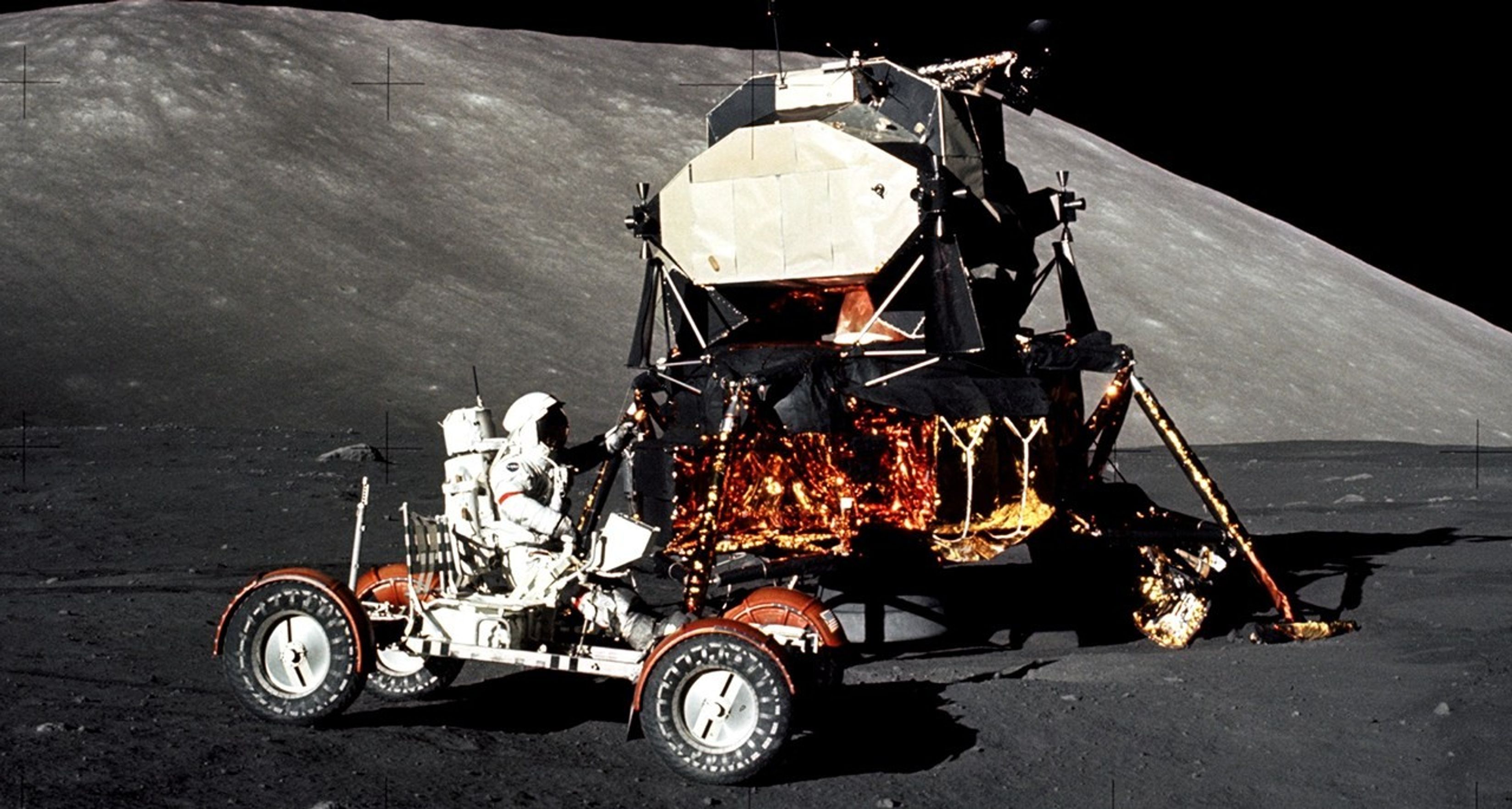

KiwiSaver payments have to rise – but earners shouldn’t be penalised if they can’t afford it

Source: The Conversation (Au and NZ) – By Aaron Gilbert, Professor of Finance, Auckland University of Technology

The 2020s haven’t exactly been a golden age for getting ahead.

First came COVID, when job security evaporated overnight. Then the cost-of-living crisis, when everyday expenses surged far faster than incomes. Now, global instability is pushing fuel prices higher again, squeezing household budgets even tighter.

For many New Zealanders, “getting ahead” has quietly become “just getting through”.

And when money gets tight, people make trade-offs: power bill or groceries, doctor’s appointments or school supplies, rent or savings. Today or tomorrow.

Which makes the latest change to KiwiSaver understandable but potentially problematic.

From April 1, default contributions rise from 3% to 3.5% for both employees and employers. On paper, this is a good move. At 3%, most people were never going to build a retirement balance that delivers anything close to financial security.

Contributions will rise again to 4% in 2028. But some observers have argued they need to rise to around 12%. Even at that level, others have said, four in ten people still won’t retire with enough.

So yes, we need higher contributions.

But here’s the problem: increasing contributions assumes people can afford to save more. Many can’t, which means KiwiSaver changes from an incentivised saving scheme to a financial penalty.

The flaw in the system

When KiwiSaver was introduced, policymakers made a deliberate design choice: employee contributions would be the key that unlocks the door to savings support.

If you don’t contribute, you don’t receive employer contributions or the government tax credit. We have created an all-or-nothing system.

On the face of it, that makes sense. Tie incentives to behaviour and people will make the “right” choice. But that logic was built in 2007 – a very different economic environment.

Back then, the challenge was convincing people to give up a little consumption today for a better future. A growing number of households face a very different choice today: save for the future or survive today.

Over 14% of New Zealand children live in households experiencing material hardship. On top of that, a significant proportion of struggling households are not traditionally “poor” – they are working, earning and still struggling.

These are the households KiwiSaver is quietly losing. And this creates perverse outcomes.

Those who can afford to stay in the system continue to receive employer and government support. Those under the most financial pressure are locked out entirely.

Take a household already stretched by the cost of rent, food and transport. A small increase in contributions – even half a percent – might be enough to tip the balance.

So, they take a savings suspension and their KiwiSaver contributions stop. In turn, this stops their employer contributions (effectively part of their total wage compensation) and their government contributions.

Investment service InvestNow looked at the cost of a one-year savings suspension for someone aged 35 earning NZ$80,000 per year. Thanks to the temporary suspension, they would reach retirement with $20,000 less in their fund.

That is not because they made a poor decision, it’s because they didn’t have a choice.

From nudging to punishing

New Zealand doesn’t need to penalise already financially struggling households.

Australia’s superannuation system does it differently. Employer contributions are compulsory (and higher than for KiwiSaver) and continue regardless of whether employees are themselves actively contributing. That means households continue to save for retirement even when under financial pressure.

But there is another, less obvious consequence of the KiwiSaver design. By tying employer contributions entirely to employee contributions, the scheme shifts risk away from firms and onto workers – and ultimately onto the state.

Employers benefit from a system where their retirement contribution obligations disappear the moment an employee is under financial pressure. In effect, the lower the financial resilience of the workforce, the lower the employer’s contribution costs.

This creates a longer-term problem. Workers unable to maintain contributions today are far more likely to reach retirement with inadequate savings – increasing future reliance on New Zealand Superannuation and other forms of public support.

In other words, part of the cost is simply being deferred. And when it arrives, it won’t be paid by firms. It will be paid by taxpayers.

There are simple ways the system could be made more flexible:

  • allow a minimum level of employer contributions to continue during savings suspensions

  • when employees opt to maintain default contributions at 3%, require employers to contribute 3.5% so that employees are still saving more

  • maintain some level of government contribution for households experiencing hardship

  • at the very least, create a category of suspensions where those genuinely struggling are not penalised for it.

Let’s consider our 35-year-old taking a one-year suspension who would currently have $20,000 less at retirement. If their government and employer contributions continued during that suspension, they would be down only $10,000 at retirement.

Over the population, that represents a substantial reduction in the harm financial hardship is likely to cause in retirement.

ref. KiwiSaver payments have to rise – but earners shouldn’t be penalised if they can’t afford it – https://theconversation.com/kiwisaver-payments-have-to-rise-but-earners-shouldnt-be-penalised-if-they-cant-afford-it-279327

Evening Report: https://eveningreport.nz/2026/04/01/kiwisaver-payments-have-to-rise-but-earners-shouldnt-be-penalised-if-they-cant-afford-it-279327/