Restrictions on Good Friday, Easter Sunday alcohol sales could be gone by weekend

Source: Radio New Zealand

Alcohol sale restrictions could be gone by long weekend. RNZ / Samuel Rillstone

Some restrictions on Good Friday and Easter Sunday alcohol sales could be gone as soon as this long weekend.

A member’s bill from Labour MP Kieran McAnulty would amend the Sale and Supply of Alcohol Act to allow allow premises that are already open on Good Friday, Easter Sunday, Anzac Day morning, and Christmas Day to sell alcohol under normal licence conditions.

Currently, bars or restaurants can only sell alcohol if the patron is “residing or lodging” on the premises, or “present on the premises to dine”.

McAnulty said the legislation would clear up a “confusing law” that had been in place for a long time.

“Just because something’s always been that way doesn’t mean that that’s a good reason to keep it,” he said.

The general requirement is that patrons have to order a ‘substantial meal’, but McAnulty said that was not defined, and patrons were not required to eat it anyway.

“That is a bit of a farce of a situation. So all we’re doing is clearing it up that those businesses that are already able to operate anyway can do so under normal conditions, and those that can’t like off-licences and supermarkets, they remain restricted, but for those on-licences that are already operating, they can do so normally.”

The bill is up for its third reading on Wednesday. Exactly when depends on other legislation scheduled to be debated first.

If the bill passes, it is possible it may receive Royal Assent on Thursday, in time for Good Friday.

Kieran McAnulty RNZ / Angus Dreaver

McAnulty said the timing was a “sticking point,” but as some government bills were scheduled to receive Royal Assent on Thursday he was hopeful his could be included alongside those.

“It’s quite fortuitous timing, I think, the way that it’s played out. And really, we’re at the mercy and availability of Her Excellency, and I’m not of a mind to flick a text to the Governor-General and ask for a solid, so I’m quite happy with the way that it’s played out, and hopefully it does follow through.”

Parliament treats alcohol legislation as a conscience matter, meaning MPs vote according to their personal view or what they think is best for their electorate or community, rather than as a party bloc.

It means some of McAnulty’s own Labour colleagues may choose to oppose his bill, but the MP was optimistic he had the numbers across the House to pass.

McAnulty’s original intent was to allow any premises that was allowed to operate on those public holidays to sell alcohol, which would have included supermarkets but not bottle shops.

But he said it was changed to keep things simple, and only apply it to on-licence venues.

“It’s proven to be the right decision, because we’ve maintained enough support in Parliament,” he said.

“I know that if we’d stuck with off-licences or supermarkets, there are people that would have withdrawn their support, and it probably wouldn’t have passed.”

An amendment proposed by ACT MP Cameron Luxton has been adopted into the bill.

ACT MP Cameron Luxton. VNP / Phil Smith

Luxton’s amendment means bars can open after midnight on Anzac and Easter holidays. McAnulty said that was consistent with the intention of the bill, and he was happy to support it.

“I know that the hospitality businesses in Christchurch are very happy about that, because when their stadium opens and people leave, they won’t have to then be kicked out of the hospitality businesses at midnight because it’s Anzac Day the following day.”

McAnulty, a Catholic, was less concerned with religious opposition to the bill, but understood why people might be opposed on health grounds.

“It’s a valid concern, but because the bill only targets those on-licensed premises that are already able to operate, it’s actually not going to expand the number of premises that can provide alcohol. It just means they don’t have to jump through these ridiculous hoops in order to be able to do it.”

This is not the only piece of legislation that would liberalise alcohol trading laws to pass through Parliament this term.

The government is working through its own piece of legislation to allow restaurants with on-site retail spaces to sell take-home alcoholic beverages, if they also sell takeaway food or non-alcoholic beverages prepared by the business.

Luxton’s own member’s bill to repeal alcohol restrictions on Good Friday and Easter Sunday was voted down at first reading in 2024.

Another bill by National’s Stuart Smith to allow winery cellar doors to charge visitors for samples and add off-licence categories for wineries holding an on-licence passed successfully through the House in 2024.

Sign up for Ngā Pitopito Kōrero, a daily newsletter curated by our editors and delivered straight to your inbox every weekday.

– Published by EveningReport.nz and AsiaPacificReport.nz, see: MIL OSI in partnership with Radio New Zealand

LiveNews: https://nz.mil-osi.com/2026/04/01/restrictions-on-good-friday-easter-sunday-alcohol-sales-could-be-gone-by-weekend/

Easter weather: Calm before a possible storm – heavy rain forecast for parts of country

Source: Radio New Zealand

MetService said it had “moderate confidence” a heavy rain warning will be needed for the ranges of central and northern Westland. Julia Sudnitskaya / 123RF

A calm start to the Easter break will be followed by potential heavy rain to parts of the country, forecasters say.

“It’s a little bit windy at the moment but that southwesterly is starting to ease and then we get to bask in the calmness of high pressure for the next couple of days before the high moves to the east on Friday,” Heather Keats, MetService head of weather news, said.

“There will be a couple of little features leading up to the weekend with the next series of fronts approaching the South Island on Friday. Those fronts move over the island on Saturday.”

That will allow a “northwesterly flow over southern and central New Zealand to strengthen ahead of a series of fronts approaching from the northwest”, MetService said in its severe weather outlook update.

“There is low confidence of rainfall accumulations reaching warning amounts during the second half of the day in the ranges of Westland, also also for southern Fiordland.”

[embedded content]

In the lead-up to the long weekend, Wednesday will see isolated showers nationwide, but otherwise “quite settled” weather.

“Thursday, which this week is the new Friday, is even better with the only real showers likely for Fiordland and for Stewart Island,” Keats said.

“On Friday … the North Island is still fairly decent, but those showers develop in the west of the South Island early in the day and will turn to rain later in the day.

“And on Saturday, those fronts will dish up heavy rain to both western and eastern parts of the south. Could be some watches and warnings for the start of Easter.”

The forecast for Sunday, 5 April. MetService

MetService said it had “moderate confidence” a heavy rain warning will be needed for the ranges of central and northern Westland, and low confidence for southern Westland and Fiordland before noon.

“There is also low confidence of heavy rain for central and southern Canterbury, eastern Otago and northern parts of Central Otago.”

On Sunday, the bad weather will move slowly north across the South Island.

“There is low confidence of warning amounts of heavy rain during the first half of the day for the ranges of central and northern Westland, and for all of Canterbury. There is also low confidence of heavy rain for northwest Tasman and Buller, but this continues all day.”

Sign up for Ngā Pitopito Kōrero, a daily newsletter curated by our editors and delivered straight to your inbox every weekday.

– Published by EveningReport.nz and AsiaPacificReport.nz, see: MIL OSI in partnership with Radio New Zealand

LiveNews: https://nz.mil-osi.com/2026/04/01/easter-weather-calm-before-a-possible-storm-heavy-rain-forecast-for-parts-of-country/

Australians ‘getting better deal on Easter eggs’

Source: Radio New Zealand

An economist has compared the price of New Zealand Easter eggs with those in Australia. Cybèle and Bevan / Unsplash

New Zealanders are paying more for their Easter eggs than shoppers across the Tasman, one senior economist says.

Westpac economist Satish Ranchhod has compared the price of Easter treats in New Zealand with those in Australia.

He found a chocolate bunny had the biggest price difference – one that was NZ$9 here was NZ$5.99 in Australia.

A bag of mini chocolate eggs was NZ$7 in New Zealand and the equivalent of NZ$5.39 in Australia.

A 10-pack of chocolate hollow eggs was 73c cheaper in Australia.

Even hot cross buns were 73c cheaper across the ditch. A multi-pack of cream-filled mini chocolate eggs was NZ$1.61 cheaper in Australia.

Only a single cream-filled chocolate egg was cheaper in New Zealand. It was 40c dearer in Australia.

Earlier, RNZ reported that Easter egg prices this year are higher than last year’s, probably on the back of higher prices for ingredients.

Ranchhod said he considered whether the difference in price could be due to GST but that did not seem to explain it.

“It could be that there’s higher import costs in New Zealand, since we’re slightly further away from some of those big markets. But it’s quite surprising that the Aussies are getting these better prices for these sweet treats at Easter.”

He said items seemed to be on special at the same time in both Australia and New Zealand, so it was also not due to different discounts.

Waiting a bit longer could help reduce the price, he said.

“We do tend to get a little bit of last-minute discounting for these items, and if you’re really frugal, maybe you can wait till Tuesday after Easter and pick up a few bargains on those items that didn’t sell.”

Ranchhod said people who wanted chocolate and weren’t worried about what it looked like could save money by buying traditional blocks.

“If we looked at the price of that chocolate, it was still a much better deal to get a block than it was to go get the chocolate eggs or the bunnies. It’s not as much fun, but it’s much better value for money.”

Sign up for Money with Susan Edmunds, a weekly newsletter covering all the things that affect how we make, spend and invest money.

– Published by EveningReport.nz and AsiaPacificReport.nz, see: MIL OSI in partnership with Radio New Zealand

LiveNews: https://nz.mil-osi.com/2026/04/01/australians-getting-better-deal-on-easter-eggs/

Fuel disruption brings City Rail Link benefits into sharper focus

Source: Auckland Council

The world’s fuel shock is making life challenging at the pump.

Conflict in the Middle East and this fuel price pressure, whilst difficult on many fronts, are reinforcing the value of the City Rail Link (CRL) as the city gets ready for day one of the new network in the second half of 2026.

Public transport is already one of the most affordable ways to travel. Up to 400,000 weekday trips are being recorded at the moment, the highest level since COVID, and there is capacity for more. CRL is set to make public transport options even more attractive.  

Auckland Transport has a fully electric train fleet shielding it from fuel price rises and any potential fuel restrictions. For the last few years it’s been gradually adding more trains to be able to carry more people when CRL opens later this year.

When the South City (S-E), East West (E-W) and Onehunga West (O-W) lines are up and running and ticketing gates first open at the city’s new CRL stations, many Aucklanders will start to experience the benefits of the new network every day.

Some big-picture benefits are anticipated too – things like improved sustainability, productivity, liveability and walkability to stations.

Big-picture benefits

Commentators say CRL will lift Auckland as an international contender for talent, investment capital, tourism revenue and big events.      

Councillor Andy Baker who is Chair of Auckland Council’s Transport and Infrastructure Delivery Committee says the City Rail Link network itself, the upgrade of neighbourhoods around new stations, and the higher frequency timetable will all improve how the city moves, grows and competes.

“When the new stations open, I think Aucklanders will be proud of what they see. We have built stunning long-term assets for the city. Our city centre has been regenerated, and we’re ready. I’m excited that Aucklanders will soon be able to enjoy it.

“It will open up easy and efficient travel in and around the city for those further from the city centre, while connecting the likes of Pukekohe and Franklin with our urban population. Everywhere will benefit,” says Councillor Baker.

Auckland Council Director of Resilience and Infrastructure Barry Potter says CRL is the largest, most complex transport project undertaken in New Zealand for decades.

“Just as Waitematā Station has driven quality development in downtown, the CRL’s new stations will also drive investment. It will continue to have a positive catalyst effect. 

Auckland Council’s Barry Potter in Myers Park which was upgraded as part of Te Waihorotiu Station neighbourhood.

“And the more people use the rail network and the more vehicles come off the roads, the more sustainable Auckland becomes,” says Potter.  

Looking at the economic advantages of the new transport network, Auckland Council Chief Economist Gary Blick says improved connectivity between people and jobs enabled by CRL will drive urban productivity.

“A more productive Auckland is not only more competitive in attracting people, skills, and investment; ultimately it’s a more liveable place for everyone,” he says. 

Reflecting on the upgraded streets and spaces the Auckland Council group has delivered around the new stations to welcome the surge in passengers, Auckland Council Priority Location Director for the city centre, Simon Oddie, says people will see that CRL is much more than a transport project.

“It’s a city-shaping investment. Our new station neighbourhoods have created places that connect people seamlessly to jobs, learning, culture and daily life, while supporting a more walkable, resilient and low-carbon city centre,” he says.

Renowned French urbanist Alain Bertaud said central Auckland’s public spaces are among the best he’s seen in the world, while visiting Auckland last week. (Source: BusinessDesk)

For more big-picture benefits, read more on OurAuckland.

And for more on the newly completed CRL station neighbourhoods read about the Waitematā Station neighbourhood and Karanga-a-Hape Station neighbourhood.

Everyday benefits

Councillor Andy Baker in Waitematā Station Plaza.

For a full outline of the new train lines, a City Rail Link information brochure is available in eight languages on the Auckland Transport website.

Once the CRL-enabled timetable is operational, the city’s twin underground 3.45km rail tunnels will make the rail network and bus connections more efficient – reducing travel times, improving access to the city centre and unlocking direct journeys across Auckland.

What does that mean in the north, south, east and west? This is a snapshot:

South

  • People who live in Papakura or near any station on the South City (S-C) line will have direct rail connections into the city with two more stations in central Auckland – Te Waihorotiu Station and Karanga-a-Hape Station. This opens up direct access to jobs, universities, restaurants, shops and theatres in the city centre.
  • From Te Waihorotiu Station, with entrances / exits at Wellesley and Victoria Streets, there will be frequent buses to the North Shore; and from Waitematā Station, buses and ferries to the North Shore are a short walk from the platforms.
  • In 2026, two new stations will open on the S-C line between Papakura and Pukekohe – Drury Station and Paerātā Station – with a third, Ngākōroa Station, to be built in Drury West. The stations will all have a bus interchange right outside. 65,000 people are predicted to live in Drury by 2050. That’s more than the population of Rotorua.
  • Onehunga residents will have the Onehunga West (O-W) line on their doorstep once CRL is operational, taking them further west as far as Henderson off peak – or to the city centre via a quick transfer at Newmarket Station.

North

  • The Northern Busway is an example of good investment in public transport infrastructure. The busway has proven to be easy to use, quick, cost-effective, frequent – and is well-used.
  • People arriving in downtown – at the Albert Street bus interchange – on the NX1 or on a ferry will simply walk through Te Komititanga – downtown’s central square – and step on a train at Waitematā Station.
  • Other North Shore buses – such as the NX2 –will arrive at the Wellesley Street bus interchange which sits at the heart of the CRL rail system, with quick and easy transfers to the rail network via Te Waihorotiu Station.

West

  • From day one of CRL the train journey from Henderson to the city centre will be quicker. The new CRL underground tunnels eliminate the need to go via Newmarket, creating a more direct trip, significantly reducing travel times.
  • The journey will take just 35 minutes from Henderson Station to Te Waihorotiu Station – getting to and from work in the city centre or into the midtown arts quarter in the evenings on one single train via the East West (E-W) line.
  • Operating until around 11pm seven days a week (every 30 minutes after 8pm), and a little later on Friday and Saturday nights, people will have the freedom to come and see a show in the city centre by train, without needing to think about parking, taxis or train changes.

East

  • Train trips from Glen Innes or any eastern station to the city centre are already fast because that section of Auckland’s rail system was built in the 1930s, so it’s flatter.
  • Before CRL, people would have taken multiple trains from the east to the west or south. With CRL, people will travel from stations in the east to Eden Park, Sylvia Park or Manukau, for example, on a single train using the E-W line.

*These are peak travel estimates using public transport. 

More information on the CRL transit map can be found in this document [695KBs].

LiveNews: https://nz.mil-osi.com/2026/04/01/fuel-disruption-brings-city-rail-link-benefits-into-sharper-focus/

Border fee changes make system fairer

Source: New Zealand Government

A new levy regime that comes into effect today makes the goods management system fairer by better reflecting the risks and costs associated with clearing goods at the border, Customs Minister Casey Costello and Biosecurity Minister Andrew Hoggard said today. 

“The changes are about more fairly recovering costs and also address a significant increase in the volume of low-value goods (worth less than $1,000) crossing our border,” Ms Costello says. 

Low-value goods imports – people buying online from the likes of Amazon and Temu – more than tripled from 2017/18 to 2023/24, from 7.8 million packages to 24 million packages annually. 

Businesses pay customs levies on the goods they import, but people shopping online in this way often didn’t,” Ms Costello says. “That growth meant substantially more processing work at the border and taxpayers were funding almost all the costs involved. That changes from today.”

“Customs and the Ministry for Primary Industries make a critical contribution to New Zealand’s economic prosperity and growth, by ensuring trade can flow as safely and efficiently as possible,” Mr Hoggard says.

“Between them, they protect against biosecurity risks, which could devastate our primary sector, and illegal drugs and other criminal activity that harms our communities costing our economy hundreds of millions of dollars every year, while also preventing illegal export activity and ensuring our exports are able to enter overseas markets with minimal delay or disruption.

“The new goods management fees properly reflect the costs of this work and sit within a long-standing government cost recovery framework where costs are recovered from those who use border services or create the need for them.”

“Customs calculates that over four years from 2025/26 to 2028/29, the new goods levy regime will shift NZ$71 million in costs from taxpayers to importers and exporters who create the need for border management services,” Ms Costello says.

The changes taking effect from today are:

  • Different rates for sea and air consignments for both high value goods – (over NZ$1000) and low value goods (less than NZ$1000 – Customs only).
  • Consignment-based charging for low value goods, replacing charges per cargo report.
  • Charging low-value goods transported by international mail.
  • Ending taxpayer subsidies for low-value goods and commercial vessels, with full cost recovery for Customs and MPI services.
  • The introduction of a commercial vessel charge.
  • The introduction of charging international transshipments and empty shipping containers. (Customs only) 

The changes were approved by Cabinet last year following extensive industry and public consultation. Customs and MPI have been working with industry stakeholders to ensure that the changes are implemented smoothly.

MIL OSI

LiveNews: https://livenews.co.nz/2026/04/01/border-fee-changes-make-system-fairer/

Trucking firm says fuel bill has increased 110% due to Middle East conflict

Source: Radio New Zealand

The trucking and tourism sectors are struggling with rising fuel costs. RNZ / Unsplash

A trucking sector veteran says the soaring price of diesel is the worst he’s seen in his 35 years in the industry.

The US and Israel’s ongoing war on Iran has caused a global fuel crisis which is now in its fifth week as Iran continues to block most shipping through the Strait of Hormuz which is used to transit about one-fifth of the world’s oil and gas.

It has hugely disrupted key supply chains and pushed Brent crude oil over $115 a barrel, pushing up prices at the pump.

The price of diesel has nearly doubled in the space of a month since the conflict in the Middle East.

In New Zealand on Wednesday morning, the Gaspy website showed the price of diesel was $3.51 on average – more expensive than the price of unleaded 91 priced at $3.43.

David Hill, general manager of Hawke’s Bay’s Emmerson Transport, said their fuel bill had gone up 110 percent, and they had no choice but to pass that on to their customers.

“In the 35 years I’ve been involved in the road transport industry, we’ve never seen increases of this magnitude,” he said.

“Most operators obviously are having issues with funding that,” he added.

The huge increase in the price of diesel is hitting the trucking sector. 123RF

Hill said prudent operators would take into account the “Fuel Adjustment Factor” (FAF), and set their rates at the end of the month for the following month.

However, he said some operators were on fixed price arrangements – such as quarterly pricing – and would not be able to adjust their prices.

Hill said his company had taken a hardline approach to FAF, and their customers had been understanding.

“Most responsible corporates these days accept what the situation is and work with their providers… because we’re gonna do nobody any favours the stakeholders or our staff – if we go outta business due to the fact that we’ve not recovered the fuel FAF.”

Hill said the current situation was comparable to the diesel spike during the Global Financial Crisis – but he added that even then, the New Zealand currency had a stronger exchange rate to the US dollar than now.

Tour bus operator forced to implement fuel surcharge

Meanwhile, a tour bus operator has had to implement a fuel surcharge to accommodate for the growing diesel prices.

Ready 2 Roll offers tours and airport transfers in the central North Island.

Director Carleen Dahya told Morning Report they had seen nearly a $100 increase at the pump in just over a week.

“Already a vehicle that was costing us $140 to fill up a week and a half ago is now $250.”

Dahya said they were currently charging a 12 percent surcharge, but the effects would take time to flow through.

“We’re not going to start to recover that until sort of a month’s time because we’ve honoured bookings that we’ve already got because it’s not their fault – it’s not our fault, but we’re the ones who have to wear it.”

She said even with adding the 12 percent on, with the cost of diesel, the numbers were tight.

“It’s going to be an interesting process moving forward, how many times we have to increase our surcharge to keep up with the fuel increases.”

Dahya said the current situation was a nightmare.

“With the diesel prices as well as road user [charges], it’s going to kill us.”

She said they were also seeing a trend of people cancelling due to disruption the fuel crisis was having their travel plans.

Finance Minister says tax relief won’t work

Finance Minister Nicola Willis has rejected any tax relief for the transport industry saying it would not work.

Nicola Willis faces questions on the fuel crisis last month. RNZ / Samuel Rillstone

She acknowledged the diesel price was very high saying it reflected the fact that diesel was one of the fuel’s that had been most disrupted by the crisis in the Middle East.

“It’s cost to get into New Zealand has gone up considerably and that’s where you’ve seen the biggest price rises.”

Diesel users pay their road tax through the road user charge, where as petrol users just pay it at the pump as the tax is added to the price of their fuel, she said.

“The challenge we face is that if we were to take away that tax that would put a half billion dollar hole in our road funding which would only multiply every time you extended that reduction … and then we would simply not have enough funding available to maintain our roads.”

She said officials have also been clear that there may come a time when road users would be asked to conserve fuel.

“Our officials have been very clear that sending a price signal that you’re taking away a tax at the same time as you’re asking for restraint doesn’t make sense, it’s very contradictory.”

Sign up for Ngā Pitopito Kōrero, a daily newsletter curated by our editors and delivered straight to your inbox every weekday.

– Published by EveningReport.nz and AsiaPacificReport.nz, see: MIL OSI in partnership with Radio New Zealand

LiveNews: https://nz.mil-osi.com/2026/04/01/trucking-firm-says-fuel-bill-has-increased-110-due-to-middle-east-conflict/

Government commits $10 million to EIT Hawke’s Bay campus rebuild

Source: Eastern Institute of Technology

23 seconds ago

The Eastern Institute of Technology (EIT) has welcomed Cabinet’s approval of $10 million from the Government’s contingency fund to support the rebuild and improvement of its Hawke’s Bay Campus in Taradale following Cyclone Gabrielle.

Cabinet’s decision, announced yesterday, follows the devastation caused by Cyclone Gabrielle in February 2023, which resulted in catastrophic flooding across the campus.

About 90 per cent of ground-floor buildings were inundated with floodwater and contaminated silt, damaging more than 500 teaching and support spaces and forcing widespread disruption to learning and operations.

Many buildings were unusable for months, with teaching delivered across temporary sites throughout Napier and Hastings while repairs progressed.

EIT has since worked to restore campus functionality, using limited insurance proceeds to carry out essential remediation and keep programmes running. While significant progress has been made, insurance funding has not been sufficient to fully meet long-term rebuild needs.

EIT Chief Executive Lucy Laitinen (left) and Council Chair David Pearson have welcomed Government funding to support the rebuild and improvement of the institute’s Hawke’s Bay Campus in Taradale.

EIT Council Chair David Pearson said the Government’s decision was a turning point.

“This funding is a genuine game-changer for EIT. We have rebuilt as much as we could with the resources available, but there have been clear gaps that insurance simply will not be able to cover.

“This investment gives us certainty as we complete the next stage of our rebuild and plan for the future. I am delighted and deeply appreciative of the Government’s support.”

EIT acknowledged the support of Minister for Tertiary Education and Skills Hon Penny Simmonds, along with local MPs, regional leaders, iwi partners and the wider community, who supported the institute through its recovery and return to independence following the disestablishment of Te Pūkenga.

Chief Executive Lucy Laitinen said the funding comes at a pivotal time as EIT moves forward as an independent institution.

“EIT is well and truly back in business. Our student enrolments are strong, our staff are energised by our independence, and we are reconnecting with local industry and our wider communities to ensure we are meeting their needs. This funding will help fill critical gaps in our rebuild and ensure our Taradale campus can continue to serve Hawke’s Bay for generations to come.”

She said the recovery reflects the commitment and resilience of staff, students and supporters across the region.

“We are incredibly grateful for the support we have received through thick and thin from government, our local MPs, regional and civic leaders, iwi, industry partners and the community. We never stopped delivering for our learners, and this investment allows us to focus on rebuilding a campus that is resilient, fit for purpose, and aligned with Hawke’s Bay’s future skills needs.”

The funding will enable EIT to accelerate rebuilding work, improve campus infrastructure, and strengthen its long-term sustainability as Hawke’s Bay’s regional institute of technology.

MIL OSI

LiveNews: https://livenews.co.nz/2026/04/01/government-commits-10-million-to-eit-hawkes-bay-campus-rebuild/

New Zealand WWII pilot’s watch found in Germany more than 80 years later

Source: Radio New Zealand

The watch found in Germany. Supplied

When Tom Metcalfe left for England to fly bombers in the second world war, he took a watch given to him by his parents for his 18th birthday in 1941.

His little sister Sandra was just 12 when he left. She is now 97, and does not like to talk on the phone. Her daughter Louise Taylor, who lives with her in Kaitaia, told First Up Sandra’s memories of her brother leaving are tinged with sadness: “She didn’t see him after that.”

Metcalfe and his crew were killed when their Wellington bomber was shot down near the German city of Cologne as they returned from a night raid in September 1942.

Their bodies were buried near Cologne before being moved to the Rheinberg war cemetry.

Years, possibly decades later, a local man found a mangled watch with an inscription in English. “Tom, from Dad and Mum”, with the date 18th of July 1941.

After the man died, his widow saw Uwe Benkel being interviewed on TV about his work identifying servicemen who were missing in action. Benkel’s helped recover more than 150 aircraft, including the remains of 60 missing crew members. It was a deeply personal mission for Benkel. Two of his uncles were killed on the eastern front in World War Two, he was able to locate the grave site of one shortly before his father’s death.

“When I told him where his brother is buried in the cemetery in Russia, he was crying like a little kid,” Benkel told First Up.

He was tasked with finding the owner of the watch, but was incorrrectly told it was from a Wellington bomber that had crashed much later in the war.

“I didn’t get a connection from the crash to the watch, so I kept the watch in my archives until nine years later,” he said.

On the other side of the world, New Zealander Paul Kercher was doing his own research. Kercher’s great uncle Walter was another casualty of the Second World War.

Walter had been a frontgunner in a Wellington bomber, and several years ago Kercher found an online article stating Walter’s plane had crashed near Cologne, with a reference to a watch being found years later.

Late last year, Kecher found another German website with details of the crash, including his great uncle’s death certificate. Through that he got in touch with Manfred Weichert, another german crash researcher, and Benkel.

They were able to work out the flight number, and the crew list. The pilot was listed as Thomas Metcalfe, and his birthday matched the date on the watch.

“All of a sudden those pieces connected like a puzzle,” said Benkel.

The next task, establishing if Metcalfe had any surviving relatives. Kercher put a post on the New Zealand Remembrance Army Facebook page.

Soon he was in touch with Greg Bennett, Tom’s nephew, who then put him in touch with Louise and Sandra, Tom’s sister.

The precious watch was currently on its way to Kercher from Germany. Kercher planned to personally hand it to Tom’s sister Sandra this month, with Anzac Day a distinct possibility.

“It’s still hard for us to believe” said Louise Taylor. “I think it’ll be more believable for us when we actually get it in our hands.”

For Benkel, he was glad the watch could finally be returned: “We don’t make no difference if it was Germans, Americans, British, New Zealand, because they all were young guys and they had to fight and they had to give the only thing they had, they gave their lives.”

Sign up for Ngā Pitopito Kōrero, a daily newsletter curated by our editors and delivered straight to your inbox every weekday.

– Published by EveningReport.nz and AsiaPacificReport.nz, see: MIL OSI in partnership with Radio New Zealand

LiveNews: https://nz.mil-osi.com/2026/04/01/new-zealand-wwii-pilots-watch-found-in-germany-more-than-80-years-later/

Murderers, money troubles and Malcolm: April’s Best TV

Source: Radio New Zealand

Margo’s Got Money Troubles

This new dramedy from uber-TV producer David E. Kelley (Ally McBeal, Big Little Lies) stars Elle Fanning as Margo, a college dropout navigating unexpected motherhood and a mountain of debt. To make some fast cash, she launches an OnlyFans account, which quickly gains success after she uses pro-wrestling branding tactics learned from her estranged father.

Based on the novel of the same name, the show has spared no expense assembling a powerhouse cast that includes Nick Offerman as Margo’s wrestling dad, Michelle Pfeiffer as Margo’s mum and Nicole Kidman as a family mediator.

Michelle Pfeiffer and Elle Fanning in Margo’s Got Money Troubles.

Apple TV+

Watch: Apple TV+

When: 15 April

Should I Marry a Murderer?

Well, no, obviously. But what if you didn’t know the love of your life was a murderer until after all the wedding invitations had been sent out? Still, a no to be honest, but this is the horrific question Caroline Muirhead had to face after her fiancé confessed that he’d literally gotten away with murder.

This new true crime series investigates the case of ‘The Vanishing Cyclist’ named after a charity rider who disappeared in the UK without a trace, and shows how Muirhead covertly gathered evidence against the love of her life and the emotional turmoil his confession wrought.

Caroline Muirhead in Should I Marry a Murderer?

Netflix

Watch: Netflix

When: 29 April

Kevin

Breakups are never easy, yet for all the debate over who “gets” the pet, surprisingly little thought is given to the animal’s own preferences. This new adult animated comedy runs with that idea and sees the titular house cat choosing to break up with both of his owners after their relationship implodes. The show follows his journey into independence as he navigates life as a freshly single cat.

The voice cast is impressive. Aubrey Plaza, the show’s co-creator, voices one of the spurned owners and is joined by Jason Schwartzman as Kevin, alongside Whoopi Goldberg, Amy Sedaris, and John Waters. With the talent involved, Kevin should be the cat’s pyjamas.

Adult animated comedy Kevin.

Amazon Content Services LLC

Watch: Netflix

When: 20 April

Euphoria

The show that was a lightning rod for controversy due to its unflinching, high-fashion and, some would say, gratuitous depiction of teenage life, returns after a four-year break.

The eight-episode third season follows the original cast members, Zendaya, Sydney Sweeney, and Jacob Elordi, as they leave their wild teen years behind and transition into a (presumably) more mature adulthood.

With series creator Sam Levinson teasing a new film noir aesthetic, the addition of Natasha Lyonne and Sharon Stone to the cast, and themes of sobriety, student debt, ongoing trauma and the trifecta of drugs, sex and love, it sounds like the show has no plans to settle down.

Zendaya in Euphoria.

Neon

Watch: Neon

When: 13 April

David Lomas Breakthrough

The veteran investigative journalist returns with a brand new series that, admittedly, is a lot like his previous shows. Once again, Lomas accepts the seemingly impossible cases and helps New Zealanders solve lifelong mysteries or track down their long-lost loved ones.

Expect plenty of emotional journeys as Lomas looks for the breakthrough that will bring closure, relief or reunite people.

David Lomas Breakthrough

ThreeNow

Watch: Three

When: 14 April

Malcolm in the Middle: Life’s Still Unfair

Hot on the heels of the Scrubs revival, another beloved noughties sitcom returns to our screens. This four-part miniseries finds an adult Malcolm, now a father himself, reluctantly returning home for his parents’ 40th wedding anniversary.

With the original creator back at the helm and most of the original cast returning (bar a recast Dewey), initial reports are promising that the revival has successfully recaptured the show’s manic, middle-class chaos, already sparking rumours that a full new season could be on the cards.

Malcolm in the Middle: Life’s Still Unfair.

Disney+

Watch: Disney+

When: 10 April

Extra Viewing

My House My Castle

Comedian Hayley Sproull looks for the funny in the housing market while experts help regular houseproud Kiwis renovate or relocate.

Comedian Hayley Sproull.

Matt Dwen

Watch: Three / Three Now

When: 8 April

Apex

Charlize Theron stars in this high-stakes survival thriller about a woman being hunted by a ruthless predator through the Australian wild.

Taron Egerton as Ben and Charlize Theron as Sasha in APEX.

Kane Skennar/Netflix

Watch: Netflix

When: 24 April

The Great British Bake Off

The 16th season of the popular baking competition show pops out of the oven as new contestants look to impress the judges with their sweet delights.

Presenters and judges on The Great British Bake Off.

Laura Palmer

Watch: TVNZ 1

When: 9 April

Karl Puschmann is an arts and entertainment journalist, and also runs Screen Crack, a popular Substack dedicated to deep-diving into film and television. screencrack.substack.com.

– Published by EveningReport.nz and AsiaPacificReport.nz, see: MIL OSI in partnership with Radio New Zealand

LiveNews: https://nz.mil-osi.com/2026/04/01/murderers-money-troubles-and-malcolm-aprils-best-tv/

Peaky Blinders The Immortal Man: why mythic figures like Tommy Shelby continue to captivate us

Source: The Conversation (Au and NZ) – By Adriana Marin, Lecturer in International Relations, Coventry University

Tommy Shelby returns in Netflix’s new Peaky Blinders film, The Immortal Man, a figure defined by control, composure and calculated violence. He navigates risk, trauma and conflict with an almost unnatural endurance. No matter the pressure, he adapts, survives and remains in charge.

The Immortal Man follows Shelby as he navigates a tightening web of political intrigue and criminal threats beyond Birmingham, forced to operate at a higher, more dangerous level while struggling to maintain control. As power shifts and new alliances form, he is pushed into more dangerous territory, balancing strategy, loyalty and survival, while his past continues to shape his decisions.

Irish actor Cillian Murphy delivers a masterful performance, capturing Shelby’s authority while hinting at the strain beneath the surface.

As the film’s title suggests, Shelby reflects a broader cultural archetype: the “immortal man”. He is not literally invincible, but rather resilient – a character who absorbs damage without collapsing, who endures where others fall apart.

This figure appears consistently in crime drama – Vito and Michael Corleone in The Godfather, Jimmy Conway in Goodfellas, Tony Soprano in The Sopranos – and its popularity reveals something important about how we understand crime, masculinity and power.

Criminology has long challenged the idea that criminal figures are inherently irrational or chaotic. The “enterprise model” of organised crime reframes criminal activity as structured, profit-driven and responsive to market conditions.

From this perspective, participants resemble entrepreneurs operating within illicit economies rather than criminals. Tommy Shelby fits this model closely. His actions are calculated, with violence deployed as a means to an end rather than an impulse.

The emphasis falls on strategy, recognising opportunity, managing risk and consolidating power in ways that echo legitimate business practices. This framing shifts crime away from images of chaos and unpredictability, presenting it instead as controlled and methodical. Yet rationality alone is not enough to account for his appeal.

[embedded content]

Masculinity, control and contradiction

Cultural criminology, particularly the work of Jeff Ferrell, draws attention to the symbolic and emotional dimensions of crime. It is not only about material gain, it is also about identity, meaning and representation. Shelby is not just an economic figure but a cultural performer. His authority is constructed through style, symbolism and reputation.

Control, in this sense, is not only exercised but communicated: his presence, speech and appearance are tightly managed, projecting authority through restraint as much as action. This stylisation makes organised crime seem structured and, for some audiences, appealing. The “immortal man” is therefore not just a survivor, but a figure who appears to master both his environment and himself.

This performance of control is inseparable from masculinity. Sociologist R.W. Connell’s concept of “hegemonic masculinity” (the dominant form of masculinity in society that shapes expectations of how men should behave) helps explain Shelby’s appeal.

He embodies authority, emotional restraint and the capacity to command. He leads decisively, conceals vulnerability and maintains dominance across different spheres of life. Yet what makes the character compelling is the tension within this model. Shelby’s authority is shaped by trauma – war, loss and psychological strain.

He aligns with the ideals of dominance while simultaneously revealing their cost. The “immortal man” is defined not by being invincible, but by his ability to endure and keep going under pressure.

In this sense, masculinity is not just power, but the ability to maintain control while carrying internal damage. Shelby intensifies this model, presenting a form of dominant masculinity rooted in survival, where dominance is sustained through emotional containment rather than the absence of vulnerability.

This tension reinforces a familiar expectation: that masculinity is proven through resilience without visible collapse. At the same time, it adds complexity, presenting strength and fragility as intertwined rather than oppositional.

In The Godfather both Michael Corleone and his father Vito exhibit the same tight control in terms of their own emotions and the people around them. Pictorial Press / Alamy

Sociologist Robert Merton’s strain theory suggests that when access to legitimate success is limited, individuals adapt by pursuing alternative routes.

Shelby’s trajectory reflects this logic. He does not reject the pursuit of wealth, status or influence, but he reworks the means of achieving them. Organised crime becomes a rational response to constraint, blurring the boundary between legitimate and illegitimate enterprise.

This is what gives the figure such resonance. Shelby appears to overcome structural limits while maintaining control, offering a version of success that feels both transgressive and recognisable. His appeal lies not only in what he achieves, but in how he achieves it: with certainty, authority and self-possession in contexts where those qualities feel increasingly scarce.

The endurance of this figure reflects wider cultural anxieties. In periods of instability, characters who impose order and act decisively become especially attractive. At the same time, as traditional models of masculinity are questioned, the “immortal man” offers a reassertion of clarity: an identity grounded in independence and dominance.

Shelby represents more than a criminal figure. He becomes a cultural response to uncertainty, embodying a form of masculinity and authority that promises control, even as it quietly reveals the strain required to sustain it.

Rethinking the ‘immortal man’

The issue is not that audiences engage with these narratives, but that their underlying assumptions often go unexamined. The “immortal man” ties together masculinity, power and violence in ways that appear natural but are, in fact, constructed. Authority is best demonstrated through domination, that emotional restraint is a marker of strength, and that success justifies the means by which it is achieved.

These associations are reinforced through repetition. Criminological research offers a more complex picture. Organised crime is rarely as stable or controlled as it appears on screen. It is often characterised by volatility, exploitation and harm, frequently directed at the most vulnerable.

What figures like Shelby offer, then, is not a reflection of reality, but a compelling simplification of it, one that continues to resonate because it speaks to enduring questions about power, identity and control in uncertain times.

There is, ultimately, nothing immortal about men like Tommy Shelby. What endures instead is the narrative itself: a story that continues to resonate because it speaks to persistent anxieties about inequality, control and the limits of legitimate success.

ref. Peaky Blinders The Immortal Man: why mythic figures like Tommy Shelby continue to captivate us – https://theconversation.com/peaky-blinders-the-immortal-man-why-mythic-figures-like-tommy-shelby-continue-to-captivate-us-279417

Evening Report: https://eveningreport.nz/2026/04/01/peaky-blinders-the-immortal-man-why-mythic-figures-like-tommy-shelby-continue-to-captivate-us-279417/

Why has it taken so long to return to the Moon?

Source: The Conversation (Au and NZ) – By Domenico Vicinanza, Associate Professor of Intelligent Systems and Data Science, Anglia Ruskin University

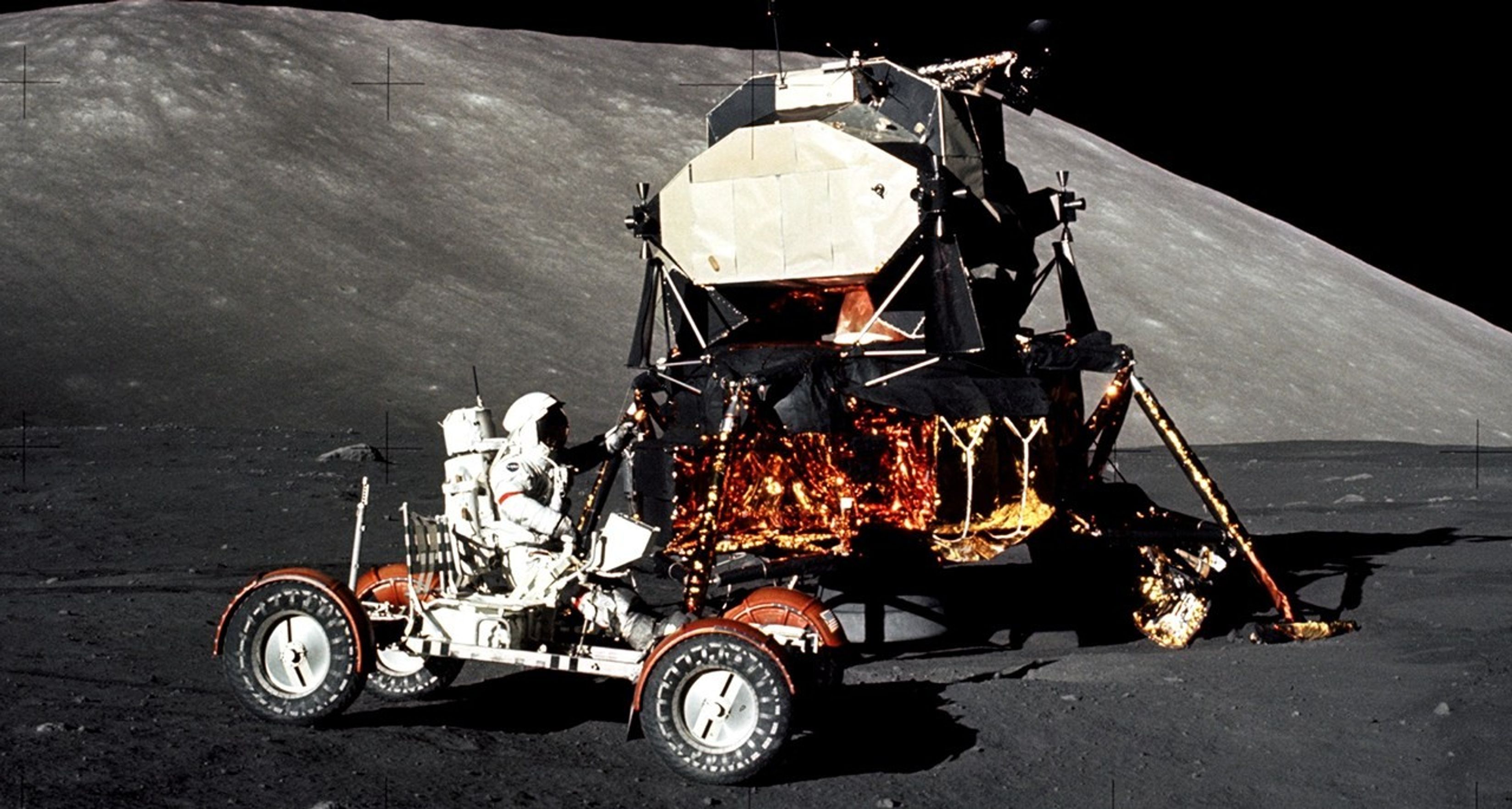
At 13:24:59 Central Standard Time on December 19 1972, the Apollo 17 command module splashed down in the Pacific Ocean, about 350 nautical miles south-east of Samoa, concluding the last mission to the Moon.

During his career, Apollo 17’s commander, Eugene A. Cernan, logged 566 hours and 15 minutes in space, of which more than 73 hours were spent on the surface of the Moon. Cernan was the second American to have walked in space, and the last person to leave his footprints on the surface of the Moon.

The conclusion of the Apollo 17 journey marked not only the end of a mission, but the close of an era. Between 1969 and 1972, 12 astronauts walked on the Moon over the course of six separate landings.

Half a century later, Nasa is preparing to return under its Artemis programme. For the Artemis II mission, set to launch on April 1 2026, four astronauts will travel in a loop around the Moon in Nasa’s next-generation Orion crew capsule.

More than 50 years is a long gap, and it is only natural to ask if Americans could reach the Moon routinely in the early 1970s, why did it take so long for them to try to go back?

The Apollo 17 mission in 1972 marks the last time humans set foot on the Moon. Nasa

The answer is not simple. It has little to do with technology and much more with how politics, money and global support work. The place to start is with Apollo itself: its model of exploration was not built to last, and was clearly not sustainable.

On May 25 1961, before a joint session of Congress, President John F. Kennedy committed the US to the goal, before the decade was out, of landing a man on the Moon and returning him safely to the Earth.

After Kennedy’s assassination in 1963, President Lyndon B. Johnson ensured that this Moon landing goal was met. But rising costs from the Vietnam war and domestic reforms reduced his appetite for further space investment.

John F Kennedy’s speech at Rice University in 1962 reaffirmed America’s commitment to landing on the Moon. JFK Library

In fact, Nasa’s budget peaked in 1966 and began falling even before Apollo’s success, undermining prospects for sustained exploration. Further funding was declined, planned missions were cancelled, and Apollo ended in 1972 – not because it failed, but because it had accomplished its task.

Sustainable exploration (in space as on Earth) requires stable political commitment, predictable funding, and a clear long-term purpose. After Apollo, the US struggled to maintain all three at once.

Policymakers began to ask what direction Nasa should take next. In 1972, President Richard Nixon directed the space agency to begin building the space shuttle. It would lead Nasa to shift its focus away from deep space exploration towards operations in low-Earth orbit.

‘Space truck’: the shuttle was marketed as providing affordable access to low-Earth orbit. The reality was somewhat different. Nasa

Marketed as a reusable “space truck”, the space shuttle was intended to make orbital access routine and affordable. However, it would turn out to be a vehicle of incredible complexity, marred by technical failures and human tragedies – the Challenger and Columbia accidents in which 14 astronauts’ lives were lost.

Eight years into the shuttle programme, some in the space community believed it was time for the US to once again set its sights on the Moon – and the tantalising prospect of a landing on Mars. On July 20 1989, the 20th anniversary of Apollo 11’s first Moon landing, President George H.W. Bush announced the Space Exploration Initiative (SEI).

The plan aimed for a long-term commitment to construct Space Station Freedom, return astronauts to the Moon “to stay”, and finally send humans to the red planet.

However, the high estimated costs of SEI, reaching hundreds of billions of dollars, led to its downfall. Weak support in Congress along with other factors led to its cancellation under Bill Clinton’s presidential administration.

The ISS became a symbol of scientific cooperation, but consumed resources that might have been used for deep space exploration. Nasa

During the 1990s, the International Space Station (ISS) project cemented low-Earth orbit as the priority for human exploration. The space shuttle was the US’s means of building the station and transporting crews to and from the orbiting outpost.

The ISS became a symbol of scientific cooperation and technical prowess. Experiments carried out on the station generated valuable insights into everything from medical research to materials science. However, it also soaked up resources that might otherwise have supported deep-space exploration.

The Columbia disaster in 2003 – in which a space shuttle broke up over Texas with the loss of its crew – led to another rethink of America’s direction in space. As a result, President George W. Bush announced the Vision for Space Exploration.

The aim of this proposal, which would give rise to what was known as the Constellation programme, was to rebuild Nasa’s capability for reaching the Moon, with Mars as its longer-term goal. But independent reviews warned that costs and schedules were unrealistic. Congress never really gave full financial support to Constellation, leading to its cancellation in 2010 during Barack Obama’s presidency.

This repeated cycle of cancelled space projects exposes some inherent limitations to the system for funding lunar exploration. A sustainable Moon programme needs strong multi-sector commitment, and mechanisms in place for guaranteed multi-decade funding.

Constellation would have sent astronauts to the lunar surface on a lander called Altair. Nasa

But such large programmes must compete each year with defence, healthcare and social spending. Electoral turnover and shifting committee leadership in the US further weaken the prospect of continuity.

Lunar exploration has also suffered from an unresolved strategic question: why go back at all? Apollo’s purpose was largely geopolitical, and after the cold war no equally compelling justification really emerged.

Scientific returns from human space missions are limited compared with robotic exploration. Commercial prospects remain uncertain, and prestige alone rarely sustains or secures large budgets.

Maybe a more fitting question is: why does Artemis appear to have escaped the pattern? Well, Nasa argues that sending astronauts back to the lunar surface – and in particular, establishing a sustained presence there – will help researchers learn “how to live and work on another world as we prepare for human missions to Mars”. That is true, up to a point.

Nasa also emphasises that Artemis will be built through commercial partnerships and international cooperation, creating the first long-term human foothold on the Moon.

With Artemis, has Nasa finally found a rationale to maintain a more enduring presence on the Moon? Nasa

The programme seems to sit at a carefully crafted intersection of US government leadership, commercial launch capabilities, and a broad coalition of international partners brought together under the Artemis Accords. The accords are a set of common principles regarding the use of the Moon and other targets in outer space, agreed between the US and other countries.

The main difference from previous promises to return to the Moon is that this, at least in theory, spreads risk and widens the base of political support. In practice, though, Artemis remains costly and exposed to shifting budgets and priorities.

There is also a cultural dimension to this question. Apollo created a powerful – albeit fragile – myth of swift, heroic technological advance. Artemis is building its large technological base in societies and democratic contexts where investments and commitments tend to evolve slowly, shaped by negotiation, compromise and competing interests.

If Artemis succeeds, it will be because all the political, economic, societal and scientific incentives have finally aligned in a durable way. But until that alignment is proven, the 50-year gap between Apollo and Artemis is less an engineering puzzle than a reminder of how difficult sustained exploration is for modern democracies.

ref. Why has it taken so long to return to the Moon? – https://theconversation.com/why-has-it-taken-so-long-to-return-to-the-moon-274640

Evening Report: https://eveningreport.nz/2026/04/01/why-has-it-taken-so-long-to-return-to-the-moon-274640/

The Emperor’s New Clothes – a fairy tale for our times?

Source: The Conversation (Au and NZ) – By Nicola Welsh-Burke, Sessional Academic in Literary and Cultural Studies, Western Sydney University

In mid-March, an activist group in Rutland County, Vermont, held its usual weekly rally protesting the actions of US president Donald Trump. One protester, Marsha Cassel, led the crowd, dressed as a naked Trump wearing a crown and holding a staff. Cassel was followed by another protester holding a sign proclaiming “THE EMPEROR HAS NO CLOTHES!”.

This is not the first time Trump has been compared to Hans Christian Andersen’s bumbling emperor, who marched naked through the streets while claiming to be dressed in finery – a fiction many of his subjects willingly indulged.

Who was Andersen, what aspects of his life informed this particular story and why might this be useful to know in the age of Trump?

Andersen was born in Odense, Denmark, in 1805. While his grandfather supposedly claimed noble origins for the family, Andersen’s father was a cobbler and his mother an illiterate washerwoman.

Goodreads

After his father died, Andersen moved to Copenhagen for work, where he found a patron, theatre director Jonas Collin, who paid for his education. Andersen started writing after graduating from university, becoming well known for his fairy tales, which he began publishing in the 1830s.

The Emperor’s New Clothes is in his 1837 work, Fairy Tales Told for Children, which featured other memorable tales such as The Steadfast Tin Soldier and The Little Mermaid.

The story follows a vain and clothes-obsessed emperor who commissions clothing from two travelling conmen. These men, posing as weavers, visit his court to show off a new kind of material, which is supposedly rendered invisible to a man “unfit for the office he held”, or “extraordinarily simple in character”.

Afraid to reveal that he cannot see the material, the emperor sends in several aides to review the process, who all lie about being able to see the clothes being made.

llustration by Edmund Dulac from Stories from Hans Andersen, published 1938. Universal Images Group via Getty Images

Once the “outfit” is finished, the emperor dons it and parades naked through the town. The townsfolk compliment the garments, until a small child bursts the bubble, yelling out that the emperor has no clothes.

Unable to admit this, the emperor continues on his way. But the townsfolk now laugh.

This simple tale powerfully criticises rulers who tell untruths, performing intelligence and leadership, as well as those who uncritically allow this.

An outsider looking in

Like many fairy tales, the origins of this one stretch back centuries. Older versions date to medieval times. All feature people in power being duped by conmen who play on their vanities about their own intelligence. Literary scholar Hollis Robbins suggests Andersen’s version reflects a newly-emerging working class culture where “professional competence” was “quickly overtaking legitimacy and heritage as a source of aristocratic anxiety”.

In his book The Enchanted Screen: The Unknown History of Fairy-Tale Films, fairy tale scholar Jack Zipes claims Andersen was “embarrassed by his proletarian background” and “rarely mingled with the lower classes” once he found success as a writer.

Andersen never married and more recently, has been understood as a bisexual man. He had infatuations with both men and women, including Edvard Collin (the son of his patron Jonas) and Swedish opera singer Jenny Lind. After a fall in 1872, from which he never recovered, he died in 1875.

Hans Christian Andersen in an 1836 portrait. Wikimedia Commons

Andersen’s lower class background, argues Zipes, meant he was particularly well suited to biting cultural commentary about the difficult path for those escaping poverty.

In one translation of The Emperor’s New Clothes, the child who proclaims the nudity of the emperor is called “the voice of innocence” by his father. This voice spreads through the crowd, leading to the comical image of the naked emperor’s aides striving to lift the invisible train of his outfit even higher.

Regardless of one’s position in life, this story suggests you cannot escape “suffering, humiliation, and torture,” writes Zipes.

Indeed, many of Andersen’s tales feature characters (often frail, young women) who suffer immensely before dying nobly. The Emperor’s New Clothes, with its child character as the voice of reason, has an ending that, while not “happily ever after”, is as lighthearted as Andersen gets.

The power of fairy tales

The fairy tale is one of the most recognisable literary genres. We hear them from such a young age it is almost like we were born knowing them. Beginning as oral folktales, many of the tales we know today were first written down in 16th and 17th century France, Italy and Germany as social commentary and educational stories.

It is difficult to identify the “originals” of many tales, given their folkloric origins. Still, while it is almost stereotypical now to note that the “original fairy tales” (before contemporary Disney adaptations) were surprisingly dark Andersen’s are noticeably, and notably, bleak.

The Emperor’s New Clothes has been retold many times, with print, screen and musical adaptations. As Donald Trump, in the words of one pundit, continues to “construct a narrative, declare it to be true and relentlessly force the world to submit to it”, the story resonates today.

Indeed, literary academic Naomi Wood has argued that in a post 9/11 world, a “terrifying possibility” emerges in readings of the tale.

The truth of the fairy tale is not its glorification of the voice of innocence, free from corruption and untruth. Rather, it is that adults will continue to believe their own lies, even when they are clearly revealed. As a result, we allow the parade to continue, even while knowing it is farcical.

ref. The Emperor’s New Clothes – a fairy tale for our times? – https://theconversation.com/the-emperors-new-clothes-a-fairy-tale-for-our-times-279558

Evening Report: https://eveningreport.nz/2026/04/01/the-emperors-new-clothes-a-fairy-tale-for-our-times-279558/

Jane Ward Tost was a trailblazer in natural sciences – until history forgot her

Source: The Conversation (Au and NZ) – By Jane Melville, Senior Curator, Terrestrial Vertebrates, Museums Victoria Research Institute

In the 19th century, natural history was a field dominated by men: collectors, curators and naturalists. Names such as John Gould and John James Audubon are well known for their contributions to ornithology.

Far less familiar is Jane Catherine Tost (nee Ward, 1816–1889), a skilled taxidermist and naturalist who worked alongside leading figures of her era, and became the first woman employed in a professional role at an Australian museum.

Recent archival research has brought new attention to Tost’s life and career, revealing the extent of her contribution to 19th century natural history. While, to our knowledge, no images of her have survived, many of her works are still in museum collections.

Tost’s story is the subject of my new book, For Her Love of Birds, published by Museums Victoria.

Early life in London

Jane Catherine Ward was born in 1816 into a family closely connected to the London bird trade. Her father was a bird breeder, and her older brothers, like Jane, were taxidermists.

In 1825, her eldest brother, James Frederick Ward, entered a partnership with the young naturalist John Gould. Operating from Golden Square, London, the pair advertised themselves as “bird stuffers to the King”, preparing specimens for elite clients.

Evidence uncovered for this book confirms James Frederick Ward was Gould’s first business partner, a detail not recognised in previous histories. The partnership ended in 1828 after Gould was appointed to a curatorial role at the Zoological Society of London.

But the Ward family remained active in scientific circles. They developed an association with the naturalist John James Audubon, and Jane’s brothers travelled to the United States to assist him in collecting bird specimens. Her brother Edwin Henry Ward accompanied Audubon on his first trip into the Florida Territories in 1831.

Jane remained in London, where she developed her own expertise as a taxidermist. By 1838, at the age of 21, she was working for Gould, preparing bird specimens for his projects – including those from his travels across Australia.

A Tasmanian masked owl (Tyto novaehollandiae castanops), from the John Gould Collection, at the time Jane Tost worked for Gould in London. Jon Augier/Museums Victoria

Her position was unusual, considering how few women worked in paid scientific fields back then. Indeed, in 1838, of the 18 taxidermists listed in the trade directories, none were women.

But in the 1841 census, Jane listed herself as a taxidermist (or bird stuffer, as they were known then).

Hardship and emigration

Jane married Charles Tost, a Prussian-born pianoforte maker, in 1839. Yet she continued working while raising a family.

During the 1840s they experienced financial hardship. And, like many others living in London during this period, they faced the threat of disease, instability, and personal tragedy.

Moving from London to Nottingham 1850, Jane opened her own business, advertising herself as a leading naturalist and using her maiden name “Ward” alongside her married name. Her work as an independent, professional naturalist gathered considerable attention in the local papers.

Newspaper advertisement introducing Jane Ward Tost’s new business as a naturalist and ‘bird stuffer’ to Nottingham. Published in the Nottingham Journal, August 16 1850. British Library, St Pancras – London.

In 1855, the family emigrated to Australia. Although it has been previously reported they travelled to Australia on the Indian Queen, research for this new book uncovered documentation they sailed on the fast-clipper Schomberg, bound for Melbourne.

The voyage was fraught with problems, which came to a head on a stormy night two days after Christmas when the ship wrecked on the Victorian coast. Although all passengers were rescued, the ship was lost.

The Tost family eventually continued on to Tasmania, all their belongings at the bottom of the sea.

Schomberg leaving Liverpool, 1855. Colour Lithograph by T G Dutton

A new career in Australia

In Hobart Town, Jane began working for the Royal Society of Tasmania, preparing specimens for their new museum, which would later become the Tasmanian Museum and Art Gallery. Her work was well regarded, and she contributed to displays that would be shown internationally, including in an 1862 exhibition held at the Crystal Palace.

Seeking broader professional opportunities, Jane moved her family to Sydney. There she established a taxidermy business and undertook work for private clients and public exhibitions. Her work, including a well-publicised display of alpacas that won medals at the International Exhibition in London in 1862, helped establish her reputation.

Her most significant appointment came when Australian Museum director and curator Gerard Krefft employed her as a taxidermist in 1863. She was paid £10 per week, the same wage as the men. In this role, she repaired and prepared specimens for display when the museum’s collections required extensive restoration.

Her employment marked a milestone: she was the first woman appointed to a professional position at the Australian Museum, and likely one of the first at a museum globally.

The Australian Museum in Sydney, 1860s, with Gerard Krefft (right) pictured in the skeleton gallery. Henry Barnes Snr © Australian Museum (only for use with this article)

Her legacy

Despite her achievements, Jane’s career was not free from difficulty. Heated disputes within the museum led to the dismissal of her husband, who had also been employed there, and she subsequently lost her position. The family again faced financial strain.

Irrawaddy squirrel (Callosciurus pygerythrus) specimens prepared by Jane Tost while she worked as a taxidermist at the Australian Museum, Sydney, in the 1860s. Photo by M. Dean-Jones © Australian Museum (only for use with this article)

Following further tragedies, Jane and her daughter Ada established a taxidermy business opposite the museum. Over time, it became one of the leading taxidermy establishments in Australia, supplying specimens to museums and private collectors globally.

Jane continued working until her death in 1889, exhibiting at international exhibitions in London, Paris, Calcutta and Chicago.

Although her name faded from mainstream accounts of scientific history, Jane Ward Tost played a significant role in the development of natural history collections in both Britain and Australia.

The full extent of her life – spanning professional achievement, migration, personal loss and resilience – is finally being fully documented.

Her story offers a new perspective on the people who underpinned 19th century museums and natural history, and on the women whose expertise helped build museum collections that still exist today.

Plains pocket gopher (Geomys bursarius) specimen prepared by Jane Tost while she worked as a taxidermist at the Australian Museum, Sydney, in the 1860s. Photo by M. Dean-Jones © Australian Museum (only for use with this article)

ref. Jane Ward Tost was a trailblazer in natural sciences – until history forgot her – https://theconversation.com/jane-ward-tost-was-a-trailblazer-in-natural-sciences-until-history-forgot-her-276764

Evening Report: https://eveningreport.nz/2026/04/01/jane-ward-tost-was-a-trailblazer-in-natural-sciences-until-history-forgot-her-276764/

How Taiwan is viewing the Iran war – and what it reveals about US credibility

Source: The Conversation (Au and NZ) – By Bonnie Yushih Liao, Assistant Professor of Diplomacy & International Relations, Tamkang University

The United States and Israeli strikes on Iran have become increasingly concerning for the world due to the risks of further escalation and the impact on energy markets.

In Taiwan, however, the focus has shifted in a different direction.

Rather than treating the war as geographically distant, Taiwanese political leaders and analysts are viewing it as a real-time indicator of how the United States operates under strategic pressure.

The key question is less about whether the United States would act if a conflict with China were to break out in the Indo-Pacific region, and more about how it would manage competing pressures if multiple crises unfolded at once.

A test of limits, not intentions

There is growing recognition in Taiwan that US resources are not unlimited.

The Middle East war has caused energy prices to fluctuate and stoked fears of rising inflation in the United States, demonstrating the domestic costs of military operations.

US President Donald Trump’s approval ratings have also taken a hit, with some in his own party now questioning his rationale for going to war.

Some reports have indicated US supplies of interceptor missiles are running low. The US military has, for example, had to move some THAAD missile interceptors from South Korea to the Middle East. The US has also struggled to defend against Iran’s use of asymmetrical fighting tactics.

This has direct implications for the deterrence Washington has long maintained in the Indo-Pacific. This deterrence depends not only on US war-fighting capability, but on the expectation this capability will remain intact under strain.

Conflicts elsewhere may not weaken the US resolve to intervene if China were to invade or pressure Taiwan in some fashion. But they can drain American resources and influence where these items are prioritised.

Shifting thresholds for the use of force

The US has also framed its strikes on Iran as a “preventive” action aimed at mitigating a future threat rather than responding to an imminent attack. This raises broader questions about the changing threshold for the use of force in the Indo-Pacific.

For Taiwan, this is not an abstract notion. If the threshold for military action is lowered from imminent threat to potential risk, the strategic environment becomes less predictable in the Indo-Pacific.

This broadens the range of circumstances under which force by the United States may be justified.

The speed with which the Trump administration has acted in Iran has also increased uncertainty for regional partners like Japan and South Korea in assessing when and how the United States would act against China.

The US’ NATO partners weren’t told about the Iran strikes before they happened. This could make Japan and South Korea similarly worried about a lack of communication on potential US actions over Taiwan.

South Korean protesters rallying against the US and Israel attacks on Iran in Seoul on March 24. Ahn Young-joon/AP

Wars rarely follow anticipated pathways

The Iran war has also raised broader questions about how the United States adapts as crises evolve.

Much of the discussion around Taiwan has traditionally centred on the possibility of a large-scale Chinese invasion. However, recent developments suggest escalation may be less linear than this.

Rather than following a single, predictable pathway, conflicts can develop through a sequence of smaller decisions, the ambiguity over signals sent by an adversary, or rapidly changing political conditions.

This has contributed to a shift in strategic discussion in Taiwan. Recent defence policy debates and security forums have increasingly examined scenarios in which China pressured Taiwan with grey-zone tactics, blockades and incremental escalatory moves, rather than focusing solely on full-scale invasion.

As a result, attention is shifting to how such pressure might build over time – through cyber operations, maritime restrictions or limited military actions – and possibly spiral out of control.

The current crisis in the Strait of Hormuz has been watched closely in Taiwan as an example of how disruption of a strategic chokepoint can quickly impact the world. This raises questions about whether similar dynamics could emerge in the Taiwan Strait, and how prepared external actors – including the US – would be to respond.

The US has also been unable to prevent the Iran war from spilling over into the Persian Gulf states. This raises questions about whether a war over Taiwan could be contained or produce wider regional effects.

The USS Antietam (CG-54) conducting operations in the Taiwan Strait in August 2022. US Navy handout/EPA

The risk of misinterpretation

For Taiwan, the most immediate challenge comes from how China interprets US actions in Iran. If Beijing concludes that diminishing military resources or domestic pressures would limit the US’ ability to wage a sustained conflict in the Indo-Pacific, it may reassess the risks of applying coercive pressure on Taiwan.

This does not imply immediate conflict is likely over Taiwan. However, it increases the likelihood that China would try to pressure or coerce Taiwan just below the threshold of full-scale war.

History suggests that escalation is often shaped by how situations are interpreted by adversaries, rather than by clear shifts in power. When states believe conditions are more favourable than they actually are, the risk of misjudgement increases.

For Taiwan, the challenge is therefore not only to assess developments in the Middle East, but to ensure that its own position is not misunderstood. This involves:

  • maintaining credible defensive capabilities
  • reinforcing internal cohesion against possible threats
  • signalling clearly that any attempt at coercion would face robust resistance.

Deterrence depends not only on what a country can do, but what others believe it will do — and whether those beliefs discourage risk-taking.

ref. How Taiwan is viewing the Iran war – and what it reveals about US credibility – https://theconversation.com/how-taiwan-is-viewing-the-iran-war-and-what-it-reveals-about-us-credibility-279102

Evening Report: https://eveningreport.nz/2026/04/01/how-taiwan-is-viewing-the-iran-war-and-what-it-reveals-about-us-credibility-279102/

I’m close to retirement age. What are my options for drawing on my super savings?

Source: The Conversation (Au and NZ) – By Di Johnson, Senior Lecturer, Finance and Financial Planning, Griffith University

Retiring well means making a series of decisions to ensure a financially secure post-work life. One practical step is to work out the income you need each week to survive and thrive when you stop working.

If you are one of the many Australians still working and growing your super, knowing more about tailored retirement income products might help to plan.

There are two main ways to use super savings in retirement:

  • through products that provide an income stream, and/or
  • through lump sums.

CC BY-NC

It’s easy to put off thinking about superannuation when retirement is years away. In this five-part series, we ask top experts to explain how to sort your super in a few simple steps, avoid greenwashing, and set goals for retirement.


Account-based pensions

The most common product for a retirement income stream in super is an account-based pension. These can be set up outside super, but there are advantages inside super. Around 80% of retired super fund members have one or more account-based pensions in super.

These products offer flexibility, control and continued exposure to investment markets. They allow retirees to convert part, or all, of their super balance into an income stream while keeping an allocated sum invested.

More than one can be set up, at different times, and with different investment choices, so your investment balance keeps growing while providing income in the short-term. Retirees can choose how much they withdraw, as long as they meet the government’s minimum withdrawal requirements.

Arguably, the greatest advantage of an account-based pension within super is its tax effectiveness compared to investments outside super. Once a super member is fully retired, both the investment earnings and income drawn from an account-based pension in super is tax-free.

One of the disadvantages of account-based pensions in super is that the age-based minimum drawdown rates might not suit your investment timing or income preferences. Investment returns are not guaranteed, and you don’t know how many years of income will be needed.

If you die before the funds are fully drawn, however, your beneficiary can receive the remaining money.

One or more retirement products can provide steady income for retirees. Greta Hoffman, Pexels

Another option for regular income: annuities

Retirees can also use their super to buy another type of income product called an annuity. There are a few main types of annuities and you can choose if you want the income payments:

  • guaranteed over a fixed period of time
  • investment-linked over a fixed period or for life, or
  • guaranteed for the rest of your life, typically adjusted for inflation.

The cost of the annuity will vary depending on these factors. Annuities provide more certainty both in the payments and timeframe for income, regardless of investment market performance.

In Australia, fewer than 5% of super member accounts are annuities. But that may be changing, as more retirees realise the advantages of including an annuity in their super income planning.

Annuities can be bought using super or non-super money, but using super has the advantage of tax-free earnings and income.

In addition, for age pension eligibility, Centrelink only takes into consideration 60% of the value of a lifetime annuity compared to 100% of an account-based pension. This favourable treatment means your super savings can last longer, because your retirement income will be supplemented with more age pension.

On the downside, annuities have less flexibility. Once you have committed a lump sum of super to purchase the annuity, you cannot convert that back into a lump sum.

The income from annuity returns may also not be as high as in an account-based pension, because there is a trade-off between investment returns and guaranteed income.

Choosing the right mix for your circumstances

Retirees may benefit from a retirement income strategy that includes a combination of account-based pensions and annuities, depending on their personal needs and circumstances.

Once aged 67, retirees will also be eligible for the age pension, within asset or income limits. More than 60% of retirees receive at least some age pension, around 40% as their main income.

There is a maximum amount that can be transferred to pension phase within super, regardless of whether you choose an account-based pension or annuity, or a combination. That cap currently sits at A$2 million.

What about lump sums?

Once a super fund member reaches preservation age, usually age 60, and ceases at least one job, they may be able to access some or all their super as a lump sum. Alternatively, a member can access some or all their super as a lump sum when they turn 65, regardless of their employment.

With more people heading into retirement with mortgages, lump sums can be used to pay down debt, or for home repairs, holidays or even gifting.

How the lump sum is used may affect your age pension. In 2025, the average lump sum taken out by newly retired members was around $58,000.

While income stream products have a range of advantages within super, taking at least some super as a lump sum is common, even later in retirement. More than $71 billion was paid out in lump sums from superannuation in 2025 across 2.26 million member accounts.

Advice can help

Getting advice on coordinating super income streams and age pension entitlements can make a big difference to maximising your income while managing risk. Licensed financial advisers are in high demand, either within or outside your super fund.

Super funds can provide a range of valuable information, calculators and support. Other online tools are also available that can help with retirement income planning, including taking age pension eligibility into account.

Disclaimer: This article provides general information only and is not intended as financial advice.

ref. I’m close to retirement age. What are my options for drawing on my super savings? – https://theconversation.com/im-close-to-retirement-age-what-are-my-options-for-drawing-on-my-super-savings-276377

Evening Report: https://eveningreport.nz/2026/04/01/im-close-to-retirement-age-what-are-my-options-for-drawing-on-my-super-savings-276377/

Family ‘devastated with worry’ over French man Antoine Richard who’s missing in central Otago

Source: Radio New Zealand

Antoine Richard hasn’t been seen since 21 March. Supplied / NZ Police

The family of French national Antoine Richard is appealing for more help in the search for the 21-year-old who was reported missing in Cromwell on the weekend of 21-22 March.

Richard was last seen on 21 March, around 11.45pm at the Victoria Arms Hotel on the corner of Achil Street and Melmore Terrace.

A statement issued by police on behalf of the family on Wednesday said: “An enormous amount of work has already been carried out by the police, the Search and Rescue team, Carrick winery where he worked, his friends, the Cromwell Rugby Team, local residents, and everyone who has taken part in the search.

“We are infinitely grateful to them.”

The family, Hervé, Marithé, Claudine, Elise, Noémie, Valentin and Corentin Richard, said they were asking for people’s help with these aspects of the case:

  • A Croc shoe that had been found
  • If you or someone you know owns a property in Cromwell, please check your surroundings, gardens, and outbuildings
  • If you have a security camera, please review the footage from after 11:30pm on 22 March
  • Anyone who gave a lift to Richard in the early hours of 22 March

“We have been devastated with worry since we heard the news.

“We are writing on behalf of his entire family, his friends, his colleagues in France and New Zealand, and all the people he loves, in the hope of finding him as soon as possible.”

Police are also appealing for residents to check their properties and any CCTV footage which can be uploaded here.

They also want to hear from anyone who may have seen a person matching Richard’s description either hitchhiking or walking in Cromwell in the early hours of 22 March.

Supplied / NZ police

Detective Phill Hamlin said searches have been conducted by LandSAR members from throughout the Otago and Southland area, police, Coastguard and many members of the community.

“We remain dedicated and focused on locating Antoine,” he said.

The Police National Dive Squad will also search areas of Lake Dunstan.

Search teams located a grey rubber Croc branded sandal from the shore of Lake Dunstan and would like to speak to anyone who may have seen somebody wearing the footwear.

Richard was last seen also wearing light coloured knee length shorts and a black t-shirt, police said.

Anyone who has seen him or has information regarding his whereabouts, is urged to contact police via 105, using the reference file number 260324/5771.

Sign up for Ngā Pitopito Kōrero, a daily newsletter curated by our editors and delivered straight to your inbox every weekday.

– Published by EveningReport.nz and AsiaPacificReport.nz, see: MIL OSI in partnership with Radio New Zealand

LiveNews: https://nz.mil-osi.com/2026/04/01/family-devastated-with-worry-over-french-man-antoine-richard-whos-missing-in-central-otago/

Will medicinal cannabis help my mental health? Here are the evidence and the risks

Source: The Conversation (Au and NZ) – By Suzanne Nielsen, Professor and Deputy Director, Monash Addiction Research Centre, Monash University

Anxiety, depression and post-traumatic stress disorder (PTSD) are among the most common mental health conditions for which Australians are prescribed medicinal cannabis.

Most prescriptions for mental health conditions, and for other conditions more broadly, are for products containing higher levels of THC (tetrahydrocannabinol). This is the part of cannabis that causes a “high” and can affect thinking and mood.

Many of these prescriptions are for inhaled products, such as dried leaf or flower that people smoke or inhale.

This pattern of use – of inhaled, higher-THC content for mental health conditions – appears to be partly driven by prescribing trends among 18 to 44-year-old men.

For anxiety alone, there are almost three times more approvals for the products containing the highest levels of THC than for products containing only CBD (cannabidiol).

But this prescribing pattern doesn’t line up with the best available research. Most higher-quality clinical trials for anxiety have tested CBD-based products, not THC.

This is just one example of how Australians are using medicinal cannabis to treat mental health conditions without the best available evidence to back it.

Let’s start with anxiety

Anxiety is the most common mental health reason people seek medicinal cannabis in Australia.

There is emerging evidence CBD may help some people with anxiety, but the findings are inconsistent.

The largest and most comprehensive systematic review on medicinal cannabis and mental health found it did not meaningfully improve anxiety symptoms. The authors said we still need larger, high-quality trials, and studies that reflect how people use medicinal cannabis in the real world.

Evidence for THC is even more mixed. In our previous article we described how some people find THC makes them feel calmer, but others say it worsens their anxiety. As few trials have investigated THC for anxiety, it is hard to draw firm conclusions.


CC BY-NC

Medicinal cannabis prescriptions have skyrocketed in Australia, mostly for legal but unapproved products we don’t even know work or are safe. In this series, experts tease out what’s fuelling the rise of medicinal cannabis, the fallout, and what needs to happen next.


How about PTSD?

The evidence so far for using medicinal cannabis to treat PTSD is limited.

While some people report benefit, the findings from the small number of high-quality randomised controlled trials (the gold standard for medical evidence) are mixed.

In one very small study, only five people completed the entire protocol. This tested vaporised cannabis containing either a combination of 10% THC and 10% CBD, or a product with mainly 10% THC.

Both products appeared to improve PTSD symptoms in the short term, but the trial had trouble recruiting participants. A larger study would be needed to know if the results are reliable.

Another trial tested smoked cannabis with three strengths: 12% THC, one mainly containing CBD, and one with equal amounts of THC and CBD. There was no change in the severity of PTSD symptoms for any of the products compared to placebo. Smoking cannabis, including medicinal cannabis, is also not recommended because of its well known harms.

The limited and uncertain evidence is one reason the Department of Veterans’ Affairs has decided not to fund medicinal cannabis to treat mental health conditions, including PTSD.

What about depression?

There is even less high-quality evidence for using medicinal cannabis to treat depression. A recent systematic review found no relevant randomised controlled trials.

A small pilot study tested 150–300 milligrams a day of CBD alongside standard treatment for bipolar depression. CBD was well tolerated, meaning it didn’t cause serious side effects, but it didn’t help symptoms.

Studies for different types of depression are mixed. Some show possible benefits but also unfavourable effects including worse symptoms or acute mental health effects such as psychosis, suicidal thoughts or anxiety. It is also unclear whether unfavourable effects are due to the product or underlying mental health condition.

Is medicinal cannabis safe?

Emerging evidence shows psychosis has been reported among people using medicinal cannabis containing higher levels of THC.

Australia’s medicines regulator, the Therapeutic Goods Administration (or TGA) says products containing THC are generally not appropriate for people who have a personal or family history of psychosis or schizophrenia. This caution also extends to people with past or current mood or anxiety disorders.

This is largely because THC can worsen or trigger symptoms in people who are already vulnerable to these conditions.

Why the increased risk?

Is this due to the THC or were these people already at higher risk? It’s likely a mix of both.

Daily or near-daily cannabis use (which is common with medicinal use) is linked to a higher risk of psychosis, or it may contribute to developing it.

Young people may be particularly vulnerable to side effects after taking medicinal cannabis (and cannabis in general) for mental health conditions as their brains are still developing.

Other research shows higher-strength THC products appear to carry higher mental health risks for everyone. People who use frequently, or for long periods, are at further risk.

So the emerging picture is that the product used, how it is used, and the person matter and can influence health outcomes. Higher THC products raise risks across the board, but those risks are increased in people who start young, use often, or continue long term.

What happens when I stop taking it?

Some people whose mental health symptoms increase when they stop taking medicinal cannabis see that as evidence their medicine was working. But that’s not necessarily the case. They could be experiencing withdrawal from cannabis.

Many people who use cannabis (medicinal or otherwise) experience a rebound in symptoms – such as anxiety or sleep difficulties – when they stop. This can feel very similar to the symptoms that prompted them to seek treatment.

We also know around one in three or four people who use cannabis medically will develop cannabis dependence and are likely to experience withdrawal symptoms if they stop using it suddenly.

So, cannabis withdrawal may be more common than people realise, and may well explain symptoms that emerge when someone stops taking it.

How do I know what is right for me?

Many studies that look at whether medicinal cannabis could help different mental health conditions are low quality or have conflicting findings. So the evidence is not yet strong enough to recommend it as the best treatment for any mental health condition.

So talk to your trusted, regular medical professional to help you weigh up the potential benefits and risks of medicinal cannabis, especially if you have a history of mental health concerns.

Given the mixed evidence and the TGA’s cautions, it’s really important to seek personalised medical advice.


If you or someone you know is struggling with anxiety, mood changes, or any mental health concerns – whether or not these relate to cannabis use – the following support is available: Beyond Blue (24/7 support): 1300 22 4636 and Lifeline (crisis support): 13 11 14.

ref. Will medicinal cannabis help my mental health? Here are the evidence and the risks – https://theconversation.com/will-medicinal-cannabis-help-my-mental-health-here-are-the-evidence-and-the-risks-271196

Evening Report: https://eveningreport.nz/2026/04/01/will-medicinal-cannabis-help-my-mental-health-here-are-the-evidence-and-the-risks-271196/

Cutting fuel excise is a sugar hit – we need a plan to slash dependence on imports

Source: The Conversation (Au and NZ) – By Hussein Dia, Professor of Transport Technology and Sustainability, Swinburne University of Technology

As fuel prices spike, many Australians are understandably anxious. Photos of empty bowsers, long queues, and high prices create the impression of a system under strain.

What we are seeing isn’t a collapse of Australia’s fuel supply chain. Shipments are still arriving and most deliveries continue as planned. While some cargoes have been disrupted, governments and industry have actively secured alternative supplies. What this crisis shows is the lack of a clear, long-term strategy to reduce dependence on fuel shipped from conflict zones thousands of kilometres away.

Because Australia is so reliant on trucks running on imported fuel, rising diesel costs are now flowing through the economy and pushing up the cost of freight, food and everyday goods.

The federal government has moved to underwrite fuel imports, relax fuel standards and tap reserves. The government has also flagged the possible need to ration fuel if supplies keep shrinking in its new fuel security plan.

These are sensible responses to a disruption more complex and potentially longer-lasting than first thought. But they are not a long-term plan to end reliance on importing fuel in a very uncertain world.

[embedded content]
Victoria makes public transport free as fuel prices climb.

No unifying strategy

Australia’s plans for the future of transport include a national electric vehicle strategy and the New Vehicle Efficiency Standard.

These steps are necessary. The problem is, they tend to exist in silos. There’s no clear roadmap aimed at a practical outcome: reducing dependence on imported fuels and strengthening our long-term energy security as part of the transition to net zero.

Electrification at scale

Every kilometre travelled using electricity is one that didn’t depend on a tanker arriving from overseas. Unlike oil, renewable energy is not exposed to global supply disruptions in the same way.

Electric vehicles aren’t just a question of consumer choice. Electrifying transport is a full system transition.

Waiting for households to gradually switch to electric cars will be slow. Working to electrify high-impact segments such as urban freight, commercial fleets, buses and government vehicles will be much faster. Over time, this should reduce the hundreds of tanker shipments needed to keep the country moving each year.

Fastest response? Reduce demand

The quickest way to cut fuel dependence is to reduce how often we drive.

Around the world, governments and businesses are already encouraging reduced travel, flexible work and more efficient use of transport.

These temporary measures should become a core part of long-term strategy, as they can deliver immediate and lasting reductions in fuel use at very low cost.

Public transport as resilience

Every trip taken by train, tram or bus reduces demand for imported fuel. The same applies to walking, cycling and micromobility options, such as electric bikes or scooters.

Victoria and Tasmania have moved to make public transport free – and reduce demand for fuel.

If Australia had an integrated transport system in which public transport, cycling and other alternatives get a boost, it would give people viable alternatives when driving becomes more expensive or difficult.

Rethinking fuel reserves

The International Energy Agency requires member countries to hold 90 days of fuel reserves. Australia has long struggled to meet that benchmark.

Decades of economic stability left Australia underprepared for fuel security challenges. Australia has long relied on continuous global supply of fuel, stocks held by the private sector and relatively lean inventories. While efficient under normal conditions, this system has little buffer when supply becomes uncertain.

To boost fuel security, authorities should expand onshore storage, diversify import pathways, and strengthen distribution networks so fuel can reach crucial regional sectors and communities when supply is disrupted.

Policy coherence matters

Even as Australia’s power grid runs more and more on renewables, policymakers continue to approve more and more investment in fossil fuels.

With one foot in each camp, it’s hard to have a coordinated strategy to shift rapidly to forms of transport that don’t rely on long fuel supply chains.

Policy discussions around reducing incentives for EVs and introducing distance-based road user charges for EV drivers risk sending mixed signals to consumers and industry.

A credible transition to a new technology requires a clear sequence: first, give incentives and support, and move to pricing reform only once the adoption trend is established.

Avoiding ‘quick fixes’

In every energy crisis, bad ideas come back from the dead.

The move to temporarily halve the fuel excise is one such idea.

The move will lower petrol and diesel prices by around 26 cents per litre. While this provides short-term relief, it also weakens the price signal. Making fuel cheaper will simply encourage people to use more of it – a bad idea in a supply crunch.

Economists are warning the move could push fuel consumption higher and prolong inflationary pressures.

[embedded content]
The temporary fuel excise cut will provide short-term relief but does little to shield households from ongoing volatility in global oil markets.

Other countries are already reducing fuel dependence

China has linked industrial policy, renewable energy and EV deployment into a coordinated transition, demonstrating how scale and coordination can reduce reliance on imported fuels.

Singapore has taken a whole-of-system approach, linking energy, transport, land use and infrastructure into a coordinated transition to reduce emissions, manage demand and limit reliance on fossil fuels.

Japan maintains large fuel reserves well beyond minimum requirements, equivalent to 254 days of domestic consumption.

None of these models is perfect. But they show reducing fuel dependence is a matter of economic resilience and national security, not just environmental policy.

A moment to reset

The modern world has long been built on oil. This crisis shows how fragile that system is.

Despite widespread fears, Australia isn’t running out of fuel. But even this tightening of supply shows how quickly global disruptions can affect us. Short-term interventions won’t be enough, while sugar hits such as cutting fuel excise will have the opposite effect.

Policymakers should use the crisis to build a transport system less exposed to less reliable supply chains, built on locally produced electricity and aligned with a low-carbon future.

ref. Cutting fuel excise is a sugar hit – we need a plan to slash dependence on imports – https://theconversation.com/cutting-fuel-excise-is-a-sugar-hit-we-need-a-plan-to-slash-dependence-on-imports-279556

Evening Report: https://eveningreport.nz/2026/04/01/cutting-fuel-excise-is-a-sugar-hit-we-need-a-plan-to-slash-dependence-on-imports-279556/

From spaghetti harvests to fake news: why the glory days of April Fools gags are over

Source: The Conversation (Au and NZ) – By Phoebe Hart, Associate Professor, Film Screen & Animation, Queensland University of Technology

April Fools’ Day is a funny one. Developed over centuries, it’s a tradition that gives people the permission to prank. Some leg-pulls are delightful – while others can cause distress and damage, especially if they’re rolled out on a large scale.

There’s a fine line between jokes that charm and those that harm. This overstep, especially in regard to the media and politics, warrants close attention.

A cheeky pasta prank

Historians conjecture the mischief most likely began in earnest in the 1500s in France, when the Julian calendar – which started the year on April 1 – was replaced by the Gregorian calendar we use today.

But not everyone got the memo; those who continued to celebrate the new year on April 1 were branded “April fools”, and were often sent on fools’ errands. Some examples, according to folklorist Nancy Cassell McEntire, include being sent for:

a left-handed screwdriver or wrench, a board-stretcher, a stick with one end, a bucket of striped paint, a bucket of steam, pigeon milk, a jar of elbow grease […] or a fallopian tube.

There was often a subversive edge to the hoaxes, which grew in scale over time.

Fast forward to the 20th century and the advent of broadcast media. Industry and governments began to hold advertisers, television and journalists accountable for dishonesty and deception.

Even so, respectable media organisations joined in on the condoned capers offered by April Fools’ Day. The BBC was famous for its ornate hoaxes, which borrowed the conventions of conventional reportage to pull the wool over viewers’ eyes.

One classic example was the “spaghetti harvest” segment broadcast on the channel’s current affairs show, Panorama, in 1957. The three-minute bit claimed to show Swiss farmers plucking pasta directly from trees.

It’s thought to be the first April Fools prank ever pulled on TV.

[embedded content]

When the Opera House was sinking

In Australia, institutions such as the Australian Broadcasting Commission (now Corporation) also began a lighthearted tradition of fooling the public on the first day of April.

The ABC’s flagship current affairs program, This Day Tonight (1967–78), reported on serious issues every other night of the year (although it also ran satirical content).

But in 1970, the April 1 program included a fishy report on a new invention called the “Dial-O-Fish” – a device guaranteed to aid even the most inept angler.

A few April Fools’ later came the bogus story on how the iconic Sydney Opera House, which opened in 1973, was sinking into the harbour. There were shots of divers inspecting the foundations underwater; it was convincing.

Then, in 1975, the program announced Australia would soon be converting to “metric time” following on from the introduction of metric currency in 1966. According to an ABC report, “under the new system there would be 100 seconds to the minute, 100 minutes to the hour, and 20-hour days”.

The segment featured shots of Adelaide Town Hall with a new ten-hour clockface. South Australian Deputy Premier Des Corcoran took part in the prank by heartily supporting the change on camera.

Audiences were divided. Many called the station. Some were amused, while others upset. More than a few were confused.

Importantly, these jokes were psychologically benign – and the reveal came quickly before any real damage was done.

Routine April Fools’ Day ruses still occur on television breakfast shows, commercial radio and in advertising – but news broadcasters walk a trickier tightrope.

No longer laughing along

The key difference before and after the digital revolution is how production, platforms and audiences have transformed.

Broadcast news audiences used to be large and trusting. Millions gathered in front of television and radio sets every evening and believed most of what they saw and heard.

Now, when everyone and anyone has the means to film and publish a story on their mobile phone, audiences are fractured and suspicious. News is suffering a crisis of confidence in an era of misinformation, and many in the industry are loath to do anything that might instil more distrust among the public.

Moreover, attention is a scarce commodity on social media, where information is delivered with less context. Short video clips, deep fakes and fake news jostle for space – and all too often, April Fools’ jests backfire.

Last year, Australian-born British ITV presenter Georgina Burnett made a social media post pretending to be pregnant as an April Fools’ prank. Instead of generating excitement, she ended up offending a lot of people – including people struggling to start a family.

On the same day, Queensland politician Ryan Murphy’s misjudged post claimed Brisbane City Council had annexed the neighbouring shire of Redlands.

The language was official – alluding to Donald Trump’s proposed annexation of Greenland. And the reaction to the post was harsh and swift; the good folks of Redlands didn’t like the idea of paying higher rates, nor being governed by another wealthier city.

Pranks in a post-truth world

Jests about personal sovereignty and safety never seem to land well, especially when issued from a source of authority. Gone are the days of the Aussie larrikin who could transgress without a care.

In the past, most forgave this (usually white, male) character when others become targets of his hazing.

Today, onlookers are digitally-savvy. They are aware they’re living in a world with entrenched inequality, scammers and bad actors, immoral leaders and elites, and corruptible institutions. No wonder we’re quicker to denounce lies and insensitivity.

ref. From spaghetti harvests to fake news: why the glory days of April Fools gags are over – https://theconversation.com/from-spaghetti-harvests-to-fake-news-why-the-glory-days-of-april-fools-gags-are-over-279331

Evening Report: https://eveningreport.nz/2026/04/01/from-spaghetti-harvests-to-fake-news-why-the-glory-days-of-april-fools-gags-are-over-279331/

‘No actual change’: Chris Bishop downplays scaling down of Auckland housing plans

Source: Radio New Zealand

Housing Minister Chris Bishop. RNZ / Marika Khabazi

The housing minister says nothing has fundamentally changed as the government scales back Auckland’s minimum housing target even further.

Auckland Council had been progressing a plan to accommodate up to 2 million homes in the next 30 years. But in February that was reduced to 1.6 million, and on Tuesday that dropped again to 1.4 million homes.

The council opted out of medium-density rules that apply to most major cities on the proviso it set up zoning for 30 years of growth, instead adopting its own process called Plan Change 120. RNZ previously reported this approach was made under pressure from proponents of heritage homes, who raised concerns about further intensification in character areas that were already seeing major development.

Chris Bishop told Morning Report on Wednesday 1.4m was the new legal minimum, but with upzoning around the City Rail Link (CRL) stations and other areas, officials were expecting to settle closer to 1.6m.

“We’re just making sure we can get some certainty into the Parliament and into the community. And I think hopefully – he says, crossing his fingers behind his back – that this will settle the issue once and for all… Nothing’s actually fundamentally changed. It’s still the same process. And actually, what Auckland Council’s doing right now, they can just charge on with because there’s no actual change to any of that.”

In response to a suggestion it was a “bit confusing”, Bishop responded: “Yeah, well, tell me about it.”

“On the margins, the 1.4m will allow the council a bit more flexibility, but I’m told that with all of the legal requirements around the national policy statement, urban development, rapid transit stations, for example, and the CRL, that the practical effect will be the council ends up at about 1.6m, which is a big improvement on the status quo and will make a significant difference to housing and development opportunities in Auckland, which is ultimately what I’m trying to achieve here.”

He said much of the debate around PC120 last year was “not exactly that helpful”, and the original target of 2m homes “became a bit of a lightning rod”.

“Everyone wants Auckland to grow, but we want to make sure it grows in the right places. We want to make sure that there’s a social license and community consensus around density. There’s no point having endless debates without making a lot of progress. And so that’s what I’ve been focused on, actually making progress.”

As for which suburbs might see less or more development under the latest plan, Bishop said that was up to Auckland Council.

“Having made this decision, we are now kicking the issue into Auckland Council’s hands and saying, ‘It’s now over to you. You wanted more flexibility over the medium density standards, we’ve given you that. You wanted to take the number down, we’ve given you that. It is now over to you and Auckland communities and constituents and councillors to work out exactly where density in Auckland happens.’ So it’s now over to the council…

“And 1.6m is a big advance on the current Auckland plan, the Auckland Unitary Plan, which is about 1.2m. So we are making progress in Auckland.”

Mayor Wayne Brown. RNZ/Marika Khabazi

Mayor Wayne Brown said in a statement on Tuesday the change would give Auckland more flexibility to grow into the city it wants to be, “a global city, not embarrassingly the world’s biggest suburb”.

“This has been going on for years, over successive governments. If we waited for everyone to agree, we’d never get anywhere. It’s time to stop the talk, for Wellington to get out of the way, and let Auckland get on with building Auckland.”

He also noted it would give greater ability to downzone for natural hazards and retain intensification where it makes the most sense, such as along major transport routes and the CRL.

National’s coalition partner ACT wanted fewer homes built if they were not going to be greenfields developments.

“The council has said they don’t want to do that. I think that’s really disappointing. They’ve said that they want most development to be within 10km of Queen Street,” leader David Seymour said.

“That’s their right and their choice as a council, but it’s also caused a change in the target number that the government has set.”

Sign up for Ngā Pitopito Kōrero, a daily newsletter curated by our editors and delivered straight to your inbox every weekday.

– Published by EveningReport.nz and AsiaPacificReport.nz, see: MIL OSI in partnership with Radio New Zealand

LiveNews: https://nz.mil-osi.com/2026/04/01/no-actual-change-chris-bishop-downplays-scaling-down-of-auckland-housing-plans/