Growing EV popularity is leading to queues at fast chargers. Could a kerbside charger network help?

Source: The Conversation (Au and NZ) – By Bjorn Sturmberg, Senior Research Fellow, Battery Storage & Grid Integration Program, Australian National University

The war on Iran has made crystal clear how shaky our reliance on fossil fuels is. It’s no surprise electric vehicles and transport have become more appealing.

In Australia, sales of electric vehicles surged 40–50% in March.

That sudden surge came after ten months of relatively slow growth, during which battery electric and plug-in hybrid vehicles made up roughly 14% of new car sales. Industry groups saw the sluggishness as a sign of the difficulties in moving beyond early adopters to the much larger mainstream market.

This market includes people who live in apartments or inner city areas with no off street parking. In Sydney’s eastern suburbs, for example, 60% of residents live in apartments or townhouses, and 50% rent.

If the millions of Australians in this position are to go electric, they have to be confident in their ability to charge cheaply and conveniently. Relying on public fast chargers won’t be enough, as queues at chargers over Easter show.

These drivers will need a high quality public kerbside charging network, where drivers can park on a street, plug in a slower but much cheaper charger and head to the shops. In our new research, we lay out what a good kerbside network should look like.

Why kerbside chargers matter

Drivers usually charge their EVs using private chargers at home, public chargers at work or at dedicated fast or ultra-fast charging stations on roads.

Kerbside chargers represent another promising option. These small box-like chargers can be attached to power poles, streetlights or mounted on the footpath. Kerbside chargers usually run at power levels similar to home charging at around 7-22kW, though some run at 30-50kW.

There’s a trade-off between speed and cost. Ultra-fast chargers (150-400kW) can charge an average EV battery from 10 to 80% in around 30 minutes, but cost significantly more than slower chargers. Kerbside chargers cost significantly less, in part because they place far less stress on the power grid.

As well as letting drivers charge without off-street parking, kerbside chargers also build confidence for all EV drivers by expanding the charger network. If one charger is occupied, another will be free.

The federal government last year announced A$40 million in grant funding to accelerate the kerbside charging rollout, which is about to be delivered. Electricity distributors are lobbying to be able to provide this infrastructure.

How do we get the rollout right?

To find out how to optimise the kerbside charger rollout, we partnered with Waverley, Woollahra and Randwick Councils in Sydney, whose kerbside network amounts to 94 spaces. It’s well used, with 27,000 charging sessions over the six months to the end of February 2026.

The data from these chargers revealed key insights. Chargers were used much more when they were located near apartments and shops, and when signs restricted use to EVs actively using the chargers.

One surprise was the fact charger usage clustered around daytime and evenings, with little overnight.

Daytime use is good news for the power grid, as it makes sense to charge EVs when floods of cheap solar are being generated. This should lead to lower charging prices during these times.

But it’s less than ideal that a third of total charger use took place during evenings, when the power grid is experiencing peak demand.

As more and more EVs appear on the roads, evening demand from chargers may rise too. Meeting this demand could require expensive grid upgrades.

This graph shows the pattern of charging demand from the kerbside charging network in three Sydney council areas. Daytime charging is ideal, but evening charging adds to peak demand. Author provided, CC BY-NC-ND

Optimising the kerbside network

There’s usually a lot of flexibility in when drivers charge their EVs for daily or weekly use. Many EVs can even be set to charge when power is cheapest.

The challenge is how to get people (and vehicles) to respond to this flexibility and how to coordinate their actions at scale. One method could be to set higher prices for kerbside charging during times of peak demand.

Higher prices during evening peaks for EV charging at home could also encourage drivers to avoid peak demand, though this should ideally apply only to EV charging, not cooking dinner.

People want faster kerbside chargers

Most existing or planned kerbside chargers rely on slower, low power AC chargers (7-11 kW) able to charge an average EV from 10 to 80% in around six hours.

These are the default for kerbside charging because they are cheap and provide the same charging experience as in homes and workplaces. They work well for those who live nearby and can charge over longer periods such as across a day or overnight.

But the Sydney council data showed a clear preference for higher power DC chargers (30-50 kW) able to charge an average EV battery from 10 to 80% in two hours.

These chargers are best located near services which take 1-2 hours to complete, or near apartment blocks where many local drivers can take short turns charging.

On average, the faster DC charger sites were used four times a day, compared to once a day for slower AC chargers. Because DC chargers deliver energy much faster, each one delivered five times more energy (100 kWh per day) on average.

This means these more expensive DC chargers can be the most economic option for kerbside charging. Their higher throughput also makes them space efficient, requiring fewer contentious dedicated EV parking spaces.

Our analysis shows DC sites are most effective when coupled with two hour parking restrictions rather than allowing a four hour stay, as this reduces EVs overstaying once fully charged.

DC chargers deliver much more power than slower AC chargers. Author provided, CC BY-NC-ND

In response, the three Sydney councils have deployed more DC chargers at new sites and upgraded some existing sites.

At present, many plans for new public kerbside chargers still focus on slower AC chargers, many without dedicated EV parking spaces.

Our analysis suggests dedicated EV parking spaces are essential, and faster DC chargers should play a more prominent role. These are popular with drivers, have better economics, and require fewer dedicated EV parking spaces.

ref. Growing EV popularity is leading to queues at fast chargers. Could a kerbside charger network help? – https://theconversation.com/growing-ev-popularity-is-leading-to-queues-at-fast-chargers-could-a-kerbside-charger-network-help-279563

Evening Report: https://eveningreport.nz/2026/04/07/growing-ev-popularity-is-leading-to-queues-at-fast-chargers-could-a-kerbside-charger-network-help-279563/
What is E coli bacteria contamination, and what does it mean for your health?

Source: Radio New Zealand

E coli bacteria is usually found in our guts, but certain strains can also cause illness when they contaminate food, water or your hands. THOM LEACH / Science Photo Library via AFP

Explainer – What does it mean when a boil water notice is issued due to possible E coli contamination? Here’s what you need to know.

Several Auckland suburbs were put under a boil water alert Monday night after routine water sample testing showed traces of E coli.

The notice was for about 7500 households in parts of Hillsborough, Mt Roskill, Royal Oak and Three Kings.

That doesn’t necessarily mean there’s a major E coli outbreak.

“From time to time, a single E coli result can occur for reasons that don’t reflect a problem in the network itself,” Watercare chief operations officer Mark Bourne said.

“For example, it could be caused by contamination at the sample tap, or environmental factors like wind or rain during sampling.”

Watercare is continuing to monitor the situation and has said it will update the public, but E coli scares in water have happened several times before.

What is E coli?

It’s short for Escherichia coli and basically, it’s a kind of bacteria.

We all actually carry it around in our lower intestines, and that’s where it should stay in healthy people as part of your digestive system.

But if certain strains of E coli are consumed by drinking contaminated water, eating contaminated foods such as undercooked meats or raw milk or contact with animal faeces, then you’ve got a problem.

Is it dangerous?

Most types of E coli are harmless, Health NZ says, but some can cause diarrhoea or gastroenteritis.

That’s not pleasant for anyone, of course, but in some people – young children, older people or those with compromised immune systems – it can be much more dangerous.

“We test for it as part of our regular monitoring programme, which sees us sample all of Auckland’s water supply distribution zones at least once a day,” Bourne said.

A strain of E coli known as Shiga toxin-producing can cause severe disease – symptoms include abdominal cramps and diarrhoea that may in some cases progress to bloody diarrhoea, the World Health Organisation says.

Last year, a Christchurch man said his daughter got violently sick and was hospitalised for 10 days after drinking Shiga E coli contaminated water at a north Canterbury campground.

“She was very sick, she had diarrhoea, stomach cramps, she was very lethargic, she was hooked up to an IV line and fed intravenously – she wasn’t well,” the father told RNZ.

“Most patients recover within 10 days, but in a small proportion of patients (particularly young children and the elderly), the infection may lead to a life-threatening disease, such as haemolytic uraemic syndrome,” WHO writes.

There’s no specific treatment for E coli, other than rest and drinking plenty of fluids to prevent hydration.

Health NZ’s website also offers more tips for dealing with gastroenteritis.

The best way to avoid getting E coli is to wash your hands regularly and follow food and water safety advice, Health NZ says.

If your symptoms haven’t gone away in seven days or you have bloody diarrhoea or a fever, you should see a healthcare provider.

For children, watch to see if they’re not drinking, not passing much urine, if they have a dry mouth or sunken eyes or seem drowsy. If so, they need to see a doctor as soon as possible.

A boil water notice has been issued for several Auckland suburbs after routine water sample testing showed traces of E coli. RNZ / Calvin Samuel

How do they search for E coli contamination?

Regular water samples are conducted by authorities to check for quality and safety.

Bourne told Morning Report that all other testing in the area showed normal results, and the boil water decision was made to protect public health while investigations continued.

“Typically we’re taking about 40 samples throughout the networked area of Auckland each day. Those samples are then analysed for a range of parameters. One of those parameters is E coli.”

Bourne said Watercare was investigating how E coli could have possibly entered the water supply.

“Part of our rapid response yesterday evening and overnight was we’ve undertaken investigations of the local reservoir that supplies the area, and we’ve walked all of the upper reaches of the water supply pipelines.”

“Our water treatment plants are also continuously monitored for water quality parameters to make sure we meet the Drinking Water Quality Assurance Rules set by the Water Services Authority Taumata Arowai and provide safe and reliable drinking water to our customers.”

Why was a boil water notice issued?

“When it comes to these rare positive results, we have taken guidance from Taumata Arowai and are working with them to take a precautionary approach,” Bourne said. “That means if we get a positive result, we may issue a boil water notice while we carry out further testing.”

Boiling water in an electric kettle is sufficient to kill bacteria and other organisms, Watercare notes on its website. The water only needs to be boiled once, then it can be cooled before use.

“All we need to do is literally boil [water] in an electric jug, and then if you want to drink it cool, let it cool down,” Bourne said.

Is it common for E coli to be detected in water?

“These are rare events – on average we might see around three isolated detections a year – and in those cases, all other test results have been normal, and follow-up testing confirms the water is safe,” Bourne said.

“We have robust processes in place to maintain our network’s integrity and minimise the chance of contamination.”

There have been other incidents around Aotearoa.

A study in 2023 found that about half the groundwater wells across the country monitored long-term were contaminated with E coli.

And last year, The Water Services Authority said the risk of E coli contamination in many school water supplies is extremely high.

The authority’s Drinking Water Regulation Report for 2024 said 71 schools reported at least one instance of faecal contamination of their drinking water last year.

Bourne said Watercare’s approach “puts public health first and is increasingly being adopted across New Zealand”.

“Once we are confident that all results are back within drinking water standards, the notice is lifted.”

Sign up for Ngā Pitopito Kōrero, a daily newsletter curated by our editors and delivered straight to your inbox every weekday.

– Published by EveningReport.nz and AsiaPacificReport.nz, see: MIL OSI in partnership with Radio New Zealand

LiveNews: https://nz.mil-osi.com/2026/04/07/what-is-e-coli-bacteria-contamination-and-what-does-it-mean-for-your-health/

Hormuz closure threatens the global food supply – why grocery price hikes are coming

Source: The Conversation (Au and NZ) – By Aya S. Chacar, Professor of International Business, Florida International University

The global energy crisis caused by the closure of the Strait of Hormuz is only the beginning of the economic cost of the war with Iran.

I study how institutions affect businesses and supply chains, and I expect food prices to rise next, with high prices lasting even after whatever point hostilities end.

Along with about 20% of the world’s crude oil trade and a similar share of the world’s liquefied natural gas shipments, shipping traffic through the strait also carries roughly a third of internationally traded fertilizer, which is key to bountiful crops around the world.

Modern agriculture depends on precise timing of delivering nutrients to plants. When fertilizer arrives late or becomes too expensive to buy in sufficient quantities, farmers are left to either reduce the amount they use, plant fewer crops or switch to crops that need less fertilizer. Each option reduces overall productivity, cutting supplies of basic foods, feed for livestock and key ingredients used in a wide range of food products.

Ultimately, with corn prices rising, summer barbecues may taste a bit different or cost more. Corn on the cob may not be cheap, nor will corn-fed beef. In addition, many store-bought condiments, soft drinks and other food products are made with high-fructose corn syrup and will also cost more.

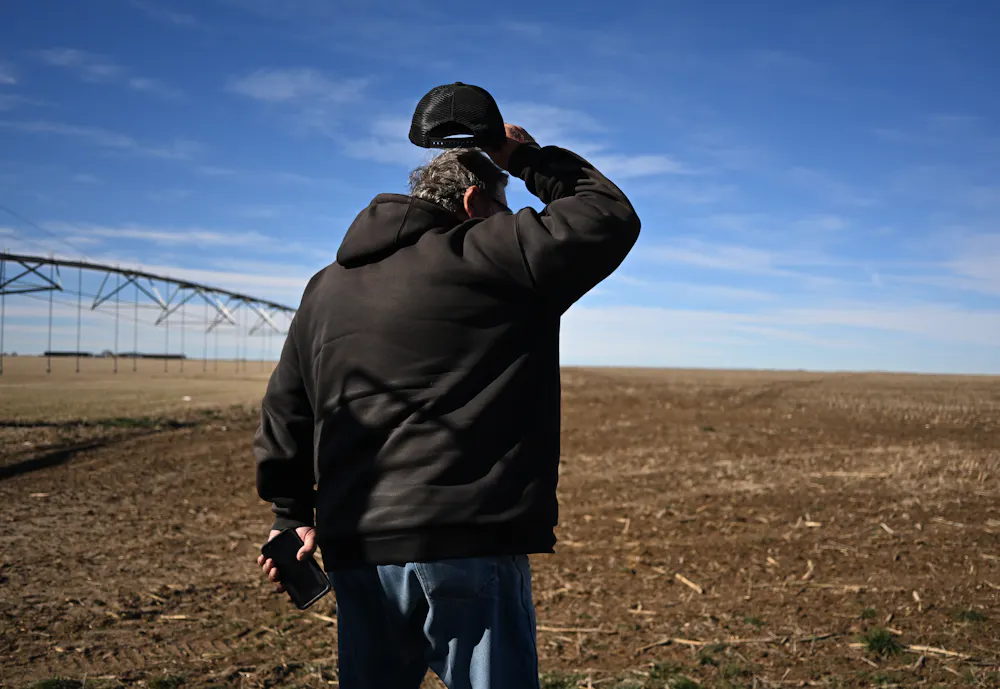
Farmers have hard decisions to make about what crops to plant and how much of each. RJ Sangosti/MediaNews Group/The Denver Post via Getty Images

3 main crops, 3 nutrients needed

Three staple crops – corn, wheat and rice – supply more than half of the world’s dietary calories.

To maximize production, those crops need three main nutrients: nitrogen, phosphate and potassium. Nitrogen helps plants grow. Phosphorus helps transport energy within plant cells and is critical for early root growth and the formation of seeds and fruit. Potassium helps plants conserve water and boosts protein content.

The closure of the Strait of Hormuz has reduced the supply and increased the cost of all three.

Natural gas, which determines 70% to 90% of the cost of producing nitrogen fertilizer, has seen a 20% drop in production due to the war and price increases up to 70%. To preserve its own supplies, Russia has suspended exports of ammonium nitrate, another nitrogen source for fertilizer.

In a similar effort, China, the world’s largest phosphate producer, has blocked phosphate exports, removing 25% of the global supply.

Potash, the potassium-rich component of fertilizers, has also been in short supply in recent years, in part because of economic sanctions on Belarus and Russia, which are major potash producers.

As a consequence, fertilizer prices have risen globally. In the U.S., some fertilizers rose more than 40% in just one month after the war’s start in late February 2026.

[embedded content]
An American farmer talks about the cost of fertilizer amid the war in Iran.

Affecting farmers first

Cereal plants absorb the vast majority of their nitrogen needs during their early growth. Applying fertilizer later in the growth cycle is less effective.

Reducing nitrogen application by 10% to 15%, or delaying application by two to four weeks, can reduce corn yields by 10% to 25%.

Producing less corn and wheat reduces not only food available for humans but also food for livestock. Increased fertilizer costs and reduced grain supplies increase the price of raising livestock, making meat and animal products more expensive.

When feed costs become unsustainable, farmers may be forced to kill or sell off the breeding cows and sows that represent the future of the food supply. In the U.S., a combination of persistent drought and high costs in 2022 forced producers to kill 13.3% of the national beef cow herd, the highest proportion ever. As a result, the U.S. beef cattle inventory shrank to its lowest level since 1962, a problem that restricts beef supplies for years.

Ultimately, the costs are passed to consumers. In 2012, when a historic Midwest drought slashed corn yields by 13%, it triggered a surge in feed prices, and U.S. poultry prices rose 20%.

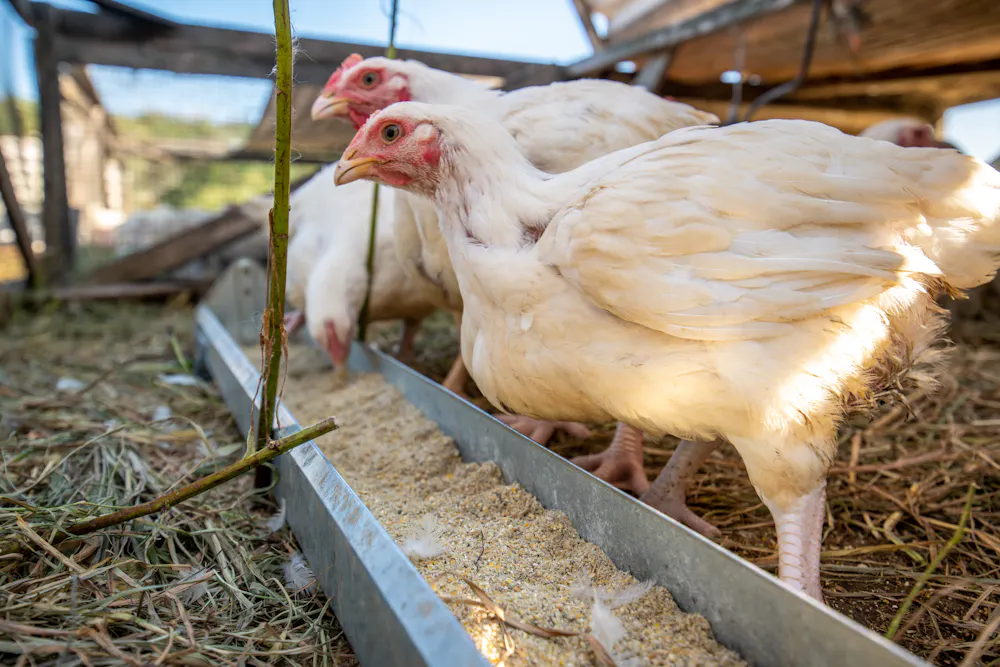
The cost of feeding chickens contributes to the cost of their meat. Edwin Remsberg/VWPics/Universal Images Group via Getty Images

More money can’t fix this problem

In mid-March 2026, the U.S. fertilizer supply was around 75% of normal levels. That’s right at the beginning of the time when Corn Belt farmers typically prepare their soil for planting, including the first applications of fertilizer. Subsequent fertilizer applications typically come from mid-April to early May and between late May and mid-June.

Farmers who fear not being able to optimize their corn yields may decide to plant less corn or switch crops and plant soybeans, which need less fertilizer. Either would reduce the corn supply.

Government loan guarantees and aid packages may help farmers cover higher costs, but they cannot address timing if enough fertilizer simply isn’t available when it is needed.

Hitting home

American consumers aren’t facing the gas and food shortages or power outages other countries are seeing from the war, but they will be hit in the pocketbook. U.S. prices for gas and jet fuel are already climbing. The effects on the food supply take longer to appear, but they are coming.

Even when crops are bountiful in the U.S., consumers are not immune to global economic forces. A smaller 2026 crop, with rising demand for livestock feed in some of the most populous countries, including China and India, will put pressure on global corn prices, affecting everyone regardless of their nationality.

In March 2026, the U.S. Department of Agriculture used data from before the Iran war to project a 3.1% average increase for all food prices.

The question for consumers is how much of the rise in corn prices will be passed to the consumer, and how fast.

USDA research shows that the speed and extent of changes in food prices vary widely by food category and the level of processing involved in making the food. Other factors also play a role, such as inventory levels, perishability and market competition. When farm prices change, wholesale prices usually adjust within the first month, but retail prices often take longer – sometimes two to four months.

Corn tortilla prices rise relatively quickly when corn prices increase. Christina House/Los Angeles Times via Getty Images

Corn tortillas and other relatively lightly processed corn foods are more likely to show price responses within a few months after corn prices increase. Adjustments to cereals or poultry prices will take a little longer. Changes in the cost of livestock products such as beef will take longer, because there are more steps between the purchase of feed corn and the sale of the meat to consumers.

Other indirect costs, related to the cost of fuel and packaging, tend to hit later. Producers often absorb the price increases in the short term, but some increases are already in the works. For instance, transport companies are adding fuel surcharges on freight shipments.

Food price hikes hit low-income households harder than high-income households, because people with lower incomes spend larger shares of their money on food and housing. For these households, even relatively affordable proteins, such as chicken, may become harder to purchase regularly.

Farm workers in Sudan begin to harvest sorghum. Tariq Ishaq Musa/Xinhua via Getty Images

A global food emergency

The cost and availability of fertilizer will affect the whole world. More than 300 million people worldwide already do not have enough food. The U.N. World Food Program predicts an additional 45 million could join them by the end of 2026 if the conflict in the Middle East continues into the middle of the year.

Crop yields in India and Brazil in 2026 are expected to be lower than normal. East African farmers struggled to afford fertilizer even before the crisis and will likely have to make do with even less.

These problems may seem removed for most Americans, but food prices are global in nature, and people in the U.S. will soon face these additional costs of the war.

ref. Hormuz closure threatens the global food supply – why grocery price hikes are coming – https://theconversation.com/hormuz-closure-threatens-the-global-food-supply-why-grocery-price-hikes-are-coming-279899

Evening Report: https://eveningreport.nz/2026/04/07/hormuz-closure-threatens-the-global-food-supply-why-grocery-price-hikes-are-coming-279899/

Hawkes Bay water project to boost food production

Source: New Zealand Government

Pre-construction work will commence at the Tukituki Water Security Project in Hawkes Bay with the help of a Regional Infrastructure Fund loan of up to $18.13 million, Associate Regional Development Minister Mark Patterson says. The Minister was at an event in Ongaonga today to announce the funding.

“The water storage project would help unlock economic potential – boost food production and create jobs.”

“As a key food producing region, Hawkes Bay has the potential for expansion with reliable long-term water supplies. This project will support land uses such as horticulture, seed production and high-value pastoral farming,” Mr Patterson says.

The work will include completion of detailed design, engineering and confirm construction costs and overall commercial viability.

If the project progresses to the construction phase, it is expected to enable the future irrigation of up to 22,000 hectares, create up to 300 jobs during construction and add up to $693 million to annual GDP for the region.

The finished water storage facility and distribution pipework network would be capable of storing 104 million cubic metres of water, the equivalent of 41,600 Olympic-sized swimming pools.

“Securing more water has been identified as a top priority for the Hawke’s Bay region,” Mr Patterson says.

“Hawkes Bay is one of our driest regions, and pressure on freshwater resources is increasing. New water storage will help address these challenges by improving water security and supporting the region’s long‑term resilience,” Mr Patterson says.

Tukituki Water Limited Partnership, which is developing the project, will receive the loan. A grant of up to $3 million was allocated in December 2024 for early development of the project.

“This water security project has the potential to transform Hawkes Bay by enabling higher value food and fibre production, and processing,” Mr Patterson says.

“The project represents an important investment in Hawkes Bay’s future, helping protect water security while enabling economic development and long‑term regional resilience. I look forward to seeing continued progress,” Mr Patterson says.

MIL OSI

LiveNews: https://livenews.co.nz/2026/04/07/hawkes-bay-water-project-to-boost-food-production/

Greenpeace’s Arctic Sunrise to join Global Sumud Flotilla mission to Gaza

By Brett Wilkins

Greenpeace International has announced that the MY Arctic Sunrise one of its largest vessels — will be taking part in the upcoming Global Sumud Flotilla relaunch in order “to directly challenge Israel’s ongoing blockade of aid to Gaza”.

The green group said the Arctic Sunrise, an icebreaker that’s been part of Greenpeace’s fleet since 1995, will be “sailing alongside more than 70 vessels and over 1000 participants” in the second Global Sumud Flotilla, which is scheduled to set sail from Barcelona on April 12, with subsequent stops in Syracuse, Italy, and Lerapetra, Greece en route to Gaza.

Greenpeace said the Arctic Sunrise “is providing operational and technical support” for the flotilla.

“The devastation inflicted on Gaza has become a dangerous doctrine of impunity, now spreading to Lebanon through relentless destruction and deepening human suffering,” Greenpeace Middle East and North Africa executive director Ghiwa Nakat said in a statement.

“The Greenpeace ship is joining this people-led mission to demand safe, unhindered humanitarian access to Gaza and to challenge the illegal blockade that continues to devastate civilian life.

“We stand firmly against war crimes, deliberate starvation, ethnic cleansing, genocide, and ecocide,” Nakat added.

“This flotilla is a call to governments around the world to end their silence, protect humanitarian action, and act with urgency and principle to uphold international law, human dignity, and justice.”

Specialised medical care
Global Sumud Flotilla organisers said the 2026 mission will focus on specialised medical care, with more than 1000 healthcare professionals aiming to deliver lifesaving medicines and equipment to Gaza, where 29 months of Israeli war and siege have left the Palestinian exclave’s medical infrastructure in ruins.

Last year, dozens of boats carrying hundreds of activists from over 40 nations took part in the last Global Sumud Flotilla — sumud means “perseverance” in Arabic — as it attempted to break Israel’s naval blockade and deliver desperately needed humanitarian aid including food, medicines, and baby formula to starving Gazans amid a growing famine.

Israeli forces intercepted and seized the flotilla vessels in international waters in early October, arresting all aboard the boats and temporarily jailing them in Israel, where some — including Swedish climate campaigner Greta Thunbergsaid they were physically and psychologically abused by their captors.

The Freedom Flotilla Coalition has made numerous attempts to break Israel’s blockade by sea, all of which ended in more or less the same way.

In 2010, Israeli forces raided one of the first convoys carrying humanitarian aid to Gaza by sea. The Israeli attackers killed nine volunteers aboard the MV Mavi Marmara, including Turkish-American teenager Furkan Doğan and a 10th died later.

Numerous experts and the entire United Nations Security Council — except the United States — have called the starvation of Gaza deliberately created by Israel, whose Prime Minister, Benjamin Netanyahu, and former Defence Minister, Yoav Gallant, are wanted by the International Criminal Court for alleged crimes against humanity and war crimes, including murder and forced starvation.

Israel — whose assault and siege of Gaza have left more than 250,000 Palestinians dead or wounded — is also facing a genocide case in the International Court of Justice filed by South Africa and formally supported by nearly 20 countries, including Spain, the mission’s country of departure.

Cycle of destruction
“At this time of escalating war, triggered by US and Israeli militaries and cascading into a cycle of destruction and pain across the Middle East, we are honoured to answer the call to join the Sumud Flotilla,” Greenpeace Spain executive director Eva Saldaña said yesterday.

“While world governments have lacked the courage and conviction to uphold international law and their obligation to prevent genocide in Gaza, the Sumud Flotilla has been a shining light of humanitarian solidarity and a symbol of hope in action.”

Global Sumud Flotilla leaders applauded Greenpeace’s decision to participate in its 2026 mission.

“Greenpeace’s history of defending the seas, confronting injustice, and taking action in defence of life makes them a powerful addition to our 2026 spring mission,” said Global Sumud Flotilla steering committee member Susan Abdullah.

“We sail together in the same direction, with a shared determination to help break Israel’s illegal siege of Gaza.”

Republished from Common Dreams under Creative Commons.

Article by AsiaPacificReport.nz

Evening Report: https://eveningreport.nz/2026/04/07/greenpeaces-arctic-sunrise-to-join-global-sumud-flotilla-mission-to-gaza/

‘Tipping point’: Kiwis switch to electric cars, solar as fuel prices stay high

Source: Radio New Zealand

RNZ / Unsplash

New Zealand has reached a “tipping point” with more people switching to electric cars and solar as Meridian Energy’s weekly app registrations increase by 214 percent, it says.

Rising oil prices have put pressure on prices across New Zealand, pushing an upward trend and interest in EV alternative vehicles.

Waka Kotahi data shows monthly registrations of full battery EVs last month jumped nearly four-fold from recent levels, from an average of 800 a month in the last two years, to 3100.

Registrations of plug-in hybrid vehicles almost tripled.

Meridian’s head of energy, Richard Sanford, said there has been a significant jump over the past four weeks.

“The last month has definitely seen a boost in interest towards EVs and home solar.

“It does feel like a tipping point, as more and more Kiwis see how moving away from a reliance on fossil fuels – where they can – would make financial sense.”

He said Meridian had long believed in what EV’s could offer to the country and was encouraged by the new interest.

Certain areas were seeing more interest than others.

“Across our Zero network we’ve seen a 16 percent increase in users and 20 percent increase in sessions over the last month, with the three most popular charging stations on the Zero network being Auckland Airport, Twizel and Culverden.

“That continues a trend towards more EV uptake, with our weekly app registrations increasing by 214 percent and weekly active users by 80 percent over the last six months.”

Sandford said Meridian was continuing to invest in EV public charging sites.

There are currently just over 1800 public charge points in New Zealand with more on the way according to the government.

In March, Transport Minister Chris Bishop and Energy and Climate Change Minister Simon Watts announced the number of electric vehicle (EV) public chargers around New Zealand would more than double thanks to $52.7 million in zero-interest loans from the government and co-investment from ChargeNet and Meridian.

He said New Zealand had one of the lowest charger-to-EV ratios in the OECD.

With the new investment the national total would be around 4550.

“The government is working towards 10,000 charge points by 2030, roughly one for every 40 EVs,” Bishop said.

Sign up for Ngā Pitopito Kōrero, a daily newsletter curated by our editors and delivered straight to your inbox every weekday.

– Published by EveningReport.nz and AsiaPacificReport.nz, see: MIL OSI in partnership with Radio New Zealand

LiveNews: https://nz.mil-osi.com/2026/04/07/tipping-point-kiwis-switch-to-electric-cars-solar-as-fuel-prices-stay-high/

Reserve Bank expected to hold OCR steady at 2.25%

Source: Radio New Zealand

RNZ

  • Reserve Bank expected to hold official cash rate unchanged at 2.25 percent
  • Middle East conflict clouds decision making for central banks
  • Recent speech by Governor Anna Breman likely template for latest decision
  • Accept inevitable inflation and growth impacts, but no knee jerk rate reaction
  • Markets price in 25 basis point rise September, another by year end
  • RBNZ statement due 2pm, 8 April, online news conference at 3pm

Amid a fog of war in the Middle East the Reserve Bank (RBNZ) may have one crystal clear message in its latest monetary review, when in doubt and you cannot see ahead, do nothing.

The head of research at BNZ, Stephen Toplis, said it is a nightmare time for central banks and economic forecasters, facing a significant inflation spike but faced with a lack of information and great uncertainty.

“It’s a case of if you know nothing, do nothing.”

He said Breman’s speech in late March was as clear an indication of what the new statement would be like in tone and content.

“The Governor’s played it with a straight bat, she’s said the right things which are ‘look there’s no knee jerk reaction from us because we need to see how this plays out’.”

“But there’s still a stern warning that if rising inflation now feeds into inflation expectations, and people start raising prices left right and centre, and it looks like inflation will become permanent then she’ll just raise interest rates,” Toplis said.

He said it was likely that the extent of the conflict’s impact on New Zealand’s inflation and growth rates would not become clear much before the middle of the year, with every possibility that March and April would show businesses increasing stocks and buying in materials to get ahead of disruptions.

Reserve Bank Governor Anna Breman. RNZ / Samuel Rillstone

Cold comfort of weak economy

HSBC chief economist for Australia and New Zealand, Paul Bloxham, said paradoxically this country’s weak economy over the past few years offered some insulation against the current shock.

“It may seem like cold comfort that three years of weak growth means New Zealand may be better placed to handle the current shock, but even cold comfort should be some comfort.”

He also expected a cautious approach by the RBNZ, with a decision to hold rates steady as it weighed up whether the energy shock was more of an inflation or growth concern.

HSBC chief economist for Australia and NZ Paul Bloxham. LinkedIn

ASB senior economist Jane Turner said the RBNZ faced an horizon shrouded in uncertainty, with risks skewed to the downside, but could be expected to take a longer term policy view, and that supported no change in rates anytime soon.

Key for future policy would be sentiment surveys and how well anchored inflation expectations were.

“Some ticking up in short-term surveyed inflation expectations is likely, the RBNZ will place more weight on surveys for longer horizons, confident these will remain around 2 percent.”

“We expect the RBNZ to affirm its confidence that inflation will settle within the 1-3 percent target range, with the growing margin of spare economic capacity and subdued economic backdrop to dampen domestically generated inflationary pressures.”

Sign up for Ngā Pitopito Kōrero, a daily newsletter curated by our editors and delivered straight to your inbox every weekday.

– Published by EveningReport.nz and AsiaPacificReport.nz, see: MIL OSI in partnership with Radio New Zealand

LiveNews: https://nz.mil-osi.com/2026/04/07/reserve-bank-expected-to-hold-ocr-steady-at-2-25/

Name release: Fatal crash – Twizel, Canterbury

Source: New Zealand Police

Police can now release the name of the woman who died following an e-scooter crash in Twizel on 28 February.

She was Amber Rose Young, 42, from Geraldine.

Our thoughts are with her loved ones during this difficult time.

The death was referred to the Coroner.

ENDS

Issued by Police Media Centre

LiveNews: https://nz.mil-osi.com/2026/04/07/name-release-fatal-crash-twizel-canterbury/

What is ‘muscle memory’ and can I improve mine?

Source: The Conversation (Au and NZ) – By Celia Harris, Associate Professor in Cognitive Science, Western Sydney University

Whether it’s riding a bike or knitting a sweater, there are some tasks you do without thinking.

These are commonly associated with “muscle memory”, the idea your body can remember how to perform complex tasks and, over time, learn to do them automatically.

But do your muscles actually have a memory? And what role does your brain play?

Let’s unpack the science.

What is ‘muscle memory’?

In popular culture, we usually associate “muscle memory” with tasks we do, or skills we learn, without much conscious thought. This could include riding a bike, playing a musical instrument or even tying your shoelaces.

However, cognitive scientists call this type of memory “procedural memory” rather than “muscle memory”. And while it doesn’t always feel like it, procedural memory involves our brain as well as our muscles.

The term “muscle memory” may also be used in a more literal sense to describe how muscles seem to get stronger or bigger if they have been trained before. Research supports this idea, suggesting prior training can speed up muscle growth. It may do this by changing how muscle cells function or are structured. However, scientists still don’t know exactly how this all works. In any case, it seems these changes do not allow muscles to “store” memories or information in the same way as the brain.

How does procedural memory work?

Scientists describe procedural memory as a kind of “non-declarative memory”, meaning it’s memory based on actions, rather than words. This means it can be difficult to share skills you might’ve learnt through procedural memory.

For example, imagine you’re teaching a child to ride a bike. If you hop on the bike yourself, it’s easy to perform all the correct steps (holding the handlebars, mounting the bike, pushing the pedals) at the right times. But it’s much harder to describe that process to another person, especially if you only use words.

Research suggests repetition is the best and fastest way to improve your procedural memory. When we learn a new skill, it initially takes a lot of effort. This is because you need to actively control every action to make sure you’re doing things in the right way and order.

Over time, these skills can become so automatic you barely think while doing them. For example, you might drive home without remembering which route you took. That’s because you’re performing a series of actions you’ve done hundreds of times before.

Maintaining your procedural memory requires multiple parts of your brain to work together. This is because we use different neural processes as we shift from actively learning a skill to acting more automatically.

When you learn something new, you’re largely using the pre-frontal and fronto-parietal regions of the brain. These are associated with attention, memory and deliberate, effortful thinking.

When you start repeating and practising a skill, you instead rely on sensorimotor circuits. These process the sensory information you receive from the outside world, and help your brain determine the best physical response. In this way, these circuits allow you to do complex tasks with less conscious effort.

What’s the impact of conditions such as dementia?

What’s fascinating about procedural memory is it’s largely unaffected by cognitive decline.

For people with dementia or other kinds of cognitive impairment, the hardest tasks are generally those that require conscious effort. However, they often retain more automatic skills that they’ve developed over a lifetime. This is why you may meet people with dementia who can still knit or dance a tango, despite having trouble remembering their loved ones’ names.

Research suggests music taps into procedural memory in an especially powerful way. One Canadian study found people with Alzheimer’s dementia, an irreversible brain condition which affects memory, cognition and behaviour, recognised words better when they were sung as opposed to spoken.

Procedural memory may also help people with cognitive conditions learn new skills, as well as retain old ones. In one Australian study, researchers wanted to know if a person with severe Alzheimer’s dementia could learn a new song. They found that a 91-year-old woman with severe Alzheimer’s, who’d never been a musician, was able to learn a brand-new song. While she couldn’t remember the words during a memory test, she could sing the song again two weeks later.

Can I improve my procedural memory?

Unfortunately, there’s no quick and easy way to strengthen your procedural memory.

To begin, you have to push through the initial phase of learning a new skill, which often requires significant effort and attention. This is where practice comes in. Practising a new skill will help your brain depend less on its attention-focused frontal regions, and rely more on those responsible for motor functions.

To make your practice as effective as possible, it may be worth spacing it out over multiple sessions. This forces you to deliberately bring a memory back to mind and actively reconstruct it, even after you’ve stopped thinking about it. As a result, you’ll become better at forming and retaining long-term memories. Sleeping after each practice session may also help. Research suggests this is because sleep helps you remember and retain new skills.

While improving procedural memory takes time and effort, it’s well worth it. Any new skills you learn will enrich your life. And even if your cognitive health declines, the skills you practice over a lifetime can keep you connected to the people and memories you value.

ref. What is ‘muscle memory’ and can I improve mine? – https://theconversation.com/what-is-muscle-memory-and-can-i-improve-mine-277471

Evening Report: https://eveningreport.nz/2026/04/07/what-is-muscle-memory-and-can-i-improve-mine-277471/

Almost 200,000 New Zealanders are now living with long COVID – where is the government plan?

Source: The Conversation (Au and NZ) – By John Donne Potter, Professor of Public Health, Te Kunenga ki Pūrehuroa – Massey University

A high prevalence of long COVID is perhaps the starkest reminder that the pandemic is far from over.

The latest New Zealand Health Survey confirms the impacts of the COVID pandemic continue, six years after the initial outbreak. The data show most New Zealanders (77.7% or about 3.3 million people) have had COVID at least once.

Many people reported changes in health after COVID, but about one in 11 adults (401,000 people) described symptoms lasting three months or longer. These were health impacts they had not experienced prior to the COVID infection and could not be explained by a different diagnosis.

Women were more likely to report symptoms of long COVID – about 1 in 7 women (14.9%) compared to 1 in 12 men (8.5%). Only among people above the age of 65 were the rates similar in women and men.

One in six Māori adults (15.5%) reported having had long COVID symptoms, compared to one in nine non-Māori adults (11.3%), and among people living with disabilities, one in four (22.8%) experienced lasting symptoms.

Overall, 11.9% of adults who contracted COVID developed long COVID following the acute phase, and almost half (48.5%) of them were still experiencing symptoms at the time they completed the survey.

New Zealand must take long COVID seriously. Denial of these impacts and delays in providing appropriate care mean New Zealand is missing opportunities to limit harms to individuals and society.

What these findings mean for New Zealand

The latest results are backed up by evidence from international studies and previous health survey research, which shows that a fifth of children in New Zealand reported persisting symptoms after COVID infection.

Self-reported surveys can either under-count or over-count prevalence, but the New Zealand health survey is designed to be representative. This is currently our best estimate of long COVID in New Zealand adults but is probably an under-count because the risk of developing long COVID increases with reinfection.

Since the survey was completed, there have been many more COVID cases and New Zealand is now experiencing a ninth wave, which means we can expect further long COVID cases.

Long COVID can affect every organ, including the cardiovascular, immune and nervous systems.

The main symptoms include cognitive dysfunction (brain fog), fatigue and post-exertional malaise. But COVID infection can also cause chronic disease without symptoms, with “silent” cell and organ damage that may predispose people to later illness.

The survey findings are concerning. The accepted definition of a rare disease is one case in 2,000 people. If a condition is more common than that, the number of people affected becomes high enough to need specific health services.

The long COVID prevalence of 9.2% of all adults in New Zealand is more than a hundred times greater than this rare-disease threshold.

The practical implications are clear. Long COVID is a health burden which must be addressed by specific health-service resources.

The cost of delayed action

More than 12 months ago, we published an extended analysis of the state of long COVID in Aotearoa New Zealand. We noted it remained a risk following any COVID infection or reinfection and carried a substantially increased risk of sudden death and organ damage.

We also noted that vaccination reduces the risk.

We urged the government to establish a coordinated response that included treatment and support services, public health and social measures to protect the community, a programme to maximise vaccine coverage, a clear information campaign and targeted surveillance – and more research.

Very little has been instituted. This indifference extends even to the data the government itself has collected. The data collection for this latest health survey was completed in 2025, and it is concerning the findings have only been released now, and only after a request under the Official Information Act.

These data have also been publicised largely by the coordinating group for Aotearoa COVID Action, not by Health New Zealand.

Inaction on respiratory infections is costing us dearly, both in terms of people’s health and a loss in productivity. Long COVID is still very challenging to treat but already some new approaches are looking promising. Much can be done to prevent new cases and to support those already affected.

Slowing the spread of COVID through communities is an important and feasible goal. One of the most basic but effective measures is promoting a culture of staying home when sick.

Providing a good standard of indoor air quality in public settings through a mix of ventilation, air filtration and specific ultraviolet lighting is highly achievable and has multiple benefits in reducing sickness rates from other respiratory infections.

Recent research shows COVID vaccines are still able to deliver a meaningful reduction in the severity of acute infection and risk of long COVID.

Running alongside prevention is the need to support those already affected by establishing and maintaining specific tailored care for symptom management and financial safety nets for those unable to work.

Policymakers and the public are reluctant to even speak of COVID in the present tense, but the evidence shows it is still a major infectious disease in Aotearoa New Zealand, with wide-ranging negative impacts.

There is a mutual support group for people with Long COVID but the government can and should be doing more to protect the population and limit this social and economic harm.

ref. Almost 200,000 New Zealanders are now living with long COVID – where is the government plan? – https://theconversation.com/almost-200-000-new-zealanders-are-now-living-with-long-covid-where-is-the-government-plan-278973

Evening Report: https://eveningreport.nz/2026/04/07/almost-200-000-new-zealanders-are-now-living-with-long-covid-where-is-the-government-plan-278973/

Appointments – Lian Butcher appointed as next EPA Chief Executive

Source: Environmental Protection Authority

Lian Butcher has been appointed as the next Chief Executive of the Environmental Protection Authority (EPA), effective 1 July 2026.
Ms Butcher joins the EPA from Greater Wellington Regional Council, where she has been Group Manager of the Environment Group, her second tenure with Greater Wellington.
Previously, she was Deputy Director-General, Partnerships and Engagement, at the Department of Conservation.
Announcing the appointment, EPA Board Chair Barry O’Neil says Lian Butcher is an accomplished and experienced leader who brings a proven ability to lead complex organisations and work collaboratively with agencies and stakeholders to achieve results.
“Lian has led major programmes of change and has a strong track record in building high-performing organisational cultures in the public sector,” he says.
“The EPA continues to evolve in its role as an environmental regulator.
“We are focused on innovation and strengthening our engagement with stakeholders. Lian is well placed, given her experience and leadership approach, to lead the organisation through this next phase,” says Barry O’Neil.
Originally from the United Kingdom, Ms Butcher holds a Master of Science in Fisheries and Shellfish Biology and a Bachelor of Science in Marine Biology from the University of North Wales.
She began her career with the Environment Agency in Wales in 2001, working on the European Union’s Habitats Directive, before moving to New Zealand in 2010 to join the Ministry for the Environment.
Lian Butcher will join the EPA in June to support a transition into the Chief Executive role, formally commencing on 1 July 2026.
She succeeds Dr Allan Freeth, who concludes nearly 11 years of service with the EPA in June.
Barry O’Neil says the EPA Board acknowledges Dr Freeth’s significant contribution to public service in New Zealand and his leadership of the EPA over this time.
This has included establishing new regulatory functions and implementing legislative changes, while ensuring decisions are grounded in robust, evidence-based processes. 

MIL OSI

LiveNews: https://livenews.co.nz/2026/04/07/appointments-lian-butcher-appointed-as-next-epa-chief-executive/

Weather: Tauranga residents told to evacuate if they feel unsafe in heavy rain

Source: Radio New Zealand

The main road in Kawakawa RNZ / Nick Monro

People in Tauranga feeling unsafe when heavy rain bears down on the city are being urged to evacuate.

The Bay of Plenty west of Whakatane is now under an orange heavy rain warning, with up to 140mm forecast from midnight.

Tauranga City Council has closed a number of tracks and parks in preparation. It said there was an increased risk of both new landslides and more damage at old ones after earlier severe weather.

The council said residents should get to other ground immediately if they learn, or suspect, a landslide is happening.

Northland warnings downgraded

Elsewhere, heavy rain continued to batter Northland’s east coast, with the Kāeo River threatening to flood across State Highway 10 north of the Bay of Islands.

High tide passed at 11am.

The wettest areas so far have been Kerikeri, Whakapara and Whangaroa, which have each recorded around 80mm of rain in the past 24 hours. MetService earlier warned up to 120mm could fall, with peak rates up to 40mm an hour.

In Punaruku, the area battered by the January storm, just over 50mm had fallen.

There were no reported power outages or highway closures, but Civil Defence was urging motorists to take extreme care as a subtropical low made its way south.

Northland Civil Defence earlier said roads and river levels were mostly stable, but there was a lot of surface water on roads and paddocks, especially in the east, and the ground was still saturated from previous downpours.

MetService cautioned of surface flooding, slips and difficult driving conditions.

Northland’s orange heavy rain warning has been downgraded to a heavy rain watch until 6pm Tuesday, with MetService saying the storm was tracking south.

A strong wind watch remained in place for Northland until 5pm.

Much of the rest of the upper North Island remained under a heavy rain watch, including Auckland, Waikato, Coromandel and the eastern Bay of Plenty.

Forecasters expected the bad weather to reach the northern South Island by Wednesday evening. Heavy rain watches for late Tuesday were in place in parts of the north of the island.

Cyclone warning

Meanwhile, a tropical cyclone could potentially head towards New Zealand within the next week.

Two tropical cyclones were hovering over the South Pacific – Maila in the Solomon Sea and Vaianu to the east of Vanuatu.

MetService forecaster Louis Fernando said the Category 2 Cyclone Vaianu looked like it would intensify to a Category 3.

“Some of the models are indicating that perhaps towards the weekend the remnants at least of the cyclone could affect parts of the North Island.”

Northland experienced heavy rains and flooding at the end of March and some parts are still recovering from the deluge.

Sign up for Ngā Pitopito Kōrero, a daily newsletter curated by our editors and delivered straight to your inbox every weekday.

– Published by EveningReport.nz and AsiaPacificReport.nz, see: MIL OSI in partnership with Radio New Zealand

LiveNews: https://nz.mil-osi.com/2026/04/07/weather-tauranga-residents-told-to-evacuate-if-they-feel-unsafe-in-heavy-rain/

Farming app detects rise in ‘suspicious’ fuel takes overnight

Source: Radio New Zealand

A farmer with his farm fuel tank featuring Levno sensors to monitor fuel withdrawals. SUPPLIED/LEVNO

Data from an app that tracks farm fuel levels shows a small rise in fuel being taken from monitored tanks during the night, amid the global fuel crisis.

Palmerston North-based company Levno has sensors on farm tanks of fuel, milk and water so farmers can track their levels on an app on their phones.

The company said there had been a 13.7 percent increase in what it called “suspicious withdrawal events” after 10pm in the three weeks to 1 April, compared to the same period the year before.

Chief executive Oscar Ellison said it was not proof of theft as such, as there could be legitimate explanations for withdrawals like contractors needing fuel for urgent farm work.

“I don’t want to cause too much alarm or anything, given the current situation around fuel, but we monitor… real-time data from those fuel tanks, and we have an alert that customers are able to set up around unusual timings of withdrawals.

“Between 10pm and 4am were the time periods that we were looking at, and we’ve seen an 11 percent increase there in some of those alert firings and also, in total a 14 percent increase in those suspicious withdrawal events.”

He said while they were not always huge volumes each time, they had risen to up to 350 incidents in a week.

“Obviously people’s operations change across months, but I think when it comes to theft people will notice the large events that happen sporadically – not very often, hopefully – where someone turns up for trailer tank or some 44-gallon drums on the back of a ute and takes 400-500 litres.

“What we see is five-litre withdrawals, 10-litre withdrawals, which might be a farm worker or might be your son or daughter coming back from university holiday, and those are the kind of smaller ones that we’ve seen this kind of uptick in.”

Ellison encouraged farmers to secure their fuel tanks, as many were already.

“You can put cameras in, you can put sensor lights near your tank and make sure you’ve got a lock on the tank,” he said.

Police told RNZ last week reported crime of fuel theft had not yet increased at that stage, but they were working with Federated Farmers and gas stations on the form of crime it said was not new.

Furthermore, limited allocations of fuel for rural distributors was also resulting in some farmers not receiving their usual deliveries and having to join the queue at the gas stations instead.

Levno technology was found on around 8000 New Zealand farms, mostly dairy, and it monitored close to 7000 fuel tanks nationwide.

The business that started back in 2012 employed a team of around 40, and had expanded into other markets, now found on 300 farms in Ireland and 200 in Australia.

It also planned to roll out its trial of monitoring feed silos nationwide later this year.

Sign up for Ngā Pitopito Kōrero, a daily newsletter curated by our editors and delivered straight to your inbox every weekday.

– Published by EveningReport.nz and AsiaPacificReport.nz, see: MIL OSI in partnership with Radio New Zealand

LiveNews: https://nz.mil-osi.com/2026/04/07/farming-app-detects-rise-in-suspicious-fuel-takes-overnight/

DOC statement: Outcome of Wildlife Act investigation

Source: NZ Department of Conservation

Date:  07 April 2026

The Department of Conservation has completed its investigation into an allegation McCallum Bros Limited (MBL) disturbed protected stony corals during sand-dredging activities in the Pākiri Temporary Sand Extraction Area in 2025.

Although corals were identified in the area, there is insufficient evidence to prove stony corals were disturbed by the company. Therefore we will not be pursuing enforcement action.

DOC has notified MBL and the party who brought these allegations to us.

Our role was to investigate two alleged breaches of the Wildlife Act 1953. Under the Wildlife Act it is an offence to take or disturb absolutely protected marine wildlife without authority. It is also an offence to fail to report accidental or incidental death or injury of marine wildlife.

The above statement can be attributed to Dylan Swain, DOC Team Lead Wildlife Crime.

Contact

For media enquiries contact:

Email: media@doc.govt.nz

MIL OSI

LiveNews: https://livenews.co.nz/2026/04/07/doc-statement-outcome-of-wildlife-act-investigation/

‘Vegan leather’ isn’t as sustainable or eco‑friendly as brands might claim

Source: The Conversation (Au and NZ) – By Caroline Swee Lin Tan, Associate Professor in Fashion Entrepreneurship, RMIT University

In a high-end fashion store or luxury car showroom, the term “vegan leather” sends a strong message of quality. For many shoppers, it promises the look and feel of real leather without using animal skins. As brands move away from animal leather, “vegan” has come to suggest something that is both kinder to animals and better for the planet.

However, the reality is more complicated. While these materials remove animal products, they often replace one environmental problem with another. Vegan leather is not one material, but a broad label that covers everything from plastic coatings to plant-based surfaces, which is why regulators are starting to question vague green claims.

The appeal of leather alternatives is easy to understand. Concerns about animal welfare, climate change and deforestation have pushed shoppers and brands towards options that seem more responsible.

As a result, “vegan leather” is often seen as the better choice – even though how long it lasts, and where it ends up, is rarely questioned.

The rise of synthetic hide

For decades, these materials were known as “pleather” or vinyl. Today, better finishes have turned thin plastic films into convincing leather lookalikes.

Most vegan leathers consist of polyurethane (PU) or polyvinyl chloride (PVC) coatings bonded to fabric backings. They are waterproof and easy to emboss, but they are also petroleum-derived plastics.

When the surface of a PU‑coated bag cracks or peels, the damage is more than cosmetic. As the coating breaks down, it sheds microplastics into the environment.

The peeling that happens with fake polyurethane leather is a source of microplastic pollution. Author supplied

The plastic underneath the plants

In response to concerns about plastic, new fake leather materials have been developed from pineapples, mushrooms, apples, grapes and even cacti. These bio-based options are often sold as the sustainable answer.

However, using a plant does not automatically make a product better for the environment.

The issue lies in how these materials are made. A “pineapple leather” shoe may be praised for its plant fibres, but those fibres are usually held together with plastic resins to make the material durable.

The result is a mixed material that cannot be recycled in Australia, even though marketing often focuses on the plant ingredient and hides the plastic underneath.

Plant leather doesn’t last long

A key challenge with many vegan leather alternatives is strength. Raw plant fibres are too weak to handle the repeated wear and pressure faced by shoes, bags and car seats. To improve performance, manufacturers layer plant materials onto plastic binders or polyester backings.

Even then, many of these materials break down sooner than real leather and cannot be properly repaired. Traditional leather can be conditioned, patched and allowed to age over time, but plant-based alternatives tend to fail once the surface coating cracks or peels.

A mushroom- or apple-based bag also cannot be composted because of the plastic beneath its surface, meaning it reaches disposal much sooner. Some plant-based vegan leather products have reported lifespans of as little as two years.

This points to a broader issue. In a circular economy that prioritises reuse, repair and material recovery, sustainability is about keeping products in use and at their highest value for as long as possible.

Brands must walk the talk

The problems hidden by elusive marketing labels are becoming harder to ignore. The Australian Competition and Consumer Commission (ACCC) has made it clear broad labels such as “sustainable” or “eco-friendly” must be backed up with evidence.

If brands use the word “vegan” to suggest lower environmental impact, they must be able to prove that claim by looking at the product’s full life cycle.

At the same time, the Productivity Commission’s 2026 inquiry into the circular economy highlights Australia’s growing problem with products that cannot be recycled. As product stewardship schemes expand, durability, recyclability and what happens to a product at the end of its life will matter as much as animal welfare.

The ethical distinction

None of this means animal leather comes without environmental or chemical costs. These include methane emissions from livestock and the toxic chemicals used in tanning. For many consumers, avoiding animal-derived materials is still an important ethical choice.

However, “vegan” and “sustainable” are not the same thing. One describes what has been left out of a product, while the other describes how that product performs over its entire life. Treating the two as interchangeable can replace meaningful progress with reassuring labels.

The takeaway is a call for material honesty. Sustainability can’t be reduced to a single word or ingredient. It’s measured by how long a product stays useful before it needs to be thrown away. A bag that avoids animal materials but breaks down within a few years simply creates waste sooner.

If vegan alternatives are going to be sustainable, they must be designed to last. Sustainability is measured in years of use, not words on a tag.

ref. ‘Vegan leather’ isn’t as sustainable or eco‑friendly as brands might claim – https://theconversation.com/vegan-leather-isnt-as-sustainable-or-eco-friendly-as-brands-might-claim-278548

Evening Report: https://eveningreport.nz/2026/04/07/vegan-leather-isnt-as-sustainable-or-eco-friendly-as-brands-might-claim-278548/

Weather: Tauranga residents urged to consider evacuating as heavy rain heads south

Source: Radio New Zealand

The main road in Kawakawa RNZ / Nick Monro

People in Tauranga feeling unsafe when heavy rain bears down on the city are being urged to evacuate.

The Bay of Plenty west of Whakatane is now under an orange heavy rain warning, with up to 140mm forecast from midnight.

Tauranga City Council has closed a number of tracks and parks in preparation. It said there was an increased risk of both new landslides and more damage at old ones after earlier severe weather.

The council said residents should get to other ground immediately if they learn, or suspect, a landslide is happening.

Northland warnings downgraded

Elsewhere, heavy rain continuied to batter Northland’s east coast, with the Kāeo River threatening to flood across State Highway 10 north of the Bay of Islands.

High tide passed at 11am.

The wettest areas so far have been Kerikeri, Whakapara and Whangaroa, which have each recorded around 80mm of rain in the past 24 hours. MetService earlier warned up to 120mm could fall, with peak rates up to 40mm an hour.

In Punaruku, the area battered by the January storm, just over 50mm had fallen.

There were no reported power outages or highway closures, but Civil Defence was urging motorists to take extreme care as a subtropical low made its way south.

Northland Civil Defence earlier said roads and river levels were mostly stable, but there was a lot of surface water on roads and paddocks, especially in the east, and the ground was still saturated from previous downpours.

MetService cautioned of surface flooding, slips and difficult driving conditions.

Northland’s orange heavy rain warning has been downgraded to a heavy rain watch until 6pm Tuesday, with MetService saying the storm was tracking south.

A strong wind watch remained in place for Northland until 5pm.

Much of the rest of the upper North Island remained under a heavy rain watch, including Auckland, Waikato, Coromandel and the eastern Bay of Plenty.

Forecasters expected the bad weather to reach the northern South Island by Wednesday evening. Heavy rain watches for late Tuesday were in place in parts of the north of the island.

Cyclone warning

Meanwhile, a tropical cyclone could potentially head towards New Zealand within the next week.

Two tropical cyclones were hovering over the South Pacific – Maila in the Solomon Sea and Vaianu to the east of Vanuatu.

MetService forecaster Louis Fernando said the Category 2 Cyclone Vaianu looked like it would intensify to a Category 3.

“Some of the models are indicating that perhaps towards the weekend the remnants at least of the cyclone could affect parts of the North Island.”

Northland experienced heavy rains and flooding at the end of March and some parts are still recovering from the deluge.

Sign up for Ngā Pitopito Kōrero, a daily newsletter curated by our editors and delivered straight to your inbox every weekday.

– Published by EveningReport.nz and AsiaPacificReport.nz, see: MIL OSI in partnership with Radio New Zealand

LiveNews: https://livenews.co.nz/2026/04/07/weather-tauranga-residents-urged-to-consider-evacuating-as-heavy-rain-heads-south/

Gang member arrested and charged for drug supply, Christchurch

Source: New Zealand Police

Attributable to Inspector Craig Scott:

Police delivered an early Easter surprise to a Christchurch gang member, who was arrested and charged in relation to drug supply last week.

At around 2:45pm on Thursday 2 April, the Te Wai Pounamu Gang Disruption Unit located a person of interest on Litchfield Street.

A subsequent search of his vehicle located around 500 grams of methamphetamine.

Following the discovery, a search was executed at his address, where another ten grams of methamphetamine were located, as well as six firearms, included a loaded pistol, and a large amount of cash.

The street value of the drugs located is estimated to be worth around $150,000.

The man, 58, has been remanded in custody and will reappear in the Christchurch District Court on 28 April, charged with supplying methamphetamine.

Further charges are being considered.

ENDS

Issued by Police Media Centre

MIL OSI

LiveNews: https://livenews.co.nz/2026/04/07/gang-member-arrested-and-charged-for-drug-supply-christchurch/

Update – Easter holiday weekend road toll stands at three

Source: New Zealand Police

Attributable to Superintendent Steve Greally, Director of Road Policing:

Following a further review, the Easter weekend road toll now stands at three, one less than Easter 2025, and four less than Easter 2024.

Of note, two of the three deceased were riding motorcycles.

The three deaths were from the following crashes:

– Coastal Highway(SH60) at the intersection with Easton Loop, Tasman. Saturday 4 April

– North Road at the intersection with Farrimond Place, Northland. Saturday 4 April

– State Highway 1 near Waipu Gorge Road, Northland. Sunday 5 April

ENDS

LiveNews: https://nz.mil-osi.com/2026/04/07/update-easter-holiday-weekend-road-toll-stands-at-three/

Renewed appeal for information on missing woman Rowena Walker

Source: New Zealand Police

Christchurch Police remain committed in their efforts to locate missing woman Rowena Walker, nearly eight months on from her last confirmed sighting.

Detective Senior Sergeant Jo Carolan says Police continue to follow lines of enquiry to locate the missing 39-year-old.

“Rowena’s last confirmed sighting was on 14 August, when she was captured on CCTV in Christchurch on Bassett Street with an associate,” she says.

“We know she travelled often, and in our efforts, we have searched in several districts including Waikato, Tasman, and Canterbury. Unfortunately, we have not been able to locate Rowena.

“Police are urging anyone with information that may assist our enquiries to please contact us.

“Rowena has not been in contact with her children since she went missing, and as her 40th birthday approaches, her family are now desperately worried for her safety.

“If you know anything, no matter how small you think it may be, it may be the piece in the puzzle we need to locate Rowena.”

Police would like to thank all members of the public who have provided information so far or have assisted in the search for Rowena.

If you have information that can assist in locating her, please contact Police online at 105.police.govt.nz or call 105, referencing file number 251022/9026.

Information can also be provided anonymously through Crime Stoppers on 0800 555 111.

ENDS

Issued by Police Media Centre

MIL OSI

LiveNews: https://livenews.co.nz/2026/04/07/renewed-appeal-for-information-on-missing-woman-rowena-walker/

Cyclone Vaianu cuts off roads, closes schools and cancels flights in Fiji

Source: Radio New Zealand

Videos shared by the Fiji Meteorological Service – sent by the public – showing real-time weather updates of the impacts of Vaianu show rain and strong winds affecting different parts of the country. Screengrab / Facebook/Fiji Meteorological Service

Dozens of roads and crossings are inaccessible in Fiji’s Western Division due to heavy rainfall caused by severe tropical cyclone Vaianu.

Authorities are advising people to avoid flooded areas and take necessary precautions.

Videos shared by the Fiji Meteorological Service – sent by the public – showing real-time weather updates of the impacts of Vaianu show rain and strong winds affecting different parts of the country.

Vaianu is not expected to make landfall in Fiji.

A forecasting officer said on Tuesday morning the wind is expected to pick up over most places on Tuesday.

Forecasting officer Shivneel Prasad said some marine areas can expect wind up to 40 knots and gusts of up to 50 knots, or about 93 kilometres an hour, which means hazardous conditions at sea.

“For land, basically we expect the northerly winds to prevail over the Fiji Group. This will bring about… occasional periods of rain and heavy falls as well.”

He said the Metservice had received reports of flash flooding.

Prasad said Vaianu is expected to stay on its projected south-east path, and weather conditions will continue to affect Fiji on Wednesday but should start to ease.

“Come tomorrow morning we’ll start to see a trend of easing of the winds over the Fiji group, and with regards to the rain – because there’s an extension of this system up to the north – the rain will start to ease off by end of tomorrow.”

A heavy rain warning remains in place for the whole Fiji group. Schools and universities are closed until further notice.

The National Disaster Risk Management Office (NDRMO) has advised those living in low-lying and flood-prone areas to move to evacuation centres.

“Do not attempt to cross flooded roads, rivers, or crossings under any circumstances,” the country’s acting permanent secretary for disaster management Mitieli Cama said at a news conference on Monday.

The Water Authority of Fiji is advising people to store water in advance as the impacts of Vaianu could affect water production and supply.

“This could lead to low water pressure or temporary supply interruptions in some areas. Poor road conditions may also delay water cartage services to affected communities,” it said.

Fiji’s Maritime Safety Authority (MSAF) has issued a notice advising all passenger and cargo transport operations in the Western Division to cease effective 9am on Tuesday local time.

“Ship masters are permitted to reposition vessels for safety purposes without the need for standard clearances, provided that no passengers or cargo are on board,” the notice said.

It urged all maritime operators and seafarers to remain vigilant and prioritise safety at all times.

Multiple flights into and out of Nadi were cancelled on Tuesday due to the adverse weather connected to cyclone Vaianu.

Fiji Airports said all Fiji Link domestic flights were cancelled, as were a number of international flights.

– Published by EveningReport.nz and AsiaPacificReport.nz, see: MIL OSI in partnership with Radio New Zealand

LiveNews: https://nz.mil-osi.com/2026/04/07/cyclone-vaianu-cuts-off-roads-closes-schools-and-cancels-flights-in-fiji/